

Quickview:
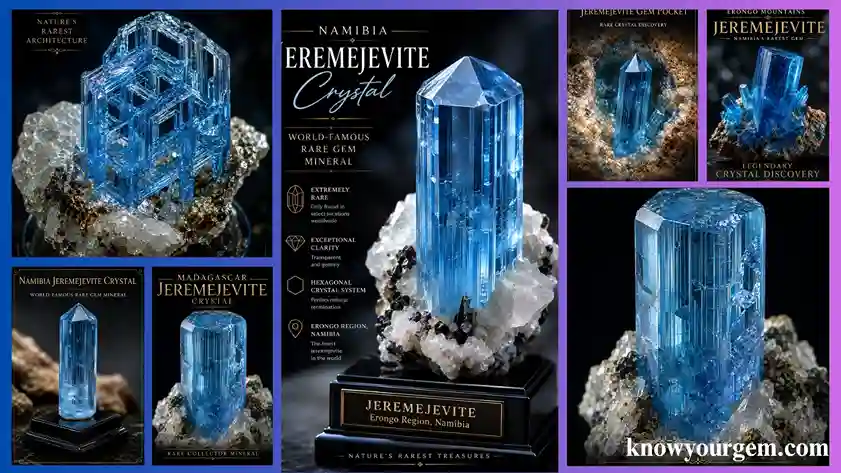
Jeremejevite is an ultra rare gemstone, it is usually clear to pale blue, with a bright, glassy sparkle. Since, it was first discovered in 1883, and is so rare that many gem experts can never see a cut stone in their careers. Collectors valued it for its delicate beauty and extreme rarity, that makes it tone of the most valued gems in the world.
There are many root chakra and third eye chakra linked stones but moonstone is differently connected to these chakras.
What Is Jeremejevite?
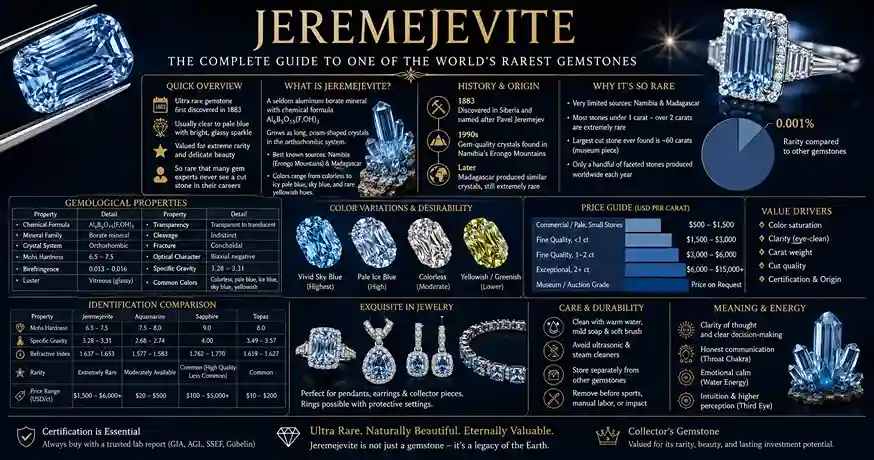
Jeremejetive is a seldom aluminum borate mineral with having chemical formula of Al₆B₅O₁₅(F,OH)₃. Jeremejevite grows as long, prism shaped in the orthorhombic system. It is best recognized from Namibia and Madagascar, where gem quality stones are found. In its finest form, it is transparent and glassy, its color ranges from icy pale blue.
The stone was first identified in 1883 in Siberia and named after mineralogist Pale Jeremejevite. For decades, only tiny crystals were recognized, so it was treated more as a scientific curiosity than a gemstone.
That changed in the late 20th century when larger, gem quality stones were discovered in Namibia’s Erongo region. Even so, jeremejevite remains extremely scarce, that make it one of the most valued gems for collectors.
Jeremejevite History and Origin:
This rare blue collector gem’s story begins in Siberia in 1883, where only tiny, colorless stones were found in too small cut, leaving it a mineralogcal curiosity for decades.
The breakthrough came in Namibia’s Erongo Mountains in the late 1990s, when larger, transparent crystals were appeared. These pale blue stones finally made jeremejevite a true gemstone.
Madagascar later produced similar crystals, however gem quality material remains extremely rare.
Jeremejevite Gemological Properties:
This rare blue Collector Gem’s physical and optical properties reflect to recognizable and special.
| Property | Detail |
| Chemical Formula | Al₆B₅O₁₅(F,OH)₃ |
| Mineral Family | Borate mineral |
| Crystal System | Like, Orthorhombic |
| Birefringence | Like, 0.013 to 0.016 |
| Luster | Is Vitreous or glassy |
| Transparency | Transparent to translucent |
| Cleavage | Indistinct |
| Fracture | Conchoidal |
| Optical Character | Biaxial negative |
| Common Colors | Colorless, pale blue, ice blue, sky blue, yellowish |
Jeremejevite Hardness:
Jeremejevte’s hardness is measured between 6.5 and 7.5 on the Mohs scale of hardness, which puts it in the same range as quartz and tanzanite occur. Which makes it durable enough for pendant, earring, and display pieces, since daily wear rings can require protective settings.
It also carries indistinct cleavage, that is a good thing, and the stone is less likely to split along internal planes as compared to gem like topaz which has perfect cleavage. This adds to its appea for collectors and jewelers.
Jeremejevite Refractive Index and Optical Properties:
Jeremejevite owns refractive index like, 1.640 gives a brilliant sparkle more than quartz.
A negative biaxial character and low birefringence of this stone let light pass through quickly, which creates clean glassy look it. It showcases transparency, bright and shiny vitreous luster due to having well cut.
Elite Collector Stone Specific Gravity and Density:
Its specific gravity is 3.28 to 3.31, that makes it stronger than many pale blue gems like, aquamarine, and slightly lighter than blue topaz. Such difference helps gemologists separate this stone from other similar looking gems.
One useful method is hydrostatic weighing, where the stone’s density is measured in water. Even without a full lab report, this test can confirm its identity and distinguish it from other pale blue gems.
Jeremejevite Color variations:
Jeremejevite gem comes in a small but elegant group of colors. The most valued stones are pale to medium ice blue or sky clue, shades that resemble the lightest aquamarine or pale sapphire. Colorless crystals also exist, but they are less valuable among collectors.
Some pieces showcase faint yellowish or greenish tones, usually from lower quality deposits, and these are less sought after in the gem trade.
The blue color comes from tiny impurities and structural effects rather than one main coloring agent, that’s why stones from the similar source can look quite different in saturation.
Eichwaldite color grades by desirability:
| Color | Collector Desirability | Notes |
| Vivid sky blue | Highest | Stone in this color is considered as extremely rare; top auction material |
| Pale ice blue | High | This color of the stone is common in fine quality, hallmark of Namibian material |
| Colorless | Moderate | It is geologically interesting, less visual impact |
| Yellowish / greenish tint | Lower | It has less sought after, secondary deposits |
How Rare Is Jeremejevite?
Eichwaldite is generally considered a rare gem. To put its scarcity in context:
- Namibia’s Erongo Mountains is the primary limited supplying source of qualitative gem. This source produces larger crystals.
- Mostly jeremejevite gems are found in very small like, under 1 carat. Stones more than 2 carats are rare and highly valued.
- The largest cut jeremejevite ever found is about 60 carats, considered as one of the kind piece kept as a museum treasure.
- Only a handful of faceted stones are produced worldwide each year, that makes jeremejevite far rarer than many other collectible gems.
Eichwaldite is one of the most rarest gemstones on the earth. It is tougher to find than alexandrite or red beryl, and less known in the market than benitoite or grandiderite.
It is not rare than red diamond, because red diamonds attract big global investors, but jeremejevite stays mostly in the hands of specialist collectors.
Is jeremejevite rarer than diamond?
In a practical sense yes it is a rare stone, but natural faceted jeremejevite in good quality can harder to locate than a diamond of equivalent weight. Since, diamond mining produces tens of millions of carats annually. But Jeremejevite produces only few dozen quality faceted stones in good year.
What is the worth of Jeremejevite?
Prices of Jeremejevite reflect to its extreme rarity. Because it remains largely unrecognized outside specialist collector circles, prices are often lower than comparably seldom stones which have achieved mainstream recognition.
| Quality Level | Price Per Carat (USD) |
| Commercial / pale color, small stone can command | $500 to $1,500 |
| Fine quality, good blue, under 1 ct stone is usually sold for | $1,500 to $3,000 |
| Fine quality, strong blue, 1–2 ct stone commands | $3,000 to $6,000 |
| Exceptional, vivid blue, 2+ ct stone can command | $6,000 to $15,000plus |
| Museum / auction grade stone’s | Price on request |
Various factors drive Eremeevite’s value upward or downwar:
- Color saturation: Stone which owns richer and pure blue color can command higher prices.
- Clarity: Eye clean stones are considered as standard expectation for fine quality. Since, inclusions visible to the naked eye can reduce value significantly.
- Carat weight: Size and weight of a stone matters more. Because larger stones can slightly command premium prices as compared to smaller stones.
- Cut quality: Having a well cut of stone can execute faceting job and also maximizes color and brightness of stones. Which make the stone more meaningful.
- Certification: A report from GIA, AGL, or another recognized laboratory can confirm identity, origin and treatment status that is essential for any stone more than $1,000.
Where Is Jeremejevite Found?
Gem quality sources are very limited for Eremeevite. It usually comes almost entirely from two countries.
Namibia:
In Namibia Erongo is the preeminent source which produce pale to medium ice blue crystals that are most valued. Such form of stones in granitic pegmatities alongside aquamarine, tourmaline, and flourapatite. Since Namibian stones are known for their clean color and high transparency.
Madagascar:
Crystals of this origin showcase similar colors but are generally considered in prestige. However, fine Madagascan specimens can rival Namibia’s beast in clarity and hue.
Other localities:
Small occurrences are existing in Russia, Germany, Tajikistan, and few other countries. These are essential for mineral collectors but don’t contribute meaningful amounts of gem quality material to the market.
Raw Jeremejevite vs Faceted Jeremejevite:
Eichwaldite appears in two main forms in the gem world:
Rough specimens:
These are the natural prismatic crystals, sometimes still attached to their host rock. Since, collectors value them for their shape, clarity, and association with other minerals.
High qualitative Namibian crystals are sold for hundreds to thousands of dollars which totally hinge on size and perfection.
Faceted gemstones:
Lapidries cut and polish these stones, and make them most valuable form for jewelry. Jeremejevite crystals are usually found in small size and cutting in wastes material, whether faceted stones with more than 0.5 carat can command higher price as they are rare.

How to Identify Real Jeremejevite?
Eichwaldite’s pale blue, transparent look often get mistaken for other blue gemstones, so proper identification is really needing gemological testing.
Jeremejevite vs Aquamarine:
Aquamarine is visually similar stones to jeremejevite in color spectrum. Both stones display pale blue to sky hues with having an excellent transparency. Following table showcases their key difference:
| Property | Jeremejevite | Aquamarine |
| Mineral family | It belongs to Borate mineral family | While aquamarine relates to Beryl (silicate) family |
| Mohs | Jeremejevite is 6.5 to 7.5 on mohs scale hardness | While aquamarine contains 7.5 to 8.0 mohs scale |
| SG | It has specific gravity like 3.28 to 3.31 | Whether aquamarine carries 2.68 to 2.74 |
| RI | It owns refractive index like 1.637 to 1.653 | While aquamarine owns 1.577 to 1.583 |
| Rarity | It is extremely rare | It is moderately available |
| Price | It commands $1,500 to $6,000+ | Whether aquamrine is sold for $20 to $500 |
According above implementation Eichwaldite is stronger than aquamarine, so checking specific gravity is the most essential and reliable quick test. Its refractive index, is measured through refractometer, that also clarifies they are two separate stones.
Jeremejevite vs Sapphire:
Blue sapphire can also look like Eichwaldite in lighter shades, however it easy to tell both are separate. Because sapphire blue is much harder owns 9 mohs scale of hardness and stronger enough with having specific gravity like 4.00. And sapphire also beast Jeremejevite in refractive index like 1.762 to 1.770.
Jeremejevite vs Topaz:
Blue topaz feels like more rare than jeremejevite, however it is tougher 8.0 on the Mohs scale as compared to jeremejevite.
Its refractive index is lower (1.619–1.627), as compared to jeremejevite.
Why Certification matters for Jeremejevite?
Certification from trusted source is essential for buying this gem in natural and real condition. Because the gem is so rare and obscure, mix-ups are common among sellers mistakenly or deliberately label aquamarine, blue topaz to blue apatite as jeremejevite.
A trusted laboratory certification confirms:
- The stone is genuinely authentic.
- Certification confirms whether stone is treated on untreated
- It also confirm stone’s Origin, where determination is possible
- It point outs the weight, dimensions, and quality observations
Recommended laboratories for jeremejevite certification:
- GIA: Gemological Institute of America is globally trusted, its colored stone identification reports are widely accepted.
- AGL: American Gemological Laboratories, they are specialists in rare colored stones and origin determination
- Gübelin Gem Lab: Swiss authority with strong rare mineral expertise
- SSEF: Swiss Gemological Institute is strong technical team for unusual minerals
For any jeremejevite more than $500 in value, a laboratory report is a non negotiable requirement.
Is Jeremejevite Treated?
Jeremejevite is almost always sold untreated. Not same as ruby, sapphire or emerald where are routinely enhanced, Jeremejeffite has no tradition of treatment its rarity and natural color make experimentation.
When you are buying it, always request treatment disclosure and a lab report. If a seller can’t confirm or refuses certification, it is best to proceed with caution.
Jeremejevite in Jewelry: What You Need Know
Jeremejeffite owns indistinct cleavage which makes it workable, but it demands appropriate care.
Suitable Jewelry Uses:
- Pendant and necklace are perfect way to showcase jeremejevite. Since a simple bezel or prong setting keeps the stone safe while letting light play through its clear, pale blue color.
- Earrings are the great choice for jeremejevite since they face very little impact or wear. Earrings like stud or drop designs in platinum or 18-carat gold highlights the stone’s clear glassy look beautifully.
- Collector display is, honestly, the most common destination for faceted jeremejevite. Various buyers acquire certified loose stones to hold as collector pieces rather than set in jewelry.
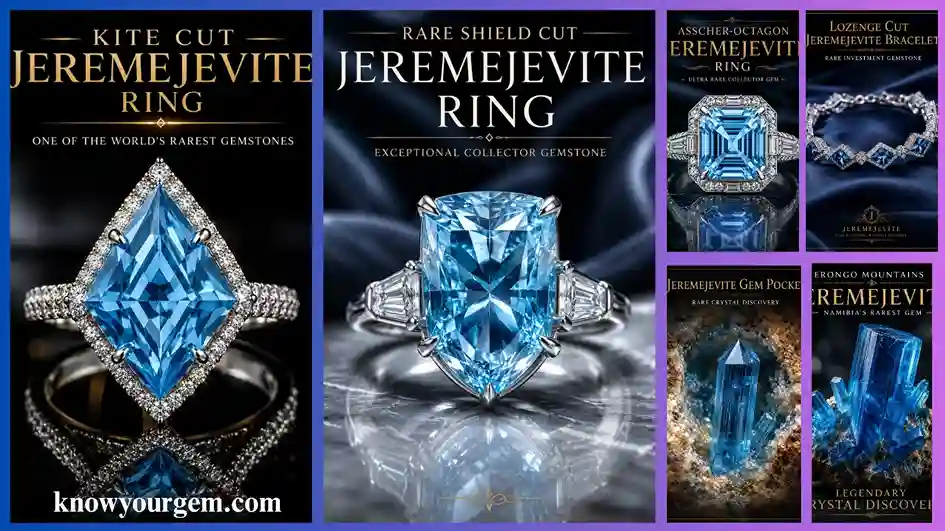
Jeremejevite Rings and Engagement Rings:
A jeremejevite ring can be made, but it requires extra care. While having 6.5 to 7.5 mohs scale of hardness, it can scratch from everyday contact with harder materials like quartz dust. Since, a deep bezel setting in platinum helps to protect it, and jeweler’s check for engagement ring is required from time to time.
Because of this, various buyers who love Jeremejeffite’s rarity and color can choose aquamarine or pale-blue-sapphire instead. These stones offer a similar look but are more practical for daily wear.
care for this stone:
- Clean it with warm water, mild soap, and use soft brush for dust removing
- Avoid ultrasonic and steam cleaning as both can stress the stone
- Store your stone separately to resist contacting with harder stones
- Remove your jewelry before manual labor, sports, or activities with impact risk

Meaning,Symbolism and Spiritual Properties of Jeremejevite:
Jeremejevite owns meaning both from its extreme rarity and its link to the element of water in crystal traditions. Since, its pale blue color is often linked to clarity, calm, and insight qualities which many practitioners value in crystal healing.
Jeremejeffite Spiritual Meaning:
Jeremejevite in spiritual practice linked with mental clarity, honest communication, and higher perception. Its clear nature is seen as a symbol of truth and clear thinking.
The soft blue color connects this stone with throat chakra and third eye chakra, that make it a stone which people associate it with insight and expression.
Metaphysical Properties and Healing Benefits of Jeremejeffite:
Crystal healing traditions attribute the following properties to Jeremejeffite:
- Clarity of thought: The stone is said to cut through confusion and support clear, rational decision making
- Honest communication: It is associated with the throat chakra, and is used in meditation focused on expressing truth
- Emotional calm: The pale blue hue connects it to the water energy that soothing, flowing, and adaptive
- Heightened perception: Some practitioners use it in third eye work for intuition and expanded awareness
- Manifestation support: It is used as a stone for setting that clears intentions due to its association with clarity and focus
Jeremejeffite’s Symbolism:
Jeremejevite’s rarity gives it an extra symbolic meaning. In crystal traditions, it is seen as a stone of uniqueness, patience, and the persistence required to fine it. Since collectors often connect it with authenticity and depth, that value rarity over visibility.
Note: Metaphysical properties of this stone are part of spiritual practices, they can’t compete medical claims.
Jeremejevite as a Collector and Investment Stone:
Jeremejevite sits nicely in corner of the rare gemstone world. It is not a mainstream investment like ruby, sapphire, or alexandrite, that own strong markets, auction activity, and global recognition.
Arguments for jeremejevite as an investment stone:
- Supply: A supply of this stone is truly limited with having no large deposits that have been found, and existing sources produce very little.
- Collector awareness: It means that the gem is gradually growing, its demand could rise from its content low base.
- Provenance and certification: It adds an instant value, since GIA certified fine blue jeremejevite more than 1 carat with documented origin is unique.
- Synthetic competition: It is not a concern, not like ruby or emerald, no gem quality synthetic jeremejevite exists commercially.
Arguments for caution:
- Its market liquidity is very limited, since selling this stone can require finding another specialist collector that can take time.
- Its pricing is opaque without auction benchmarks or standardized grading, it value is mostly subjective.
- Its recognition is low because most jewelers and the general public have never even heard of jeremejevite.
The most fitting buyer for jeremehevite is a dedicated gemstone collector who values itself, not for quick resale. Since, this stone isn’t about short term profit but it is also about owning something truly unique.
How to Buy Jeremejevite? A Practical Guide
Give below is the complete buying guide can get benefit from it:
Step 1: Find a Specialist Dealer:
Jeremejevite is not isn’t something that you find in a general jewelry store. To track it collectors usually look in more specialized places:
- Rare gemstone dealers: Always buy these gems from most trusted specialists who provide provenance documentation.
- Major gem shows: Events like the Tucson Gem Show or Munich Mineralientage are prime venues.
- Verified online platforms: Always look for established verified online platforms that work with rare gem experts.
- Auction houses: Those with having colored stone departments occasionally feature high value pieces.
These channels believed to ensure the gems authenticity and give buyers confidence in such rare stone.
Step 2: Demand Certification Before Purchase:
For jeremejevite, don’t buy without asking for certification from trusted lab like GIA, IGS as the labs can confirm the stone’s authenticity.
Step 3: Evaluate Color and Clarity:
The finest jeremejevite looks like eye clean, pure pale to medium blue and should be checked with photos in both daylight and indoor lighting.
Step 4: Understand the Price:
Be cautious, because jeremejevite is priced far below $500 per carat or sold with unverifiable rarity claims are likely poor quality or questionable.
Step 5: Verify the Source:
Namibian origin produces strongest jeremejevite stones which are highly prized and command premium prices.
FAQs:
1. What is jeremejevite?
It is a rare aluminum borate mineral forming transparent crystals in pale blue, colorless, or faint yellow hues, that are named after Pavel Jeremejev.
2. What is its meaning in crystal healing?
This stone is linked with clarity, calm, communication, and intuition in metaphysical traditions.
3. How to tell if jeremejevite is genuine
You can realize it only through certified lab testing with Specific Gravity and Refractive index.
4. Is jeremejevite a good investment?
It is collector’s stone with having scarcity value, not a liquid or mainstream investment.
5. Can jeremejevite be used in an engagement ring?
Yes, but it requires a protective setting and careful wear due to having modrate hardness.
6. What gemstones look similar?
Pale aquamarine, light blue topaz, and some pale sapphires can resemble it but they are different in gemological test.
7. Is jeremejevite rarer than diamond?
Yes, diamond is mined in millions of carats annually, however jeremejevite is produced only fewer per year.
8. Is jeremejevite treated?
No, it is sold in its natural state without heat treatment, filling or coating.
9. What is jeremejevite’s hardness?
Jeremejevite is 6.5 to 7.5 mohs scale of hardness which means that it is durable enough for pendant and earring but for daily wear ring it requires protective setting.
10. What color is jeremejevite?
It is usually found in pale to medium ice or sky blue color, since, finest stones showcase vivid blue free of gray or green tones.
11. Where is jeremejevite found?
It is majorly found in Namibia’s Erongo Mountain and Madagascar, with minor non gem sources in Russia, Germany, and Tajikistan.
12. How rare is jeremejevite?
It is extremely rare, with having only handful of faceted stones produced worldwide each year.
Always verify these gems with most trusted lab like GIA to confirm authenticity, treatment, origin, rarity, specific gravity, and refractive index! KamilHussian (Gem Enthusiast)

Welcome to KnowYourGem.com! your ultimate destination for uncovering the fascinating world of gems and their secrets! I'm Kamil Hussain, a passionate blogger with a Master’s degree in Economics, dedicated to bringing you insightful, well researched content that blends the beauty of gemstones with the art of storytelling. With a keen analytical mind and a love for discovering hidden treasures, I created this platform to help you explore the brilliance, history, and value of every gem.

