


Quick Answer: Blue Zircon is the natural silicate mineral with having formula like (ZrSiO4) valued for its brilliant sparkle and intense blue hues. It is not similar to synthetic cubic zirconia, it is a realistic natural gemstone with diamond like fire, which makes it December birthstone and an affordable alternative to the sapphire.
Blue zircon represents one of the nature’s underappreciated treasures in the gemological world. Although, the stone naturally occurs mineral captivates collectors and jewelry enthusiasts with its extraordinary brilliance and spectrum of azure tones. Throughout this comprehensive guide, you will explore everything from its geological formation.
While having evaluated thousands of gemstones more than fifteen years in gemological research, we have witnessed how blue zircon consistently surprises newcomers with its optical performance. Its refractive index rivals diamond, currently its market value remains to most buyers. While you are considering options, or simply fascinated by mineralogy, the guide will is believed to deliver expert insights grounded in hands on experience and authoritative sources. know about blue sapphire which is most looks like blue zircon;
What is blue Zircon?
Blue Zircon is the oldest mineral ever found in the Earth, Its some pieces relate to 4.4 billion years. It is made of zirconium silicate and owns formula like, (ZrSiO4) and forms crystal in a tetragonal shape. This beautiful blue stone is believed to develop deep in the earth’s crust under intense heat and pressure.
The mineral’s crystal structure creates an exceptional optical properties which have distinguished it from synthetic alternatives. Various consumers are confusing zircon vs zirconia, but these are entirely different materials. Whether cubic zirconia (CZ) is laboratory created zirconium dioxide used as a diamond simulant, zircon is a naturally occurring mineral with its own distinct characteristics an geological history.
Natural specimens range from transparent to translucent, with color variations which are influenced by trace elements and structural defects. The zircon chemical composition includes small amounts of uranium and thorium, which occasionally cause slight radioactivity in older specimens but modern gem quality stones pose no health concerns. Colorless zircon naturally occurs but is often grown with heat treatment to achieve the coveted blue zircon color that dominates today’s jewelry market.
So, the transformations from high blue zircon to finished gemstone requires skilled cutting to maximize brilliance. Raw crystal often display brownish or reddish tones before treatment, reveals their true blue potential only after careful heating processes developed over centuries of geological experimentation.
History & Cultural Significance:
Blue Zircon is admired by people from various years ago. Archaeologists have discovered that blue Zircon has used as an ancient Mesopotamian and Egyptian Civilizations. Although, in medieval Europe, it was known as “jarkan,”and was believed to hold mystical powers bring a restful sleep, protecting against evil, and attracting prosperity.
Blue Zircon is famous during the Victorian era, when jewelers have created ornate rings that are still valued by collectors today. Although, the British Crown Jewels even include Zircon pieces, often mistaken for diamonds because of their brilliant sparkle. Later on the Art Deco period, designers have highlighted zircon’s fiery shine with bold geometric cuts that matched the style of the time.
In Eastern traditions, Zircon was always carrying a special astrological meaning. It is often chosen as more affordable substitute for Sapphire, because it was tied to Saturn and was believed to sharpen the mind, attract wealth , and keep travelers safe on their journeys.
A striking example of Zircon’s legacy can be found at Vienna’s history Museum, where 19th century Cambodian specimen weights more than 40 carats is displayed. The curator is explained how early European traders are dismissed zircon as a lesser substitute until gemologist recognize its unique qualities. This undervaluation cemented its enduring reputation as an “affordable luxury”
Zircon’s recognition is as December birthstone added to its cultural importance. If it is together with Tanzanite, Turquose, and blue Topaz, then the mixture will give a colorful range for December born. Each gem carries its own unique qualities, which make all these gems as treasured by collectors and jewelry lovers as well.
Physical & optical properties:
It is must understand the technical specifications reveals because this gemstone performs so brilliantly in jewelry applications. Although, the zircon luster exhibits an adamantine to vitreous quality which means that it reflects light similarly to diamond. Thus the stone blue zircon results from an exceptional high refractive index that ranges from 1.810 to 2.024, surpass most colored gemstones.
- Mohs Hardness: Stones having 6.5-7.5 hardness can require more care to wear as jewelry.
- Specific Gravity: Noticeably heavier than similar sized stones.
- Crystal System: Tetragonal
- Dispersion: 0.039 (creates rainbow-like fire effects)
Cubic Zirconia (CZ) is harder enough ranks 8-8.5 on the mohs scale, which make it more prevent to scratches. However, it doesn’t own the unique character of natural stones. When blue zircon is compared with blue topaz measure 8 on the mohs scale but has lower refractive indices (1.609–1.643), so its sparkle is less intense than zircon’s dazzling brilliance.
| Property | Blue Zircon | Blue Topaz | Aquamarine |
| Its mohs scale is | 6.5-7.5 | 8 | 7.5-8 |
| Its refractive Index is | 1.810-2.024 | 1.609-1.643 | 1.577-1.583 |
| Its specific Gravity appeals | 4.6-4.7 | 3.49-3.57 | 2.68-2.74 |
| Its dispersion appeals | 0.039 | 0.014 | 0.014 |
| Typical Treatment | Heat | Irradiation + Heat | Usually None |
Heat treated specimens dominate the market, as thermal processing transforms brownish rough material into the dazzling azure colors. This acceptable practice doesn’t diminish value when it is properly disclosed. Natural, untreated stones with having saturated blue tones command premium prices due to rarity.
The mineral exhibits a strong double refraction when it is viewed through the table facet, you will observe doubled back facets, a diagnostic feature distinguishes it from similar appearing gems. This optical phenomenon contributes to the “sleepy” appearance some cutters deliberately enhance through specific faceting angels.
Color varieties & treatments:
The blue colored zircon spectrum ranges from pale sky blue to intense turquoise blue to deep midnight blue. Although, Cambodian deposits historically produced the most sought after electric blue specimens, now it is marked as blue cambodian zircon with premium valuations.
Sky blue varieties appear to delicate and ethereal, popular in vintage inspired designs. Although, Turquoise blue stones exhibit greenish undertones reminiscent of Caribbean waters. Deep blue examples approach Sapphire saturation, since, an experienced gemologists easily distinguish them through magnification and an optical testing.
Heat treated transformed the gemstone market by making it vibrant, consistent blue shades hugely available. Although, in laboratories, reddish-brown or golden-brown zircon crystal is carefully heated to around 900–1000°C in low oxygen conditions. Although, this process changes the crystal’s structure and redistributes trace elements, lock in the brilliant blue tones that continue to captivate collectors and jewelers.
To identify untreated specimens requires specialized equipment. Although, untreated blue stones typically showcase zoning under magnification, distinct bands of vary intensity, whose treated examples lack. Spectroscopic implementation reveals absorption patterns characteristic o f each type. Reputable dealers always disclose treatment status, as it significantly affects market pricing.
The aqua blue zircon variety, with having its lighter tones, suit to those people who are seeking for subtle elegance. These specimens often originate from Sril Lanka mines and pair beautifully with white gold or platinum settings. Their softer hue complements fair skin particularly well.
Australian blue zircon deposits occasionally yield naturally saturated stones require no treatment, because such discoveries remain an exceptional. These command collector premiums and sometimes receive special certification nothing their untreated status.
Sources & mining locations:
Cambodia dominates the high quality production, particularly from the Ratanakiri Province. Blue Zircon Cambodia specimens exhibit the most desirable electric blue saturation, which makes them industry benchmarks. However, decades of mining have depleted easily accessible deposits, and increase scarcity and value.
SriLanka contributes significant quantities, since, typically lighter toned material. The island nation’s alluvial deposits yield stones range from colorless to pale blue, often requires heat treatment for commercial appeal. Myanmar produces an occasional fine specimens alongside its famous Ruby and Sapphire output.
Tanzania is emerged as an essential source in the recent decades, with deposits near the Umba River yielding quality rough material. Although, African stones generally require treatment but respond excellently to thermal process. Madagascar supplies increasing quantities to an international markets, since quality varies considerably by specific mining location.
The blue zircon country of origin significantly collector preference and prices.Although, Cambodian provenance commands premiums of 20-40% over equivalent quality stones form other sources, driven by historical reputation rather than objective quality differences in various cases.
Ethical source considerations have gained an importance as consumers demand conflict free gemstones. Although, reputable suppliers provide origin certificates and ensure fair labor practices throughout the supply chain. Small scale artisanal mining dominates production, which make it completely traceability challenging but increasingly expected by conscientious buyers.
When you are going to purchase, don’t forget request to verified documentation source and treatment disclosure. Organizations like the responsible Jewellery Council work to establish an ethical standards, since implementation caries by region and dealer.
Buying blue zircon:
Authenticating genuine stones can require better understanding key identification markets. Natural specimens display characteristic inclusions visible under 10x magnification tiny crystals, features, or color zoning that synthetic materials lack. The doubled facet edges from strong birefringence serve as an immediate diagnostic clue when examine through the table facet.
Price Guide (per carat, retail):
- Commercial grade (1-3ct, moderate clarity): $50-150
- Fine quality (3-5ct, eye-clean, good color): $150-300
- Exceptional (5ct+, vivid color, excellent cut): $300-600
- Untreated premium specimens: $400-1000+
The blue zircon cost per carat increases an exceptionally for larger sizes, as stones exceed 5 carats with the strong saturation are uncommon. A price of blue zircon per carat average like $200 represents typical market rates for quality material suitable for engagement rings or fine jewelry.
As compared to blue zircon vs blue Topaz reveals distinct value propositions. It is generally costs less carat ($20-100) due to abundant supply, but lacks zircon’s superior brilliance. Sapphire obviously commands far higher prices ($400-10,00 plus per carat depend on quality), which makes zircon an attractive alternative for budget-conscious buyers seek visual impact.
When you are about to buy gemstones online, it is best to ask for certification from trusted labs like GIA or IGI. Although, these reports confirm the stone’s authenticity, explain any treatments, and outline its quality. Since you can’t see the gem in person, clear photos and videos are taken under vary lighting are the best way to judge its color and sparkle.
Store purchases allow personal inspection with jeweler’s loupes, check for chips along facet junctions, the stone’s moderate hardness makes it susceptible to edge damage. Examine how light interacts with the gem by tilting under direct illumination, observing description and fire.
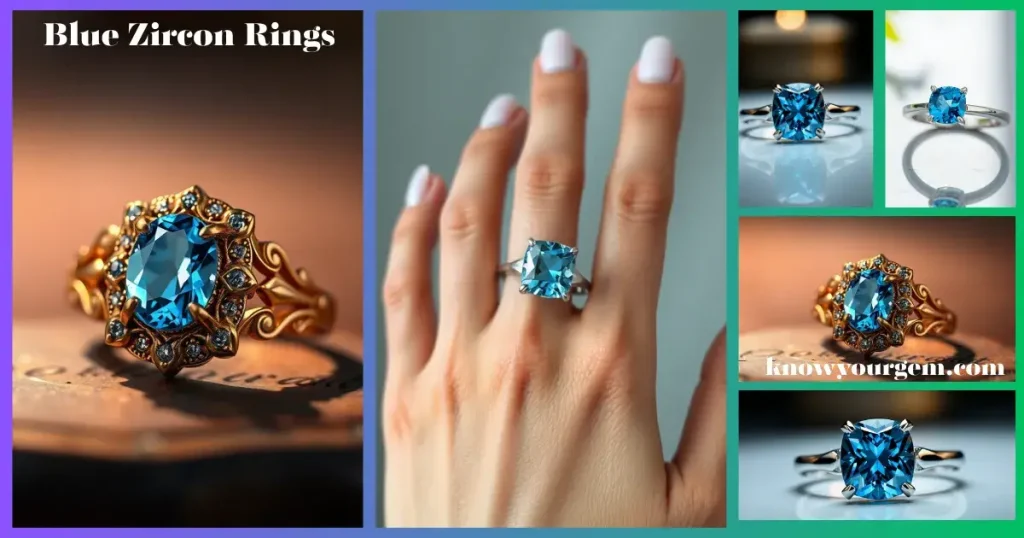
Natural blue zircon ring settings should protect the stone through bezel or partial bezel designers rather than vulnerable prong only mountings. Discuss setting options with jewelers experienced in working with softer gemstones.
Jewelry & fashion uses:
The blue zircon engagement ring trends is growing as couples seek distinctive alternatives to the traditional diamond solitaires diamond solitaires. Although, Oval and cushion cuts maximize the stone’s brilliance whether minimizing visible inclusions. Although, round brilliant cuts showcase an exceptional fire, since they require more rough material, increasing costs.
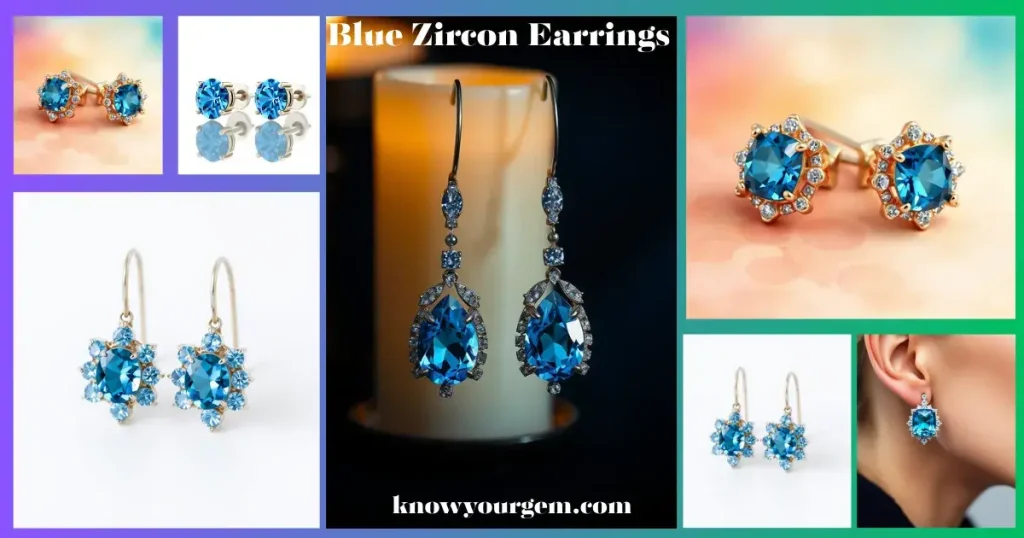
Blue Zircon Earrings provie a versatile styling options. Since Zircon stud earrings in white god offers understated elegance for professional settings, whether elaborate drop designs feature multiple stones to create dramatic looks. The gemstone’s moderate weight makes it comfortable for extend wear despite its high specific gravity.
Blue zircon ring yellow gold combinations produce warm, vintage inspired aesthetic particularly popular in antique reproduction jewelry. Yellow gold’s richness complements the stone’s cool tones, and creates pleasing color contrast. Blue Zircon yellow gold ring designs often incorporate accent diamonds or intricate metalwork drawing from historical styles.
Blue zircon ring rose gold pairs appeal to contemporary tastes, with the metal’s pinkish hue and provides a romantic softness against azure gemstones. This combination suits skin tones across the spectrum and coordinates well with rose gold wedding bands.
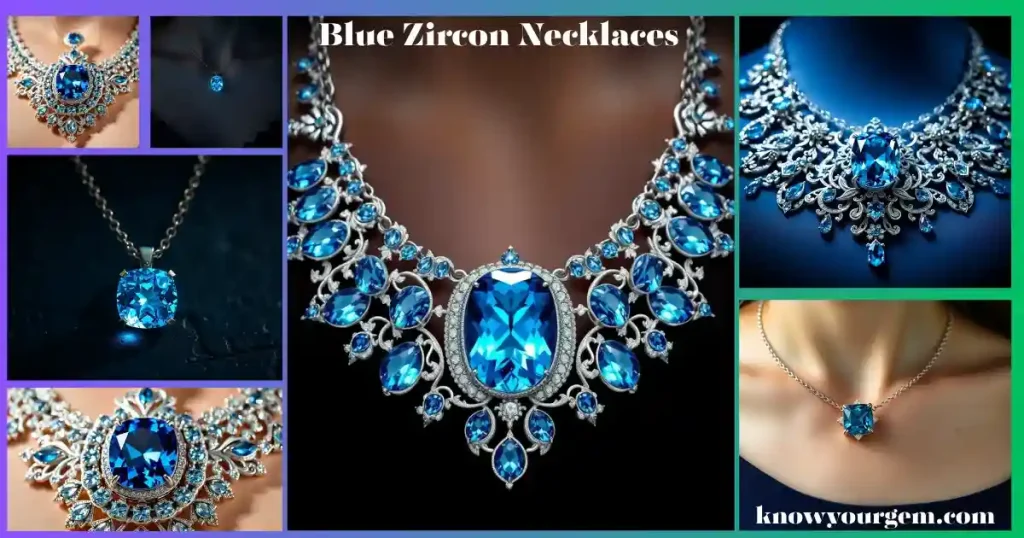
Blue Zircon necklace serves as the statement piece, whether it features a single substantial stone or multiple smaller specimens in elaborate designs. Although, blue zircon pendant ranges from simple solitaire drops to the complex halo settings incorporates accent diamonds.
Blue zircon bracelet designs require careful consideration of the stone’s durabilit. Tennis bracelet styles work best with protective settings, whether charm bracelets might incorporate smaller stones in bezel mounted configurations minimizing impact risk.
Blue zircon beads appear in artisan jewelry, since their relative softness is compared to harder gemstones limits use in frequently worn pieces. Designers sometimes create striking contrast by combining them with more durable materials like sapphire or spinel
Jewelers maximize brilliance through strategic setting choices. Mounting stones with open backs allows light penetration from all angles, enhancing the signature sparkle. White metal backings reflect more light through the gem compared to yellow tones, intensifying color saturation.
Care & maintenance:
Since taking proper care of gemstone can help them to stay beautiful for generations. To clean blue zircon jewelry, must use warm water with a mild, non abrasive soap. And let the pieces dropped in water for 10-15 minutes, then gently brush them with the soft toothbrush, and clean it with the soft cloth.
Keep away these common mistakes:
- Avoid ultrasonic cleaners because vibrations can loose stones or cause fractures.
- Avoid steam cleaners because they can thermal shock risks.
- Avoid harsh chemicals because houshold cleaners, chlorine bleach, acids.
- Avoid Abrasive materials like baking oda, toothpaste containing whitening agents.
Store your gemstone pieces separately in soft pouches or divided jewelry boxes to prevent harder gemstones like sapphire or diamond from scratch the surface. Although, Zircon’s value diminishes noticeably if the polish becomes degraded through contact with harder materials.
Avoid exposing zircon jewelry from sudden temperature change, because this can cause scratches.
Chemical exposure can require vigilance. So, remove rings before applying lotions, perfumes, or cleaning products. Even seemingly mild substances can gradually dull the surface or affect treated color stability over time.
Professional inspection annually can ensure prongs remain secure and the stone showcases no damage. Jewelers can repolish stones exhibit surface wear, restoring their original brilliance. This service typically costs $50-150 depends on stone size and setting complexity.
Handle pieces carefully during wear, as the moderate hardness makes blue zircon vulnerable to chips along facet edges. This characteristic particularly matters for blue zircon rings, which experience more impact than protected earrings or pendants.
Healing & metaphysical properties:
Some Alternative medicine practitioners believes blue zircon has special benefits, since scientific proof is limited. Supporters say the stone can enhance mental clarity, improve focus during meditation, and can also help to emotional balance in stressful times.
Traditionally it is believed that the stone with throat chakra activation, supposedly improves communication skills and authentic self expression. Some practitioners recommend it for individuals who struggle with public seeking or creative blocks.
Crystal healing communities describe blue zircon and Aquamarine as complementary stone, Aquamarine is for emotional healing, zircon for mental clarity. About blue stone zircon metaphysical applications, enthusiasts to claim it helps to release negative thought patterns and encourages optimistic perspectives.
The blue zircon meaning in contemporary spiritual practices often centers on wisdom, prosperity, and protection during travel. These symbolic associations derive from historical beliefs spanning multiple cultures, since interpretations vary hugely among practitioners.
Important Disclaimer: These metaphysical properties have no scientific validation. Information is presented here which serves an educational purposes regarding traditional beliefs and should not replace professional medical advice, diagnosis,or treatment, Always consult with qualified healthcare providers for medical concerns.
Expert tips & buying checklist:
Authentication checklist:
- Request gemological certification from trusted sources like (GIA, IGI, or equivalent)
- Verify treatment disclosure, since heat treatment should be noted.
- Examine double refraction under magnification.
- Check specific gravity if it is possible (4.6-4.7 for zircon)
- Confirm stone’s ethical source documentation for premium sources.
Quality assessment:
- Prioritize vivid, saturated blue tones without gray or brown overtones.
- Sleek eye clean stones having no visible inclusions without magnification can be qualitative.
- Evaluate cut quality well proportioned stones can maximize brilliance.
- As compared to similar stones under varied lighting like daylight, incandescent, LED can be qualitative.
- It is must to consider size relative to budget larger stones increase exponentially in price.
Setting Recommendations:
- Always choose protective designs like bezel, halo, three stone with guards.
- Specify low profile settings for rings to reduce an impact exposure.
- Select durable metals like, platinum, 18k gold for long term security.
- Discuss prong shape with jewelers for rounded prongs reduce chipping risk.
Insider Perspective: Always look for vivid blue stones with having strong brilliance and minimal windowing like, light passing through without reflection. Since, Cambodian origin adds prestige but shouldn’t override color and clarity assessment, a superb Sri Lankan stone surpasses a mediocre Cambodian specimen. Must request to view the stone under different light sources, because some stones appear best in daylight whether others shine under incandescent lighting.
When you consider zircon ring in gold or other precious metals, it is must too have factor resizing limitations. The stone owns brittleness means jewelers must remove it before size adjustments, adds cost and risk. Discuss this upfront to avoid surprises.
It is must to understand domed, undaceted stones emphasize color over brilliance for those who are exploring blue zircon cabochon. They suit vintage desings but sacrifice the signature sparkle that makes faceted stones so desirable.
The blue stone bracelet question deserves a careful consideration whether beautiful, bracelets experience frequent impacts that can damage stones over time.
References & Resources:
This guide draws from authoritative gemological sources and decades of collective industry experience:
- Gemological Institute of America (GIA): Comprehensive zircon property database and identification resource at gia.edu
- International Gem Society: gemsociety.org has detailed articles on Zircon varieties, treatments, and market information.
- Mineralogical Society of America: Scientific publications on zircon formation and crystal structure are available on mineralogical society of America.
- American Gem Trade Association: Market analysis and ethical sourcing guidelines
For readers who seek to distinguish between cubic zirconia mineral verses natural alternatives, GIA’s educational materials provide an excellent technical explanations. The comparison of zircon slightly expensive than synthetic options which and that’s all clarifies market positioning.
An additional research on zircon gemstones and benefits, both historical and contemporary, appears in the peer reviewed journals including Gems and Gemological and the journey of gemology. These patterns to innovative treatment methods.
Collectors are interested in related materials which might be explored as green zircon, pink zircon, yellow zircon, and brown zircon varieties, each with having distinct characteristics and markets niches. The zircon brown to blue transformation through heat treatment and represents one of gemology’s most successful enhancement techniques.
For specialized interests, research on shiny blue zircon dreamlight valley like a video game reference and blue zircon dreamlight valley demonstrates the stone’s cultural penetration beyond traditional jewelry contexts, since these gaming elements warrant separate exploration from geological topics.
Final Thoughts: Blue Zircon represents an exceptional value currently in gemstone market and combines diamond like brilliance with accessible pricing and distinctive azure beauty. While you are considering blue zircon birthstone rings for December birthday, seeking for a unique engagement ring centerpiece, or building a gemstone collection, this underappreciated mineral deserves serious consideration. Its rich history, remarkable optical properties, and improving ethical source make it both a practical choice and a fascinating study in Earth’s geological artistry.
When you are searching for specific items like a zircon pendant, blue zircon and diamond ring combinations, or even specialized pieces like sw zircon , remember that quality assessment principles remain constant: It is must to prioritize color saturation, clarity, and cut excellence regardless of design preferences.
FAQS:
1. Is Blue Zircon real or synthetic?
Blue zircon is an authentic natural zirconium silicate which is mined from the Earth, it is completely different from synthetic cubic Zirconia. Since most commercial stones are heat treated due to enhancing their colors and they could shine for years.v
2. Does Blue Zircon fade over time?
Heat treated stone are believed to maintain color stability under normal conditions. However, prolonged exposure to intense UV radiation or extremely high temperatures can cause gradual fading in some specimens. So, proper care is must require here.
3. Can Blue Zircon be used in engagement rings?
Absolutely, with having 6.5-7.5 mohs scale of hardness, it perfectly suits engagement rings when set it protectively. Must choose bezel or halo settings rather than high prong solitaires to minimize scratches risk.
4. How do I distinguish Blue Zircon from Blue Topaz?
Blue zircon exhibits higher refractive index like greater sparkle, since higher specific gravity feels heavier, and strong double refraction means doubled facets visible through the table. So, gemologist can definitively identify each through an optical testing and specific gravity measurement.
5. Are Blue Zircon and Blue Topaz the same?
No, both are sightly different minerals with having different chemical compositions, physical properties, and optical characteristics. Since, Zircon usually showcases higher brilliance and dispersion, whether topaz offers greater hardness and typically lower cost.
6. Is a blue zircon valuable?
Blue zircon owns a good value, if it has a deeper color with clarity and proper cut from the top source like Cambodia.
7. What is blue zircon good for?
It can enhance mental clarity, reduce anxiety, and can aid spiritual growth like intuition and wisdom. So astrologically it, can also enhance Venus energy for love, wealth, creativity and confidence.
8. Is blue zircon real or fake?
Blue zircon is a genuine natural stone. Basically it is formed in zirconium silicate, which is not synthetic but it an ethically sourced, its synthetic form is cubic Zirconia.
9. Blue zircon a birthstone?
Yes, blue zircon serves as the modern birthstone for December, since topaz and Tanzanite are also named as birthstones for December month.
10. Who should not wear blue zircon?
People with having a strong Venus in their horoscope should skip it to avoid excess desires or imbalance. So, always check with an astrologer first, especially if your sign is not Libra, Taurus, or similar signs.
11. Is zircon a fake stone?
No, zircon is a legitimate natural mineral in the earth, it is found in colors like blue and white. While Cubic Zirconian is the fake imitation; real zircon shines with the unique properties.

Welcome to KnowYourGem.com! your ultimate destination for uncovering the fascinating world of gems and their secrets! I'm Kamil Hussain, a passionate blogger with a Master’s degree in Economics, dedicated to bringing you insightful, well researched content that blends the beauty of gemstones with the art of storytelling. With a keen analytical mind and a love for discovering hidden treasures, I created this platform to help you explore the brilliance, history, and value of every gem.


