


Quick view: Rubellite is a rare variety of tourmaline which is characterized by it vivid red pink coloration, caused by manganese content within the elbaite species. It is not same like Ruby, but Rubellite belongs to the tourmaline mineral family and displays unique optical properties including parochialism and distinct crystal inclusions that distinguish it from other red gemstones. know about Ruby;
Introduction to Rubellite:
Rubellite is the most dazzling gemstone, it is recognized for its vibrant red to pink shades that are fascinated by collectors and jewelry enthusiast for centuries. Its name has taken from Latin word Rubellus, means “reddish” a perfect match for striking variety of Tourmaline. In gemstone family tree, Rubellite has a clear identity. This gem is basically a member of Tourmaline group, specifically the group called elbaite species, and stands out as the red to pink member of this complex mineral. This sets it a part from other Tourmaline, like the green versatile, the blue indicolite, or the playful watermelon Tourmaline.
While having a rich color, Rubellite is often mistaken for Ruby, Pink sapphire, or red Spinal. Whether both can look similar, but each stone owns different chemical makeup, crystal structure, and optical properties. Knowing these differences are essential for collectors an buyers who want to be sure they have chosen a genuine Rubellite.
This comprehensive guide will take you through every aspect of Rubellite from its formation process in Pegmatite deposits to taking caring of it as jewelry.
Geological & Mineralogical Overview:
The formation of Rubellite lies through the complex geological process within Pematite environments, ingeous rock formations that crystallize gradually from magma rich rare elements. These Pegmaties endow the unique chemical conditions that are necessary for Tourmaline crystallization, specifically the presence of boron, aluminum and alkali metals.
Color origin in Rubellite stems preeminently from manganese content within the crystal structure, since iron can also contribute to certain hues. This manganese displays color saturation that ranges from delicate pink to the deep crimson, with the most valued specimens that display pure red without secondary brown or purple modifies. The concentration and distribution of manganese ions determine the intensity and uniformity of coloration.
Crystal inclusions generally appear in Rubellite and significantly impact both appearance and value. Liquid filled cavities- filled cavities, mineral inclusions, and growth tubes frequently occur within the crystal matrix. Not as like Emeralds where inclusions are universally expected, high quality Rubellite commands premium prices when eye clean, since moderate inclusions can be acceptable in larger stones where vivid color compensates for clarity considerations. considerations.
Crystal properties of Rubellite:
| Property | Value |
| Formula | Na(Li,Al)₃Al₆(BO₃)₃Si₆O₁₈(OH)₄ |
| Its crystal shape | Trigonal |
| Rubellite ranks on | 7.0-7.5 Mohs scale |
| A stone owns specific gravity like | 2.82-3.32 |
| A gem owns refractive Index | 1.614-1.666 |
| Stone’s birefringence | 0.018-0.040 |
- Brazil (Minas Gerais) – It is popular for forming vibrant, gem quality of Rubellite with an exceptional clarity.
- Madagascar – It is recognized for striking stones that often own slightly purplish hue.
- Nigeria – A key African source, is yielding Rubellite with the deep, saturated tones.
- Mozambique – It produces Rubellite that is prized for its intensity and brilliance.
- Afghanistan – It offers beautiful crystals, that are often found alongside other Tourmalines in rugged mountain deposits.
- California (San Diego County) – It is historically significant, with mines that have produced Rubellite since the late 19th century, had been adding, to the state’s gem legacy.
Since, Brazilian sources historically produced the finest specimens, while African deposits have recently yielded exceptional material. Regional differences in trace element composition create subtle variations in color tone and saturation that is experienced gemologists can sometime attribute to specific localities. Hereafter, the formation process demands millions of years as Pegmatitic fluids cool and crystallize deep within the Earth’s crust. Therefore, subsequent tectonic activity and erosion eventually expose these deposits, that make them accessible for mining . Understanding this geological context enhances appreciation for each Rubellite crystal as a unique record of Earth’s mineralogical processes.
Physical & optical properties:
While interpreting the physical and optical characteristics of Rubellite proves essential for proper identification and appreciation of this gemstone. While having 7.0 to 7.5 mohs scale, Rubellite demonstrates durability which means that it is suitable for most jewelry applications, since it demands more care than harder stones like Sapphire or Diamond.
The refractive index of Rubellite ranges from 1.614 to 1.666, that creates the brilliant luster characteristic of high quality specimens. Since, this optical property, is integrated with the specific gravity between 2. 82 and 3. 32, endows gemologists with reliable identification parameters distinct from Rubllite vs Ruby comparisons where Ruby’s higher refractive index like (1.762-1.770) and specific gravity (4,00) clearly differentiate that two species.
Pleochroism embodies high distinctive Rubellite features. When it is viewed from different crystallographic directions, the stone displays vary color intensities and typically showcases darker tones when it is viewed down the c-axis and lighter hues prependicular to it. This optical phenomenon outcomes from the ordered arrangement of manganese ions within the crystal structure and serves as a diagnostic feature during gemological examination.
Color ranges in rubellite span a spectrum:
- Pale pink which is often classified simply as pink Tourmaline.
- Medium pink with excellent saturation
- Hot pink with vivid fluorescence
- Purplish red intermediate tones
- Deep red approaches ruby color which is most valuable
- Red with brown modifiers are less desirable.
Saturation level dramatically affect value, with pure, vivid red enjoining the highest prices. Transparency varies from transparent gem quality material that is suitable for faceting to translucent specimens better utilized in cabochon Rubellite formats or raw specimens for collectors.
Luster in well cut Red Tourmaline exhibits vitreous (glass like) character, with properly polished surfaces reflect light brilliantly. Since, inclusions affect optical behavior hinges on their type and distribution, needle like inclusions can add character without severely diminishing transparency. Some examples of Rubellite and lepidolite associations showcase interesting inclusion patterns where the host remains partially integrated.
The birefringence of 0.018-0.040 creates subtle doubling of back facet edges where it is viewed through the table of a cut stone, a feature visible under magnification and useful distinguishing Tourmaline from singly refractive gemstones.
Rubellite vs other Gemstones:
Discriminating Rubellite from similar appearing demands recognizing both visual characteristics and underlying chemical differences. The most usual confusion involves Red-Tourmaline and Ruby, two fundamentally different minerals that share only superficial color similarities.
- Rubellite vs Ruby: Red Tourmalines often arises, but the more critical comparison involves Ruby. Ruby is made of corundum (aluminum oxide) with chromium endow it its red color. It is very hard ranks on 9 on the Mohs scale. whether Red Tourmaline is softer, with a hardness of only 7–7.5 on the Mohs scale. Ruby typically displays fluorescence under ultraviolet fine Ruby commands significantly higher prices per carat than even exceptional Red Tourmaline jewelry, since top quality Red Tourmaline remains quite valuable.
- Rubellite vs Pink Sapphire: Pink Sapphire shares Ruby’s corundum composition but with less chromium, and produce pink rather than red. Like Ruby, pink sapphire surpasses Red- pink tourmaline in hardness and typically in value. Sapphire lacks the pleochroism characteristic of red-pink Tourmaline and showcases different inclusion types, silk like rutile needles versus the liquid and crystal inclusions common in red-pink Tourmaline.
- Rubellite vs Spinel: Re Spinel presents another coparison point. Spinel crystallizes in the cubic system, that showcases no pleochroism, Red spinel presents another comparison point. Spinel crystallizes in the cubic system, showing no pleochroism, whereas red tourmaline’s trigonal structure creates a distinct directional color variations. Spinel typically exhibits higher specific gravity and different optical properties, that make laboratory distinction straightforward despite visual similarities.
- Rubellite vs Other Pink Tourmalines: Not all pink Tourmaline qualifies Rubellite. Industry standards generally reserve the Red-Pink Tourmaline designation for stones showing predominantly red coloration even under incandescent light. Pink Tourmaline with have significant purple or brown modifiers, or stones that appear pink under daylight but lose red saturation under incandescent lighting, fall outside the red-pink Tourmaline classification. This distinction significantly impacts pricing, with true red Tourmaline authorizing premium values.
Comparison rable:
| Property | Rubellite | Ruby | Pink Sapphire | Red Spinel |
| Their chemical Composition names are | Na-Li-Al borosilicate | Aluminum oxide | Aluminum oxide | Magnesium aluminum oxide |
| They rank vary mohs like | 7.0-7.5 | 9.0 | 9.0 | 8.0 |
| Their Color Sources vary | Manganese | Chromium | Chromium/iron | Chromium |
| Their very Pleochroism is | Strong | Weak | Weak | None |
| They own vary typical Price/ct | $200-$800 | $1,000-$15,000+ | $300-$3,000 | $300-$2,000 |
Visual differentiation in the field relies on pleochroism observation using a dichroscope, specific gravity testing, and refractive index measurement. Chemical implementation through spectroscopy endows definitive identification but demands laboratory equipment. So, consumers must consider reputable sources like GIA, AGL, GRS to purchase these stones because they endow a clear and authentic certification that ensure the identification and value assessment.
An existing market sometimes sees synthetic stones as marketed deceptively, which make professional verification essential for significant purchases. So, recognizing these comparative differences can empower buyers to make informed about making decision of purchasing different gemstones. You can explore the key factors to keep in mind that you have to pick authentic pieces:
What to Look For:
- Color Quality: The most esteemed Tourmaline showcases a rich, vivid red to purplish-red color flexibility. Stones that look took brownish or too pale are less treasure-able. Strong, even color across the gem is big plus.
- Clarity: Red Rubellite often owns inclusions like tiny internal features. Eye clean stones are rare and more expensive. Few inclusions are acceptable, but avoid stones cracks that weaken durability.
- Cut: A well cut red tourmaline will maximize brilliance and minimize visible inclusions. Since, poorly cut stones can look dull or uneven in color.
- Size & Carat Weight: Larger Red-Pink stones are rarer, especially with having good clarity. Prices rise quickly with size, but balance beauty with budget.
- Origin: Red Tourmaline comes from sources like, Brazil, Madagascar. Nigeria, Mozambique, Afghanistan, and California.
- Durability: Its ranks 7-7.5 on the mohs scale of hardness means that Red Tourmaline is hard enough but still softer than Ruby or Sapphire. It is fine for jewelry but needs more care to avoid scratches.
- Price Range: Price exception meats to $200–$800 per carat for quality stones. Exceptional pieces can go higher, but beware of overpriced offerings that don’t match the gem’s quality.
Treatments, stability & care:
In contrast to many colored gemstones that routinely undergo enhancement procedures, Pink-red Tourmaline typically enters the market in its natural state. Since, heat treatment rarity Rubellite stems from the fact that thermal enhancement generally proves ineffective or even detrimental to Tourmaline’s color. Whether some Tourmalines respond favorably to heating like certain brown varieties can shift to pink, Red Tourmaline’s mangansese is derived color remains stable and rarely benefits from thermal modification.
This natural presentation embodies a significant advantage for collectors who are seeking for unenhanced gemstones. When they purchase Pink-red Tourmaline jewelry or loose stones, buyers can generally assume untreated status otherwise disclosed, since certification from reputable laboratories should always confirm treatment status for valuable specimens.
Stability under sunlight normally poses a minimal concern for Red-Pink Tourmaline. In contrast to Kunzite or some Amethyst varieties that fade with prolonged light exposure, properly saturated Red Tourmaline specimens can showcase subtle color shifts over years of intense sunlight exposure, that makes rotation of jewelry pieces a prudent practice for significant collections.
Cleaning & Jewelry Care:
Rubellite’s moderate hardness demands thoughtful care to prevent scratches and damage:
- Safe cleaning methods: Cleaning with warm water mild soap, soft brush can be benefited.
- Ultrasonic cleaners: The cleaner are commonly safe clean stone without fractures but it is must avoid them for heavily specimens.
- Steam cleaning: It is not recommended due to having thermal shock risk.
- Chemical exposure: Disavow to use harsh chemicals, household cleaners and exposure to cosmetics because they can scratch a stone internally and externally.
- Daily wear considerations: You must have to remove rings Red tourmaline jewelry while doing any heavy manual work resist chipping.
The crystal inclusions usual in Tourmaline create internal stress points that can propagate if they are subjected to sudden temperature changes or sharp impacts, whether Pink-Red Tourmaline serves beautifully in Red Tourmaline rings, Rubellite earrings, and Red Tourmaline Necklace designs, protective settings help safeguard valuable stones.
Storage recommendations:
Proper storage extends the life and beauty of Red Tourmaline gemstone collections:
- Individual soft pouch can prevent scratches from contact with hardest gemstones.
- Separation from diamonds, sapphires and other materials prevents abrasion
- Climate controlled environments maintain stable conditions
- Avoid storage in direct sunlight for loose stones
- Periodic inspection of prongs and settings loss
For Red Tourmaline and Diamond Ring integration, professional inspection annually ensures secure settings and identifies wear before stones become endangered. The distinct between Pink-Tourmaline color and Diamond color brilliance create together a dazzling jewelry, but the hardness differential means Diamonds can scratch Tourmaline if the pieces of both stones are stored together carelessly.
Since vibrant red-pink Tourmaline bracelet designs demand particular attention, as bracelets experience more impacts and abrasion than other Jewelry types. Consider protective bezels or careful design that recesses stone slightly to minimize exposure to surfaces that can cause damage.
Jewelry uses & fashion:
Red Tourmaline’s versatility in jewelry applications stem from its extraordinary color, adequate hardness, and availability in sizes that range from small accent stones to the substantial centerpieces. The gem’s journey from rough crystal to finished jewelry showcases the importance of skilled cutting in maximizing beauty and value.
Cut Effects on Appearance: The proper orientation of rough material believes to prove critical. Cutters must balance color optimization (cutting perpendicular to the c-axis for best face up color) against yield maximization. Since, well executed cuts enhance the Red-Tourmaline crystal’s natural brilliance precise facet alignment, whether poor proportions can create window or extinction that diminishes visual appeal. Popular cuts include:
- Oval and cushion shapes that increase carat weight retention
- Emerald cuts showcases clarity in exceptionally clean stones
- Round brilliants for maximum sparkle in smaller sizes
- Fantasy cuts highlight unique rough characteristics
Jewelry Applications:
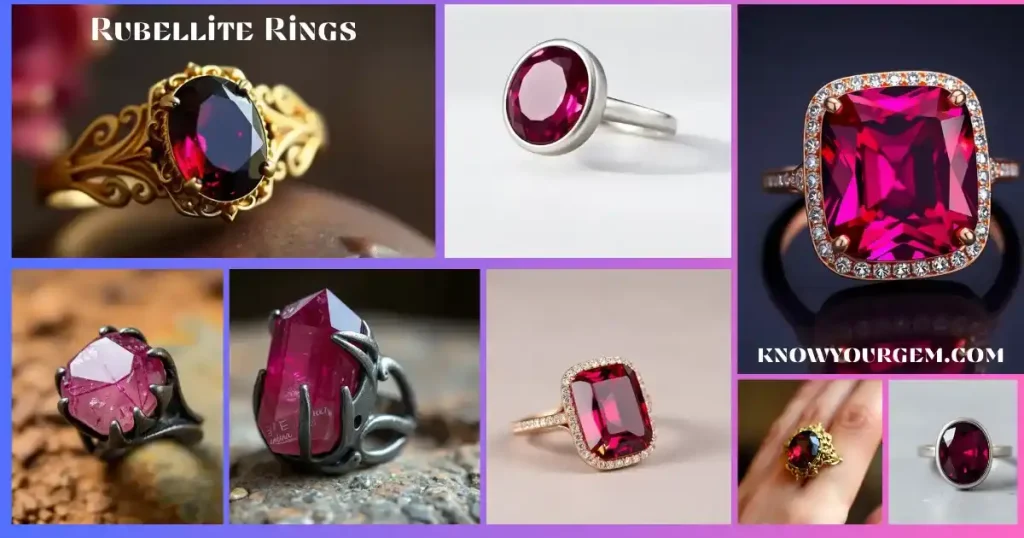
Rubellite rings Rank among the most popular applications, with the stone’s durability that supports consistent wear when it is properly set. Three stone designs, halo settings with Diamonds, and solitaire presentations all showcase Red Tourmaline effectively. Since protective settings with bezels or partial can help guard cherish-able stones in active lifestyles.
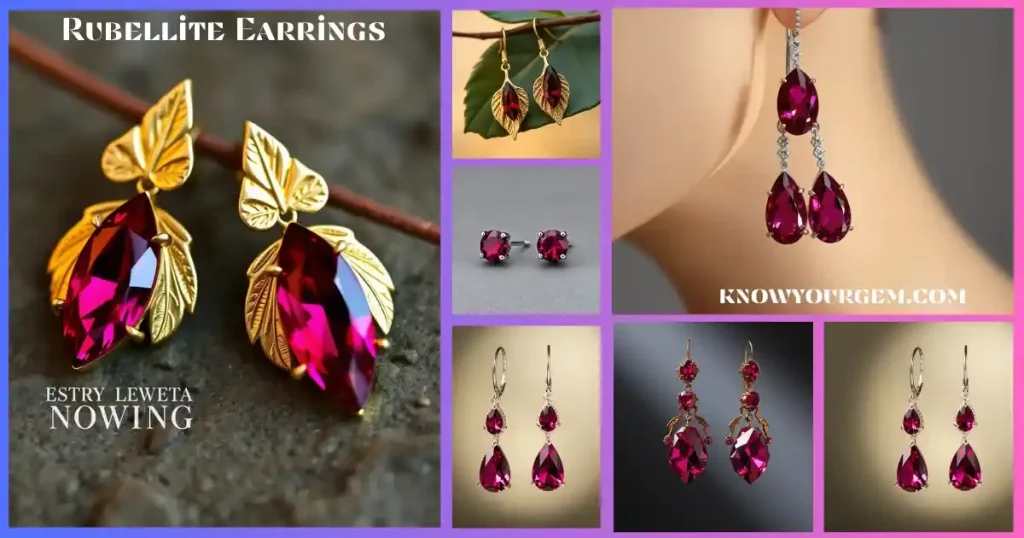
Rubellite earrings Offer versatility from delicate studs that feature smaller stones to dramatic drops with substantial carats. The relative safety of earring wear makes this ideal application for particularly fine specimens that might risk damage in ring settings.
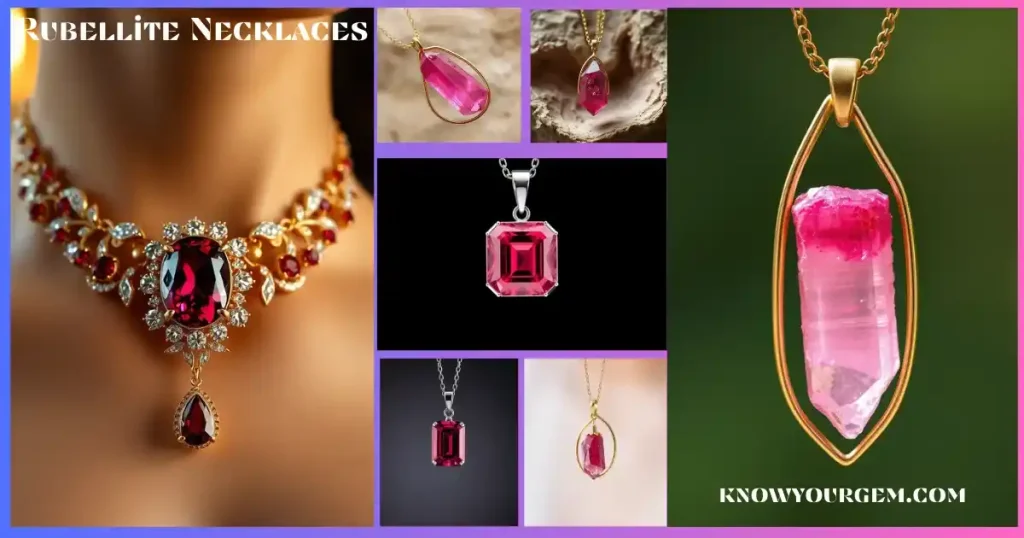
Rubellite necklace and rubellite pendant designs create focal points that draw attention to the stone’s extraordinary color. Whether featuring a single statement piece or graduated array of stones, necklaces, allow larger red Tourmaline specimens to be worn while maximizing visual impact.
Rubellite jewelry trends currently favor:
- Mixed metal designs contrasting rose gold with white gold or platinum
- Nature inspired settings with an organic texture
- Minimalist presentations believe to emphasize the stone over elaborate metalwork
- Statement pieces are integrating Red Tourmaline with other Tourmaline varieties
Metal pairings:
The choice of metal significantly influences red tourmaline’s color presentation:
- Rose gold: This combination harmonizes with pink tones, that create warm, romantic aesthetics
- Yellow gold: This integration enriches red hues, traditional appearance
- White gold/Platinum: This combination creates contrast, emphasizing red Tourmaline’s color through opposition
- Mixed metals: This pair combines complementary tones for contemporary designs
Fashion applications believe to extend beyond traditional jewelry into the high jewelry Red Tourmaline necklace creations by prestigious houses. Since, notable example includes the Bulgari high jewelry pink-red Tourmaline necklace features exceptional stones in elaborate designs that showcase both gem quality and artistic vision.
The Tourmaline and Ruby integration occasionally appears in artistic pieces, in contrast the two gemstones own different characteristics. Similarly red Tourmaline and Diamond cluster necklace designs leverage the complementary nature of colored and colorless gems, with diamonds endowing brilliance whether Red Tourmaline contributes vibrant color.
Buying guide & value:
Recognizing red-pink Tourmaline price determinants empowers buyers to make informed purchasing decisions and recognize fair value in market that ranges affordable pink tourmaline rough to investment gems.
Price per carat factors:
| Quality Factor | Lower Value | Higher Value |
| Color | Pale pink, brownish | Vivid pure red |
| Clarity | Visible inclusions | Eye-clean |
| Cut | Poor proportions | Excellent make |
| Carat Size | Under 2ct | Over 5ct |
| Origin | Commercial sources | Prized localities |
| Treatment | Undisclosed | Certified natural |
Cost of pink tourmaline per carat hinges on dramatically based its factors. Since, commercial grade material can range from $50-200 per carat, whether fine red tourmaline commands $300-$800 per carat. Exceptional specimens exceed 5 carats with vivid, pure red color and excellent clarity can reach $1,000 plus per carat at retail. Price of pink tourmaline per carat varies dramatically based on these factors.
Te Tourmaline value per carat calculation becomes complex in large sizes, as red tourmaline demonstrates less dramatic per carat price increase than ruby, that makes it an accessible option for those who are seeking for substantial red gemstones without ruby’s premium pricing.
Inspection guidelines:
When your going to evaluate potential purchase, systematic examination discloses quality indicators:
Color assessment:
- View under multiple ligth sources(daylight, incandescant, fluorescent)
- Confirm red dominance persists under incandescent lighting (red tourmaline definition)
- Check for zoning or uneven distribution
- Assess saturation and tone balance
Inclusion Evaluation:
- Examine with the 10x magnification
- Note inclusion type like, size, and position
- Determine eye-clean status from normal viewing distance
- Assess inclusion impact on durability
Cut Quality:
- Check for proper proportions and symmetry
- Evaluate brilliance and light return
- Look for window or extension zones
- Assess polish quality on facets
Certification & Lab Reports:
Professional gemstone certification from recognized laboratories endows essential documentation:
- GIA stands for Gemological institute of America: Industry standard, comprehensive reporting
- AGL stands for American Gemological: Specializes in colored stones
- GRS stands GemResearch Swisslab: International reputation
- Gübelin: Premium certification, highly regarded
Reports should specify:
- Species and variety identification
- Color grade and description
- Clarity characteristics
- Dimensions and weight
- Treatment disclosure
- Origin (when determinable)
Avoiding common scams:
The gemstone market presents pitfalls for unwary buyers:
- Misrepresentation: Pink Tourmaline is marketed as Rubellite when color doesn’t meet standards.
- Synthetic confusion: Synthetic stones are sold as natural
- Treatment concealment: Enhanced materiel is presented as untreated
- Origin fraud: Common material is claimed from premium localities
- Photo manipulation: Digitally enhanced images misrepresenting actual color.
While purchasing Tourmaline gems for sale demands dealer vetting, preference for established retailers, and instance on proper certification. The investment in professional documentation pays dividends through confidence in authenticity through confidence in authenticity and future resale documentation.
For those who are seeking for red Tourmaline raw material or pink Tourmaline rough, recognizing crystal to orientation, color distribution, and inclusion patterns help assess cutting potential and fair wholesale pricing.
Historical cultural and metaphysical significance:
Red Tourmaline is cherished not just for its dazzling beauty but also for the its deeper meaning that it carries. From various centuries to the current modern world people give more values to the gem, for its passion, vitality and emotional healing qualities that consistent to inspire and fascinate people today.
Historical origins:
The name “Rubellite” has first appeared in gemological literature since 19th century as mineralogists developed more sophisticated classification systems diminished Tourmaline varieties. Prior to this formalization, makes precise historical attribution challenging.
Russian Crown Jewels historically featured an exceptional pink Tourmalines, some likely qualify as red Tourmaline by modern standards, since contemporary documentation rarely distinguished Tourmaline species. These pieces demonstrate pink-red tourmaline’s long standing appreciation among royalty and collectors.
Cultural significance:
Distinct cultures have attributed several meaning to re and pink gemstones throughout history:
- Chinese traditions: They are associated with pink and red stones with emotional healing and heart energy
- European jewelry: It is utilized re tourmaline in Victorian and Edwardian pieces, that value romantic pink tones
- American sources: California red tourmaline discoveries in San Diego County pegmatites had contributed to early 20th century jewelry movements
- Contemporary design: Modern appreciation aims on Red Tourmaline’s natural and unique characteristics
The pink-red tourmaline history as a distinct variety remains shorter than ruby and sapphire, but its geological history spans millions of years of Earth’s crystallization processes.
Metaphysical claims:
Within crystal and metaphysical belief systems, practitioners attribute several properties to red color tourmaline, since these claim lack of scientific validation:
- Emotional associations: Heart chakra alignment, emotional healing, compassion
- Rubellite benefits: (as believed by practitioners) Stress reduction, creativity enhancement, relationship harmony
- Rubellite healing properties: They appeal to traditional beliefs like energy balancing, vitality, circulatory support.
Important Note: Such metaphysical attributions embody only cultural beliefs and alliterative to healing traditions. Don’t compare them with scientific treatments or medicines.
Birthstone connections:
The red tourmaline is connected to the October month. Since the stone represents itself as October’s birthstone. Although, tourmaline appears in several colors, like red tourmaline embodies particular value and that can optional for October celebrants who are seeking for red or pink variations. This birthstone association contributes to consistent demand and cultural relevance.
The facts about pink-red tourmaline extend beyond mystical to natural gemological marvels, each crystal embodies millions o f years of specific chemical and physical processes, that make each specimen unique expression of Earth’s mineralogical diversity.
Common myths & misconceptions:
Since clarification of widespread misunderstandings about red tourmaline can help buyers, enthusiasts develop an accurate knowledge and avoid costly mistake in the marketplace.
Myth 1: “Red tourmaline is a ruby”
This fundamental fallacy persists despite clear chemical and structural distinction. Since, Ruby is made of aluminum oxide (corundum) colored by chromium. While red tourmaline belongs to the tourmaline family with the complex borosilicate composition. The discombobulation really comes down to the the color. This the reason that the term Ruby Tourmaline sometimes pops up in marketing.
Myth 2: “All pink tourmaline is rubellite”
The industry standards believe to reserve the red tourmaline designation for Tourmaline that displays strong red coloration even under incandescent lighting. Since, pink tourmaline that appears pink rather than red, or showcases significant purple or brown modifiers, falls outside the pink Tourmaline classification despite being tourmaline. This distinction significantly impacts pricing and market positioning. The, rubellite vs pink tourmaline distinction matters commercially, with the true commanding premium prices over general pink varieties.
Myth 3: “Rubellite always undergoes heat treatment”
Unlike many gemstones routinely enhanced, rubellite typically remains untreated. Heat treatment rarely benefits rubellite’s color and may even cause damage. When purchasing certified rubellite, buyers can generally expect natural, unenhanced material unless specifically disclosed otherwise.
This contrasts sharply with rubies, where heat treatment affects over 95% of commercial material. Rubellite’s natural status represents a significant value advantage for those preferring untreated gemstones.
Myth 4: “Synthetic rubellite floods the market”
Since synthetic Tourmaline exists, and it remains relatively uncommon as compared to synthetic Ruby or sapphire. The economic drivers for synthesis favor more valuable materials. Most red tourmaline in commerce consists of natural material, since synthetic alternatives exist demand disclosure. Discombobulation sometimes arises with the glass imitations or doublets, but these aren’t synthetic tourmaline they are entirely different materials attempting to mimic appearance.
Myth 5: “All rubellite fades in sunlight”
Qualitative red-pink tourmaline demonstrates good color stability under normal conditions. Since extremely pale pink stones might showcase subtle shifts over decades of intense exposure, properly saturated red Tourmaline maintains its vibrant appearnce. This myth conflates Tourmaline with genuinely photosenstitive gems like kunzite or some Amethyst.
Myth 6: “Rubellite purple represents a variety”
Whether purplish-red tourmaline exists, strong purple modifies typically disqualify stones from red tourmaline category. Pure color without secondary hues commands the highest prices and most clearly fits red tourmaline definitions.
Recognizing these distinctions can help people to navigate marketing language and aim on accurately described that meets their preferences and budgets.
Conclusion:
Red Tourmaline stands out for nature’s remarkable gemological achievement, since a crystalline expression of color that rivals ruby’s beauty whether maintaining its own distinct identity. From pegmatite deposits where red tourmaline mineral forms more for than million years to carefully crafted red tourmaline pendant or red tourmaline and diamond ring adoring a collector. Each stone embodies a unique geological and human story.
This comprehensive exploration have covered red tourmaline’s scientific properties, positioning, care requirements, and cultural significance. Whether you are seeking for a red tourmaline stone for investment, desire to recognize red-pink tourmaline meaning in historical context. Or strategy to purchase red tourmaline jewelry, the information is presented here endows the foundation for informed appreciation and decision making.
The distinction between re tourmaline and similar materials from the Aquamarine to red tourmaline comparison across the tourmaline spectrum to the critical pink-red tourmaline vs ruby differentiation empowers consumers to navigate the marketplace with confidence. Recognizing the red tourmaline chemical formula, understanding quality indicators, and appreciating the red tourmaline hardness relative to other gems all contribute to sophisticated evaluation.
For those who are seeking for red gemstones, pink-red tourmaline offers an attractive to ruby’s premium pricing whether spectacular color and substantial size options. The red jewel ring possibilities range from vintage inspired designs to contemporary feature red tourmaline stone as the centerpiece.
FAQS:
1. What is rubellite?
2. Is rubellite pink tourmaline?
Yes, red tourmaline is essentially a trade name for the most intense pink to red shades of Tourmaline. Since, some lighter pinks are just called pink tourmaline, true red tourmaline stays vividly red under various lights.
3. Is rubellite rare?
4. What color is rubellite?
Red tourmaline shines in deep pinks to bright reds, sometimes with purple or orange hints. The best ones hold a pure raspberry red that doesn’t fade in different lighting.
5. Is rubellite the same as ruby?
No, red tourmaline and ruby are completely vary minerals. Rubellites are varieties of Tourmaline their chemical composition is sodium lithium aluminum borosilicate, Whether ruby is made of corundum aluminum oxide. They own different chemical composition, ruby owns 9 mohs scale and red tourmaline owns 7.7.5, crystal structure, and typical inclusions.
6. How do I clean rubellite jewelry?
Red tourmaline demands a gentle cleaning with the mild soap, a soft brush, and dry with a lint free cloth. Don’t use steam cleaning and remove jewelry before chemicals or heavy activities to resist damage.
7. How valuable is rubellite per carat?
>Commercial red tourmaline usually costs $50–200 per carat.
>Fine qualitative stones can range from $300-$800 per carat.
> Rare, exceptional gems can more like $1000 per carat.
8. Can rubellite fade in sunlight?
Quality red Tourmaline demonstrates good color stability and resists fading under wearing conditions. Neither same as photosensitive gemstones such as kunzite, managases colored red tourmaline its appearance with the typical light exposure.

Welcome to KnowYourGem.com! your ultimate destination for uncovering the fascinating world of gems and their secrets! I'm Kamil Hussain, a passionate blogger with a Master’s degree in Economics, dedicated to bringing you insightful, well researched content that blends the beauty of gemstones with the art of storytelling. With a keen analytical mind and a love for discovering hidden treasures, I created this platform to help you explore the brilliance, history, and value of every gem.


