


Overview: A Bi color sapphire is an originated corundum gemstone which demonstrates two color zones within a single crystal, forms when trace element concentrations shift during geological growth. It is slightly different from color change varieties that shift hues under different lighting, these stones showcase simultaneous color boundaries often blue green, blue yellow, or pink orange combinations with value determined by color contrast clarity, zoning symmetry, and cut orientation rather than rarity alone.
When it is examined that bi color sapphire in professional gemstone evaluation, the relationship between crystal growth conditions and visible color distribution becomes immediately apparent. This comprehensive resource addresses to geological formation, quality assessment methods, treatment disclosure standards, and practical buying considerations for anyone who are interested in these distinctive corundum specimens, whether you are private collector evaluating investment potential, a jewelry designer selecting center stones, or a consumer navigating your first purchase. When examining bi-color sapphires in professional gemstone evaluation, the
The evaluation based approach makes the guide slightly different from promotional gemstone content. Rather than emphasizing desirability or market hype the focus remains on understanding what creates value in these stones, how to spot quality differences, and which factors genuinely affect the long term satisfaction and wear-ability. The information we have endowed here, draws from gemological principles, market observation, and hands on assessment experience with hundred of color zoned corundum specimens.
What is a Bi-Color Sapphire?
Bi color sapphire is a naturally formed gemstone relates to corundum family see how it relates to this family and why it is called a natural gemstone:
Corundum species explanation:
Bi color sapphire preeminently belongs to the corundum mineral species, it shares the same aluminum oxide crystal structure (Al₂O₃) as ruby and all other sapphire varieties own.The defining characteristic is the presence of two distinct zones visible within a single crystal, created by variations I n trace element concentrations during formation rather than optical phenomena or lighting conditions.
Definition of color Zoning:
Color zoning lies when different infinitesimal elements or varying concentrations of the same elements incorporate into the different growth layers of the crystal. This creates visible boundaries between areas of different hue, saturation, or tone within what is otherwise a continuous single structure.
How Bi color differs from Parti Sapphire:
This color zoning differs fundamentally from parti sapphires which typically display three or more color sections, often includes yellow, green, and blue in Australian sapphire specimens. Whether parti stones showcase complex multi hued patterns, bi colored varieties present cleaner two toe divisions, since the boundary between these classifications can occasionally blur when a third minor color appears.
How Bi-color differs from color-change sapphire:
Color change sapphires represent an entirely separate phenomenon. These stones shift their apparent hue when they are viewed under incandescent versus daylight illumination due to specific trace element combinations (typically chromium and vanadium). In contrast, bi color specimens believe to maintain their dual zones regardless of light source, with both colors remaining simultaneously visible.
Scientific naming clarity:
Scientific nomenclature follows mineral classification standards: the term “sapphire” applies to all corundum varieties expect red specimens intense enough to qualify as ruby. When it describes bi colored examples, gemological reports typically specify both hues present, for instance, “blue green bi color sapphire” or pink yellow bi color sapphire” rather than using a single color destination.
How Bi-color Sapphires Form naturally:
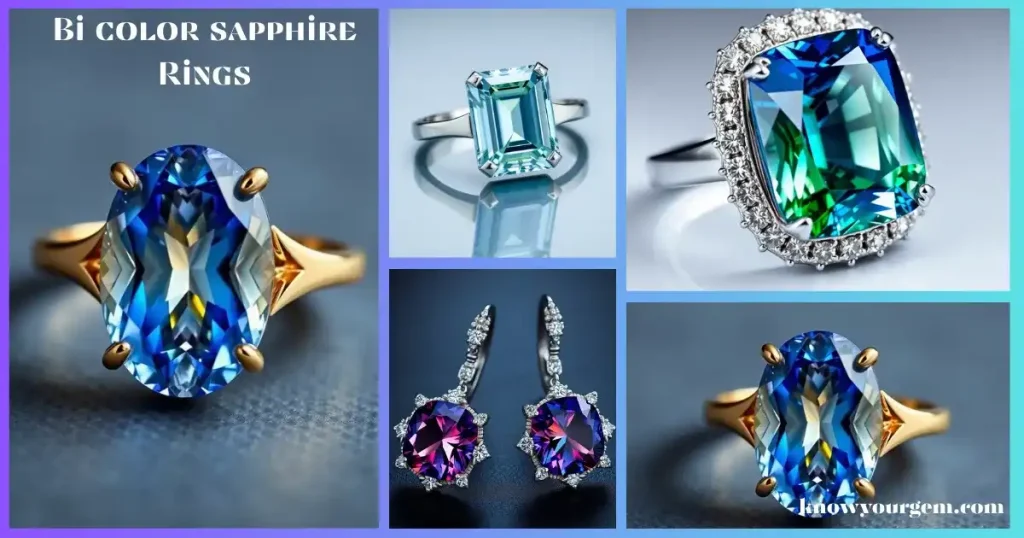
Bi color sapphire is nature’s invention of painting with atoms, capturing Earth’s chemistry in stunning hues. Each zone of color is a frozen moment in their growth, that tells a unique geological story that reflects subtle in pressure, heat and elemental balance deep with in the earth’s crust.
Trace elements like, Iron, Chromium, Titanium:
To understand how color zoning forms in corundum, we look at how infinitesimal elements replace some aluminum atoms, they create the wide range of sapphire colors found in nature. Since, iron and titanium are working together to create blue coloration through intervalence charge transfer, a quantum mechanical interaction between adjacent impurity atoms. Chromium produces pink to red hues depend on concentration. Small amounts of iron alone can yield yellow or greenish tones. When the concentration or combination of these trace elements changes during crystal growth changes crystal growth. Distinct color zones develop in the forming sapphire.
Crystal growth zones:
Concentration shifts happen when geological conditions change during the long process of corundum crystallization. Variations in temperature, pressure, or the availability of trace elements in surrounding rocks can alter the crystal’s composition different growth stages. Because Corundum forms over thousands to millions of years, even small environmental changes can leave behind visible boundaries in the crystal.
Geological environments:
Geological environments use to support sapphire formation include metamorphic rocks (marble and schist), basaltic sources, and alluvial deposits are derived from these primary locations. Bi color specimens occur combinations more frequently, Montana sapphires often showcase blue green zoning, while some Ceylon deposits yield pink blue combinations.
Why color boundaries occur:
Color boundaries occur rather than gradual transitions because the entire crystal relates to the crystal growth mechanics. Sapphire forms through layer by layer atomic deposition on existing crystal faces. When trace element availability changes relatively quickly (in geological terms), the newly depositing layers incorporate different impurities than preceding growth, creating a distinct boundary. If changes occur gradually, can bled transitions develop instead.
Natural vs Lab-induced zoning clarification:
Synthetic sapphires can replicate this zoning through deliberate manipulation of growth conditions that changes dopant concentrations midway through the process. However, the patterns typically differ from the natural examples in their geometric regularity and the specific trace element integration present. Gemological testing distinguish these synthetic bi color sapphire specimens through inclusion patterns, growth structure analysis, and spectroscopic examination.
Understanding color zoning in Bi-color Sapphires:
Bi color sapphire is like nature’s hidden artwork, where geological shifting conditions paint vivid contrasts inside a signal.
Sharp vs Blended Zoning:
Color distribution patterns within bi colored corundum directly influence both aesthetic appeal and market value, make zoning analysis essential during quality evaluation. The boundary between color zones can present as a sharp, well defined line or as a gradual gradient spanning appreciable distance within the crystal. Neither pattern holds inherent superiority sharp transitions can create dramatic visual contrast, while blended zones often appear more harmonious in finished jewelry.
Symmetrical vs uneven Zoning:
Symmetrical zoning occurs when color boundaries align with the crystal growth patterns in geometrically regular ways, often following hexagonal crystal faces or running perpendicular to the c-axis. Asymmetrical or uneven distribution presents color zones that appear random or irregular, sometimes concentrating one hue in a corner or along one edge of the finished stone. Symmetrical patterns generally command higher prices because they enable cutters more flexibility in orientation and tend to create more balanced visual effects.
How cut orientation affects zoning visibility:
Cut orientation affects zoning visibility more dramatically than most buyers realize. A faceter examines rough material must decide which crystal axis to align with the table facet, the large flat top surface of a finished gemstone. Orienting the table perpendicular to color boundaries maximizes their visibility in the face up view, creating the most obvious bi color bi color effect. Conversely, petitioning the table parallel to zoning can minimize or nearly eliminate the visible color separation.
Poorly oriented often hide zoning intentionally, reducing visual appeal when the bi color effect is desirable but potentially improving appearance when color distribution is unfavorable. This practice occasionally leads to consumer disappointment when stones that appeared relatively uniform when set suddenly reveal pronounced zoning when removed it is removed from their mounting or viewed from different angles..
Light Interaction and Face-up Appearance:
Light interaction complicates zoning appearance further. Sapphire’s high refractive index and specific crystal orientation (pleochroism) means that color intensity changes depends on viewing direction. In bi colored specimens, this can create situations where both zones appear different from the side view versus table up position, or where lighting angle dramatically shifts the apparent color balance between zones. Face up appearance, how the stone looks when it is mounted in jewelry and viewed from above, represents the most commercially relevant perspective. Some bi color sapphires display excellent color separation when it is examined as loose or from the side but showcase predominantly one color when it is viewed face due to internal light reflection patterns and pavilion facet orientation.
How experts evaluate bi-color sapphire quality:
Bi color sapphire is valued not only for their rarity but also for artistry hidden within their natural zoning. Evaluating them requires more approach than single color sapphires, as factors like balance, contrast, and orientation directly shape both beauty and value.
Color balance and contrast:
Quality assessment for bi colored corundum follows modified criteria as compared to single color sapphire evaluation, with color balance and contrast assuming prominence alongside traditional considerations.
Color balance refers to how the two hues distribute within the visible face up area. Stones showcase roughly equal representation of both colors typically command higher prices than examples where one hue dominates 80-90% of the visible area with only minor secondary color presence. However, deliberate aesthetically when integrated into custom design. Contrast between the two and orange, pink and green, blue and yellow generate more dramatic appearances than closely related colors like blue and blue green.
Clarity patterns specific to zoning:
Clarity patterns specific to color zoned sapphires deserve particular attention. The same geological conditions that create different trace element concentrations often produce different inclusion patterns in each color zone. Blue areas might contain fine rutile silk whether yellow zones showcase liquid inclusions, for example.Evaluators examine whether inclusions disrupt visual appeal, affect durability (reaching the surface or creating fracture planes), or provide evidence of natural formation versus treatment.
Cut impact on value:
Cut impact on value extends beyond the orientation decisions discussed earlier. Bi color sapphires benefit from precise symmetry and proportion that maximize brilliance in both color zones equally. Poorly executed cutting can create “windows” washed out areas where light passes straight through without reflection that appear more prominently in one color zone than the other, creating imbalanced visual appeal.
Carat weight relevance:
Carat wight relevance differs somewhat from single color sapphire evaluation. Whether large sizes generally increase per carat prices across all colored stones, bi-colored stones, bi colored examples don’t necessarily follow the same exponential price curves that rare blue or padparadscha sapphires exhibit at larger sizes. A sapphire 4 ct bi color specimen might command only modest premium over a 2 carat example of equivalent quality because collector demand concentrates more on color combination uniqueness than size.
Common mistakes buyers make:
Common mistakes buyers include prioritizing unusual color combinations over actual visual appeal in the specific stone being considered. A rare pink green example that looks muddy or poorly balanced holds less value than an attractive blue yellow specimen despite the former’s theoretical scarcity.
Why some stones look better unset than set:
Some bi color sapphires look more appeals when unset because loose stones can be rotated and viewed from many angles, reveal their most striking color effects. Once mounted, however, the gem is fixed in place and usually seen only from the table up direction, which can hide its best visual features and lead to disappointment if the most attractive angle isn’t the one displayed in the setting.
Natural vs treated bi-color sapphires:
Bi color sapphires captivate collectors because their dual hues are natural record of Earth’s chemistry. But treatments, especially heat and alter how those colors appear, makes disclosure and evaluation essential for trust and value in the gem trade.
Heat Treatment:
Treatment disclosure represents a critical trust and transparency issue in colored gemstone markets, with bi colored subject to the same enhancement methods applied to the single color corundum.
Heat treatment exposes sapphires to temperatures between 1200-1800°C in controlled atmospheres remains the most common enhancement method across the sapphire trade. In bi colored specimens, heating can intensify color saturation in one or both zones, occasionally improve transparency by dissolving certain inclusions, or in some cases reduce color zoning by promoting more uniform trace element distribution through solid state diffusion within the crystal.
Heat treatment typically doesn’t accomplish means creating bi color effects where none existed previously. The trace element concentrations and distributions that produce color zoning form during original crystal growth; heating works with existing chemistry rather than introducing new elements.
Diffusion treatments and red flags:
Diffusion treatments represent a more significant concern. Surface diffusion introduces elements like beryllium or titanium into the outer layers of a sapphire through high temperature exposure to specific chemicals. This process can create or enhance color in the treated areas, potentially produce artificial bi color or modifying existing zoning patterns. Detection of diffusion requires gemological testing. Surface diffused stones often showcase color concentration along facet edges and within surface when is examined under magnification. Advanced spectroscopic analysis can identify chemical signatures characteristic of diffusion treatments.
Disclosure expectations:
Disclosure expectations have evolved significantly as gemological knowledge has advanced. Contemporary standards requires sellers to reveal all treatments that affect value or durability, with “natural unheated” commanding premium prices, “heated only” considered standard and acceptable when it is disclosed, and diffusion treated stones require explicit identification as such. Reputable dealers endow laboratory reports from recognized gemological institutes confirming status.
How treatments affect price and longevity:
Unheated bi color sapphires are the most valuable, they are often selling for 20-50% more than heated stones of similar quality because collectors value their rarity and natural state. Diffusion treated sapphires, on the other hand, are worth far less sometimes 90% less since their color is artificially enhanced and not part of the crystal’s natural chemistry. In terms of durability, heat treatment is permanent and stable, whether diffusion treatment are vulnerable to wear; polishing or abrasion can strip away the treated surface and cause the color to fade.
Are bi-color sapphires rare?
Bi color sapphires aren’t rare in the sense of being geologically extraordinary, they can form wherever sapphires grow, which makes them special way nature’s chemistry paints two distinct hues into a single crystal, creating gems that are far less common in jewelry markets than single color sapphires. Their rarity lies more in desirable color integration and visual appeal than in absolute scarcity.
Global sourcing regions:
Rarity assessment demands distinguish between absolute scarcity and market availability whether avoiding the exaggerated claims that sometimes characterize gemstone marketing.
Global sourcing regions producing bi colored corundum include Montana (United States), Sri Lanka (Ceylon), Madagascar, Australia, Tanzania, and several Southeast Asian deposits. The phenomenon occurs wherever sapphire formation happens because color zoning results from common geological processes, fluctuating trace element availability during crystal growth rather than extraordinary circumstances.
Montana Bi color Sapphire:
Montana bi color sapphire has gained particular recognition for specimens, especially blue green combinations reflecting the iron dominant chemistry typical of these deposits. The characteristic color pairing appears frequently enough in Montana material that experienced dealers immediately associate blue-green zoning with this origin, since identical combinations occur elsewhere.
Australian Bi Color Sapphire:
Australian bi color sapphire often presents darker tones due to the higher iron overall, sometimes it showcases blue and green zones where both areas exhibit relatively strong color saturation. The same high iron concentrations that create these intense hues can also produce less desirable dark, nearly opaque stones, which require careful material selection.
Bi Color Ceylon Sapphire:
Sri Lankan deposits yield have varied color combinations which reflect the diverse infinitesimal element chemistry present cross different mining areas. Pink and blue combinations occur with some regularity, along with yellow blue varieties, whether green bi colors appear less frequently from these sources.
Bi color Sapphire Madagascar:
Bi color sapphire from Madagascar has emerged a significant source in recent decades, which produce a wide range of color combinations including some unusual pairings rarely encountered from other origins. The relative youth of intensive mining operations means material availability and characteristic appearances continue to evolving as new deposit areas are discovered.
Which color combinations are uncommon:
More to specific trace element requirements than geographic scarcity. Purple bi color sapphire element embodies a relatively unusual combination because purple itself requires specific chromium and iron proportions that lies less frequently than the chemistry produces more common hues. Natural bi color pitambari sapphire showcases yellow and blue zones corresponding to the traditional astrological definition appears regularity enough to maintain consistent market presence but less frequently than blue-green varieties. Since pink and blue bi color sapphire appears with the moderate frequency from certain origins, particularly Sri Lanka, creates attractive contrast that appeals to collectors who are seeking for romantic or feminine color combinations. Green bi color sapphire can manifest in various forms, blue-green transitions being most common, while true green is paired with distinctly different secondary colors appears less frequently.
Why rarity doesn’t equal high value automatically:
Rarity on its own doesn’t guarantee high value, it all comes down accordingly market responds. Unusual color combinations can catch the eye, but they only fetch premium prices when the pair is visually appealing. Take a brown -gray bi color sapphire, for example. Even though it is genuinely rare, it doesn’t hold much commercial value because most buyers simply don’t find that color mix attractive.
Collector vs commercial demand:
Collector demand targets on the specific quality characteristics rather than rarity per se. Serious collectors search for stones with having an excellent color saturation in both zones, attractive contrast, clean clarity, and skilled cutting that showcases the bi color effect optimally. A common color combination meets these criteria attracts more interest than a rare pairing with mediocre visual characteristics.
Since commercial demand stone destined for mainstream jewelry use concentrates even more heavily on visual appeal and wearability rather than rarity. Jewelers select bi colored sapphires that suit specific design concepts, prioritizing appropriate size, shape, and color compatibility with the intended mounting over scarcity considerations.
What determines the price of a Bi-Color Sapphire?
Bi color sapphires are mostly valued for their unique dual hues but price depends on mix visual appeal, treatment status, and craftsmanship.
Value Factors: Color Contrast, Clarity, Cut
Pricing logic for bi colored corundum use to follow distinct patterns as compared to the traditional blue sapphires and other fancy color varieties, with multiple interesting factors influencing market values.
Value factors begin with the color contrast quality. Combinations showcase a strong hue difference with good saturation in both zones command higher prices than weak, poorly saturated colors or closely related hues with minimal visual distinction. A vivid blue and bright yellow pairing typically outperforms pale blue and grayish-green, assume other quality factors remain equal. An actual color combination matters significantly. Blue green specimens represent the most commonly encountered pairing and establish pricing, whether unusual but attractive combinations like pink-orange or teal-purple command premiums when visual results satisfy collector preferences.
Clarity considerations follow a modified standards as compared to the single color sapphire evaluation. Minor inclusions that don’t significantly impact visual appeal or durability affect prices less dramatically in bi colored stones than in premium blue sapphires, where even slight clarity imperfections can reduce values substantially.
Cut quality affects value through both technical precision and aesthetic choices. Well proportioned stones that maximize brilliance, minimize windowing, and orient color zones for optimal face up display command premiums over poorly executed cutting.
Treatment Impact on pricing:
Treatment impact represents perhaps the single largest price determinant once basic quality is established. Unheated bi color sapphire specimens sell for substantial premiums typically 20-50% more than heated equivalents and multiples of diffusion treated prices. This premium reflects both relative scarcity and strong collector preference for natural, unmodified stone.
Jewelry vs Loose stone pricing:
Jewelry versus loose stone pricing reflects to different buyer motivations and quality standards. Stones already mounted in finished jewelry typically include settings are designed to maximize their appearance, potentially add significant value when the mounting complements the bi color effect effectively. However mounted stones can’t be examined as thoroughly as loose specimens, sometimes concealing clarity issues or unfavorable color distribution visible only from certain angles.
Market trends without speculation:
Market trend favor bi colored sapphires as alternative engagement stone choices have gained popularity over the past decade. While growing consumer interest in a unique non traditional gemstone has strengthened bi color sapphire price per carat for origin affects pricing preeminently through association with characteristic quality features rather than origin itself.
Is Bi-Color Sapphire Suitable for Jewelry?
Bi color sapphires are not just visual striking but they are also durable enough for everyday wear, that make them excellent choices for unique jewelry pieces.
Engagement Rings:
Engagement rings embodies increasingly popular applications for bi colored sapphires as couples who seek for a distinctive alternatives to the traditional diamond solitaires. Blue green sapphire engagement rings showcase one of the most popular color combinations, that offer natural tones that pair beautifully with several metal colors and design styles.
Bi color sapphire engagement rings endow durability which is essential for daily wear. Sapphire’s 9 hardness makes it second hardest gemstone one step below Diamond which provides excellent resistance to scratch from the most common abrasives encountered in everyday life and maintains polish indefinitely under normal conditions.
Daily wear durability:
They durability of bi color sapphire is not just about how durable it for everyday wear, it is not just about resisting scratches. It also carries up well against bumps and chemical exposure. It’s a goodness of its crystal structure, sapphire can handle the usual knocks and impacts you do expect in daily life.
Best settings to highlight zoning:
Best settings to highlight color zoning demands a thoughtful design approaches. Since bezel settings endow an excellent protection whether farming the stone in ways that can complement color boundaries, particularly when the bezel edge aligns with or contrasts against the color division. Prong settings allow maximum light entry and visibility from multiple angles, essential for appreciating the bi color effect. Therefore, a cushion cut sapphire ring can showcase bi color zoning beautifully when the color boundary runs diagonally or horizontally across the cushion shape, which creates balanced visual impact. The rounded corners and larger facets of cushion cuts allow an excellent light return whether displaying color transitions clearly.
Maintenance and care expectations:
Maintenance and care expectations remain straightforward. Since regular cleaning with a warm water and mild soap can maintain appearance indefinitely. Professional inspection annually checks with jewelers can prong security and identifies any developing issues before they cause stone loss. Since ultrasonic cleaning is generally safe for sapphires without significant fractures, though hand cleaning remains the gentler option.
Cons: Scratches, Setting Limitations, Design Constraints:
However, several constraints deserve consideration. Scratches, whether uncommon due to sapphire’s hardness, can’t be easily addressed by consumers. Professional repolishing removes surface damage but require skilled lapidary work and typically costs several hundred dollars depend on stone size and damage extent.
Setting limitations arise when color zoning creates asymmetric weight distribution or unusual depths in certain areas of the stone. Some bi colored sapphires cut to maximize color display have non standard proportions that complicate setting in standard mountings, potentially require custom metal work.
Design constraints become apparent when it is attempting to create matched pairs or sets. Finding two bi color sapphire with sufficiently similar color distribution, tone, and saturation for earrings or three stone designs presents significant challenges. Most bi colored stones work best as unique center stones in one of a kind designs.
How to choose a high-quality bi-color Sapphire:
Bi color sapphires with having rare blend of contrasting hues, makes each gem truly unique. Their striking beauty demands careful evaluation, and the following guidelines will help you choose wisely.
Verify natural origin:
Systematic evaluation follow the structured criteria helps buyers to avoid common pitfalls and select stones that endow long term satisfaction. Verify natural origin by requesting documentation. Reputable seller provide information about whether stones are natural or laboratory grown, Along with treatment disclosure. Lab grown bi color sapphire exist and can offer attractive appearances at significantly lower prices than natural stones, but requires clear identification to avoid misrepresentation. Lab grown sapphire rings feature bi color effects provide budget friendly alternatives for buyers prioritizing appearance over natural origin.
Ask for Lab certification:
Ask for lab certification from recognized gemological institutes. Reports from GIA (Gemological Institute of America), AGL (American Gemological Laboratories), GRS (Gem Research Swisslab), or other established laboratories provide independent verification of species, treatment status, and often quality grading.
Examine under multiple lighting conditions;
Examine under multiple lighting conditions to understand how the stone appears in real world situations. Natural daylight, LED lighting, and incandescent bulbs all affect apparent color differently. Some bi colored sapphires showcase an excellent contrast in bright daylight but appear nearly uniform under warm indoor lighting, while others maintain color separation across various illumination conditions.
Confirm treatments:
Confirm treatments explicitly rather than assuming disclosure. Ask directly whether the stone has been heated and whether any other treatments have been applied. Responsible dealer answer these questions clearly and provide documentation supporting their representations. Synthetic bi color sapphire created in laboratories can undergo different treatments than natural stones, require specific disclosure.
Understand return policies:
Understand return policies before purchasing. Colored gemstone buy involves more subjectively than diamond purchases, and stones that appear attractive in photographs or brief showroom viewing can not satisfy preferences after extended consideration. Return periods allow 7-14 days for evaluation provide valuable protection.
Bi-color sapphire compared to similar gemstones:
Bi color sapphires blend two vivid hues in one stone, which creates a rare and mesmerizing contrasts. Their uniqueness shines even more when as compared to other multi colored gems with distinct personalities.
Bi-color sapphire vs parti sapphire:
Parti sapphires display three or more distinct color zones within single crystals, most commonly showcase a yellow, green, and the blue areas simultaneously. Australian sapphires have established the parti designation, since the phenomenon occurs in other origins. The primary distinction lies in color complexity, partis showcase multiple hues while bi colors limit themselves to two zones.
Bi-color sapphire vs tourmaline:
Watermelon tourmaline naturally exhibits bi colored or tri colored patterns, typically pink centers with green outer zones, create a distinctive cross sectional color patterns. Whether superficially similar to bi colored sapphires, tourmaline differs fundamentally in durability like (7-7.5 Mohs hardness versus sapphire’s 9), crystal structure, and price range, Bi color gems in the tourmaline family offer an attractive alternatives at substantially lower prices than sapphire.
Bi-color sapphire vs Alexandrite:
Alexandrite exhibits color change appearing greenish in daylight and reddish under incandescent light through a completely different mechanism than bi color zoning. Whether both phenomena create multiple color experiences, since Alexandrite showcases color shift through changes while maintaining uniform color under any single light source. Bi-color sapphires display both hues simultaneously regardless of lighting.
Additional Jewelry applications:
Bi color sapphires believe to bring bold artistry to the jewelry, with their natural color contrasts create a striking designs. From necklaces to rings and earrings, they offer endless ways to showcase unique beauty.
Necklaces and Pendants:
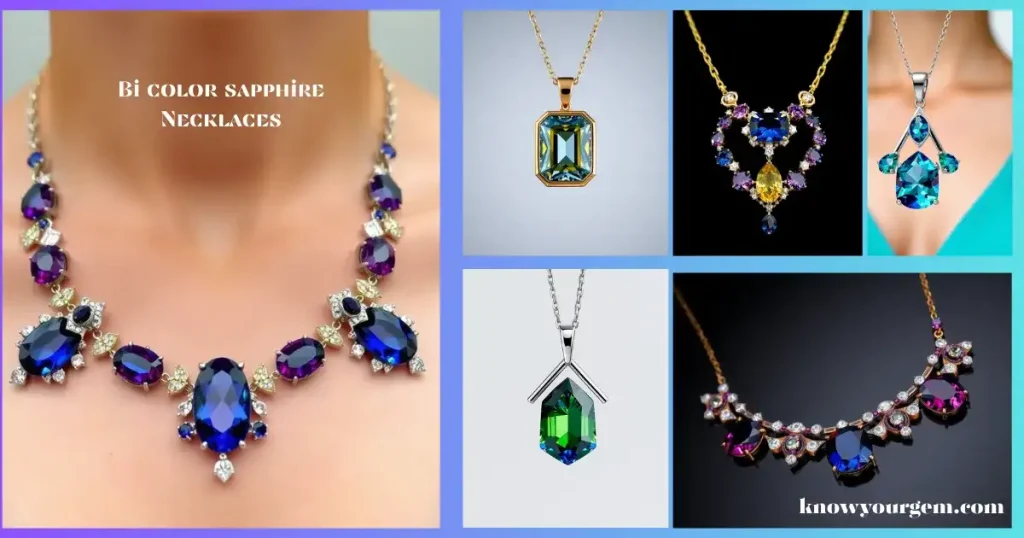
Bi color sapphire necklace designs showcase these unique stones in different ways that allow full appreciation of their color transitions. Since, Pendant settings that enable light to pass through the stone from multiple angles can emphasize the boundary between color zones, create focal points for statement jewelry pieces.
Multi colored sapphire necklace designs sometimes incorporate several bi colored stones alongside single color sapphires, create graduated color effect that flow around the neckline. These designs work particularly well when individual stones share similar color families but showcase different proportions of each hue.
Ring settings and metal choices:
Sapphire in yellow gold creates warm, classic pairing that complement bi colored stones that contain yellow, orange, or warm green zones. Since the contrast between cool blue or green sapphire areas and warm gold metal enhances color perception, make both the gemstone and the setting appear more vibrant.
Multi sapphire ring design can incorporate bi colored center stones surrounded by single color sapphire accents, create cohesive color stories that tie together the various hues present in the main stone. These designs work particularly well when accent stones pick up individual colors canter.
Vintage sapphire rings often featured bi colored stones, since historical cutters sometimes oriented these to minimize color stones, since historical cutters sometimes oriented zoning visibility rather than emphasizing it as contemporary designs frequently do. Vintage montana sapphire ring examples occasionally surface in estate jewelry markets, and offers collectors opportunities to acquire pieces with historical provenance.
Earrings:
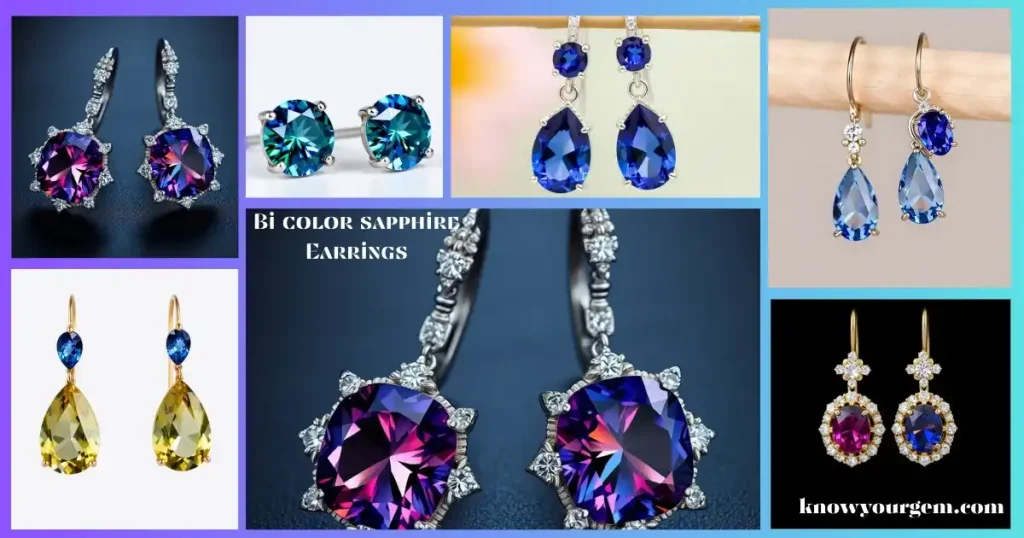
Montana sapphire earrings feature that matched bi colored pairs represent significant finds due to the difficulty of locating two stones with sufficiently similar color distribution, saturation, and zoning patterns.
Alternative combinations:
Diamond and sapphire engagement ring designs can incorporate bi colored center stones surrounded by diamond halos or accent stones, create contrast that emphasizes both the unique sapphire coloring and the brilliant white diamonds. This combination offer a traditional elegance with a distinctive penalization. Emerald sapphire engagement rings pair emerald cut sapphires with side stones or accents can showcase bi color zoning particularly effectively when the elongated rectangular shape aligns with the color boundaries, create clean divisions that emphasize the geometric cutting style.
Understanding related gemstone varieties:
Bi color sapphires reveal fascinating variations across raw crystals, color pairing, and speciality markets. Explore these related gemstone varieties highlights their rarity, beauty, and the unique stories behind each type.
Raw and unheated material:
Raw sapphire in its natural crystal form often displays bi-color zoning more obviously than cut stones because viewers can examine the entire crystal from multiple angles. Collectors of mineral specimens sometimes prefer raw bi colored corundum crystals specifically for their educational value in demonstrating natural color zoning formation.
Unheated bi color sapphire specimens particularly valued by collectors who are seeking for entirely natural, unmodified examples. The absence of heat treatment preserves the original color distribution exactly as nature’s creation, since this sometimes means sacrificing the potential clarity improvements that heat might have achieved.
Color variations:
Blue and white bi color sapphire represents an unusual integration where one zone appears nearly colorless whether the other showcase blue coloration. This specific pair occurs when trace element concentrations vary dramatically between zones, with one area that contains minimal impurities whether adjacent areas incorporate the iron titanium combinations create blue.
Specialty markets:
Teal ring designs feature blue-green sapphires have gained popularity in contemporary jewelry markets, with bi colored stones showcase transitions between true blue and green zones create particularly sought after examples f this color family. Multicolor sapphire broadly encompasses all sapphire that display multiple hues, whether through bi color zoning, parti coloration, or color change phenomena. The term serves as an umbrella category that includes bi colored varieties alongside other multi hued corundum types.
Geographic specialties:
Gem mines Montana have produced sapphires since the late 1800s, with several deposit areas yield characteristic blue-green bi colored material that established Montana’s reputation for this particular color combination. Contemporary mining continues at various locations including Rock Greek, Dry Cottonwood Creek, and several other sites.
Related products and variations:
Astrological traditions reveals blue sapphire isn’t an ideal choice for Taurus women, since beliefs vary widely.
Red sapphire gemstone represents a nomenclature issue corundum sufficiently re to be called sapphire actually falls outside the ruby definition, which applies to all red corundum is classified as ruby rather than red sapphire, since borderline stones between pink sapphire and pink ruby sometimes generate debate about proper classification.
Sapphire price varies enormously based on color, clarity, origin, size, and treatment status, with bi colored varieties occupy their own pricing niche somewhat separate from traditional blue sapphire markets or fancy color single hue stones.
Cutting and shapes:
Bi color sapphire marquise cuts create elongated shapes that can display color zoning running lengthwise along the stone, emphasize the transition between hues. The pointed ends and narrow profile of marquise cuts work particularly well for stones where color boundaries run parallel to the length axis.
Shopping considerations:
Bi color sapphire for sale appears through various channels including specialized colored gemstone dealers, custom jewelers, online marketplaces, and auction houses. Quality and pricing vary substantially between sources, making comparison shopping and verification of claims through independent laboratory certification essential for significant purchases.
Summary:
What they are: They are basically gemstones belong to natural Corundum family which display two distinct color zones in a single crystal formed when infinitesimal elements shift during geological growth. Common pairings include blue green, blue-yellow, and pink orange. Formation and Value are created over millions of years geological conditions change during crystal formation. Since value depends on color contrast, balanced distribution, clarity, cut orientation, and treatment status. Unheated stones command 20-50% premiums.
Key quality factors:
- Strong, visually appealing color contrast
- Balanced zone distribution (roughly equal visibility)
- Clean clarity without major inclusions
- Skilled cutting that showcases both colors face-up
- Treatment disclosure (unheated, heated, or diffusion-treated)
Sourcing and rarity Montana produces characteristic blue green combinations, Sri Lanka yields pink-blue varieties, whether Madagascar and Australia offer diverse pairings. Not geologically rare, but attractive, well balanced specimens are uncommon.
Jewelry use excellent for engagement rings and daily wear (9 mohs hardness). Best as unique center stones rather than matched pairs.
Buying Essentials: Request Always request certification from (GIA, AGL, GRS), verify treatment status, prioritize visual appeal over rarity claims, and understand return policies. Cut orientation dramatically affects whether color zoning is visible when mounted.
FAQS:
1. What is a bi color sapphire?
Bi color sapphire is a gemstone naturally belongs to corundum family which displays two distinct color zones that are created by vary trace element concentrations during geological formation. These zones appear simultaneously in the finished gemstone, unlike color change varieties that shift hues under different lighting conditions.
2. Does blue sapphire change color?
Blue sapphires generally do change color, since their apparent tone can shift slightly under different lighting conditions due to normal gemstone optical properties. True color-change sapphires which shift from phenomenon caused by specific trace element combinations rather than the color zoning that creates bi colored stones.
3. What is the best blue sapphire color?
The best blue sapphire color traditionally refers to vivid, medium to medium- dark blue with high saturation and minimal gray or brown modify tone. Kashmir sapphires have established this standard with their characteristic “cornflower blue” appearance. However, color preference remains subjective, and bi colored sapphires contain blue zones are evaluated differently, with color contrast and distribution patterns assume importance alongside individual zone saturation.
4. Why does sapphire have different colors?
Sapphire has different colors due to having trace element substitutions in the corundum crystal structure. Iron and titanium together create blue; chromium produces pink; iron alone yield yellow; and various combinations generate other hues including green, purple, and orange. In bi colored stones, different trace element concentration in various growth zones create the multiple visible colors.
5. What color is black sapphire metallic?
Black sapphire metallic basically refers to an automotive paint color rather than gemstone terminology. In gemological contexts, black sapphire describes very dark corundum that appears nearly opaque, usually contain high iron concentrations. These stones are not typically described as “metallic” in professional gemstone evaluation.
6. Do bi-color sapphires fade over time?
Natural bi colored sapphires maintain stable indefinitely under normal conditions. The trace elements create both color zones remain chemically stable and don’t migrate or degrade with age or light exposure. Since heat treated stones retain their enhanced colors permanently as well. Only surface diffusion treated stones face potential color changes if repolished or severely abraded.
7. Are bi-color sapphires natural or man-made?
Both natural and laboratory-grown bi colored sapphires exist in the market. Natural stones are formed through geological processes over thousands to millions o f years, whether synthetic version grows in laboratories over days or weeks.
8. Are bi-color sapphires good for engagement rings?
Sapphire’s extraordinary hardness (9 on mohs scale ) makes it an excellent choice for engagement ring durability, easily withstanding daily wear for decades. Bi colored varieties offer this same durability whether providing a unique, distinctive appearances that many couples prefer over traditional single color options. The major consideration involves whether the specific color combination appeals strongly to the wearer.
9. Can color zoning be improved by cutting or recutting?
Cutting orientation significantly affects how color zones appear in the finished stone, allows some flexibility in emphasize or de emphasize the bi color effect. However, cutting can’t eliminate zoning entirely without removing one color zone completely, which would reduce the stone’s size substantially. Recutting to improve zoning display typically reduces weight by 10-30%.
10. How much does a bi-color sapphire cost?
Pricing can vary dramatically based on quality factors including color combination, saturation, clarity, size, treatment status, and cutting quality. Since smaller stones under 2 carats with having moderate quality might sell for $200-600 per carat, whether exceptional examples with vivid colors, excellent clarity, and unheated status can command $2000-$5,000 per carat or occasionally higher.
11. Do bi-color sapphires require special care?
Standard sapphire care practices apply to bi colored varieties. Regular cleaning with the warm water and mild soap can maintain appearance. Professional inspection annually checks setting security. No special precautions specific to the bi color nature are necessary the color zoning doesn’t create additional vulnerability beyond those applicable to any sapphire.
12. What are the most valuable bi-color sapphire combinations?
The most valuable combinations feature strong color contrast with vivid saturation in both zones, balanced distributions, and appealing color pairings. Blue-pink, blue-yellow, and blue-green combinations with an excellent clarity and unheated status typically command the highest prices.
13. Where can I buy bi-color sapphire gemstone?
Bi color sapphire gemstone appears through specialized colored stone dealers, custom jewelers, online gemstone marketplaces, gem showcases and auction houses. It is must to verify seller reputation, request laboratory certification, and understand return policies before purchasing.

Welcome to KnowYourGem.com! your ultimate destination for uncovering the fascinating world of gems and their secrets! I'm Kamil Hussain, a passionate blogger with a Master’s degree in Economics, dedicated to bringing you insightful, well researched content that blends the beauty of gemstones with the art of storytelling. With a keen analytical mind and a love for discovering hidden treasures, I created this platform to help you explore the brilliance, history, and value of every gem.

