
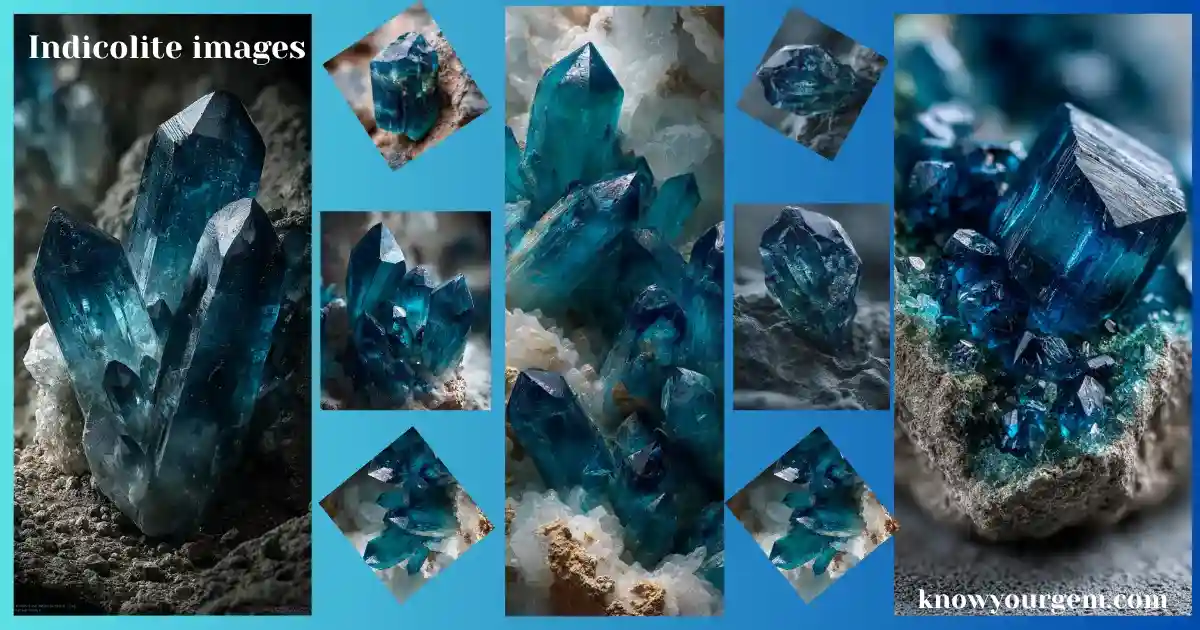

Indicolite is an uncommon blue to blue-green variety of tourmaline treasured for its thorough, ocean-like color, optical brilliance, and strong demand in fine jewelry. It commands premium prices because the gem quality blue tourmaline is genuinely scarce, complicated to mine, and unmistakable in appearance that make it one of the most sought after colored gemstones in the world.
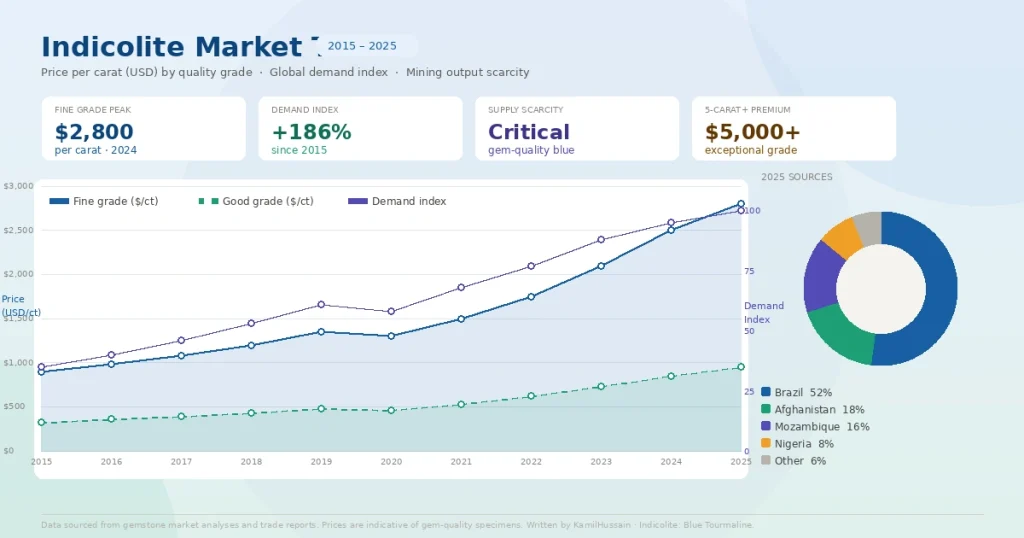
- Main trend chart tracks fine grade has command prices from ~$900/ct in 2015 to $2,800/ct in 2025, alongside good grade growth and a rising demand index, since all three move steadily upward, reflecting the gem’s increasing scarcity and collector interest.
- Four metric cards anchor the headline figures: peak fine grade price, demand growth since 2015, supply classification, and the 5-carat+ premium threshold.
- Doughnut chart on the right shows the global source breakdown, with Brazil dominating at 52% of gem-quality production, followed by Afghanistan, Mozambique, and Nigeria.
What is Indicolite?
Indicolite is essentially the blue member of the tourmliane family. Its name comes from the Latin word “indicum” means indgo, which perfeclty captures it deep, mesmerzing blue copper-rich paraiba (neon blue) indicolite is defined by its dominent blue tones, that range from pure oceanic blue to hints of bluish green.
Its rarity and vaule make it stand out. Whether collectors and gem lovers value this stone for its striking beauty of color as well as for its rarity means tough to find easily.
Indicolite meaning and origin:
The word indicolite integrates the Latin root for indigo with the Greek lithos (stone), literally means “indigo stone.” In the gemstone trade, the name carries a qualitative signal dealers and collectors often reserve it for fine bue tourmalines rather than the more generic “blue tourmaline” label.
Culturally this stone has long be connected with the depth, clarity, and clam qualities that have projected onto its cool blue color. In metaphysical traditions, it is considered as a stone of communication and inner truth, since these association are symbolic rather than scientific.
Is Indicolite a type of Tourmaline?
Indicolite is a part of tourmaline family which is so called group of minerals that include many different elements. This flexibility in composition gives tourmlaine for its blue to blue-green shades. More iron makes the blue deeper, whether changes in oxidation can shift the color toward green.
Tourmaline crystals form in the trigonal system and own hardness of 7 -7.5 on the mohs scale, means they are tough enoughfor everyday jewelry. One their fascinating traits is pleochroism means the ability to showcase different colors when they are viewed from different angles. This optical makes the stone especially captivating, as its color can shift hinges on how light hits it.
Indicolite color, appearance & quality factors:
Color is the single most essential quality factor in indicolite. It determines value more than any other variable, and understanding the color spectrum can help buyers to distinguish a commercial stone from a gem quality specimen.
What color is Indicolite?
Indicolite owns color like pure medium blue to teal, greenish-blue, and deep inky blue. The most commercially and aesthetically treasured stones display pure, saturated blue with minimal green or gray secodary color. Whether pure blue indicolite is the rarest and most expensive tone. Greenish-blue stones are more common and typically less expensive, though well saturated teal tones still attract strong collector interest.
Very dark stones, sometimes called dark indicolite, can appear nearly black certain lighting, a characteristic that reduces their appeal significantly. Buyers should view stones under multiple light sources to asses true color before purchasing.
Tone, saturation, and clarity:
Gemologists evaluate indicolite while using three color dimensions like, hue (the actual color family), tone (lightness to darness), and saturation (intensity of the hue). Medium to medium-dark tones with having high saturation are the most desirable. Whether very light stones lack visual presence; very dark stones lose their depth and appear lifeless in low ligth.
Clarity matters considerably. The GIA classifies indicolite as a Type II gemstone, means inclusions are expected but eye-clean stones are avaiable. Since higher transparency dramatically increases value because it allows light to movethrough stone freely, enhancing color display and brilliance.
Common inclusions in Indicolite:
Natural inclusioons in indicolite include needle like rutile crystals, liquid filled cavities, fractures, and mineral growth tubes. Eye clean stones command a significant premium over included specimens. Heavily included stones are typically cut into cabochons rather than faceted gems. Buyers should always ask whether stone is eye cleaned and request magnification photos when you are purchasing online.
Why is Indicolite so rare?
Indicolite’s rarity is not a marketing claim but it is a geological and statistical reality. Blue tourmalines make up tiny fraction of all tourmaline production worldwide, and gem quality indicolite is a fraction of that already small supply.
Geological formation:
Tourmaline crystallizes preeminantly in grantic pegmatities, coarse-grained indeous rocks that from mineral-rich hydrothermal fluids. These are the same geological environments that produce quamarine, topaz, and spodumene. The exact combination of iron concentration, temperature, pressure, and fluid chemistry is required to produce blue tourmaline rather than green, pink, or colorless varieties are highly specific and relatively uncommon in nature.
Limited global sources:
Brazil remains the world’s most historically significant source of indicolite, particularly from the states of Minas Gerais and Bahia. Brazillian indicolite has produced some of the finest and largest gem quality blue tourmalines on record. Other notable sources including:
- Afghanistan — It produces fine bllue stones, often with strong saturation
- Mozambique — It is increasingly important for tourmaline production, including blue varieties
- Nigeria — It has occasional gem quality blue tourmaline deposits
- United States — It is historic production from Maine, though limited in scale
Nor and neither single deposit produces consistent, large quantities of gem quality indicolite. Blue stones appear alongside other tourmaline color in pegmatite pockets and must be hand sorted from production.
Mining challenges:
Pegmatite mining is labor intensive and unpredictable. The gem pockets that contain the finest crystals are small, irregular, and often located deep within the rock. The yield of gem quality indicolite from raw material is low many crystals are heavily included, poorly colored, or fractured during extraction. This low yield from already limited deposits keep supply tight an dpieces firm.
Indicolite value & price guide:
Indicolite commands prices from under $100 per carat for commercial quality stones to several thousand dollars per carat for an exceptional specimens. The spread is wide because color quality varies dramatically and color deives price more than any other factor.
Price per carat:
| Grade | Price Range | Description |
| Commercial | $50–$300/ct | Included, greenish, or heavily toned; fashion jewelry grade |
| Good | $300–$800/ct | Eye-clean, good blue-green, well-cut; solid collector and jewelry grade |
| Fine | $800–$2,000/ct | Strong pure blue, high clarity, excellent cut |
| Exceptional | $2,000–$5,000+/ct | Vivid pure blue, eye clean, more than five carats with having certified origin can command such prices |
Large, high qualitative indicolite gemstone, especially more than 5 carats with having pure blue color and excellent clarity are extremely rare. Because of their scarcity and beauty, they ofte attract strong from collectors and at auctions.
Factors that affect Indicolite value:
- Color purity: Pure blue with gray or expensive green colored stone commands the highest premiums
- Saturation: Vivid, deeply saturated blue outperforms pale or muted tones
- Clarity: Eye clean stones are worth significantly more than visibly included ones
- Cut quality: A well proportioned cut maximizes ligth return and color display
- Carat weight: Prices per carat rise steeply more than 2 carats due to scarcity
- Origin: Brazillian indicolite, particularly from Minas Gerais, often holds collector premium prices
- Treatment: Untreated natural stones are worth than heated specimens
Indicolite vs other blue gemstones:
| Gemstone | Typical Price/ct | Hardness | Key Distinction |
| Indicolite | $50–$5,000 plus | 7to7.5 | Rare blue tourmaline with having strong pleochroism, warm optical character can command such prices.r |
| Blue Sapphire | $500–$50,000 plus | 9 | Hardest common blue gem with having royal blue tradition, widely recognized can command such prices |
| Aquamarine | $50–$600 | 7.5 to 8 | Pale to medium blue; beryl family; abundant; lower price |
| Blue Topaz | $5–$50 | 8 | It is always treated, widedly avaialable, and very affordable and commands such prices |
| Paraíba Tourmaline | $5,000–$50,000 plus | 7 to 7.5 | It owns neon blue-green color ; copper-beating; rarest tourmaline can command primium prices |
Indicolite is an uncommon and more valuable gemstone than aquamarine or blue topaz, but it doesn’t quite match sapphire in toughness or fame. Within the tourmaline family, I ts main rival is Paraíba tourmaline but paraiba’s neon glow from copper makes it a separate category altogether, with prices that usually far surpass indicolite.
Indicolite meaning, healing properties & symbolism:
Beyond its physical beauty, indicolte owns a rich set of symbolic and metaphysical associatins that appeal to the crystal enthusiasts, speritual practitioners, and those who are looking for a gemstone with symboilsm it can be a great choice. These meanings are traditional and cultural in natural claims.
Emotional and spiritual meaning:
Indicolite is widely associated with symbolism like clam, clarity, and communication. Its deep blue color naturally evokes water, sy, and depth qualities that are traditionally connedted to wisdom and inner peace. In spiritual traditions, it is considered as a stone which helps wearer to articulate thoughts clearly, reduce anxiety, and access deeper self-understanding. The indicolite spiritual meaning centers consistently on honest expenssion and emotional balance.
Chakra connection:
In chakra based healing systems, indicolite is primarily associated with the throat chakra, which is the energy center governing communication, self expression, and truth telling. Some practitioners also connect it to the third eye chakra for its reputed enhancement of intuition. While wearing or meditating with indicolite is siad to support clearer communication and release emotional blockages that are tied to self expression.
Is Indicolite used in crystal healing?:
Yes, indicolite is a popular choice in crystal healing practices. Practitioner use it for stress relief, emotionla clarity, and communication support. It appears frequently in healing crystal guides alongside stne like aquamarine, blue lace agate, and lapis lazuli.
Important note: Crystal healing is a complementary practice which is rooted in tradtion and belief. It can’t be substitute for medical advice, diagnosis, or treatment. Anyone who are experiencing health cencerns should consult a qualified healthcase professioinlal.
Indicolite jewelry: popular uses
Its color, durability, and optical properties make it an excellent gemstone for wide range of jewelry applications. Its rarity also gives finished pieces a distinctive character that mass market stones can’t replicate.
Indicolite rings, necklaces, and earrings:
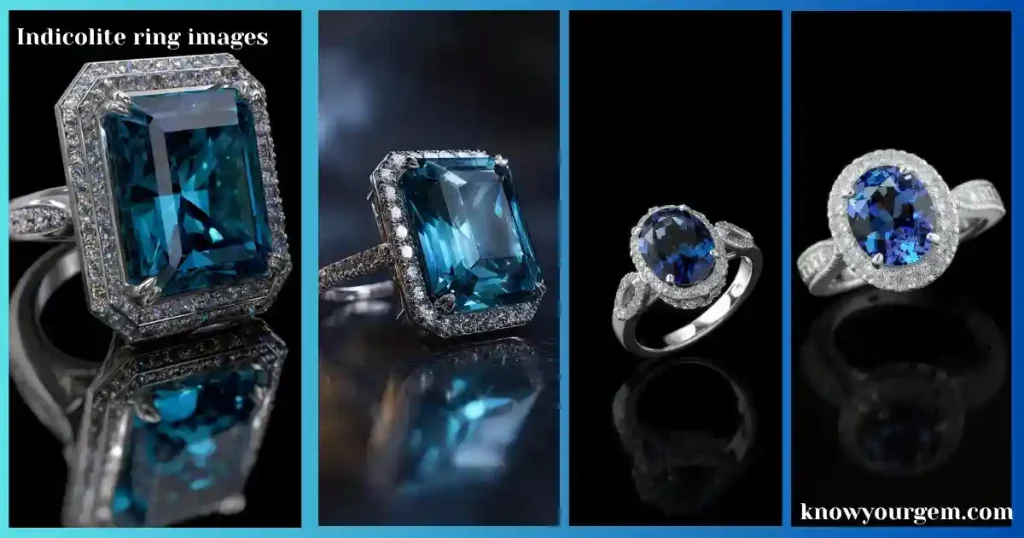
Rings: Indicolite tourmaline rungs are the most popular jewelry aplications. The gemstone fits beautigully in both solitaire and multi-stone designs. Whether yellow-gold pair enhaces the warmth of greenish-blue stones; and white gold platinum allows pure indicolite to take center stage.
Pendants and necklaces: Large stones are often set as pendants in which color can be appreciated in natural light. A deep blue tourmaline in a simple bezel or prong setting can make striking, conversation starting piece.
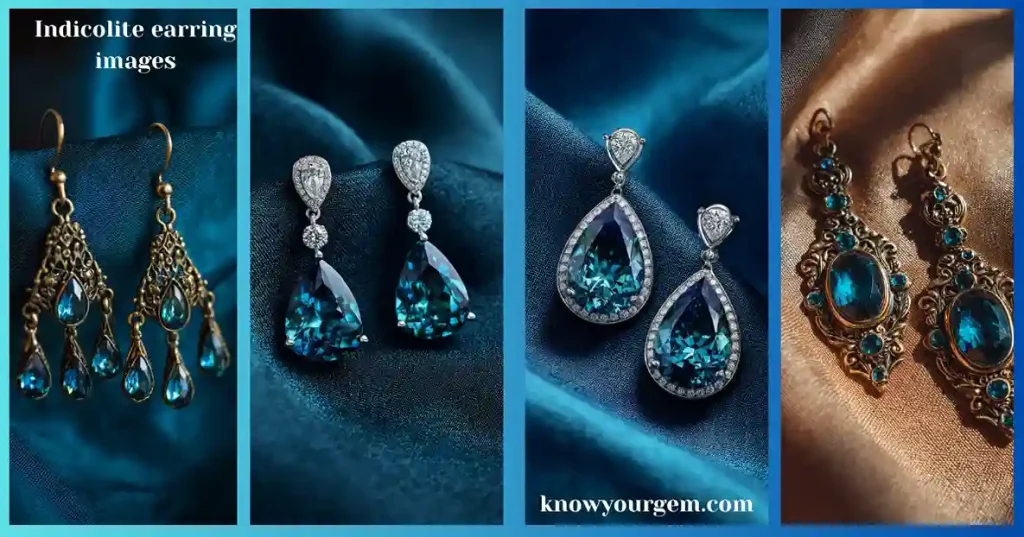
Earrings: Indicolite earrings particularly in drop or stud form are popular for their ability to complement the eye color of various wearers. While matching pairs of calibrated indicolite are complex to source, which makes high quality matched earring stones particularly valuable.
Durability and wearability:
This blue-green tourmaline rates 7 to 7.5 on the mohs scale of hardness, as like quartz . It resists everyday scratches from most common surfaces and can be worn on daily basis with reasonable care.protective settings like bezel or low profile are advisable for rings that are worn during active usage, since tourmaline can chip if struck sharply. You should keep away steam cleaners and ultrasonic cleaners, because this stone is sensitive to sudden temperature changes and vibration.
How to identify real Indicolite:
Bllue tourmaline is a natural gemstone, but the market is full of synthetic, or other minerals those are wrongly sold as torumaline. While understaning how to spot realistic thing can help buyers to pick and authentic piece.
Natural vs synthetic vs treated:
There is currently no significant commercial production of synthetic indicolite. The gem quallity blue tourmaline on the market is overwhelmingly natural. However, heat treatment is commonly applied to improve or stabilize color specifically to reduce excess green secondary tones and enhance blue saturation. This treatment is generally accepted in the trade, but a reputable seller must disclose it. Untreated stones command premium, and a laboratory report will specify whether heating has occurre.
Key identification tips:
Pleochroism is one of this stone’s most reliable identification markets. When you rotate the stone, it showcases distinctly different colors at different viewing angles that ttypically range from blue to greenish-blue to nearly colorless or yellowish in the third direction. Glass and various simulates are singly refractive and showcase no pleochroism.
Color zoning is another useful indicator. Since, natural indicolite often showcases color variation within the stone darker in some zones, lighter in others. Perfectly uniform color thruoghout a stone is more characteristic of glass or a heavily treated stone than natural tourmaline.
A qualified gemologist can confirm identification through refractive index measurement, specific gravity testing, and spectroscopic analysis.
Certification and lab reports:
For any indicolite purchase more than $500, it is wise to get a lab certificate. Since, trusted gem labs like GIA, AGL, GRS, and Gübelin can confirm the stone’s identity, ethical origin, and whether it has been treated or not. This certification can protect buyers from the biggest risks like misidentification or undisclosed treatments and adds confidence to the investemt.
How to buy Indicolite: Expert buying guide
While purchasing this stone can requiire prioritizing the right factors in the right order and works with those sellers who can answer specific, informed questions.
What to look for before buying:
Always evaluate color first. A stone with having vivid, clean blue-green color and moderate inclusions is generally more valuable and beautful than eye clean stone with a washed-out or heavily greenish tone. After color, assess clarity aim for eye-clean if your budget allows. Then consider cut: a well proportioned stone showcases more color and life than a poorly cut stone of equsl weight. Avoid overly dark stone that appear inky or black in normal lighting. Always request videos or images of the stoone under multiple light sources like daylight, incandescant, and LED committing to purchase.
Questions to ask sellers:
- What is the geographic origin of this stone?
- Has this stone been heat treated or otherwise treated?
- Is a laboratory certificate available or can one be obtained?
- What is the exact color description — blue, greenish-blue, or teal?
- Is this stone eye-clean, and what inclusions are present?
A seller who deflect or can’t answer these questions feel diffident then realize there something wrong.
Where to buy Indicolite safely:
The safest sources including estabilished gemstone dealers with verifiable reputations, certified gemologists sell it directly, auction houses with gemological verification, and trusted onlilne platforms which offer third party certificates and return policies. Since, reputable dealers provide treatment disclosure and support certification requests. It is best to avoid listing with no treatment disclosure, sellers who can’t describe the stone’s origin, and prices that seem unrealistically low for the claimed quality level.
Caring for Indicolite:
Indicolite is a durable gemstone but benefits from a simple care habits that preserve its beauty and protect its value over time.
Cleaning methods:
Clean this stone with lukewarm water, a drop of mild soap, and a soft brush like a baby toothbrush to roughing it lightly. Wash well it in clean water and dry with a lint free cloth. This simple routine is safest way and keeps the stone’s sparkle.
Avid ultrasonis or steam cleaner because they can damage the gem by causing fractures. Household chemicals and solvents should also be avoided to protect the stone’s clarity and color.
Storage tips:
Store indicolite jewelry separately from hadest gemstones like diamond, sapphire, and ruby,which can damage it quickly. A fabric-lined jewelry box with individual compartments, or wrapping each piece in a soft cloth are recommendable fo safe storage.

Indicolite vs blue tourmaline – are they the same?
Yes indicolite is blue tourmaline. The two terms refer to the same gemstone. Indicolite is the gemological variety name; ‘blue tourmaline ” is the descriptive trade term. They are interchangeable from a gemological standpoint.
In practice, a subtle commercial distinction exists. The blue tourmaline tends to be applied to the higher quality blue tourmaline gemstones , those with having a strong recognizable blue hue and better clarity. So, this distinction is considered as informal and not standardized by any grading body.
Quick Q/A:
1. What is indicolite used for?
The blue vibrant colored indicolite is used in fine jewelry like ring, earring, and bracelet. And its metaphysical properties link this gem to the heart chakra.
2. Is indicolite expensive?
It can be, hinging on quality. You should find commercial grade pieces that command prices from $50-$300 per carat. but the realistic gems wit having pure blue with the top clarity can command prices from $800 or even more than $5,000 per carat.
3. How rare is indicolite?
It is pretty darn rare. Blue isn’t a common tourmaline color, and gem-quality indicolite with that pure color and clarity is just a tiny slice of the mining result.
4. Is indicolite natural or treated?
It is a naturally formed gemstone, through a deep and long process. And it is said that heat treatment is pretty standard to dial back any green tones and amp up the blue. Since, good sellers always tell you upfront, and untreated ones fetch premium prices..
5. Can indicolite be worn daily?
Absolutely, if you are sensible about it. While having 7-7.5 mohs scale, it is tough enough for daily wear earrings, pendants, or rings in protective settings.
6. What color indicolite is most valuable?
Always select a pure vivid blue medium to medium-dark tone, super saturated, with having hardly any green or gray mixed in plus, great transparency.
7. Where is indicolite found?
Brazil leads the pack, especially Minas Gerais those stones which often carry a collector premium. You will also find those stones in Afghanistan, Mozambique, Nigeria, and even old digs in Mine, USA.
8. Is indicolite a birthstone?
Tourmaline is October’s official birthstone which shares a spotlight with opal, so indicolite fits in as the blue variety. It’s not traditional for other months, but some modern lists toss it in as a blue alternative for October babies who skip the pinks.
9. How does indicolite differ from Paraíba tourmaline?
Indicolite’s electric blue color pops in ring, pendant, earring, and bracelet. Collectors always prioritize rare gems rather than easily finding gems.
The content is written and published by gemstone enthusiast KamilHussain!

Welcome to KnowYourGem.com! your ultimate destination for uncovering the fascinating world of gems and their secrets! I'm Kamil Hussain, a passionate blogger with a Master’s degree in Economics, dedicated to bringing you insightful, well researched content that blends the beauty of gemstones with the art of storytelling. With a keen analytical mind and a love for discovering hidden treasures, I created this platform to help you explore the brilliance, history, and value of every gem.

