


Purple gemstones usually range from common amethyst to uncommon tanzanite and investment grade imperial topaz. Prices can swing from under $10/ct to thousands, but slightly based on rarity, color depth, durability, origin, and treatments.
What are purple Gemstones?
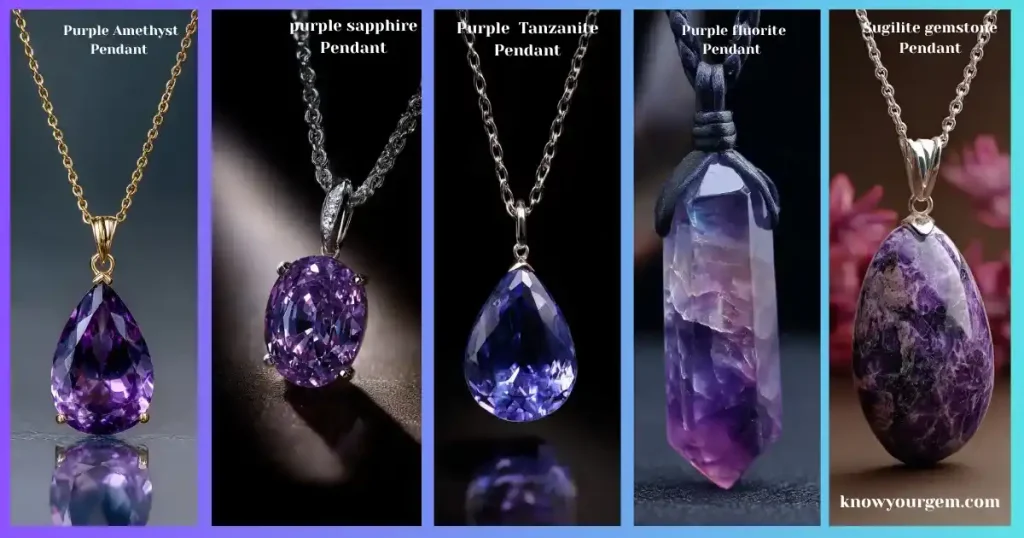
Purple gemstones dazzle with their regal violet hues, blinding rarity, history, and versatility for jewelry lovers and collectors who love see these gems of their daily wear jewelry. Given below a detailed guide these gemstones you can study.
Iconic and accessible choices:
- Amethyst: It is quartz purple star, abundant comes from Brazil and Uruguay mines. Iron impurities create it colors; heat it, and it turns citrine-yellow. Purple amethyst is everyday wear friendly because it is 7 on the mohs scale of hardness, it is affordable even in large sizes, perfect for bold statement pieces without breaking the blank.
- Purple Sapphire: It belongs to corundum family as regular blue sapphire belongs, it is sources from SriLanka or Madagascar. Chromium tints it violet; top specimens rival rubies in value due to scarcity. It is idea for high end investments who expect premium prices for vivid, eye clean stones more than 1 carat.
Rare and collectible purple gemstones:
- Tanzanite: It is Zoisite exclusive to Tanzania’s Merelani Hills (one location worldwide). Vanadium give this pleochroic magic that shift purple -blue-violet hinging on the angle. It is 6.5 on the mohs scale of hardness, so protect it from scratches; heating enhances color. A modern classic with rising demand as supplies dwindle.
- Purple Fluorite: Cubic calcium fluoride from China or Mexico, with having manganese for deep lilac shades. It is soft 4 on mohs , best for cabochons or collector cabinets rather than rings. Its flourescene under UV ligth adds whimsy glows electric blue or pink.
Underrated investment purple gemstones:
Following are the underrated investment purple gemstones:
- Charoite: It is Russia’s silky purple wonder, swirling with black amphibole inclusions. It is rare and is only found in Sakhalin Peninsula), It owns 5-6 mohs scale and its chatoyancy mimics a starry night sky. It gains traction for bold, which is one of a kind pendants.
- Sugilite: It is Manganese rich from South Africa’s Wessels Mine, that range laveder to royal purple. Opaque but vibrant because its owns 6-6.5 mohs; gel-like quality suits beads or carvings. Ethical sourcing matters so, avoid treated fakes.
List of popular purple gemstones:
Purple gemstones span a huge range of mineral varieties, each with having distinct properties, ethical origin, and price points. Study the most commercially available and investment worthy options below:
Purple Amethysts:(Most Common Purple Gemstones)
Amethyst, is the purple powerhouse of the quartz family, it delivers vibrant violet colors at a wallet-friendly price, it is often first purple gem choice for people who falls for purple stones. It clocks at 7 on the mohs scale, it is tough enough for dangling earrings or necklaces that catch the light all day, it is tough to skip for rings if you are rough on your hands.
Picture colors from soft lavender whispers to bold, velvety violets, the realistic treasures glow with even, saturated depth, no distracting bands. Brazil, Uruguay, and Madagascar flood the market with beauties, that keep prices grounded; $5 per carat for solid picks, spiking to $100-$200 for those flawless, museum-worthy stunners.
Many people get a gentle heat enhance for richer tones, but hunt for untreated ones if you are building a natural collection. It is your purple gateway drug, affordable, versatile, and a smart swap for pricey engagement rings that still says “forever.”
Purple Tanzanite: (Rare & single-origin)
Tazanite, a blue violet to purple ziosite, comes from only one spot near which is near to Mount Kilimanjaro in Tanzania that makes it the rarest purple gem. While having 6-6.5 mohs scale, it is softer than amethyst, so use protective settings for rings.
The most striking feature of tanzanite is its pleochroism, means the stone showcases different colors which hinges on viewing angle; purple from one direction, blue from another. Since, high quality tanzanite commands prices from $200 to $500 per carat, with fine specimens its price can exceed as like $1,000 per carat. Virtually all tanzanite undergoes heat treatment to achieve its signature purple-blue hue. The rarity and finite supply make tanzanite a secious consideration for investment focused buyers.
Purple sapphires: (Luxury purple gemstones)
Purple sapphire, a corundum family member like ruby and blue sapphire, gets its color from chromium and iron. It leads the luxury purple gems with having diamond like durability for any jewelry .
Stones from Kashmir, Burma and Sri Lanka can be sold for $500–$2,000/ct for fine quality, up to $5,000+ for exceptional ones. These gemstones are not like fading amethyst or treated tanzanite, since untreated purple sapphires stay stable in light prime investment.
Purple Spinel: (Underrated purple Gemstones)
Purple or violet spinel is magnesium aluminate mineral that occupies a surprising blind spot in the market, collectors often overlook it despite excellent properties. Spinel rate 8 on the mohs scale, which places it between sapphire and amethyst in durability, and offers outstanding optical clarity and brilliance.
Fine purple spinel commands prices from $50 to $300 per carat that hinging on ethical origin and saturation. Since, Burmese spinel commands premium prices due to historic reputation, while newer supply from Sri Lanka offer an excellent value. Many jewelry experts consider purple spinel severely undervalued relative to its beauty and durability, that makes it an intelligent choice for buyers who are seeking quality more than market price expectations.
Purple imperial topaz: (Hidden Investment purple gemstones)
Imperial topaz in purple and violet tones embodies most underrated precious gemstone in the market today. While imperial topaz is traditionally recognized for golden-orange hues, rare purple and violet specimens from Brazil’s finest sources in both beauty and investment potential still priced below comparable quality purple sapphire.
Imperial topaz is 8 on the mosh scale of hardness and displays an exceptional optical properties including high refractive index and exceptional clarity in fine specimens. Since, purple imperial topaz price can range from $200 to #1,500 per carat, with museum-quality stones reach $3,000 per carat still significantly below purple sapphire price for comparable color saturation and clarity. Hence, the limited supply of fine imperial topaz, are combined with growing awareness among collectors, positions it as one of the most promising investment grade gemstones for the next decade.

Why Imperial Topaz crystals are the most underrated purple gemstones?
The gemstone market tends value traditional options like, sapphire, ruby, emerald, while overlooking an exceptional alternatives that offer superior value and rarity. Imperial topaz in purple tones exemplifies this market inefficiency.
What makes Imperial topaz unique?
Color rules purple gemstone value saturation and even hue matters most. Gemologist grade pale lavender vs. Deep violet; saturated, uniform stones fetch 3-5x premium prices over pale or banded ones.
Top tones vary: Amethyst shines in deep violet , purple sapphire in rich medium purple, imperial topaz in dark violet transparency, and tanzanite in balanced purple blue.
Color variations and rare purple tones:
Imperial topaz spans colors from golden-orange to pink, red, and violet. Since purple-violet tones arise from unique trace elements and radiation in top Brazilian deposits rare than even fine red imperials.
Gemstones are prized after showing medium dark violet hue, excellent transparency, and minimal inclusions.
Brazilian origin dominance:
Approximately 95 percent of world class imperial topaz gemstones originates from Ouro Preto region in Minas Gerais, Brazil. This geographic concentration, combined with declining production from exhausted mining areas, creates supply constraints that support long term value appreciation. Although, Brazilian imperial topaz holds historical significance in the gem trade that is dating back to the 19th century, and the finest specimens remain benchmarks for quality comparison globally.
The combination of single-origin supply, declining production, and rarity in purple tones creates a compelling investment thesis unavailable in more abundant gemstones like amethyst.
Imperial topaz vs other purple gemstones:
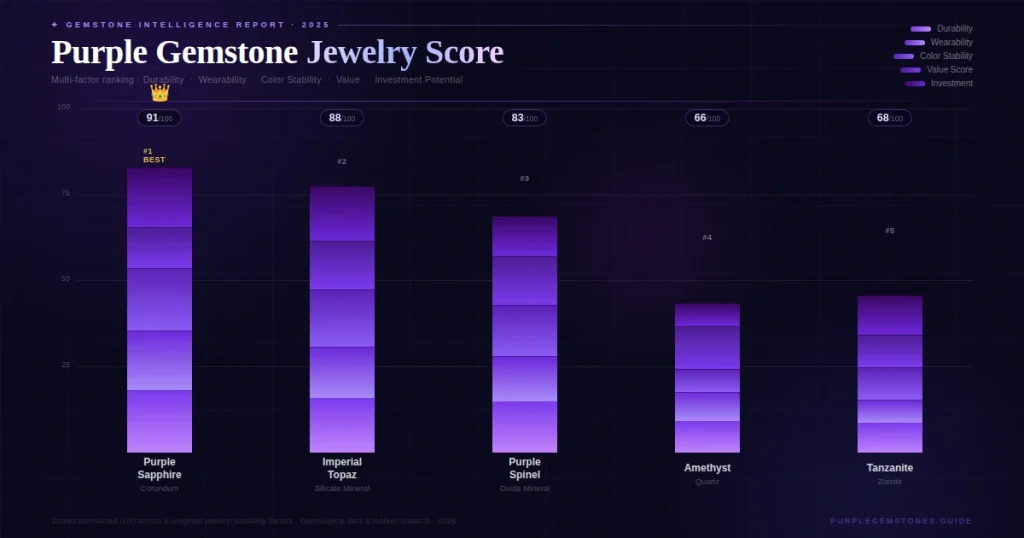
Direct comparison can showcase why imperial topaz stacks up strong against purple stones, reveals key edges in value and wearability.
Comparison table of purple gemstones:
| Property | Imperial Topaz (Purple) | Purple Sapphire | Tanzanite | Amethyst |
| Hardness | Imperial topaz owns 8 mohs scale | Purple sapphire is 9 on the mohs scale | Tanzanite is 6-6.5 on the mohs scale of hardness | Amethyst owns 7 mohs scale |
| Price per Carat | Imperial topaz commands prices from $200–$1,500 | Purple sapphire is soldfor $500–$5,000+ | Tanzanite is sold for prices from $200–$1,000+ | Amethyst commands prices from $5–$200 |
| Color Stability | It has an excellent color stability | It also has an excellent color stability | It has good color stability | It has poor color stability can fade color on direct of sunlight |
| Natural or Treated | Usually natural | Often natural | Usually heat-treated | Often heat-treated |
| Geographic Source | Brazil (95%) | Multiple (Kashmir, Burma, Sri Lanka) | Tanzania only | Multiple |
| Investment Potential | It owns very very high investment potential | It carries high investment potential | It owns high investment potential | It owns moderate invetment potential |
| Rarity of Purple Variety | It is very uncommon variety | It is moderate variety | It is very high in rarity | It can easily be found |
| Jewelry Suitability | It is an excellent choice for daily wear jewelry | It is also brilliant for daily wear jewelry | It can occasionally be own as jewelry | It is good enough for lightly wear |
| Availability in Fine Quality | Rare | Moderate | Rare | Common |
This comparison discloses that imperial topaz integrates the investment characteristics of sapphire and tanzanite with pricing that undervalues its rarity and durability.
Value & pricing of purple gemstones:
The prices of purple gemstones vary dramatically than almost colored stone categories, that are driven by rarity, origin, treatment, and market awareness. While understanding price factors enable informed purchasing decisions and realistic investment expectations.
Average price per carat:(Comparison Table)
Market prices for purple gemstones are based on both wholesale acquisition cost and retail markup:
Purple gemstones price guide table:
| Purple Gemstones | Entry level pieces | Mid grade pieces | Fine quality pieces | Museum grade pieces |
| Amethyst | Common and Entry level pieces of this stone can command affordable prices $5–$15. | Mid grade pieces usually charges prices like, $15–$50. | Fine qualitative stones use to command prices like $50-$150 | Museum grade pieces are sold for, $150–$300. |
| Spinel | Entry level spinel can command prices from , $30–$80. | Mid grade spinel can charge prices like $80–$150. | Fine quality piece of spinel can command $, 150- $400 | Rare and top graded pieces of spinel can be sold for $400-$400 |
| Imperial Topaz (Purple) | Enrty level imperial topaz usually commands prices from $150–$300. | Mid grade imperial can command prices from $300-$800 | Fine imperial stone can charge prices from $800–$1,500. | Truly rare specimens commands, $1500-$3,000 |
| Tanzanite | Entry level pieces of this tone can command prices from $100–$200. | Mid grade gemstones with having better clarity can be sold for $200–$400. | Fine qualitative pieces showcase vibrant vivid blue purple and command prices from $400–$1,000. | An exceptional quality, uncommon and valuable pieces can command prices from $1,000-$3,000 |
| Purple Sapphire | Entry level sapphire usually commands prices from $300 to $800 | Mid grade sapphires with having richer tones can command prices form $800-$2000 | Fine stones with having strong brilliance are sold for $2,000- $5,000 | Kashmir-origin or rare specimens can command $5,000–$15,000+. |
On this table different prices have showcased according to the current market structure, such as one carat fine amethyst can command $80, while sapphire from well known origin like Kashmir can be sold for $3000 per carat. This is what rarity is more preferable over easy finding stones.
Factors that affect value:
Given below the five key factors you must need to consider them before purchasing purple gemstones:
Color saturation and hue:
Color drives gemstone value saturation and even it rules all over the stone. Since gemologists grade pale lavender vs deep violet; saturated, uniform stone can fetch 3-5x premium prices over pale or banded ones..
Clarity:
An eye clean clarity means no inclusions visible to the naked eye embodies the minimum quality threshold for fine purple gemstones. Since, visible inclusions dramatically reduce value, sometimes by 50 percent or more. However, absolute perfection carries diminishing returns beyond eye clean grades.
Amethyst offers good clarity even at low prices minor inclusions barely dent its value since it is so common. Purple sapphire, imperial topaz, and eye clean tanzanite demand big premiums.
Origin:
Geographic origin influence both rarity and perceived value. Since, Brazilian imperial topaz commands the highest prices due to its reputation for exceptional quality and historic significance. Tanzanite’s value is intrinsically tied to its exclusive Tanzanian origin on other source exists that makes origin authenticity essential for investment confidence.
Purple sapphire prices reflect origin hierarchy: Kashmir sapphires command highest prices due to finest historical reputation, that are followed by Burmese stones, then Sri Lankan material, since, quality variations between sources are less dramatic than with sapphire.
Treatment status:
Treatment disclosure is the trust foundation for gemstone transactions. Natural, untreated stones command significant premium price sometimes 200 to 500 percent over treated material of identical appearance. Heat treatment is permanent and widely accepted: glass filling, dyeing, and irradiation have variable acceptance and affect long term value.
Amethyst is virtually always heat treated, and this treatment is standard in the market, so disclosure is critical but doesn’t reduce value relative to comparable treated material. Since, Tanzanite undergoes standard heat treatment, equally universal and accepted. Purple sapphire prices reflect treatment status dramatically, untreated purple sapphire costs several times more than heated material. Imperial topaz purple varieties are often natural color, and heat free specimens command premium prices.
Certification status:
Independent certification from recognized laboratories primarily GIA, IGI, or SSEF adds 10 to 30 percent to retail pricing by proving third party verification of color, clarity, treatment status, and carat weight. For investment-grade stones increasing $500 per carat, certification is virtually essential for resale confidence value documentation.
Why Imperial Topaz has Strong investment potential:
Imperial topaz in purple tones integrate multiple characteristics that rarely align in a single gemstone:
- Scarcity Increasing Over Time: Production from Brazilian mines continues declining, whether demand for fine purple gemstone increases. This supply demand divergence creates structural support for value appreciation.
- Undervaluation Relative to Comparables: Purple imperial topaz trade at 30 to 50 percent discounts versus purple sapphire of comparable color saturation and clarity, despite equivalent durability and superior optical properties. This pricing gap reflects market inefficiency rather than quality difference an opportunity for value conscious investors.
- Single-Origin Supply:Like tanzanite, imperial topaz’s concentration in Brazil’s Ouro Petro regioin creates supply-side scarcity. Not same as tanzanite which is found nowhere else globally, imperial topaz has alternate minor sources, but Brazilian material dominates fine quality, that maintain price stability
- Hedge Against Currency and Inflation: Gemstone value historically correlates weakly with stock markets and currency fluctuations, make investment-grade purple gemstones useful portfolio diversification. Not like commodities, gemstones produce income but appreciate through rarity and industrial/decorative demand.
- Growing Collector Awareness: The shift toward alternative investments and EGG-conscious sourcing is gradually increasing awareness of undervalued gemstones like imperial topaz, potentially drive accelerated price for early investors

Purple gemstones for jewelry: (Commercial Intent purple gemstones)
Going with the right purple gemstones for jewelry will require balance preferences with durability requirements, that are intended to wear frequency, and budget constrains.
Best stones for rings, necklaces, earrings:
Given below is a proper guide that explains which purple gemstones are for rings, necklaces, earrings:
Engagement rings and daily-wear rings:
Purple sapphire is the optimal choice for engagement rings and daily-wear rings. Its owns 9 mohs scale which ensures this stone is scratch resistance and chipping fro routine wear. Fine quality purple sapphire maintains its value and appearance indefinitely with the basic care.
Purple spinel offers an excellent durability while having 8 mohs scale and it delivers exceptional value as compared to sapphire. It is ideal for buyers who are prioritizing beauty and longevity over the prestige of sapphire naming.
Imperial topaz score 8 on the mohs and it is perfect for daily wear, with rarity that doubles as investment appeal.
Amethyst is 7 on the mohs scale of hardness can get scratched easily; tanzanite owns 6-6.5 mohs scale risk for fast damage and both can fade in sunlight not ideal for engagement rings.
Necklaces and Pendants:
All purple gemstones suit necklaces and pendants, as these pieces experience minimal impact and abrasion. Since, amethyst becomes an excellent choice here, which offers dramatic color at affordable prices with acceptably low risk. Whether Tanzanite similarly works beautifully in pendants protected by bezels. Sapphire, spinel, and imperial topaz are all excellent choice for higher budget protected by bezels. On the other hand sapphire, spinel and imperial topaz are all excellent choices for higher budget pieces.
Earrings: (Studs vs Dangling)
Stud earrings provide good durability for all purple gemstones, as movement is minimal. Amethyst and tanzanite work acceptably in studs, since, sapphire, spinel, and imperial topaz are superior long term choices.
Dangling earrings create more movement and potential impact, and favor harder stones like, sapphire, spinel, and imperial, topaz. Amethyst can work in dangling studs if the jewelry is carefully handled and removed during active situations.
Durability comparison: (Mohs Scale)
Given below is the durability details of purple gemstones:
Purple gemstones durability chart:
Given below is the mohs hardness points about purple gemstones:
- Purple Sapphire: It is 9 on the mohs scale of hardness and it is excellent for daily wear jewelry.
- Imperial Topaz: It is 8 on the mohs scale of hardness tough enough for daily wear jewelry
- Purple Spinel: Same as topaz owns 8 mohs scale good for everyday
- Amethyst: It owns 7 mohs scale good enough for earrings and necklaces; moderate risk for rings
- Tanzanite: It is 6–6.5 on the mohs scale suitable for earring earrings, and pendants but risky for rings.
Daily wear vs occasional wear:
See what purple gemstones jewelry can be daily worn or occasionally wear:
Daily-wear applications:
- Daily wear hits jewelry with soap, lotions, sweat heat shifts, and bumps only tougher purple gems keep their shine and strength.
- Purple sapphire is only gemstone recommended without reservation for daily wear rings. Its 9 mohs and excellent toughness enable indefinite daily wear with basic care.
- Imperial topaz and purple spinel both own 8 mohs scale and are suitable for daily wear if the wearer commits to protective habits: removing rings during contact sports, swimming, gardening, and other high impact activities.
- With the help of 7 mohs scale Amethyst can tolerate daily wear in pendants and earrings but showcases visible wear on rings within one to three years. Tanzanite is unsuitable for daily-wear rings and should reserved for carefully managed occasional wear.
Occasional-wear purple gemstones :
Occasionally wearing weddings, formal events, special occasions permits greater flexibility. All purple gemstones suit occasional wear pieces, and assume careful handling and protected settings.
Amethyst and tanzanite both are becoming an excellent choices for occasional wear rings, necklaces, and earrings, where beauty takes priority over durability. A tanzanite engagement ring is worn only on special occasions can deliver exceptional beauty with minimal risk, whereas the same ring is worn daily would showcase damage within months.
How to identify real vs fake purple gemstones:
Purple gemstones range from natural untreated to untreated like synthetic and fakes. While knowing verification methods is essential for buyers to avoid from scams and overpaying.
Certification: (GIA, IGI)
An independent gem labs are considered as gold standard for authentication and value proof. Independent gem labs are the gold standard for authentication and value proof. Since, GIA, IGI, and SSEF uphold strict standards, detail identity, clarity, treatment, and carat weight.
A certified stone including an identification number laser-inscribed on the gemstone’ girdle, linking the physical stone to its laboratory report. This certificate to stone linkage prevents switching fraud, where cheap stone is substituted after purchase.
For stones that exceed $500 to $1000 retail value, certification is strongly recommended even it is essential for investment grade material. Fine purple sapphire, imperial topaz, and tanzaninte should be certified before purchase.
Certification costs from $75 to $300 hinges on gemstone type and stone size, a small percentage of value for quality pieces.
Common treatments to watch for:
Must consider treatment like:
Heat treatment:
Heat treatment is permanent, generally accepted, and standard for amethyst and tanzanite. Heating improves color saturation and removes brown or gray overtones. All tanzanite undergoes heat treatment as a part of standard process, untreated tanzanite doesn’t commercially. Heat treated stones disclose this status but retain value comparable to untreated material in these varieties.
Purple sapphire is often heat treated, since a standard practice but untreated stones fetch premium prices. Always demand clear treatment disclosure.
Glass filling and surface coating:
Glass filling involves injection molten glass into the surface features and cavities to improve apparent clarity. Since, this treatment is temporary the glass can cloudy over time or wash away during cleaning and significantly reduces value. Glass filled gemstones should be priced as costume jewelry, not investment material.
Surface coating applies a thin resinous or lacquer layer to improve color or apparent clarity. This treatment is also temporary and easily removable during standard jewelry cleaning.
Both practices are fraudulent if they are not disclosed. Reputable sellers certified dealers never engage in hidden treatments.
Irradiation:
Irradiation exposes gemstones to nuclear radiation to alter or deepen color. This treatment is permanent but controversial. Irradiated tanzanite exists but is uncommon. Any irradiation treatment must be disclosed; many buyers actively avoid irradiated material.
Dyeing:
Dyeing adds fake color to porous stones like amethyst, that its quartz structure soaks up easily. It it is outright fraud avoid dyed amethyst completely, as gemologists spot it under microscopy but it is tough visually.
At-home identification tips:
While laboratory certification is recommended for valuable stones, several at home provide initial verification and detection of obvious fakes.
Visual inspection under magnification:
Use 10x jeweler’s loupe to inspect real purple gemstones because they showcase natural inclusions, uneven color, and unique internal patterns. Since, synthetics have uniform color and odd clarity, whether fakes reveal dyes or suspiciously flawless large stones. Amethyst under magnification of showcases banding subtle color variations in zones which is a natural feature. Perfectly even color saturation in large amethyst suggests heat treatment or synthetic origin.
Light transmission and transparency:
Hold the stone up to the natural light and observe transparency. Since real gemstones transmit light clearly without haziness or cloudiness. Milky cloudiness suggests poor quality, glass filling, or synthetic material. Genuine tanzanite displays slight haziness at some angles due to pleochroism and is normal; complete cloudiness indicates problems.
Temperature feel:
Realistic gemstones feel cool to the touch initially and warm gradually. Glass and plastic fakes warm immediately upon contact with the skin. This is not foolproof but provides initial indicator.
Weight and density:
Real gemstones beat glass or plastic in density. A one carat amethyst feels noticeably heavier than the same size fakes, practice with genuine stones for spot on comparisons.
Professional testing:
Serious buyers investment-grade purple gemstones should always engage professional gemological testing. Portable refractometer, specific gravity scales, and UV light examination by trained gemologists provide definitive verification impossible with at home methods.
Spiritual & symbolic meaning of purple gemstones:
Purple hue has deep symbols like, weight across traditions, guides gemstone choice for beauty and metaphysical vibes.
Royalty, wisdom, and luxury symbolism:
Purple color is recognized for royalty, luxury, and spiritual wisdom. In medical Europe, expensive purple dyes were used only for kings, queens, and religious robes create a lasting link to high status.
Differences between Amethyst vs Topaz meaning:
Given below the differences of Amethyst vs topaz meaning:
Amethyst Symbolism:
Amethyst owns meanings from ancient traditions and modern crystal healing. It is associated with sobriety and clear thinking. Since, Greek legends say it resists drunkenness. This stone also supports spiritual awakening, third eye activation, and intuition in chakra systems.
People always recommend amethyst for meditation, discarding anxiety, and better sleep. Science doesn’t prove crystal powers, but the comfort of meaningful stones and focused intentions keep it popular with holistic folks.
Imperial Topaz meaning:
Imperial topaz ties to abundance, prosperity, and manifestation. It enhances personal power, creativity, and goal success, it is often linked to the solar plexus chakras for willpower and change.
Its golden orange shades draw wealth in spiritual circles. Uncommon purple versions blend crown chakra spirituality with material riches.
These meanings come from gem lore, not science, but guide choices for spiritual gifts and wearers.
Where to buy high quality purple gemstones:
While choosing a reliable seller can better matter as much as picking the perfect purple gemstones. The market honest dealers, quality shops, and scammers.
Online vs physical stores:
Buying guide for purple gemstones as follows:
Brick-and-mortar jewelry stores:
If you want to purchase and authentic jewelry you should visit physical stores rather than online because physical store allow you to check gemstone, color, clarity, and size. Local reputable jewelers often bring stronger expertise and ethics than various online options.
Drawbacks including smaller selections, steep markups typically from 200-400% , and location limits to specialists are uncommon outside big cities like Karachi in Pakistan.
Reputable online retailers:
Purchasing this purple gemstones online from trusted dealers can give you vast selections, clear prices, better deals, and full high res photos. Since, top sites include authenticity certificates, money back guarantees, and 30 day returns to cut risks. Build trust by checking seller reviews and ratings, use secure payments like credit cards or Paypal for fraud protection.
Auction platforms: (Mixed Risk)
Auction site like, eBay, Amazon, and Esty carry high risk due to uneven seller quality. Dealer can pop up, but thorough checks on sellers are a must.
Essential safeguards:
- Insist on lab certification from GIA, AGS for authenticity.
- Always confirm clear return policies, since many people offer limited windows or buyer protection.
- Use platform that safeguards like Paypal or credit cards for disputes.
Prioritize long term sellers with having strong feedback to the dodge fake and fraud.
What to look for before buying purple gemstones:
Given below is a complete guide about consider things before purchasing:
Research the seller:
Must consider reviews, seller history, certifications and return policies before purchasing a gem.
Red flags to dodge:
- Sellers skip certification or independent verification.
- Claims of health/healing powers without proof.
- Prices way under the marker rates.
These steps protect against scams and ensure authentic gems.
Request complete disclosure for purple gemstones:
Always demand for full disclosure on gemstone identity like, ethics, origin, treatments, and certification for buying. Insist on specifics like carat weight, color grade, clarity, and treatment details compare price against market standards:
Exceptional deals exist, but prices dramatically below established market ranges often indicate lower quality or misrepresentation. An Amethyst is prized at $2 per carat might be heavily included or color banded. A purple sapphire at $100 per carat might be heated or lower clarity. Use established retail pricing as baseline expectations.
Verify certification:
For investment grade purchases, request independent certification from GIA, IGI, or SSEF. Verify certificate authenticity through the laboratory’s website using the certificate number. Never purchase investment grade purple gemstones without professional certification.
Understand return policies:
Reputable sellers offer 30 day returns, no question is asked, if the stone doesn’t match representations. This safety net protects against receiving material or misrepresented goods.
Why Imperial Topaz requires extra verification:
Imperial topaz, particularly purple varieties, remain relatively unknown to average consumers, that create both opportunity and fraud risk. The lower awareness level means fewer people understand imperial topaz quality, pricing and characteristic misrepresentation.
Purple imperial topaz is occasionally confused with purple sapphire, tanzaite, or color treated purple topaz. Verify gemstone identity through certification before purchase. Request that nay imperial topaz purchase including laboratory confirmation of mineral species.
Natural purple imperial topaz is uncommon, so bargain or bulk stock scream for verification. Since reputable dealers provide GIA or IGI certs for stones more than $500, backs their authenticity and quality.
Quick questions and answers:
1. Is imperial topaz more valuable than amethyst?
Oh yes, by a lot! Purple imperial topaz can run $200 to $3,000 plus per carat, whether amethyst is just $5 to $200. It is tougher 8 on the mohs scale of hardness vs, amethyst’s 7 mohs, way rarer, and has real investment upside. Amethyst is perfect if you just want that gorgeous purple pop without braking the bank, since no commitment needed.
2. Which purple gemstone is best for investment?
You should go with purple sapphire or purple imperial topaz. Since, sapphire brings that timeless luxury vibe, rock-solid demand, and unbeatable toughness. Whether imperial topaz gives you amazing bang for your buck rare than most realize, and as collectors catch on, prices could climb. Tanzanite is a smart pick too, we are grateful one and done supply, but it is not as touch for everyday wear.
3. Are purple gemstones expensive?
They span every budget! Amethyst commands price from $5 per carat, anyone can snag that purple magic. Whether purple spinel price range from $300 to $15,000 plus. Doesn’t matter your wallet, there is purple bliss waiting.
4. How can you tell if a purple gemstones are real?
For peace of mind, get a GIA, IGI, OR SSEF cert because they are the gold standard. At home, use 10x loupe for natural inclusions, check clean light transmission (no haze), and test density by weight. Since, realistic feel cool, glow transparently watch for bubbly dyes, perfect color, or cloudy fakes.
5. Are purple gemstones natural or treated?
You will find both out these. Amethyst and tanzanite are almost always heated, it is just how they are brought to life, and untreated ones are like unicorns. Purple sapphire comes naturally colored or heated; the untreated beauties fetch big premium price. Purple imperial topaz often shines in its natural hue. Always ask for certs that spill the treatment beans transparency is everything.
6. What are the most durable purple gemstones for rings?
Purple sapphire wins hands down at 9 on the mohs scale and perfect for everyday ring wear without a worry. While Imperial topaz and purple spinel are 8 on the mohs, they are fantastic too, as long as you ate a bit gentle. Amethyst 7 starts showcases scratches in 1-3 years on a ring. Tanzanite is save for pendants, not rings.
7. Why does amethyst fade in sunlight?
Amethyst gets its purple color from impurities which are hit by natural underground but sunlight’s UV rays that color down over months or years permanently fade it and slashes value.
8. How much is a one-carat purple sapphire worth?
Expect $500 for decent heated ones up to $5,000 plus for the top natural color at retail. Although stone from kashmir can command more price like $10000 per carat.
9. Where should I buy certified purple gemstones?
Stick to the trusted pros with having solid reps, easy returns, and certs ready to go. Always seek for American Gem Society members or online sellers with having glowing reviews and fair prices. Demand GIA, IGI, or SSEF for anything more than $500 dodge no cert hustlers or hype pushers without proof.
In closing:
Purple gems bring pure joy from amethyst’s wallet friendly daily, sapphire’s luxe durability for rings and investments, to imperial topaz’s thrill for gem hunters. It is must to know gem’s ID, treatments, toughness, and certs to shop smart, skip fakes, and build a lasting collection.
This long tail content is written and published by gemstone enthusiast KamilHussain!

Welcome to KnowYourGem.com! your ultimate destination for uncovering the fascinating world of gems and their secrets! I'm Kamil Hussain, a passionate blogger with a Master’s degree in Economics, dedicated to bringing you insightful, well researched content that blends the beauty of gemstones with the art of storytelling. With a keen analytical mind and a love for discovering hidden treasures, I created this platform to help you explore the brilliance, history, and value of every gem.

