


Introduction:
Montana Diamond is a singular, naturally occurring gemstone found in Montana, USA, esteemed for its ethical sourcing and uncommon characteristics in the gemstone industry.
This natural diamond personifies a small but significant portion of American geology; it endows consumers a traceable, conflict-free alternative to traditionally sourced diamonds.
Montana’s geological history has manufactured these mischievous-extraordinary stone alongside the state’s famous sapphires, which create a unique niche in the ethical jewelry market.
What are Montana Diamonds?
Montana diamonds are pristine diamonds extracted from geological deposits within Montana’s diverse terrain. They can’t be compared with synthetic or laboratory-grown alternatives; these gemstones are formed more than millions of years through intense geological pressure and heat beneath the Earth’s surface.
Key characteristics of Montana Diamonds:
Color Variations: Organic Montana diamond deposits produce stones in several different colors, including yellow diamond and golden hues range from pale champagne to the deeper golden tones.
Clear diamonds are less common which display an exceptional brilliance and transparency. Whether Green Diamonds, among the rarest finds, showcase ethereal to vivid green coloration caused by natural radiation exposure during formation. The champagne diamond variety features a brownish-gold tone, and represents one of the Montana’s most distinctive contributions to the diamond market.
Size and Quality: Most Montana diamonds measure smaller than their African or Canadian counterparts, that are typically ranged from 0.10 to 0.50 carats.
These stones can be smaller in size but they make up for it with an excellent quality, clarity, and unique colors/ Their compact shape makes the perfect for accent pieces, delicate engagement rings, and custom jewelry designs that value ethical sourcing over large carat weight.
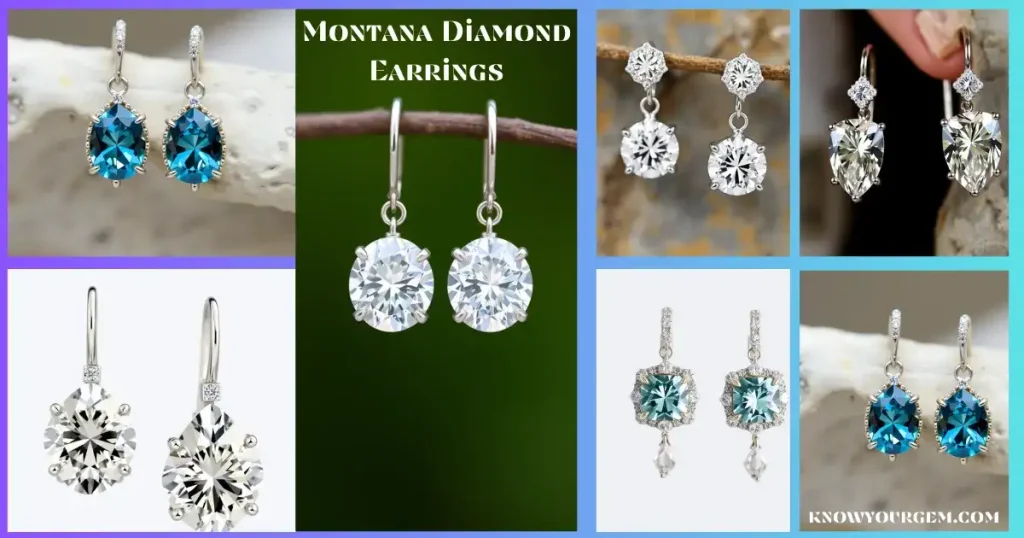
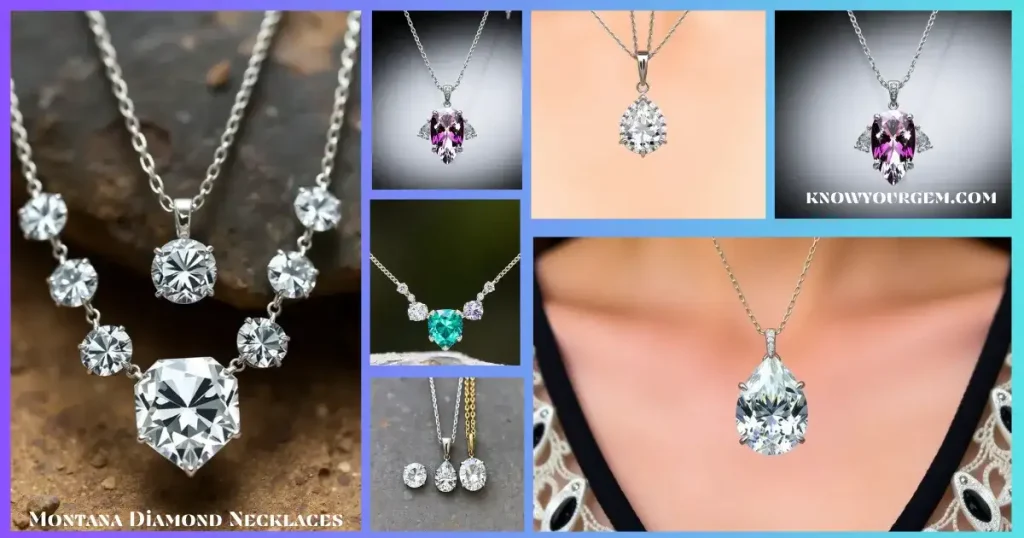
Primary Applications: These American gemstones serve multitudinous purposes in contemporary jewelry design. Engagement rings feature Montana diamonds, which appeal to environmentally conscious couples who are seeking for traceable origins.
Custom jewelry designers incorporate these stones into one-of-a-kind pieces that tell the story of American craftsmanship. The Montana sapphire and diamond ring fusion has become particularly popular, and showcased the state’s dual gemstone heritage in single pieces.
Direct Answer:
Montana Diamonds are natural, rare, and traceable gemstones from the United States, which endow ethical alternatives to the traditionally sourced diamond with complete supply chain transparency from mine to the market.
History and mining operations:
Discovery and early mining Era:
The legacy of Montana Diamond begins in 1865 when gold prospectors had been working near the Missouri River made an unexpected discovery.
Whether panning for gold, miners encountered small, clear crystals that initially puzzled them. These stones, later identified as diamonds, marked the beginning of Montana’s diamond mining history, since it would take decades before systematic extraction efforts began.
The Bell Diamond Mine Butte, Montana facility encapsulates the most documented historical diamond operation in the state. Located near Butte, this mine is operated intermittently from the late 1800s through the mid-1900s which produces small quantities of gem-quality diamonds alongside other mineral resources.
The Bell Diamond Mine’s historical significance extends beyond its production numbers; it is established Montana’s reputation as one of the few American states with the natural diamond deposits.
Modern mining operations:
Contemporary Diamond extraction in Montana follows two primary methodologies. Since, Alluvial mining involves searching river gravels and ancient stream beds where erosion has concentrated Diamonds over geological time frames.
This method predominates at Rock Creek Sapphires locations, where miners simultaneously recover both sapphire and occasional diamonds from concentrated gravel deposits.
Kimberlite Exploration embodies the second approach, targeting the volcanic pipes that originally transported Diamonds from the deep within the Earth’s mantle.
The Diamond Butte, Montana region contains several Kimberlite formations under investigation, since commercial-scale Kimberlite mining has not yet developed to the extent seen in other diamond-producing regions.
Mining timeline & milestones:
- 1865–1900: It was the era of big discoveries. Diamonds were found mostly by dance, often recovered by gold miners during their work.
- 1901–1950: Dedicated diamond mining operations began to take shape, with sites like the Bell Diamond Mine leading the way.
- 1951–1990: Diamond mining had slowed down. Attention has shifted toward sapphires, which became the main focus during this period.
- 1991–Present: Since interest in Diamonds returned, but with the new emphasis on ethical sourcing. Today, small-scale artisanal mining plays a key role in meeting demand.
Geological sources and deposits:
Montana’s diamond deposits originate from the two geological environments. Since, preeminent deposits occur within the Kimberlite and Lamproite volcanic formations, where diamonds are formed at the extreme depths before volcanic eruptions transform them to the surface.
Secondary deposits result from millions of years of erosion, concentrating diamonds in alluvial gravels along ancient and modern waterways.The Black Diamond Quarry Montana operations, whether preeminently focused on industrial aggregate, occasionally encounter gem-quality diamonds within their extracted materials.
These incidental discoveries highlight the widespread, if sparse, distribution of diamonds throughout Montana’s geological formations.

Are there really Diamonds in Montana?
Yes, Montana features natural diamond deposits, since, they occur far less abundantly than global diamond mining centers like Botswana, Russia, or Canada. Following are the ways to know if diamond is really located in Montana:
Rarity and distribution:
Montana’s Diamond occurrence evokes the geologists as “microdiamonds,” small crystals that typically measure under one carat. The largest diamond deposit concentrations in Montana can’t compete with South African mines or Canadian kimberlite fields in terms of volume or average stone size.
However, Montana’s diamonds achieve through their geological uniqueness and ethical sourcing credentials than production volume.
Common misconceptions:
A lot of people who are looking to know where to find diamonds in Montana. It was ended up in confusion because the state is actually known for its sapphires, not diamonds.
Montana sapphires are much more common and sometimes sparkle like diamonds, which can cause mix-ups. Even places with mix-ups. Even names like Cliff and Diamond Lake mostly produce sapphires, since diamonds do turn up once in a while.
Verification and Identification:
Authentic Montana Diamonds entail professional gemological verification to distinguish them from sapphires, quartz crystals, or other transparent minerals.
The Montana cut Diamond designation refers to stones both and processed within Montana, ensure compete traceability. Gemological laboratories, including the Gemological Institute of America (GIA) provide certification services that definitively identify Montana Diamonds and document their characteristics.
Geographic distribution:
Diamond finds in Montana cluster in several key regions. The southwestern portion of the state, particularly around Butte and the Highland Mountains, have produced the most consistent Diamond discoveries.
Central Montana’s Missouri River drainage system contains alluvial deposits where erosion has concentrated diamonds over Millennia. Eastern Montana’s sedimentary formations occasionally yield microdiamonds within coal seams, since these typically lack gem quality.
Montana Diamonds in Jewelry applications:
Engagement Ring designs:
Montana Diamond engagement rings evoke the intersection of ethical values and traditional symbolism. Contemporary couples increasingly prioritize traceable sourcing, makes Montana’s documented supply chain appeal.
These rings perfectly feature central Montana sapphires surrounded by the small Montana diamond accents, create entirely sate-sourced pieces.
The Montana Sapphire Diamonds band integrates sapphire and diamond as alternate patterns, set in either channel or pave styles. This design creates a balanced, elegant look that shows off the beauty of both gemstones.
Since these rings are often chosen as wedding bands, anniversary rings, or bold statement pieces. Each one honors American gemstone heritage and evokes a timeless symbol of love and craftsmanship.
Custom Jewelry design:
Natural wedding Ring features a Montana diamond that suits for couple who seek for something non-traditional and ethically sourced.
Local Jewelry designers are often specialized in Montana gemstones, crafting custom pieces that highlight these rare stones as either the centerpiece or as dedicate accents.
When sapphires and diamonds are integrated, designers can create a striking contrast, Whether pairing Montana’s signature blue-teal or green sapphires with the clear Champagne diamonds.
Blue-green sapphire engagement rings often include small Montana halos or side that enhance the sapphire’s brilliance and color. Likewise, teal sapphire rings are perfectly complemented by Diamond accents that highlight their unique shades without overpowering them.
Popular cuts and settings:
Montana Diamond has given its typically small size, adapt best to specific cutting styles. Since round brilliant cuts maximize the limited surface area, which produces an optimal light return.
Oval cuts elongate smaller stones, which create the illusion of greater size. Cushion cuts suit Montana’s frequently colored diamonds, emphasize depth of color over pure brilliance.
Setting styles for Montana Diamonds include:
- Bezel Settings: These are protective metal rims that secure small diamonds, whether showing their unique colors
- Pavé Settings: Multiple tiny Montana Diamonds create glittering surfaces in bands and halos.
- Cluster Settings: Groups of small Montana Diamonds form larger visual impacts.
- Three-stone settings: Central Montana sapphires are flanked by Montana diamond side stones.
Commercial applications:
Montana Diamonds aren’t just used for personal jewelry; they also show up in mainline collections that highlight American craftsmanship and ethical sourcing.
Over time, Montana’s jewelry industry has grown around the state’s rich gemstone resources, with many local retailers and designers focus on materials sourced right from Montana. This supports the state’s economy and also gives customers the assurance of fully traceable gemstones.
Even Venus-like Diamond B weddings reflect Montana’s connection to diamonds. Whether the site itself is dedicated to hosting celebrations rather than selling gems, its name and presence tie into the state’s broader diamond heritage and cultural association with love, beauty, and special occasions.
Ethical and sustainability considerations of Montana Diamond:
Traceability and Documentation:
Montana Diamonds endow a complete supply chain transparency from an extraction to Retail. Each stone can be traced to specific mining operations, since documentation providing that mining can conflict diamonds for sale in unregulated markets can’t match.
This traceability addresses consumer concerns about diamond sourcing ethics that have plagued the industry since revelations about conflict diamonds are emerged in the 1990s.
The Diamond hanging Seven ranch Montana property, whether preeminent a ranch operation, sits within a region that contains alluvial diamond deposits.
Such locations demonstrate that Montana diamond recovery in Montana usually occurs on private land with clear ownership and regulatory oversight, unlike disputed mining regions in conflict zones.
Environmental impact assessment:
Montana’s infinitesimal-scale diamond mining operations generate significantly less environmental disruption than larger industrial mines.
Alluvial mining at locations like Rock Creek involves manually sorting gravels, avoid the massive landscape alternation is associated with the open-pit mining. When kimberlite exploration occurs, Montana’s stringent environmental regulations require reclamation plans and impact mitigation.
The Montana diamond mine operations, both historical and contemporary, typically occupy limited footprints. The Bell Diamond Mine, during its operational period, has distributed less than 50 acres of land, minuscule as compared to diamond mines in other countries that can span thousands of acres.
Conflict-free certification:
All Montana Diamonds qualify as conflict-free by definition, sourced within United States borders under federal and state regulations. The Kimberly Process was esteemed to prevent the conflict diamond trade and certifies rough diamonds cross international borders.
Montana diamonds bypass these concerns entirely, as domestic enter international rough diamond markets where conflict diamonds circulate.
Comparative ethical analysis:
- Montana vs. Traditional Diamond Sources: African Diamond mining, whether increasingly regulated, still faces challenges with artisanal mining conditions and revenue distribution. Montana’s documented labor practices and regulatory environment eliminate these concerns.
- Montana vs. Canadian Diamonds: Frequently arises in ethical diamond discussions. Canadian diamonds generally average larger sizes and benefit from extensive marketing emphasizing northern origin. However, Montana diamond endows a comparable ethical credentials with the advantage of domestic United States sourcing, eliminating international supply chain complexity.
- Montana vs. Lab-Grown Diamonds: Synthetic Diamonds eliminate mining concerns entirely but lack the geological story and rarity that natural diamonds possess. Montana diamonds bridge this gap and offer natural formation with ethical extraction.
Economic Sustainability:
Small-scale Montana Diamond operation supports local communities without creating mining-dependent economies vulnerable to deposit depletion.
The 4 Diamond Ranch Montana and similar properties corroborate land use diversification, where diamond recovery supplements rather than dominates activity. This approach creates sustainable long-term economic models which balance resource extraction with the conversion.
Buying guide for Montana Diamonds:
Verification and Certification:
While purchasing authentic Montana Diamonds require a professional certification process that involves several verification steps:
- Laboratory Analysis: Geological laboratories examine stones that use spectroscopy to determine chemical composition and confirm realistic diamond classification. Since this testing distinguishes Montana Diamonds from synthetic alternatives and other transparent gemstones.
- Origin Determination: Advanced testing can identify geographic ethical source through infinitesimal element signatures distinguish them from Diamonds sourced elsewhere.
- Grading Assessment: Saturated diamond grading criteria exemplifies cut, color, clarity, carat, and apply to Montana stones, since color grading for fancy colored diamonds requires specialized expertise.
Pricing considerations:
Montana Diamond prices can reflect more for size. Experts generally apply premiums like 15-30% as compared to commercially available Diamonds of equivalent size and quality, with the premium justified by traceability, ethical sourcing, and rarity. A Montana Diamond drill bits and industrial diamonds command entirely different pricing structures.
Pricing Factors:
- Rarity Premium: Limited supply increases per carat costs.
- Color Rarity: Green and natural colored stones command the highest premium prices.
- Size: Stones exceeding 0.50 carats can carry an exponential price increases.
- Certification: GIA or specialized gemological lab certification adds value through authentication.
Identifying certified sellers:
Reputable Montana Diamond dealers endow comprehensive documentation including:
- Mining Source Documentation: Specific mine or alluvial deposit
- Certification: Laboratory reports from recognized institutions cut setting.
- Information: Details on any processing or mounting performed Ethical sourcing
- Statements: Written guarantees regards labor practices and environmental compliance.
Steps for purchasing Montana Diamonds:
Step 1: Research certified dealers who are specializing in Montana gemstones, prioritizing established businesses with gemological credentials and customer reviews.
Step 2: Request complete documentation for any stone under consideration, including laboratory reports, origin certificates, and photographic documentation showcase the stone’s actual appearance.
Step 3: Verify certification authenticity by cross-referencing laboratory report numbers with issuing institution databases; most of that can maintain online verification systems.
Step 4: Consider integrating Montana diamond with Montana sapphire to augment Montana sourcing, whether managing cots, as sapphires offer larger sizes at lower price points.
Step 5: Confirm return policies and guarantees before purchase, because it ensures protection if independent verification contradicts seller claims.
Pairing with Montana Sapphires:
The Montana diamond and sapphire ring integration maximizes Montana’s gemstone heritage while creating visually striking jewelry. Design approaches include:
- Halo Settings: Central Montana sapphires surrounded by tiny Montana Diamond side stone.
- Arrangements: Three stone rings feature central sapphires with diamond side stones.
- Channel Settings: Alternating sapphires and diamonds in band designs.
- Cluster Designs: Mixed groupings of several sized sapphires and diamonds.
This pair addresses the size limitation of Montana diamonds, whether creating substantial pieces with complete Montana provenance.
Investment Considerations:
Montana Diamonds Denotes niche collectibles rather than traditional investment vehicles. Their rarity and American ethical origin create potential for value appreciation, particularly as ethical sourcing becomes increasingly prioritized.
However, limited market liquidity as compared to commercially available diamonds means resale options can be restricted to specialist dealers and collectors.
Avoiding common pitfalls:
- Misrepresentation: Some sellers market all Montana gemstones as “Montana Diamonds” when stones are actually sapphires. Insist on proper gemological identification.
- Uncertified Stones: Purchasing unfortified Montana Diamonds creates authenticity risks. They always require professional laboratory certification.
- Origin Confusion: Stones are sold as “Montana style” or “Montana cut” can not actually originate in Montana. Verify sourcing documentation, as it usually confirms Montana origin.
- Overpricing: If premiums are more than 15-30%, it can mean prices are inflated. Check several dealers before buying.
Related Montana mining and Ranching operations:
Montana’s gemstone industry interconnects with the state’s broader mining heritage and ranch culture. It is must to understand these connections provide context for Montana Diamond sourcing and availability.
Ranch properties and Diamond Discovery:
Several Montana ranches occupy lands that embody alluvial diamond deposits. These properties occasionally yield diamonds during routine operations or recreational prospecting.
The Diamond T Ranch Montana property ownership reflects in private lands with gemstone potential. Such ranches typically maintain mineral rights, meaning any diamonds discovered belong to the property owner rather than the state or prospectors.
The Diamond Fire Montana incident refers to a specific event, likely involves rangeland fire management rather than gemstone operations. However, Montana’s fire history occasionally discloses new geological surfaces where erosion subsequently concentrates gemstones in waterways draining burned areas.
Industrial Mining Intersections:
Montana’s industrial mineral extraction occasionally intersects with the diamond discovery. The Black Diamond Quarry operation preeminently produces aggregate for construction but has yielded incidental gem-quality diamonds within processed materials.
These discoveries, whether sporadic, demonstrate the widespread distribution of diamonds throughout Montana’s geological formations.
Sapphire mining infrastructure:
Rock Creek sapphires and similar operations are believed to maintain infrastructure that supports both sapphire and diamond recovery. These facilities endow public prospecting opportunities where visitors can search gravels for gemstones, occasionally recovering small diamonds alongside sapphires. This recreational mining introduces many people to Montana’s gemstone resources while generating tourism revenue.
Related Montana mining and Ranching operations:
Montana’s gemstone industry interconnects with the state’s broader mining heritage and ranch culture. It is must to understand these connections provide context for Montana Diamond sourcing and availability.
Ranch properties and Diamond Discovery:
Several Montana ranches occupy lands embody alluvial diamond deposits. These properties occasionally yield diamonds during routine operations or recreational prospecting. The Diamond T Ranch Montana property ownership reflects in private lands with gemstone potential.
Such ranches typically maintain mineral rights, meaning any diamonds discovered belong to the property owner rather than the state or prospectors.
The Diamond Fire Montana incident, refers to specific event, likely involves rangeland fire management rather than gemstone operations. However, Montana’s fire history occasionally discloses new geological surfaces where erosion subsequently concentrates gemstones in waterways draining burned areas.
Industrial mining Intersections:
Montana’s industrial mineral extraction occasionally intersects with the diamond discovery. The Black Diamond Quarry operation preeminently produces aggregate for construction but has yielded incidental gem quality diamonds within processed materials.
These discoveries, whether sporadic, demonstrate the widespread distribution of diamonds throughout Montana’s geological formations.
Sapphire mining infrastructure:
Rock Creek sapphires and similar operations are believed to maintain infrastructure which supports both sapphire and diamond recovery.
These facilities endow public prospecting opportunities where visitors can search gravels for gemstones, occasionally recovering small diamonds alongside sapphires. This recreational mining introduces many people to Montana’s gemstone resources while generating tourism revenue.
Montana Diamonds in popular culture and media:
Film and Location References:
The phrase “Diamonds are forever locations” relates to the 1971 James Bond Film, which is featured Nevada and California locations but not Montana.
However, Montana’s diamond heritage occasionally appears in Western films and documentaries exploring American mining history.
Marketing and branding:
Montana’s gemstone industry highlights the state’s natural beauty and frontier heritage. Since marketing focuses on rugged American authenticity, ethical sourcing, and ties to Western landscapes appeal to buyers who prefer alternatives to the traditional luxury-focused diamond marketing.
Celebrity and notable pieces:
Since Montana diamonds haven’t achieved the celebrity association levels of traditional diamonds, several high-profile engagements have featured Montana sapphires with Montana accents.
These choices by environmentally conscious celebrities generate publicity for Montana’s gemstone industry and ethical jewelry movement.
Technical specifications and Gemological Properties
Physical Characteristics:
Montana Diamonds exhibit the standard physical properties of natural diamonds: With having hardness of 10 on the Mohs scale, specific gravity of approximately 3.52, and refractive index of 2.417. Which distinguishes Montana diamonds are their inclusions patterns and trace element profiles.
- Inclusion Types: Montana Diamonds commonly constitute mineral inclusions including garnet, olivine, and chromite minerals that provide clues about the diamonds formation conditions deep within the Earth’s mantle. These inclusions, whether potentially affecting clarity grades, serve as fingerprints that confirm natural formation and geographic origin.
- Color Causes: The champagne and yellow coloration in Montana diamond result from nitrogen absorption during crystal formation. Green Diamonds acquire their color from the natural radiation exposure over geological timeframes. These color causing mechanisms differ from treatments applied to enhance or modify diamond appearance.
Cutting and Processing:
Montana cut diamond process typically occurs within the United States, often in specialized facilities familiar with small Montana diamond handling.
The cutting process for Montana’s typically small stones requires precision to maximize yield whether achieving optimal proportion for light return.
Montana Diamond drill bits represent an entirely separate industrial application, utilize small diamonds for drilling and cutting applications.
These industrial diamonds can include non gem quality Montana material but preeminently use synthetic diamonds or imported industrial grade natural diamonds.
Comparison with other Diamond sources:
- Size Comparison: Montana Diamond averages significantly smaller than African, Canadian, or Australian diamonds, where commercial mines regularly produce 1-3 carat stones, Montana’s deposits yield predominantly sub carat crystals.
- Color Distribution: Montana produces proportionally more colored diamonds than several commercial sources. Whether most diamond mines yield preeminently colorless to light yellow stones, Montana’s deposits include champagne, green, and fancy yellow diamonds at higher frequencies.
- Quality Standards: Montana Diamonds are commonly infinitesimal but very clear. Local geology is created clean crystals, with many rated VS (Very Slightly included) to IF (Internally Flawless).
Diamond Treatment Disclosure:
Ethical Montana Diamond dealers disclose any treatment applied to stones. Common treatments include:
Treatment disclosure protects consumers and maintains the ethical integrity that makes Montana Diamonds appealing.
Future of Montana Diamond Industry:
Exploration and Development:
Surveys in Montana can keep finding possible diamond-rich areas. The Montana Geological Survey and USGS study Kimberlite in less explored regions. Their work can uncover deposits and help larger mining projects whether following environmental and deontic standards.
Market trends:
Consumer demand for ethical jewelry continues to expand, create growth opportunities for Montana’s gemstone industry.
As awareness increases regrading traditional diamond sourcing concerns, Montana diamonds’ fully traceable supply chains become increasingly valuable.
This trend is particularly affecting millennials and Generation Z consumers who prioritize corporate responsibility and environmental sustainability.
Technological advances:
Modern tools like radar, magnetic surveys, and satellite detection can make diamond exploration more efficient in Montana.
They can disclose deposits missed by older methods. Advanced testing also enhances origin verification, boosting Montana Diamonds’ authenticity and traceability.
Regulatory environment:
Montana’s regulatory framework balances resource extraction with environmental protection. Future diamond development will likely occur under continued stringent oversight, maintains the environmental standards that differentiate Montana operations from less regulated mining regions.
Since this regulatory environment generally contains potential limitations on production scale that preserve the ethical differentiation that creates market value.
Educational Initiatives:
Montana’s universities and geological institutions rapidly incorporate gemstone studies into geology and business programs.
These educational initiatives develop expertise support sustainable industry growth whether training professionals in ethical sourcing practices and gemological science.
Conclusion:
Montana Diamond gemstones embody a unique intersection of geological rarity, ethical sourcing, and American gemstone heritage. These rare, naturally occurring gemstones endow consumers with fully traceable alternatives to the traditional diamond sources, while supporting Montana’s sustainable gemstone industry.
Since infinitesimal in average size compared to commercial diamond production elsewhere, Montana Diamonds compensate through exceptional ethical credentials, complete supply chain transparency, and connection to the American landscapes and history.
The Montana Diamond Gemstone industry demonstrates that diamond mining can operate sustainably with minimal environmental impact and complete regulatory oversight.
As consumer awareness regard diamond sourcing ethics continues expanding, Montana’s documented approach to gemstone extraction positions these rare stones as increasingly relevant alternatives for engagement rings, wedding bands, and custom jewelry emphasizing responsible sourcing.
For couples who are seeking for natural wedding rings that combine ethical values with the traditional symbolism, Montana Diamonds deliver meaningful alternatives. When they are paired with traditional symbolism, Montana Diamonds deliver meaningful alternatives.
Since if they are paired with the state’s famous sapphires in designs like blue-green sapphire engagement ring or teal engagement rings, Montana Diamonds complete entirely state-sourced jewelry pieces which celebrate an American gemstone resources.
The future of Montana’s Diamond industry depends on environmental stewardship. Whether large-scale production remain unlikely given deposit characteristics, Montana diamonds’ niche market grows as ethical jewelry demand increases.
Short note:
Explore certified Montana Diamonds and ethical jewelry collections through specialized dealers that prioritize transparency and sustainability.
Whether if you are seeking for engagement rings, anniversary bands, or unique custom pieces, Montana Diamonds provide rare gemstone options supporting responsible mining practices while celebrating the geological legacy of America’s Mountain West.
FAQS:
1. Can you find Diamonds in Montana?
Diamonds from Montana are rare, but they do turn up to time. Unlike the state’s well-known sapphire deposits, diamonds are much less common here. When they are found, it is usually by chance, either while sifting through gravel during alluvial prospecting or as an unexpected byproduct of mining for other minerals.
2. How do Montana diamonds compare to Canadian diamonds?
Montana Diamonds are slightly different from Canadian diamonds primarily in average size and production volume. Since, Canadian diamonds typically measure larger, with commercial operations regularly producing stones exceed one carat. Montana Diamond averages infinitesimal, rarely exceeding 0.50 carats. Both sources offer ethical, traceable provenance with minimal conflict concerns.
3. Are Montana diamonds ethical?
Montana Diamond qualifies as highly ethical based on several factors. First, traceability ensures complete supply chain transparency from extraction through retail sale. Second, United States labor and environmental regulations governing Montana mining operations exceed standards in many traditional diamond-producing regions. Third, Montana Diamonds avoid conflict diamond concerns by definition, as domestic United States sourcing eliminates international conflict zone involvement.
4. Can Montana diamonds be used in engagement rings?
Montana Diamonds can work excellently well in engagement rings, specifically for couples who prioritize ethical sourcing and unique design. Their typical infinitesimal size makes them an ideal for accent stones surrounding larger Montana Sapphires, create entirely Montana-sourced engagement rings. Alternatively, clusters of small Montana Diamonds can create substantial visual impact equaling larger single stones.
5. Where can I buy certified Montana diamonds?
Certified Montana Diamonds are available through specialized gemstone dealers who aim to own American gemstones, Montana jewelry retailers, custom jewelers with Montana gemstone expertise. Online Marketplaces occasionally feature Montana Diamonds, since purchasing through established dealers with geological credentials provide greater security.
6. What makes Montana diamonds special compared to other diamonds?
Montana Diamonds’ special characteristics include complete traceability, ethical sourcing, American origin, and geological rarity. Unlike mass market diamonds from large commercial operations, each Montana Diamond represents a rare find with documented provenance. Their formation in Montana’s trace element signatures distinguish them from diamonds elsewhere. The integration of natural formation, ethical extraction, and connection to American landscapes creates appeal beyond mere gemological properties.
7. How rare are green Montana diamonds?
Green Montana Diamonds rank among the rarest color varieties in Montana’s already limited diamond production. While exact production statistics remain unavailable due to infinitesimal scale, dispersed mining operations, green diamonds constitute an estimated 1-2% of Montana Diamond finds.
8. What is the largest Montana diamond ever found?
Historical records document few large Montana diamond discoveries, with most finds measure under one carat. The Bell Diamond Mine’s records indicate occasional stones reach 1-2 carats during rarely exceed 0.75 carats. Montana’s diamond deposits appear to favor smaller crystal formation as compared to world-class diamond mines elsewhere.
9. Do Montana diamonds require special care or maintenance?
Montana Diamonds require an identical care to the diamonds from any source. While having 10 hardness on the Mohs scale they are extremely durable and scratch-resistant. However, Diamonds can chip if struck forcefully at angles, so protective settings benefit Montana Diamonds’ typically infinitesimal size.
10. Can I prospect for diamonds myself in Montana?
Yes, recreational prospecting for Diamonds occurs in Montana, since success requires patience and realistic expectations. Several commercial operations endow public free-dig opportunities where visitors can search processed gravels for gemstones. Rock Greek Sapphires and similar facilities provide access to the materials which contain potential diamonds alongside sapphires.
Written and Published by Gemstone Enthusiast KamilHussain!

Welcome to KnowYourGem.com! your ultimate destination for uncovering the fascinating world of gems and their secrets! I'm Kamil Hussain, a passionate blogger with a Master’s degree in Economics, dedicated to bringing you insightful, well researched content that blends the beauty of gemstones with the art of storytelling. With a keen analytical mind and a love for discovering hidden treasures, I created this platform to help you explore the brilliance, history, and value of every gem.
