


Overview:
A purplish-green stone is called Rhodolite garnet and is well-known for its rich raspberry glow. Pyrope and almandine minerals together produce this stone, which gives it a color that looks like ruby. With its lively sparkle and strong brilliance, it’s a favorite choice for fine jewelry.
What is basically Rhodolite Garnet?
Gemologists primarily classified the stone as a pink-red-colored garnet and a hybrid variety; it is born from the combination of two different categories called pyrope and almandine garnets.
Delve into its rhodolite garnet chemical composition:
it is chemically composed as (\ceMg,Fe)3\ceAl2(\ceSiO4)3, where magnesium and iron substitute within the structure. And the stone forms a cubic lattice in the isometric group Ia‑3d, giving even light transmission.
Garnet vs rhodolite:
The distinctions between Garnet and Rhodolite are that, since all garnets share the nesosilicate family. A 20-30% almandine content from rhodolite gives the stone purplish undertones that are generally missed by main garnet.
Rhodolite is generally in favor of pivoting to this hybrid magic, which makes garnet the world’s color innovator.
Physical & Gemological Properties:
Rhodolite garnet is a more desirable stone for jewelry, even it is occasional or daily wear. Because the stone displays valuable color saturation and also contains 7-7.5 Mohs hardness, both properties make this stone especially suitable for daily wear rings and bracelets.
Color range and tone:
Its striking color generally glows from light rose-pink through raspberry-red to the deep purplish-red. Its most valuable pieces show a vivid purplish-red color which is totally different from garnet.
Mohs hardness & durability:
Its 7-7.5 Mohs hardness makes it tougher and durable enough for scratch resistance.
Refractive index & brilliance:
Its refractive index 1.74-1.77 generates a remarkable brilliance when the stone is properly cut. Its optical property is combined with the highly counted dispersion like (0.026) which creates an attractive fire and sparkle under direct lighting.
Transparency and clarity grades:
Generally, high-quality stones carry exceptional transparency with minimal natural inclusions that can be seen easily without a microscope. But eye-clean stones are relatively common which makes the variety of garnet an excellent choice for everyone
Rhodolite Garnet color variations:
The stone generally offers a radiant color spectrum, which gives a feel of versatility and luxury. Its warm exhibition in rose-red tones or cool elegance in purplish-red makes it one of the most favorite garnet varieties.
Rose-Red vs Purplish-Red:
The two preeminent color categories serve vary aesthetic presences. Rose-red examples carry warmer undertones and pair beautifully with the yellow or rose gold settings. Purplish-red specimens offer cooler tones that complement white metals and create striking contrasts with the diamond.
What affects color intensity:
Iron generally affects its in-depth color; higher reflection of iron can shift hue toward the red end of the color spectrum. A well as magnesium-rich compositions give it a lighter and more purplish glow.
Natural vs treated color appearance:
Natural rhodolite garnet typically demands no enhancement to achieve desirable color. Not same as many gemstones which are subjected to heat treatment or irradiation, these stones reach their full beauty through geological processes alone. This natural origin contributes to their appeal among purists and collectors.
Origins & major mining locations:
Rhodolite Garnet’s journey from Earth’s depths to the sparkle showcases, as like dazzling as its vivid color. Found across Africa and Asia, each origin adds subtle shifts in hue and clarity details that collectors and gem lovers cherish.
African sources:
Rhodolite garnet from Africa dominates the current market, with having significant deposits are discovered in multiple countries.
Some of its finest examples of this stone commonly come from Tanzanian deposits exist in the Umba Valley region. Tanzanian Rhodolite garnet has established a reputation for quality and striking color, which generally increases its price.
Another location is Mozambique, which contributes substantial quantities to global supply. This mining location produces genuine high-quality Rhodolite garnets, which are actually formed from the combination of pyrope and almandine minerals.
Orissa Rhodolite Garnet:
In the late 20th century, India’s Orissa region was the major source of forming rhodolite garnet. It is actually recognized for its striking purplish-pink tones; Orissa gems have achieved recognition among collectors.
In current structure the production of rhodolite is dwindling because deposits are depleting or becoming uneconomical, which makes these garnets even more prized.
Sri Lanka:
This island nation’s gem gravels occasionally yield fine examples alongside its famous sapphires and spinels. Sri Lanka material tends to lighter tones with an excellent transparency.
Geological formation conditions:
The geological formation process depends on metamorphic rocks. When they reflect high temperature and pressure deep within the Earth’s crust, the specific chemical environment shows result as a combination of pyrope and almandine, which gradually produces the stone.
Rhodolite Garnet vs other red Gemstones:
Rhodolite garnet is one of the most favorite varieties because it is bright, affordable, and more beautiful than other red gemstones. Its purplish-red color gives it a richer look, which collectors really love.
Rhodolite vs Ruby:
Ruby is a precious gemstone that generally commands a higher price, even is it is sold in pigeon blood color or normal red color; the stone has 9 Mohs hardness, one step below diamond, which makes it more desirable than softer stones. While Rhodolite, with similar red‑purple beauty, is much more affordable with 7-7.5 Mohs hardness.
Rhodolite vs Spinel:
Red Spinel shares excellent clarity, and rhodolite shares brilliant clarity but typically displays purer red hues without the characteristic purple undertones. Whether spinel is a modern jewel stone that owns 8 Mohs hardness and commands higher prices for fine specimens.
Rhodolite Garnet vs other Garnets:
Almandine shows off a darker, brownish-red color and usually having less transparency. While Rhodolite garnet displays a brighter purplish-red glow and is famously worn as jewelry.
If we look with the naked eye, rhodolite represents a different variety and has different properties and hardness.
Rhodolite vs garnet
There is no comparison between rhodolite and pure garnet because rhodolite is one of the varieties of garnet. But Garnet itself is a broad category.
Comparison Table:
| Gemstone | Mohs | Color | Refractive Index | Relative Price |
| Rhodolite owns hardness | 7-7.5 | Its color type is purplish-red | 1.74-1.77 | Moderate |
| Ruby owns hardness | 9 | Its color type is pure red | 1.76-1.77 | Very High |
| Red Spinel Spinel owns hardness | 8 | Its color type is pure red to pink | 1.71-1.73 | High |
| Almandine owns hardness | 7-7.5 | Its color type is dark brownish-red | 1.78-1.81 | Low |
| Pyrope owns hardness | 7-7.5 | Its color type is blood red | 1.73-1.76 | Low-Moderate |
Rhodolite Garnet in Jewelry:
The purplish-red Rhodolite garnet especially glows in every jewelry design, from minimalist to solitaire. Its natural vivid colors and its durability make it more desirable for all types of jewelry.
Best cuts and settings:
Rhodolite garnet faceted with having standard cuts maximizes its natural fire and brilliance. Hereafter, Round, Oval, and cushion shapes remain popular choices that can balance light performance with the yield from rough crystals. Since, Emerald cuts showcase clarity but sacrifice some sparkle.
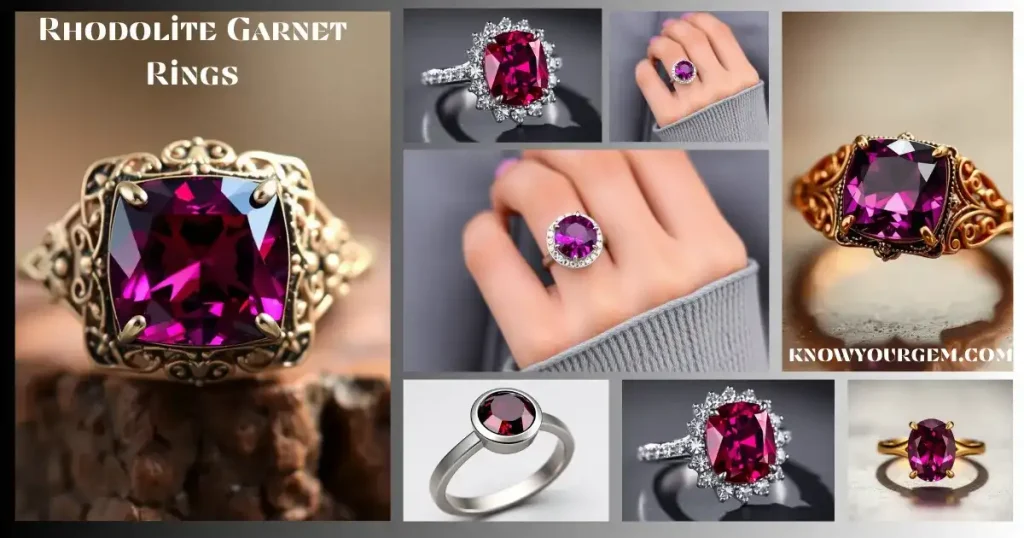
Jewelers often used to feature this gemstone in halo designs where small diamonds are surrounded by the center stone, which enhances its size and adds contrast. Bezel and prong settings are recommended for maximizing brilliance.
Jewelry like Rings, Pendants, Earrings:
Rhodolite garnet ring designs are available from simple solitaires to elaborate cocktail pieces. Each design owns Rhodolite’s durability, and that makes them suitable for high-contact applications. So, protective settings are recommended for those who usually engage in heavy activities.
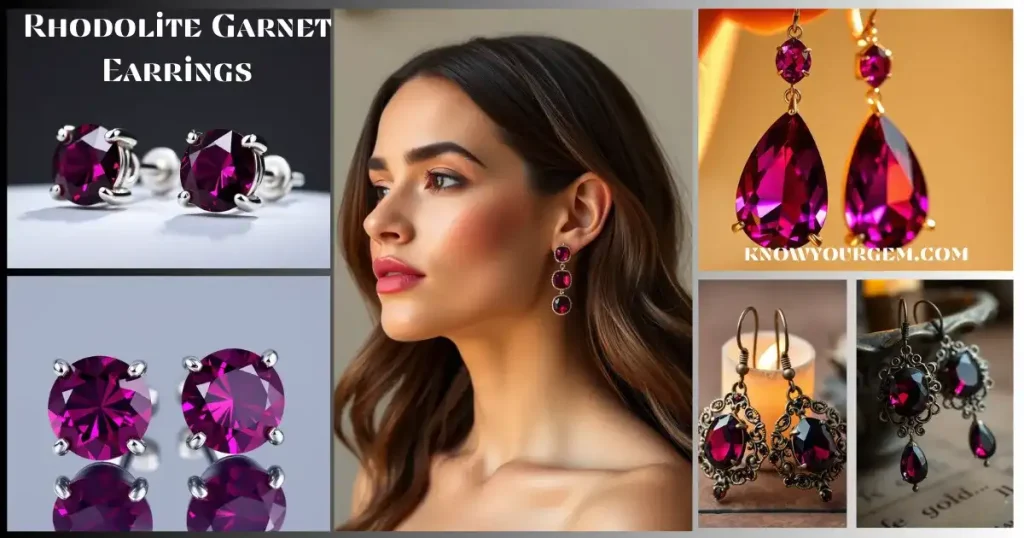
Rhodolite garnet earrings showcase the gem’s color perfectly, demand less protection than rings whether offer an excellent visibility. Stud, drop, and chandelier styles all work effectively with this versatile stone.
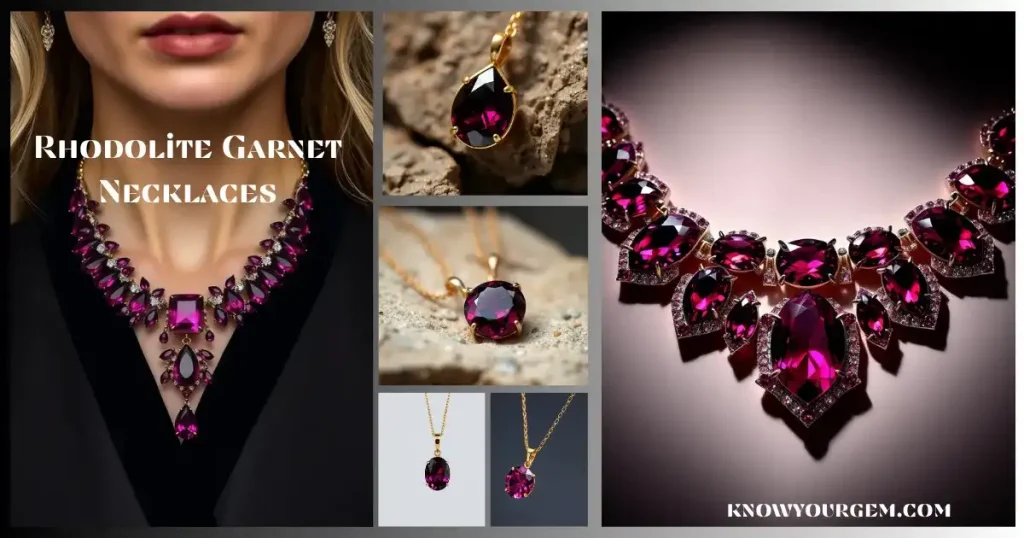
Rhodolite garnet necklace designs typically feature either a single pendant stone or multiple smaller gems arranged in strands. The gem’s consistent color makes matching stones for multi-gem pieces relatively straightforward.
Rhodolite garnet bracelet designs start from tennis bracelets to statement pieces that generally feature a single larger stone as a focal point.
Rhodolite garnet brooch designs generally offer opportunities to set them in creative settings that can highlight the stone’s romantic color in vintage-inspired or contemporary artistic pieces.
Rhodolite Garnet engagement ring:
Rhodolite garnet engagement ring choices suit those couples who are looking for a non-traditional alternative to diamond or sapphire. This gem is symbolized with love and devotion, and this combination makes this gem durable and affordable, which means that is can be an ideal option for people.
When you are choosing Garnet for owning a rhodolite garnet engagement ring then you must need to prioritize eye-clean specimens with having vivid color saturation and consider a protective setting that guards the stone’s facets from hard impacts.
Durability for daily wear:
The stone is durable and tough enough for daily wear jewelry due to having 7.5-7 Mohs hardness and a most striking color display like purplish-red.
Rhodolite garnet price & value factors:
Its beauty and practical brilliance make the stone more versatile and more valuable. Its durability, vivid color, and affordability make it a strong fit for everyone.
Size, clarity, color impact:
Rhodolite garnet price per carat increases with size, but less than rare gemstones. As under 5 carats, stones can command linear price, but exceptional specimens with more than 10 carats generally are worthy.
Eye-clean clarity can significantly increase the value of the stone, because inclusions commonly detract from the gemstone’s transparency advantage. But color intensity and purity drive the higher prices.
Market demand:
Existing market conditions favor well-cut vibrant specimens in 2-5 carat range of jewelry applications. Since Loose rhodolite garnet appeals to custom jewelry designers and collectors who appreciate selecting individual stones.
The brand Le Vian increased rhodolite’s popularity through fitting its rings and earrings.
JTV rhodolite garnet rings represent the accessible end of the market, which introduces the gem to television shopping audiences that exhibition also succeed in paying attention, first-time buyers.
Collector vs Commercial Stones:
Commercial grade material serves the jewelry industry admirably at the accessible price point. Collector-grade specimens, those exhibit an exceptional color, clarity, and size as compared to similarly graded rubies or sapphires.
Natural, Synthetic & Treated Stones:
Natural purplish-red Rhodolite garnet gets value because of its vivid colors, Mohs hardness, and brilliance. But fakes and synthetics usually lack the brilliance and vividness, and the main fault is that they are created in labs not naturally forming.
How to identify natural Rhodolite:
Gemological testing discloses a natural origin through characteristic inclusion patterns. Common features include crystal inclusions, needle-like rulite formations, and inclusions contain liquid and gas bubbles. These natural fingerprints distinguish authentic specimens from laboratory creations.
The absence of curved growth lines indicative of flame synthesis and the presence of the natural crystal structure confirm genuineness when it is examined under magnification.
Common Treatments:
A significant advantage of this variety lies in its typical lack of treatment. Most rhodolite garnet stone examples reach the market without heat treatment.
Most pieces of rhodolite garnet reach at the market in untreated condition, but they are different from colored gems. And this natural state draws the attention of buyers for such stones.
Lab-Grown Considerations:
Synthetic versions exist but remain uncommon in the marketplace due to the natural material’s abundance and affordability. The economic incentive for synthesis is minimal when natural alternatives cost less than production expenses for laboratory creation.
When it is encountered, that synthetic garnets typically serve industrial applications rather than jewelry purposes.
Care, cleaning & storage:
- Durability: Garnet is hard, but it still requires proper care to maintain its brilliance.
- Gentle cleaning: You can use warm water with mild soap for cleaning.
- Soft brush: It is best for cleaning or removing dust behind settings and prongs.
- Avoid ultrasonic: Because they can chip the stone.
- No harsh chemicals: Keep away bleach and strong cleaners because they can the stone.
- Temperature caution: Avoid sudden heat or cold which can stress the stone.
- Cosmetics warning: Remove jewelry before sprays, perfumes, or makeup to protect its sparkle.
- Skip steam: Pressure and heat can stress the stone.
Long-term preservation tips:
Store pieces separately in soft pouches or lined compartments to protect its from harder gemstones like diamond, Sapphire, and ruby.
Yearly professional inspection with jewelers can keep the sparkle of the gem.
For heirloom or investment jewelry, is believed to maintain records like receipts, certificates, and insurance appraisals, and refresh every 2-3 years to match the current market values.
Cultural meaning & symbolism:
Culturally and traditionally, Rhodolite garnet is valued for displaying beautiful color and also for its meaningful symbolism. Old practitioners have seen it as a protective stone, but now people link this stone with love, creativity, and romance, which makes it more than just a gem.
Historical Associations:
The stone was seen as a protective talisman in ancient culture. People believed that rhodolite garnet protected them from evil and guided them during travels. Medieval European people linked it with symbols of passion, devotion, and lasting relationships.
Birthstone Month:
Garnet is a birthstone of January month, but many people prefer its lighter, purple-red tones more than almandine brownish-red.
Astrology:
Astrological experts connected this stone to Rahu, which is the north lunar node. They generally recommend rhodolite garnet for emotional control and spiritual pursuits.
Rhodolite garnet benefits:
Traditional belief systems attribute various rhodolite garnet benefits, including emotional control, energy enhancement, and circulation support. While these claims are part of the gemstone’s cultural heritage, no scientific evidence supports metaphysical or medical properties.
Wearers can experience physiological benefits from the stone’s beauty and personal significance; that is the same satisfaction that drives from any meaningful jewelry pieces.
Modern interpretations:
Contemporary meanings can emphasize romance, creativity, and confidence. Since Jewelry designers select this variety for pieces celebrating love, artistic achievement, or personal milestones.
The gem’s accessible price point allows for meaningful gifting without financial strain, democratic colored stone ownership beyond traditional luxury markets.
Important Note: The meaning and benefits of Rhodolite embody cultural traditions and personal beliefs; they can’t compete with a medical perspective or scientifically proven effects.
Expert summary & buying advice:
Who should choose rhodolite garnet:
This versatile gem fits well for several profiles:
- Budget-conscious buyers who are seeking for rub-like aesthetics without a premium price can purchase Rhodolite.
- Creative individuals who are drawn to its unique purplish red coloration can purchase it from a reputable source that can provide its certification.
- Ethical consumers who appreciate untreated, natural gemstones can consider to purchase rhodolite for its authenticity and natural beauty.
- Jewelry enthusiasts who are looking to collect diversified color saturation they can consider rhodolite.
Key takeaways:
When you purchase rhodolite garnet jewelry, it is a must to prioritize these factors:
- Color First: Always relfect to vivid, pure purplish-red without brown or gray modifiers
- Clarity Matters: Eye-clean specimens maximize value and beauty
- Cut Quality: Well-proportioned faced cut can enhance brilliance and fire.
- Size Sweet Spot: The 2-5 carat rhodolite offers value for most jewelry applications
- Setting Protection: Choose designs that guard the stone’s edges and facets
- Natural Origin: Verify absence of treatments and synthetic production
- Reputable Sources: Purchase from established dealers who provide authenticity documentation
Investment Perspective:
Rhodolite garnet is not typically considered an investment like ruby and sapphire, because they own exceptional specimens, particularly those which exceed 10 carats, with superior and clarity hold value well and can appreciate modestly over time.
Final Trust building Conclusion:
Rhodolite garnet deserves recognition as one of the gemstone world’s best kept secrets. It delivers a stunning beauty, reliable durability, and honest value without the complications of treatments or synthetic alternatives that plague various colored stone markets.
If you are choosing rhodolite garnet for an engagement ring, for custom pieces, or just want to maximize your collection, then this stone can be an ideal pick for you.
FAQS:
1. How expensive rhodolite garnet is?
The price value of this stone can vary depending on factors like color, clarity, and size. It can command $10 to $300plus per carat for fine quality but top-quality raspberry without inclusions can be sold as premium pieces.
2. Is rhodolite the same as garnet?
Rhodolite is just a kind of garnet. It doesn’t carry the same look, properties, and values as like the main garnet.
3. Is rhodolite garnet rare?
Rhodolite distracts a middle position on the rarity spectrum. It is scarcer than common Almandine but more available than the top-tier Rubies or Alexandrite. Since fine quality specimens that display exceptional color and clarity qualify as rare, whether commercial grade material remains readily accessible.
4. Can it replace ruby?
For several jewelry applications, yes, rhodolite serves as an excellent ruby alternative when purplish-red coloration is acceptable. It offers a similar appearance at dramatically lower cost, which makes it ideal for larger statement pieces where ruby’s price would be prohibitive.
5. Is it suitable for engagement rings?
Yes, rhodolite garnet is naturally well suited for engagement rings because its durability and color saturation meet the requirements.
6. How do we compare rhodolite with amethyst?
Rhodolite has a harder Mohs scale and brighter and richer color, but amethyst is softer, cheaper, and found in larger sizes.
7. What color pairs well suit with rhodolite in jewelry?
A pair of rhodolite garnet with diamond can generally create an elegant contrast with white diamond. However, yellow and gold colors can enhance its red undertones.
8. How does it differ from tsavorite?
Both varieties belong to the garnet family but with different dramatic color combinations. Tsavorite is more expensive than rhodolite because tsavorite owns vivid green color and greater rarity.
9. How garnet and maroon color are different ?
Maroon describes a darker brownish-red hues, similar to what almandine garnet owns. Whether Rhodolite owns purplish-red.
Sellers who offer certification of trusted labs like GIA, IGI, IGS, and SSEF you should trust and buy this stone.
Gems Insight expert KamilHussian!

Welcome to KnowYourGem.com! your ultimate destination for uncovering the fascinating world of gems and their secrets! I'm Kamil Hussain, a passionate blogger with a Master’s degree in Economics, dedicated to bringing you insightful, well researched content that blends the beauty of gemstones with the art of storytelling. With a keen analytical mind and a love for discovering hidden treasures, I created this platform to help you explore the brilliance, history, and value of every gem.


[…] jewelry if it is treated carefully. It is found in different which start from almandine, pyrope, rhodolite, spessartine to tsavorite, and […]
[…] Rhodolite […]