
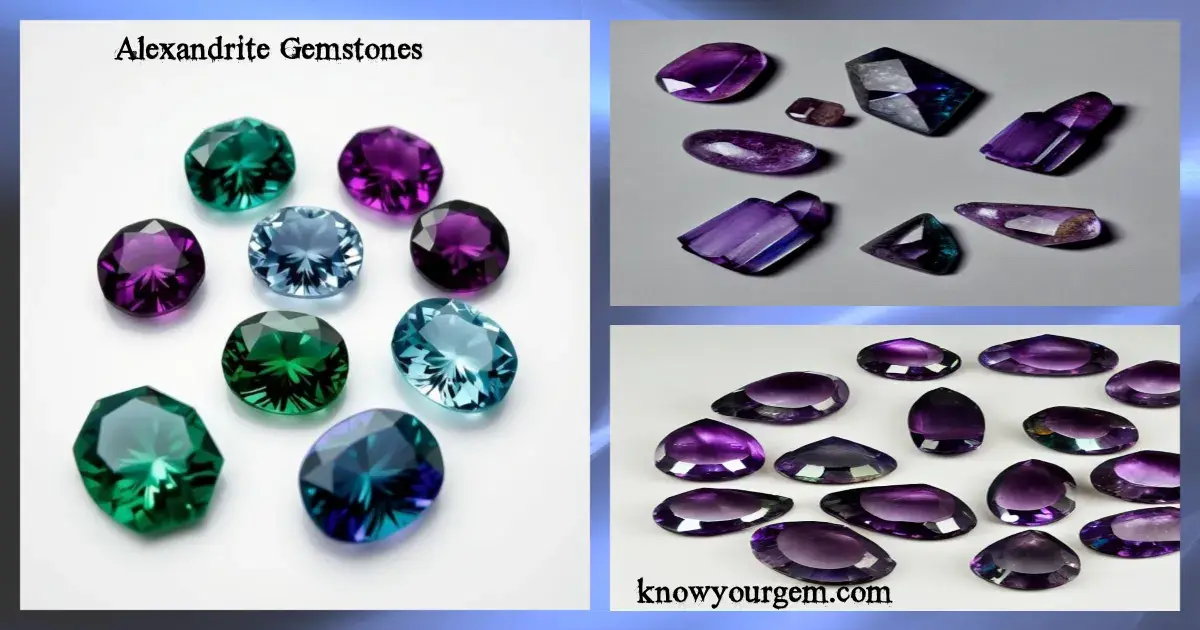

Overview:
Gemstone alexandrite is truly an extraordinary gem which is not just prized for its striking beauty but for a rare ability that can set it apart from nearly every other gem. Since this captivating gemstone can popularly change its color which is depending on the light, thus it can glow emerald green in daylight and shifting to a vibrant ruby red under incandescent light.
While having 8.5 Mohs hardness is durable and suitable enough for daily wear rings. Learn about 10 magic facts of Alexandrite rings.
What is Alexandrite?
Alexandrite is a fascinating gemstone belongs to the crysoberyl family. It was first discovered in Russia during the 1830s reign of Tsar Nicholas I, marked it as Russian stone, and was named in honor of Tsar Alexandrite II.
Alexandrite is chemically known as beryllium aluminum oxide with the formula BeAl2O4. Although, the composition this inclusion can trace of chromium, which is responsible for its unique visual effects and vibrant colors.
Alexandrite is quite hard scores 8.5 on the Mohs scale of hardness that makes it durable enough and scratch resistant and suitable for daily wear jewelry. It is crystallizes in orthorhombic crystal system, and reflects to the specific structure of its mineral class.
Alexandrite stone color changing properties:
Alexandrite stone’s color changing property like green in daylight to red under incandescent light happens due to chromium ions inside the gemstone Alexandrite. Thus, these ions interact with vary types of light in special ways, that make the stone appear green when viewed in daylight and shift to red when seen under warmer, indoor lighting.
Color-changing Gemstones:
When are about to say color changing gemstones then Alexandrite comes to first on mind because its unique color changing property is very strong and clear. As other stones can also change color, but their color shifting is less dramatically.
Such as, Garnet changes color from greenish or brownish tones to reddish or pinkish however the change is usually more subtle. Whether, sapphire tends to move from blue or grayish to blue to softer purple of pink shades but these color changes can’t compete the Alexandrite’s color changing property.
Chromium Ions and Light Absorption:
Chromium ions can play the key role here. Because they influence, how the gemstone absorbs light, creating two major light to create two main absorption areas in the blue to green and red parts of the spectrum whether mostly absorbing yellow light.
Daylight contains a color of blue to green wavelenghts, so Alexandrite looks green in natural light while Incandescent light has more red wavelengths, causing the stone to show its red color.
The Unique Alexandrite Color Change:
This equal and intense can switch between green and red is rare in other color changing gems can make alexandrite stand out. The sharpness and vibrancy of its color changing which is believed to make it one of the most fascinating gemstones prized for this property.
Alexandrite Birthstone meaning and symbolism:
The meaning of Alexandrite says that it is deeply connected to its unique to change color, which can make it a powerful symbol to transform, balance, and adaptability.
Metaphysical and Spiritual Significance:
If we consider it spiritually then gemstone Alexandrite is deeply linked to both the crown and heart chakras. Gemstone Alexandrite has ability to boost strength intuition and balance emotional healing.
People can gain clarity and insight from multiple perspectives most of them are associated with attracting love, prosperity, and good fortune. This, gem promotes balance and harmony in life and aiding those who are facing challenges and transitions by encouraging flexibility and growth.
Associating with Balance, Prosperity, and Transformation:
Alexandrite is a rare gemstone that converts its color into green in daylight and change to red in incandescent light. Gemstone Alexandrite owns symbols like balance between dualities like light and dark or physical and spiritual realms.
Although this balance can extend to personal growth, where Alexandrite is thought to enhance creativity, self expression, and build up confidence. So, it is often seen as a stone for renewing energy and inspiring new beginnings, can make it popular for marking life moments.
Birthstone for June (Shared with Pearl and Moonstone):
Alexandrite is one of the birthstones for June, and other two gems are pearl and moonstone which stand for intuition and feminine energy, Alexandrite can bring transformantion and luck to the trio, who round’s out June’s qualities with a focus on change and personal power.
Zodiac & Chakra Connections:
According to astrological calendar, gemstone Alexandrite is associated with zodiac sings like, Gamini and Cancer. Although, these signs share traits like adaptability, emotional depth, and intellectual curiosity.
That align well with gemstone’s symbolism regarding heart chakras where alexandrite connect itself to crown chakra, fostering spiritual awareness and connection , and the heart chakra can promote emotional balance and love.
Origin and sources of Natural Alexanrite:
Natural Alexandrite was first discovered in Russia during the 1830s in the Ural Mountains of Russia, which is specifically near the Tokovaya River in Emerald mines.
This original Russian source is popular for producing some of the finest and most valuable Alexandrite and the region is characterized for producing intense and vivid color changing Alexandrite.
Russian Alexandrite remains highly valued and rare because of depleted mines and its historical significance, including its association with Tsar gemstone Alexandrite II and Imperial Russia’s colors.
Alexandrite is apart from Russia, and is usually found in several other countries including Sri Lanka, Brazil, India, Tanzania, and Madagascar. Each region can produce stone with somewhat different qualities:
- Sri Lanka can also produce Alexandrites which can be more common, often with a softer and less intense color change than Russian stones.
- Brazil is also known as today’s gemstone Alexandrite producing source relatively high with striking color shifts, often more affordable than Russian ones.
- Tanzania, Madagascar, and India also yield Alexandrites, generally with good color changes but often varying in clarity and size compared to Russian and Brazilian stones.
Russian Alexandrite is the gold standard for its vivid color changing property, rarity, and historic prestige. However Brazilian, Sri Lankan, and East African Alexandrites also offer fine quality, but typically with softer hardness or having more inclusions.
How to identify and buy real Alexandrite?
If you want to buy a real alexandrite and also want to know how to identify authentic stones and understanding the differences between real, and lab created , and synthetic varieties are crucial.
How to Identify Real Alexandrite?
The most distinctive function of natural gemstone Alexandrite is its dramatic color change, means that it can shift from green or bluish to green in daylight to red, purplish to red, or reddish to red, or reddish to brown under incandescent light.
This color, factor is often called the Alexandrite effect, should be strong and vibrant, not dull or neon like, red flag for synthetic stones. Real gemstone Alexandrite is typically containing characteristic inclusions, which is tiny naturally formed internal features.
Although, features include fine needles or crystals but crucially, natural alexandrites don’t showcase curved growth lines or gas bubbles, that are common in synthetics. Inclusions and the unique “fingerprint” form help gemologists distinguish natural from lab created or synthetic alexandrite under magnification.
Physically, real alexandrite is doubly refractive means that it slits light into two rays with a refractive index around 1.746 to 1.755. Thus, it is also quite hard 8.5 on the Mohs scale of hardness, durable, and has a various
Differences Between Real, Lab-Created, and Synthetic Alexandrite:
- Real Alexandrite forms naturally in the earth and is usually rare. Each stone has unique color patterns and inclusions.
- Lab created gemstone Alexandrite is grown in labs to mimic natural stones but tend to be more uniform in color and clarity since the procedure is controlled. Therefore trained gemologists can often spot lab stones by their lack of natural inclusions and overly consistent change behavior.
- Synthetic gemstone Alexandrite sometimes confused with lab created can include materials like synthetic corundum or spinel made to imitate color change. Hence, it can often exhibit unnatural or neon colors and can have visible curved growth lines and gas bubbles under microscopic inspection.
Certifications to Look For:
When you are going to purchase gemstone Alexandrite, it is important to ask about certification from reputable gemological labs like:
- GIA (Gemological Institute of America)
- IGI (International Gemological Institute)
- AGL (American Gem Lab)
These labs are believed to provide detailed reports verifying the stone’s natural origin, quality characteristics like, color change strength, clarity, cut, and measurements. A lab report can be your best assurance against misrepresented stones.
Current Price Ranges per Carat:
- Gmestone is a rare, so its price can vary widely depend on quality:
- ALexandrite gems with having more shining color can be converted to clear green in daylight and intense red in incandescent light command the highest prices.
- Fine qualitative gemstone Alexandrite can cost you in between $15,000 to $70,000 per carat or more for museum quality stones with exceptional color and clarity, especially if from the Russian deposits.
- More Affordable pieces, can often from Brazil or Sri Lanka, can be in a range of $800 to $7,000 per carat which can depend on size and color change intensity.
Best Places to Buy Alexandrite (Online and Offline):
- Reputable virtual jewelers and gemstone dealers who provide certified gemstone alexandrite with a clear return policies option. While websites that can consistently offer third party lab reports and detailed photos are safest.
- Established Jewelry stores with gemological expertise can also help you see the stone in person and verify authenticity through expert staff.
- Auction houses or gemstones show sometimes offer a rare alexandrite, but require caution and due diligence.
- It is crucial to avoid impulse purchasers or dealers who don’t provide certification or detailed information about the stone’s origin. It is must to ask questions about the stone’s color change visibility under different lights, also check inclusions and requesting lab reports can help to ensure you get a genuine Alexandrite.
Alexandrite hardness and popularly used in Jewelry:
- Mohs hardness: gemstone Alexandrite is 8.5 on the mohs scales of hardness.
- Durability: High resistance to scratches and excellent toughness, no cleavage.
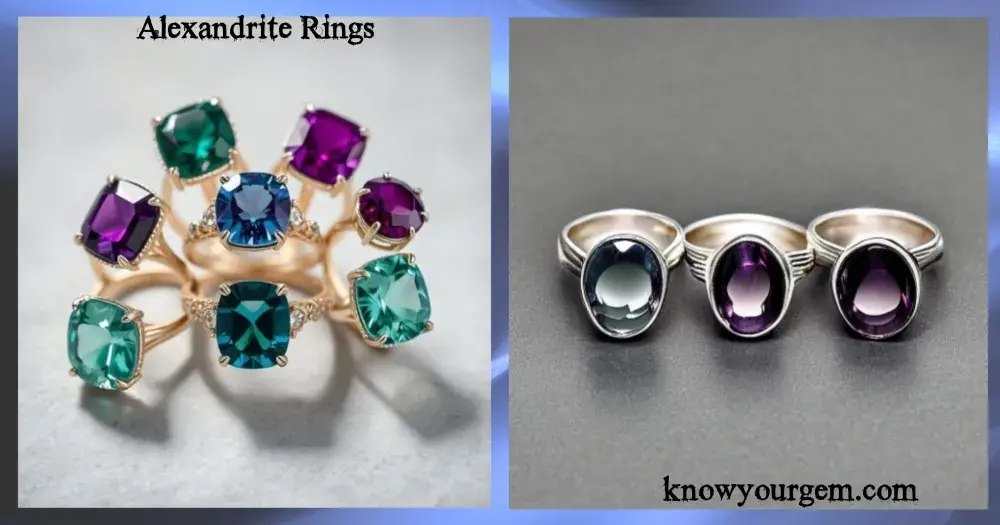
- Popular uses: Engagement rings, rings, bracelets, custom and heirloom jewelry
- Care: Suitable for daily wear but benefits from gentle cleaning and protection from harsh chemicals or sharp blows
How to Clean & Care for Alexandrite?
For best care Gemstone Alexandrite is pretty straightforward, but doing it right help to keep its remarkable color change and shine looking it best.
Tips for daily care:
Gemstone Alexandrite is most likely durable because it is 8.5 on the mohs scale of hardness, so it can be a daily based wear material.
However, it would become a smarter action if you can avoid exposing through cleaning it with harsh chemicals like household cleaners, perfumes, or chlorinated water, as this gem can dull the stone or damage the setting.
So, kindly wear off your Alexandrite jewelry before doing any heavy activity like, applying lotions or sprays, or swimming. Regularly check the setting, especially prongs on rings, to make sure the stone is ensure.
Cleaning Dos and Don’ts:
- Soak the jewelry in lukewarm water with few drops of mild liquid soap for few minutes.
- Gently clean it with a soft cloth or a soft bristled baby toothbrush.
- Avoid scrubbing hard or using abrasive or stiff bristled brushes.
- Wash thoroughly with a cool water and pat dry with a soft, lint free cloth.
- Do try to use ultrasonic or steam cleaner or other harsh chemicals, as they are harmful for Alexandrite.
Storage Advice:
Store your Alexandrite jewelry separately from other gemstone or jewelry for protecting it from scratches or keep it in a soft pouch or individual compartments in a jewelry box which can work better.
Moreover you can keep it in a cool, dry place and keep away it from direct sunlight and extreme temperature which can change to maintain its brilliance. So, it is a good idea to inspect your alexandrite jewelry now and then to catch any damage or loose settings early.
Final sparkle:
Gemstone Alexandrite is truly standing out for its unique and captivating color change, which can shifted beautifully to green in daylight and to red in incandescent light. Hence, its rare features can integrate it with durability and rich symbolism, which can make it a versatile choice for all kinds of jewelry like, from Alexandrite engagement rings to custom heirlooms.
Whether you’re drawn to its striking look or its deeper meaning of transformation and balance, then it is believed to offer something special for anyone who appreciate gemstones with character and history.
If you are interested to purchase gemstone Alexandrite or its jewelry must explore it deeply and discover pieces that can speak to you and also look for a certified stones to ensure authenticity and quality. Moreover if you could curious about the spiritual side, there’s a lot to learn about Alexandrite’s place among healing crystals too.
Recommendation:
Whether you are looking for a gemstone that can offer something truly special, then gemstone Alexandrite should be definitely be on your radar. It is tougher to find a gem that quite literally changes color before they look at it, shifting to a green color in a daylight to a warm red under indoor lighting.
Moreover its captivating look, carries a deeper symbolism around transformation, balance, and adaptability. Hence it is a stone that seems to embody life’s changes, and also making it a thoughtful gift for someone who can mark a milestone or a personal journey.
FAQS:
1. What the procedure of Gemstone Alexandrite mines?
Gemstone Alexandrite is typically mined either from primary sources, where it can be extracted directly from the rock formations (pegmatite or beryllium to rich rocks), or from secondary sources like riverbeds where stones have been naturally disloged. Hence the process can often involves traditional underground mining or alluvial with manual sorting and careful washing to recover these rare gems.
2. How look like Alexandrite engagement Rings?
Alexandrite engagement rings are striking and unique, functioning a gemstone that can shift color into green or bluish to green in daylight and vibrant red or purplish to red under warmer indoor lighting. Hence these Rings often come in a classic settings like solitaires or halo designs, with cuts like oval, cushion, or round that highlight the stone’s dramatic color change beautifully.
3. What can be Alexandrite birthstone meaning?
Gemstone Alexandrite as birthstone is symbolized with transformation, balance, and adaptability, and reflecting its unique color change that can be a mirror of life shifting moments. It is also believed to bring good fortune, love, and spiritual insight, making it a meaningful stone for personal growth and emotional healing.
4. Is Alexandrite rarer than diamond?
Gemstone Alexandrite is indeed rare than diamonds. Thus, the natural sources are very limited, and fine quality stones with a strong color change can make it highly prized collector’s gemstone. Whether diamond is more common globally, Alexandrite’s rarity and unique color shifting property set it apart as one of the rarest and most valuable gemstone.
5. Can Alexandrite be worn every day?
Gemstone Alexandrite is durable enough for everyday wear thanks to its hardness of 8.5 on the Mohs scale, which can give it a good resistance to scratches and daily wear and tear. However, it is best to avoid harsh impacts, chemicals, and extreme temperatures to keep its look better over time.

Welcome to KnowYourGem.com! your ultimate destination for uncovering the fascinating world of gems and their secrets! I'm Kamil Hussain, a passionate blogger with a Master’s degree in Economics, dedicated to bringing you insightful, well researched content that blends the beauty of gemstones with the art of storytelling. With a keen analytical mind and a love for discovering hidden treasures, I created this platform to help you explore the brilliance, history, and value of every gem.


[…] June Birthstone Alexandrite with three official birthstones–pearl, alexandrite, and moonstone; each one has its […]