
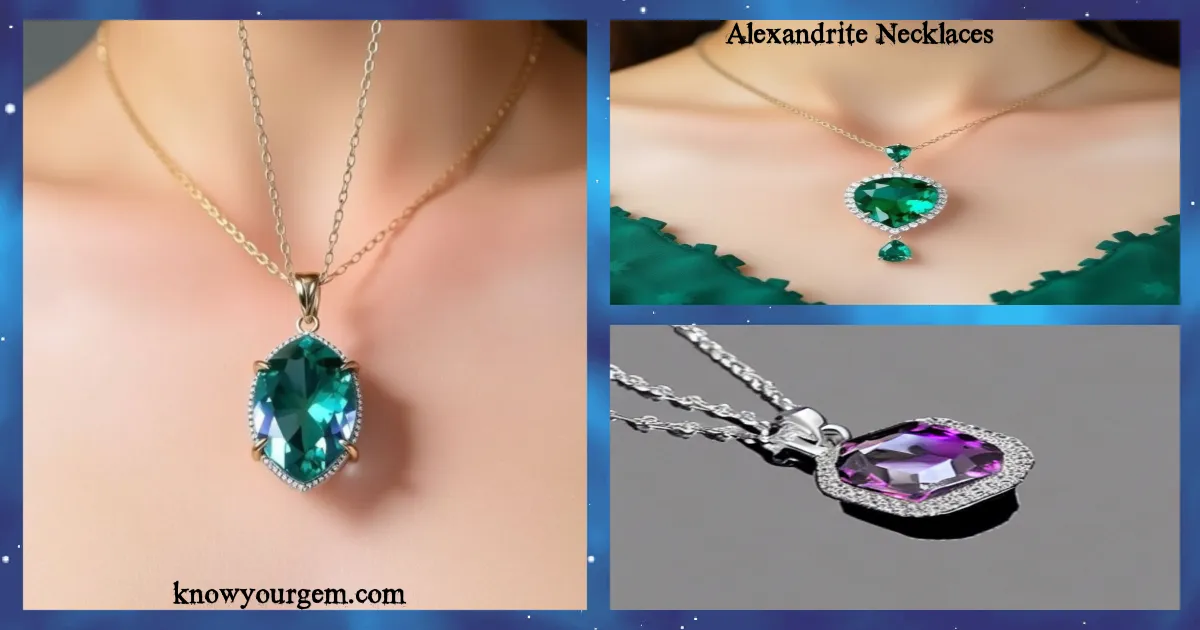

Overview:
Alexandrite necklaces showcase one of the most extraordinary and mystical gemstones in the world, and these necklaces are genuinely known for their rare and captivating ability to change color dramatically under daylight.
Alexandrine is often described as “ Emerald by day, ruby by night “ and also displays a stunning shift from vibrant green in daylight or fluorescent light to rich red or purplish-red colors under incandescent light.
Although this mesmerizing phenomenon is generally called the Alexandrite effect, which is caused by the unique interplay of chromium within the gem’s crystal structure, making each alexandrite necklace a truly unique and enchanting jewelry piece.
Gemstone Alexandrite: The Gemstone with a Magical Color changing Secret
A complete guide covers the optical properties, natural origin, and characteristics of Alexandrite:
Unique Optical Properties of Alexandrite Gemstone:
Alexandrite gemstone is famous as one of the most extraordinary color-shifting gemstones in the world. It has a captivating ability to change color, which can dramatically be described as “emerald by day and ruby by night.”
This stunning transformation is made of trace amounts of chromium ions within its natural crystal structure. And, this gemstone is structurally absorb vary wavelengths of light, under daylight or fluorescent light, vibrant red, purplish to red, or pink.
This, phenomenal visual effect is known as the alexandrite effect, which can be further enhanced by its strong pleochroism and allowing different colors to be seen at different viewing angles.
Natural Origin and Geological Significance of Alexandrite:
Natural alexandrite is the rarest type of chrysoberyl, which is crystallized in the orthorhombic system. The stone was first discovered in the 1830s in the Ural Mountains gemstones region of Russia established this location as the historic and most famous source for genuine alexandrite.
Although it was continuously highly prized for in locally because collectors were used to highly rate it when they collect. Urals, alexandrite is also sourced from other rare geological environments globally, contributing to its classification among the most coveted rare gemstones.
More characteristics about Alexandrite and its Rarity:
- Hardness: Alexandrite is 8.5 on the Mohs scale of hardness which makes it durable for everyday wear.
- Color Shift: It has a unique power to shit color from deep red to green, which makes it a versatile gem in the world.
- Rarity: Huge, finest qualitative natural Alexandrite stone is extremely scarce, to enhancing its value and appeal in the gem market.
- Pleochroism and Optical Properties: Gemstone Alexandrite exhibits a strong pleochroism and moderate double refraction, which contributes to its mystical allure.
So together, the stone’s rarity and its fascinating color-shifting properties make it an iconic Ural Mountain gem that is best suited for modern jewelry and spiritual healing.
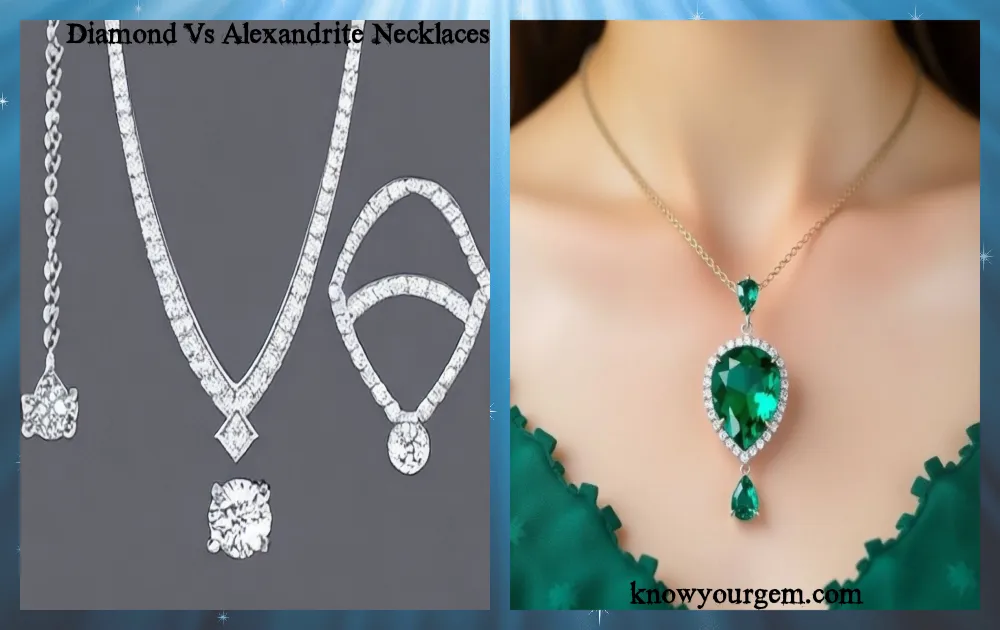
Why June’s birthstone alexandrite is the ultimate symbol of Elegance and individuality?
The June birthstone, alexandrite, especially is represented in an alexandrite necklace, is the ultimate symbol of elegance and individuality because of its rare, mystical color-shifting property and its deep symbolic meaning tied to transformation, creativity, and emotional balance.
It shifts from vivid green in deep red in daylight; under incandescent light mirrors the duality of human nature and makes it a unique reflection of personal growth, adaptability, and inner strength.
Symbolism and Meaning of Alexandrite Necklaces:
Alexandrite is often used in necklaces but is described as “emerald by day and ruby by night,” which can embody the flow and change inherent in life. The stone owns color-changing symbolism that represents transformation, renewal, and balance, qualities that resonate strongly with those who can see themselves as evolving individuals.
Gemstone Alexandrite is internally connected with the crown and heart chakra that can encourage spiritual insight and emotional healing. Hence, Alexandrite is believed to create energy and promote emotional balance, which helps wearers to navigate their paths with confidence and clarity.
A gem has been linked with good fortune, courage, and prosperity. Because this gemstone is not just recognized for its beautiful adornments but also as a lucky gemstone that attracts positive energy and growth.
As well as the gem’s rarity and connection to historical roots in the Ural Mountains of Russia add regal and timeless prestige, further underscoring its role as a treasure of elegance and refinement.
Alexandrite in Birthstone Jewelry and Gifts:
Alexandrite is one of the birthstones of June. It holds a special significance for those whose birth month is June, particularly under the zodiac signs Gemini and Cancer. Since this gemstone is symbolized with celebration of an individuality, versatility, and emotional strength, which make it a meaningful gift for birthdays, anniversaries (especially the 55th), and milestones that mark transformation and growth.
Also, Alexandrite necklaces are particularly described as a birthstone jewelry as they visually embody the uniqueness of the wearer’s journey.
Purchasing or selling of alexandrite necklaces is a signal of recognition of someone’s personal evolution, like creative energy and a quest for emotional balance all these qualities can make these jewels much more than just a decorative piece, but a talisman for some changes in life.
Why Alexandrite Necklaces Symbolize Elegance and Individuality?
- Color-Shifting phenomenon: Alexandrite necklaces have a chameleon-like color change that epitomizes individuality and the dynamic nature of personal identity.
- Rarity and exclusivity: Alexandrite as a rare gemstone, conveys a sense of luxury and one of a kind distinction.
- Spiritual and emotional balance: It is associated with heart chakra balance and emotional healing appeal to those who are seeking harmony and self-awareness.
- Creative energy stone: Gemstone Alexandrite is symbolized with unlocking and nurturing creative potential and adaptability.
- Meaningful gifting: This gem is perfect for special occasions like birthday and anniversary gifts.
Real Alexandrite Necklace Designs:
Alexandrite necklaces come in a rich kind and styles and designs that showcase this rare gemstone’s magical color-shifting beauty, which makes them highly sought after in both custom and luxury jewelry collections.
Their diversity spans from classic cuts and settings to vintage inspired lines and modern, bespoke creations, all crafted to highlighted alexandrite’s unique visual properties and rarity.
Popular Alexandrite Necklaces Styles:
- Solitaire Alexandrite Necklaces: These alexandrite necklaces are the timeless classic, solitaire alexandrite pendants that feature a single, beautifully cut alexandrite stone, often round, oval, pear, or cushion shaped, set in a simple yet elegant metal frame. Thus, these styles emphasize the gem’s natural color-shifting effect without distraction.
- Halo Setting Alexandrite necklaces: In these styles, alexandrite necklaces are encircled by “halo” of smaller diamonds or gemstones which enhance their brilliance and add luxury flair. Halo settings are popular in vintage-inspired and art deco alexandrite necklaces, and can create a luminous frame that draws the eye toward the centerpiece.
- Multi-Stone Designed Alexandrite necklaces: They feature cluster or linear arrangements of multiple alexandrite stones or integration with diamonds and complementary gemstones, which offer a dramatic and sophisticated look, perfect for statement pieces.
- Custom and Bespoke Designed Alexandrite Necklaces: Various jewelers offer tailored alexandrite necklaces where purchasers can purchase the cut, setting, and metal. Thus, this personalized approach enables one-of-a-kind jewelry that matches the wearer’s individual style and taste, often incorporating intricate metalwork or unique design motifs.
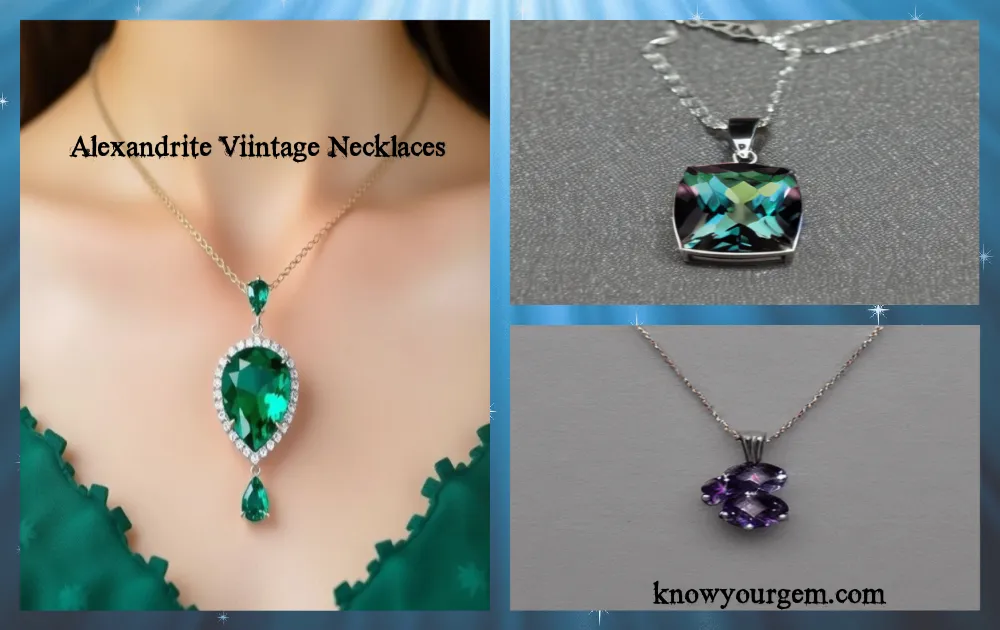
Authenticity Matters for Alexandrite diamond necklace:
Authenticity is essential when you are going to buy an authentic alexandrite necklace, as like this extraordinary gemstone’s rarity and unique color-changing properties make it a target for synthetics and imitations.
Understanding how to verify authenticity and evaluate value is essential for ensuring you invest in a genuine, high-quality piece.
Identifying an Authentic Alexandrite Necklace:
The hallmark of a natural alexandrite is its distinctive color-shifting phenomenon, changing from green or bluish to green in daylight to red or purplish to red under incandescent light.
While observing this effect clearly is the first step in identifying authenticity. However, various synthetic alexandrites or simulants attempt to mimic this but often lack the same depth or natural variation in color shift.
The Role of Gemstone Certification and Grading:
The most reliable way to verify the authenticity of alexandrite necklaces is to obtain a certification from a reputable gemological laboratory like GIA (Gemological Institute of America) or IGS (International Gem Society).
As these certifications can confirm the stone’s natural origin, the presence of genuine color change, and other quality indicators like clarity, cut, carat weight, and any treatments. Certification also provides peace of mind regarding the value the necklace and its authenticity.
Synthetic vs. Natural Alexandrite:
Synthetic alexandrites are lab-grown gems designed to replicate the natural stone’s color change but often feature differences detectable by experts.
Synthetics tend to be clearer, larger, and free from natural inclusions, which can make them visually appealing but less valuable. Real alexandrites usually have some cloudiness or natural inclusions and are rarely found above one carat in size at gem quality.
Buying Guide for an Authentic Alexandrite Necklace:
- Be cautious of price and size: Very large, flawless alexandrite stones at low prices often indicate synthetic or imitation gems.
- Observe the color change: Must check the gemstone under natural daylight and incandescent or warm light to confirm the classic green to red shift.
- Inspect inclusions: Use a 10x jeweler’s loupe to inspect internal features like natural inclusions, which support authenticity.
- Request certification: Always purchase stones accompanied by lab reports from reputable gemological labs.
- Ask about origin: Authentic natural alexandrite comes from known sources like the Ural Mountains, Sri Lanka, or Brazil, and sellers should provide mining location details.
- Consult a gemologist: It is must for expensive purchases; professional evaluation ensures accuracy beyond simple home tests.
Alexandrite Necklaces Price Guide:
| Necklace Type | Typical Price (USD) | Best For |
| Lab-Grown Alexandrite (Sterling Silver) | $50-$300 | These prices for Alexandrite necklaces with lab grown stone are budget-friendly everyday wear |
| Lab-Grown Alexandrite (14K/18K Gold) | $800-$2,500 | These prices are usually for fine jewelry and gifts |
| Natural Alexandrite (Commercial Quality) | $2,000-$8,000 | Alexandrite necklaces holding natural gem can command such prices |
| Natural Alexandrite (Fine Quality) | $8,000-$25,000 | These are luxury Alexandrite necklaces and heirloom pieces command such prices |
| Exceptional Russian or Premium Natural Alexandrite | $25,000-$100,000 plus | These are investment grade and museum quality jewelry and are sold for such prices |
Price Factors: Color-change intensity, carat weight, clarity, origin (Russian, Brazilian, Sri Lankan, or African), metal type, craftsmanship, and certification have the greatest impact on Alexandrite necklace prices. Fine natural Alexandrite remains one of the world’s rarest gemstones, while lab-grown Alexandrite offers similar beauty at a fraction of the cost.
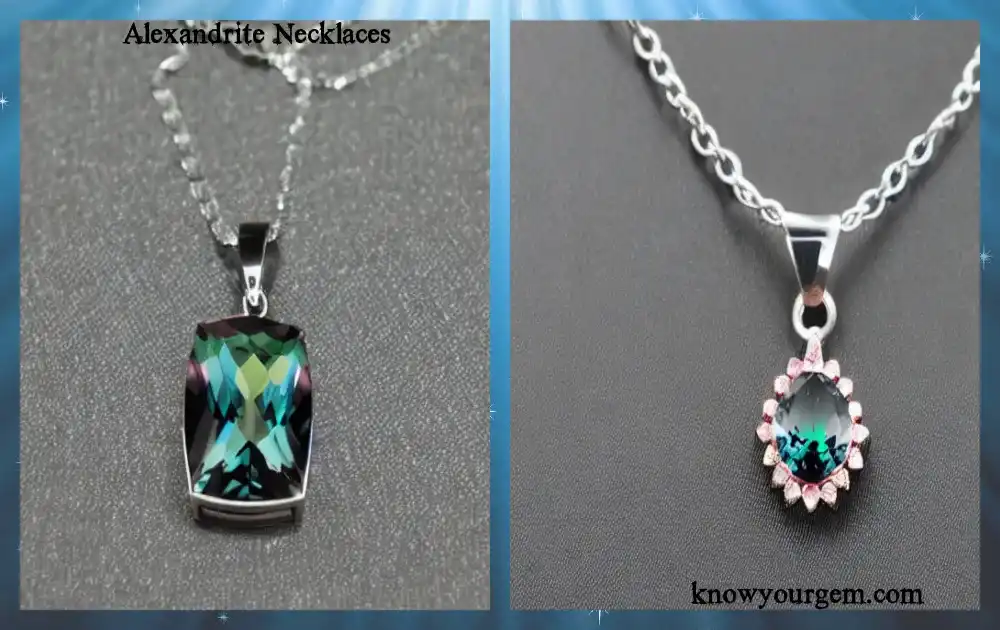
Final sparkle:
Alexandrite necklaces embody a perfect fusion of rarity, elegance, and mystical beauty. Their captivating color-shifting property like from green to red, reflects individuality and transformation, making each piece uniquely personal and deeply symbolic.
Whether crafted in classic solitaire styles or intricate vintage-inspired designs, alexandrite necklaces offer timeless luxury and emotional significance. With their natural origin rooted in rare geological sites and certified authenticity ensuring genuine value, these necklaces can stand as a treasure, an adornment that celebrates creativity, emotional balance, and lasting sophistication.
Recommendation:
Alexandrite necklaces are a stunning choice for those who are actually looking for unique, elegant jewelry that integrates rarity with mesmerizing color change. When you are going to select one necklace then must focus on a vivid color-shifting stone that can be certified by a reputable gem lab to guarantee authenticity and quality.
When selecting one, focus on vivid color-shifting stones certified by reputable gem labs to guarantee authenticity and quality. So, select designs that highlight this rare gemstone’s beauty, whether classic or custom, to enjoy a timeless piece that can be symbolized by individuality and sophistication.
Short Disclaimer:
Must consult with gemological labs like GIA (Gemological Institute of America) or AGL (American Gemological Laboratories), and don’t forget to ask about the certification of the gem from a reputable source before purchasing any jewelry. We will not be responsible for any type of mistake that brings any fake jewel your way.
FAQS:
1. How to tell if alexandrite is real or fake
To recognize whether alexandrite is real or fake, you will need to check for its signature color change from green or bluish to green in daylight and red or purplish to red under incandescent light. Buyers also need to look for natural inclusions under magnification, as synthetic stone usually lacks them. It is essential to ask for the certification from a reputable gemological lab to verify the gem’s authenticity.
2. Is alexandrite durable gemstone?
Alexandrite is a durable gemstone with a hardness of 8.5 on the Mohs scale, which makes it highly resistant to scratches and suitable for everyday jewelry wear. While it has good toughness and no cleavage, care should be taken to avoid sharp impacts or extreme stress to prevent potential damage.
3. What is the look of alexandrite engagement ring?
An alexandrite engagement ring typically features a captivating color-shifting gemstone that changes from green in daylight to red under warm light, set in elegant styles like solitaire, halo, or vintage-inspired designs. Thus, it often uses cuts like oval, round, or cushion to maximize the gem’s unique color play, paired with metals like white gold, rose gold, or platinum to enhance its mystical allure.
4. How to choose a better women’s alexandrite necklace?
To select a better women’s alexandrite necklace, look for a stone with having a strong, vibrant color shift from green in daylight to red under warm light, and ensure it comes with certification from a reputable gem lab confirming its natural origin. In addition, pick a necklace design and metal setting that complement her personal style while highlighting the gem’s unique color-changing beauty.
5. What is the difference between alexandrite and diamond necklace?
The major difference between an alexandrite necklace and a diamond necklace in different properties like, Alexandrite is popular for its rare and mesmerizing color-shifting ability, changing look from green in daylight to red under incandescent light, while diamond is mostly valued for its consistent brilliance, clarity, and exceptional hardness (Mohs 10). Diamond also offers timeless sparkle and supreme durability, whereas alexandrite that is symbolized by individuality and change.
Must Read:
I have extensive knowledge about Alexandrite stones. If you have any questions, please feel free to leave a comment on my blog post, and I will be sure to respond. Thank you.

Welcome to KnowYourGem.com! your ultimate destination for uncovering the fascinating world of gems and their secrets! I'm Kamil Hussain, a passionate blogger with a Master’s degree in Economics, dedicated to bringing you insightful, well researched content that blends the beauty of gemstones with the art of storytelling. With a keen analytical mind and a love for discovering hidden treasures, I created this platform to help you explore the brilliance, history, and value of every gem.


