


Pink gemstones are real natural minerals, they get their color from infinitesimal elements, detects, or light absorption. The term covers many stones like, diamond, sapphire, Ruby, morganite, coral with vary color spectrum, prices, hardness, and origins.
What Are Pink Gemstones?
A pink gemstone is any pink mineral or authentic gem; its more valuable pink color comes from trace elements, structural defects, or light scattering. Different mechanisms and elements produce different behaviors:
- Chromium in corundum produces pink sapphire; more chromium makes ruby.
- Manganese colors morganite like peach pink.
- Rose quartz’s pink color comes from tiny inclusions and structural irregularities, not from a single element.
- Pink opal gets its color from trace iron and light scattering within silica.
All these differences affect durability; though chromium colored stones usually keep their color, whereas others can fade when they are exposed to light.
Pink corundum and pink diamond are primarily rated as precious stones and varieties can command premium prices compared to semi-precious stones like rose quartz and rhodolite, which are considered as more affordable
Types of Pink Gemstones: (Complete List)
There are many pink gemstones existing on the Earth that buyers or collectors may not be able to identify because of their hidden identity. It is a fact that each pink variety brings diversified brilliance and balance of rarity, durability, and pricing structure.
1. Pink sapphire:
According to the current market and old market structure, pink sapphire is set as an expensive natural vivid pink color displaying gem; its pinkish glow comes from corundum.
As well as due to a rating on the 9 Mohs scale, the stone describes its good durability that is suitable for everyday wear jewelry.
2. Pink diamond:
This is a variety of natural diamond but with a pink color. The stone gets its color from crystal-lattice distortion rather than trace elements. However, this variety is extremely rare in diamonds.
Throughout history, its supply came rarely from Australian deposits. And because of its rarity, having 10 Mohs as diamond and with a vivid pink glow, it breaks the record for high pricing.
3. Morganite:
A different pink variety that displays pink to peach beryl, which is also identified as a soft romantic color like blush roses. Morganite usually charges less than sapphire and diamond varieties and in engagement rings, the stone is more popular.
4. Rose quartz:
Its milky, gentle pink glow makes it one of the most favorite pink gemstones. Rose quartz gets its color from natural inclusions and microstructure, not from a single element. The pink gemstone is more affordable than curved and tumbled stones.
5. Pink tourmaline:
A variety of tourmaline but with pale pink to deep magenta. The stone is usually called rubelite when it displays a red glow. The stone contains strong pleochroism and a wide color range.
6. Pink spinel:
Throughout its history, it has been mistaken for ruby and sapphire. But eventually it could be identified correctly, and people now call it spinel. Pink spinel has good durability and brilliance; it is often undervalued.
7. Pink opal:
It offers a soft, matte pink without the “play of color”; it is seen as precious opal.
8. Kunzite:
It is a pink to lilac spodumene gemstone notable for its strong peochroism which usually shifts with different viewing angles. Although Cabochons and bead cuts in polished patterns are its main attractions.
9. Rhodochrosite:
It has striking banded pink and white manganese carbonate it is often shown as cabs and slices. Although it is quite soft and brittle, this stone can be a beautiful choice for a pendant or display piece but won’t work for daily-wear jewelry like a ring.
10. Pink garnet:
The term covers rhodolite and malaya types that showcase a pink to purplish or orangey spectrum. The stone offers hardness and brilliance at a moderate level as compared to premium pink corundum.
11. Pink zircon:
A variety of zircon that displays its brilliance and fiery glow. People link this stone to cubic zirconia, but they are wrong because it is a natural mineral, not a synthetic material.
Pink Gemstones Color Guide:
A detailed guide below covers pink gemstones color identity:
Pink gemstones Hues:
Where the pink, red, purple, or pure pink sit on the color wheel, and their perceived hues shift with light and surrounding colors.
Pink gemstones Tone:
In light or dark pink gemstones appear, from pale blush to deep rose. Their lighter tones can be read as soft and subtle, but darker tones provide a richer and more dramatic glow.
Saturation of Pink gemstones
The intensity or purity of the color, from muted/grayish to vivid/pure, then the higher saturation usually increases rarity and price.
Overlap with Purple and Red color:
Pink color often overlaps purple stones like kunzite, violet-leaning sapphire, and red near the ruby boundary. Whether a stone near these boundaries can appear ambiguous even to trained gemologists.
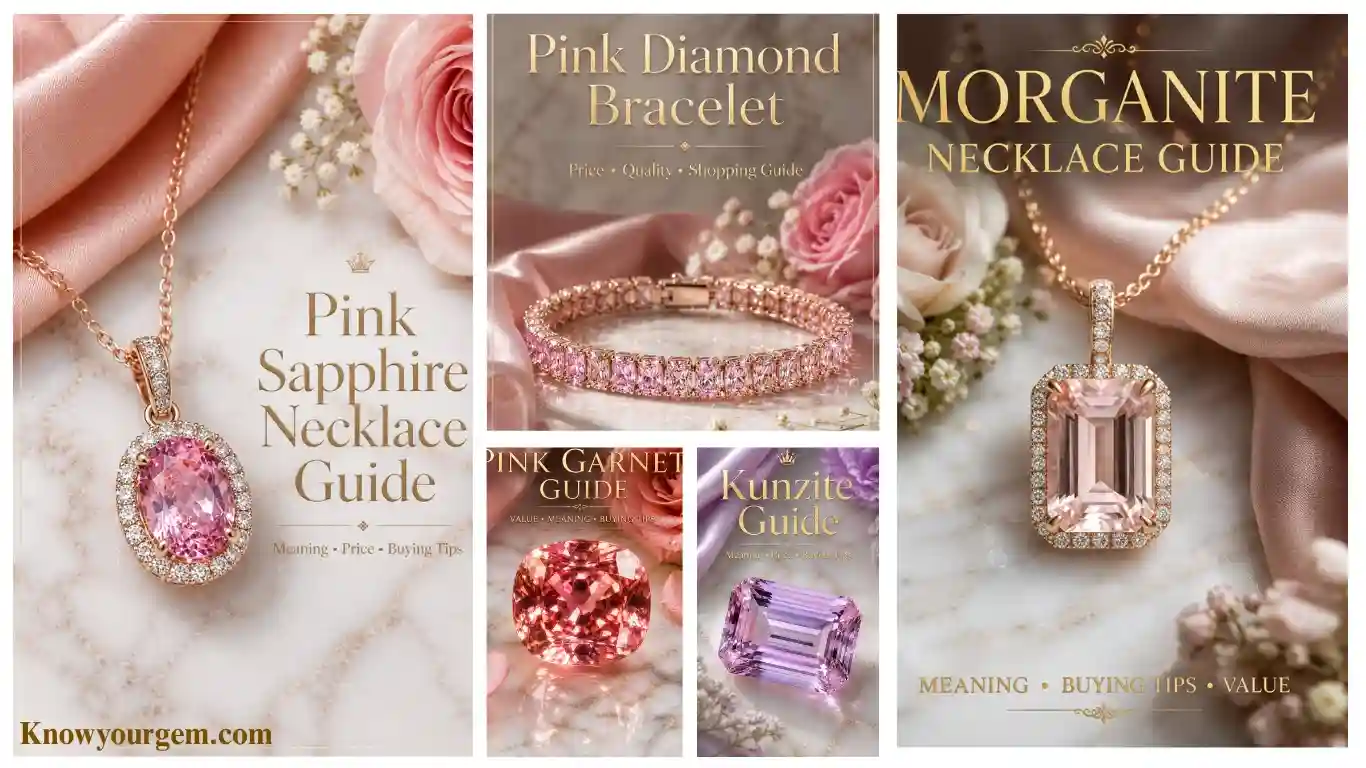
Pink Gemstone Hardness & Durability Comparison:
Hardness measures scratch resistance; toughness, controls chipping and cracking. So daily wear jewelry requires high hardness and good toughness.
| Gemstone | Mohs Scale | Daily Wear | Notes |
| Pink diamond | It is 10 on Mohs scale of hardness | Excellent | It is extremely durable |
| Pink sapphire | It owns 9 Moh hardness | Excellent | It is very tough, great for rings |
| Pink spinel | It is 8 Mohs scale | Excellent | It is durable and stable |
| Pink tourmaline | It has 7 to 7.5 Mohs hardess | Good | It is suitable for daily wear |
| Rose quartz | It has 7 Mohs hardness | Good | This stone is affordable, softer edges |
| Kunzite | It owns 6.5 to 7 Mohs scale of hardness | Fair | It has cleavage issues, can fades color in sunlight |
| Pink garnet | It owns 6.5 to 7.5 Mohs hardness | Good | It is durable, but varies by type |
| Pink zircon | It has 6 to 7.5 Mohs hardness | Good | It has brittle facet edges |
| Pink jade | It is 6.5 to 7 on the Mohs scale of hardness | Good | It is tough, resistant to breakage |
| Pink chalcedony | It has 6.5 to 7 Mohs scale | Good | It is durable microcrystalline quartz |
| Rhodonite | It carries 5.5 to 6.5 Mohs hardness | Fair | It is softer, needs care |
| Pink opal | It is softer rates 5 to 6.5 Mohs hardness | Poor | It is porous, easily scratched |
| Rhodochrosite | It is too soft due to having 3.5 to 4 Mohs hardness | Poor | It is too soft for rings |
| Pink coral | It is much softer with 3 to 4 Mohs hardness | Poor | It is sensitive to chemicals |
Notes: Your top treasure should be pink diamond, pink sapphire, and pink spinel, as they are suitable for everyday day rings as well as they can also shine in engagement rings.
However, kunzite is a stone that usually contains decent hardness but poor toughness and light sensitivity; it also carries. So reserve soft or porous stones like rhodochrosite, opal, and coral are suitable for pendants, earrings, or protected settings.
Pink Gemstone Price and Value Guide:
- Pink gemstones prices can vary according to the stone’s rarity, Mohs hardness, clarity, color, size, and treatment. For example, rose quartz commands a few dollars per carat, but the finest fancy pink diamond can be sold for millions of dollars per carat.
- Carat weight can drive price higher at key sizes like 1, 2, 5, whether origin adds quality, for example Kashmir or Burmese sapphire are sold for premium prices due to having historic scarcity.
- Treatment status is critical because untreated pink sapphire can command more price than heat-treated stones of similar quality.
- Rarity defines vivid pink gemstones like padparadscha sapphire and natural pink diamond, where demand consistently going up with limited supply.
- GIA, IGS, SSEF, Gübelin are the most trusted labs which enhance the value of gems by verifying treatment and origin, reducing buyer uncertainty.
| Gemstone | Approximate Price Range (per carat) |
| Rose quartz | It commands price like $1 to $10 per carat |
| Pink chalcedony | It commands $5-$25 per carat |
| Rhodonite | It is sold for $5-$40 per carat |
| Pink opal | It can sell for $10-$60 per carat |
| Pink jade | It can be sold for $20-$200 per carat |
| Pink garnet | Its price can range from $50–$400 per carat |
| Pink zircon | It is sold for $50–$400 per carat |
| Pink tourmaline | It commands prices like $100–$1,000+ |
| Kunzite | It is sold for $100–$500 per carat |
| Pink spinel | It can command $200–$2,000 per carat |
| Morganite | It is sold for $200–$1,500 per carat |
| Pink sapphire | It is sold for $500–$8,000+ per carat |
| Padparadscha sapphire | Its prices are $3,000–$30,000+ per carat |
| Natural pink diamond | It commands prices like $10,000–$1,000,000+ per carat |
These price ranges shift constantly with the market conditions and are meant as general orientation rather than an appraisal. It is best to always confirm the current value of a gem from gemologists before buying it.
What are Rarest & Most Valuable Pink Gemstones?
There are four rarest and most valuable pink gemstones ever found; below is a clear guide for all:
Natural Pink Diamond:
It is one of the rarest and most valuable pink gemstones ever mined on the Earth’s surface. It is sold for millions of dollars per carat. Its supply is empty after the Argyle mine closure in Australia.
Padparadscha Sapphire:
It is more valued for its blossom hue, made by precise chromium-iron balance. Its untreated pieces from Sri Lanka can command premium prices.
Pink Spinel:
It is an undervalued pink gemstone; throughout royal history, it was often mistaken for ruby. It offers exceptional beauty and long-term appreciation potential.
Investment-Grade Pink Gems:
These most valuable pink gemstones carry untreated color, lab certification, larger sizes, and provenance. Best treated as illiquid, long-term holdings.
Best Pink Gemstones for Jewelry:
The guide below identifies what pink gemstones are best for Jewelry:
Best pink gemstones for Rings:
Pink sapphire and pink diamond both lead for daily wear rings because of having (9) and (10) Mohs scale of hardness. On the other hand, morganite and pink spinel are durable but alternate-tier choices. Morganite offers a lower-cost option for larger stones.
Best pink gemstones for Necklaces:
Pendants face less impact, which makes softer gemstones viable. While Rhodochrosite, pink opal, and kunzite shine as centerpiece gemstones with displaying striking patterns.
Best Pink Gemstones for Earrings:
Earrings are seen as moderate wear; they suit stones with having brilliance but lower hardness. Such as pink tourmaline, pink zircon and rose quartz deliver vibrant sparkle without having tounghness like sapphire.
Best Pink Gemstones for Daily Wear:
Pink sapphire is an ideal and versatile choice for daily wear jewelry, like rings and earrings, and is available across a wide price range to suit different budgets.
Best Pink Gemstones for Bridal Jewelry:
Morganite is becoming a trend in engagement rings due to having a romantic color at a lower cost than sapphire and diamond. So, holding it up well in a protective setting can be safer.
Pink Sapphire vs Other Popular Pink Gemstones:
The difference between pink sapphire vs other popular pink gemstones is as follows:
Pink Sapphire vs Pink Diamond:
Both pink gemstones are exceptionally hard and durable; however, a pink diamond’s cost is dramatically higher due to extreme rarity. However pink sapphire delivers a similar luxury feel at a more accessible price structure.
Morganite vs Pink Sapphire:
Morganite is softer with 7.5 -8 Mohs hardness. The stone displays less brilliance compared to pink sapphire. Morganite is cheaper in price than pink sapphire.
Pink Spinel vs Pink Sapphire:
Both pink gemstones are closely linked on Mohs hardness (8 vs 9) and historically confused with one another. Pink Sapphire is sold for higher prices compared to pink spinel.
Rose Quartz vs Morganite:
Both are soft pink gemstones. Since, rose quartz is dramatically cheaper and usually cut as a cabochon or bead. But morganite is found in facet cut; it offers more sparkle and brilliance.
Pink Tourmaline vs Pink Sapphire:
Tourmaline offers a wider pink shades and is often considered for its clear look with mid pricing range. Whereas sapphire decisively wins on hardness and long-term durability.
Pink vs Purple Gemstones:
Pink gemstones integrate edges with kunzite, tourmaline, and violetish sapphire. Since pure purple stones like amethyst get their color from iron and irradiation, not like chromium or manganese in pink stones.
Precious vs Semi-Precious Pink gemstones:
Precious pink gemstones like sapphire and diamond offer superior hardness and provide resale value. However, semi-precious pink gemstones like rose quartz, rhodolite, and chalcedony provide beauty at a lower price and appeal to aesthetic-focused buyers.
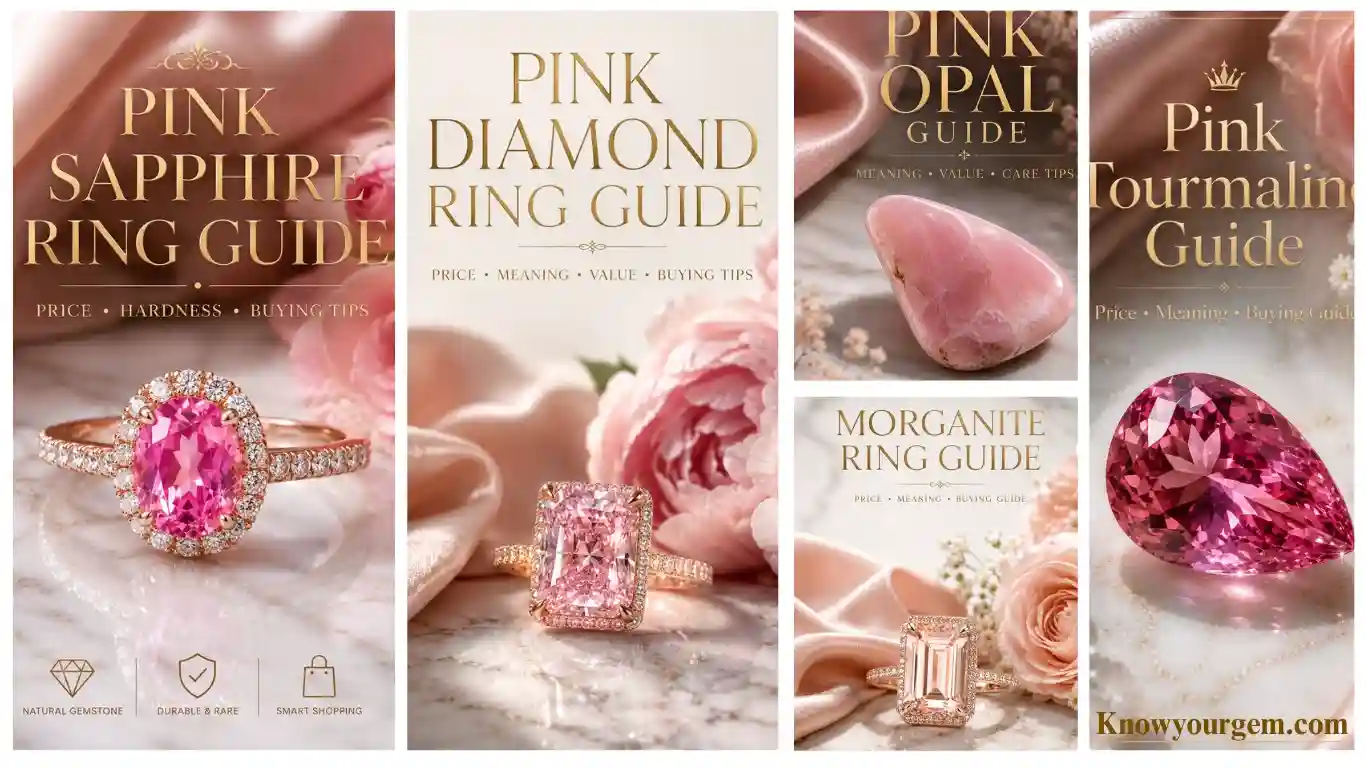
Natural, Treated & Lab-Created Pink Gemstones:
This deep descriptive guide differentiates natural pink gemstones from lab-grown ones:
Natural Pink Gemstones:
They are formed underground for more than millions of years without human intervention. Untreated pink gemstones are formed without heat treatment, irradiation, or filling, they are considered the rarest and most valuable.
Treated Pink Gemstones:
Heat treatment is a usual factor in pink sapphires, for improving their color and clarity. These stones look like untreated but they are sold for a fraction of the price.
Natural vs Treated Value:
Treatment status directly impacts rarity, resale value, and collector interest. So, untreated gems consistently command higher prices in the market.
Lab-Created Pink Gemstones:
Lab-grown sapphires share similar chemistry and optics as like natural pink gemstones, but they are formed in weeks, not millennia. They command cost less than natural premium pieces.
How to Identify Genuine Pink Gemstones:
Gemstone certification from accredited labs is more suitable and most trusted way to confirm a pink gemstone’s identity, origin, and treatment history. GIA certification is the most valued for diamonds and increasingly for colored stones, whereas labs like AGL, SSEF, and Gübelin carry strong authority for origin reports.
Since certified pink gemstones generally come with proper lab reports detailing variety, weight, measurements, and treatments. These reports actually protect buyers and signaling transparency from sellers. So, buying uncertified loose stones is riskier and usually only advisable for lower value material.
Basic identification without lab access including check for natural color zoning, examining inclusions under magnification, and confirming seller policies. Such steps help filter out obvious imitations but can’t replace professional testing for significant purchases.
Working with reputable sellers who have established jewelers, specialty gem dealers, and auction houses with gemological expertise remains one of the strongest protections against misrepresentation, especially for buyers who don’t have enough knowledge about gems.
Pink Gemstone Buying Guide:
- Budget-friendly options: Rose quartz, pink chalcedony, and pink garnet display attractive color; they command very low prices, best for budget-conscious buyers.
- Daily wear choices: Pink sapphire, pink spinel, and diamond are tougher, durable, and harder, suitable for buyers who look for daily wear.
- Luxury statement gems: Untreated pink sapphire, padparadscha sapphire, or certified pink diamond offer prestige and long-lasting value.
- Rare collector stones: Pink spinel is genuinely rare yet priced below sapphire, that makes it a smart rarity pick.
- Loose gemstones: Unset stones enable custom designs and closer inspection. Wholesale only makes sense for multiple stones or jeweler partnerships.
- Ethical sourcing: Always ask about mine origin, conflict-free status, and coral conservation compliance, since some species are now protected.
Pink Gemstone Care & Maintenance:
- Cleaning: Harder pink gemstones require normal cleaning with warm water, mild soap, and a soft brush for removing dust. Whereas softer pink gemstones need a gentle wipe only.
- Ultrasonic safety: Keep ultrasonic cleaners away from softer stones.
- Storage: Keep separate from harder pink gems from hoster use soft pouches or lined boxes.
- Sunlight caution: Do not try to expose kunzite to UV rays to prevent its natural glow.
- Daily habits: Wear off rings before chores, sports, or swimming and avoid perfume, lotion, or hairspray contact to your jewelry.
- Jeweler checkups: Have prongs inspected regularly to prevent stone loss.
Pink Gemstone Meanings & Symbolism:
Pink gemstones are extremely linked with the symbol of love, compassion, and healing; however, cultural beliefs can’t beat scientific medicine. Rose quartz is seen as a stone of unconditional love and balance.
Whether morganite symbolizes divine love and clarity, and kunzite is tied to compassion and calming energy. These meanings are tradition, not mineralogical facts. Some pink gemstones hold birthstone status:
Pink tourmaline is a birthstone of October, Morganite is an alternative, and pink sapphire is a September birthstone after blue sapphire. Birthstone lists vary by culture and history.
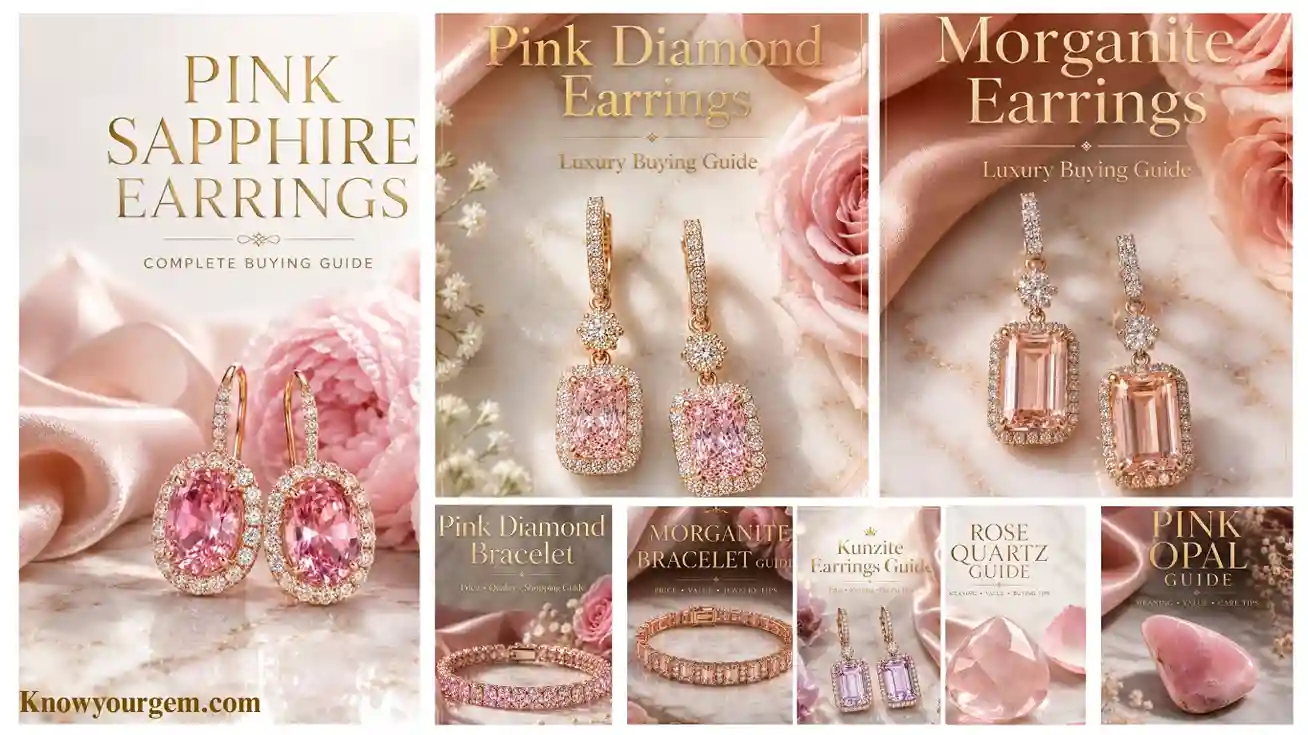
FAQS:
1. Can pink gemstones be expensive?
The cost of pink gemstones is based on their color and rarity. Hence, pink sapphires and tourmalines may be expensive, especially in vivid hues. However, options like rose quartz and pink opal are generally more affordable.
2. Which Gem can be the most rarest?
The most beautiful and rarest pink gemstone is the pink diamond, valued for its brilliant color and high value. Furthermore, other rare options include pink sapphires from specific regions and the elusive pink spinel. Therefore, each one is highly desirable for collectors and jewelers.
3. Can pink ruby real?
Pink rubies are real gemstones, certainly as a kind of corundum, just like traditional red rubies. Hence, the color can range from light pink to deep pink, but they must meet specific criteria to be classified as rubies rather than pink sapphires. Always verify authenticity through certification from a reputable gemological lab.
4. Is there any chance Sapphire can be pink?
Exactly, sapphires may be pink. Pink sapphires are a kind of corundum, just like blue sapphires, and hence their colors are shining from light to pink. Hence, they are most known for their beauty and rarity.
5. Which one is the most expensive gemstone?
The most costly gemstone is the pink diamond, known for its attraction and color. Therefore, its price can touch millions of dollars per carat, depending on quality. Other highly valuable gemstones include red diamonds and blue sapphires.
6. What do know about pink topaz?
Pink topaz is a kind of gemstone known for its beautiful pink color, often enhanced through treatments. Moreover, it is a part of the topaz community and is highly known for its clarity and splendor. Hence, mostly used in jewelry, pink topaz is a gem that can be easily purchased compared to other pink gemstones.
7. Which lasts the longest?
Pink diamond rates at the top on Mohs hardness and is also long-lasting because of having 10 Mohs hardness; however, pink sapphire also resists scratches while sitting at 9 on Mohs hardness.
8. Are pink sapphires natural?
Yes, they can be natural or heat-treated, but certification from trusted sources like GIA, AGL, or IGS can confirm the authenticity.
9. Can pink gemstones be worn daily?
Sapphire, diamond, and spinel are best suited for daily wear jewelry as daily wear jewelry requires toughness and durability.
10. Which looks like a diamond?
Pink zircon looks like a diamond, with having brilliance and fire, but is softer than diamonds.
11. What pink gemstones are best for beginners?
Rose quartz and pink garnet, with having low cost and decent durability, are easy to buy.
12. How much pink gemstones worthy?
Pink gemstones can command prices from $1 per carat to $100,000 plus per carat; it depends on the gem family, origin, Mohs scale, and their popularity.
13. Which pink gemstones best for engagement rings?
Pink sapphires are usually considered as the best choices for engagement rings, but their prices are higher; however, morganites are softer and can be an alternative with a lower cost.
Feel free to drop a comment if you have any inquiries about my blog. I will surly answer all your questions. Gem Enthusiast KamilHussain!

Welcome to KnowYourGem.com! your ultimate destination for uncovering the fascinating world of gems and their secrets! I'm Kamil Hussain, a passionate blogger with a Master’s degree in Economics, dedicated to bringing you insightful, well researched content that blends the beauty of gemstones with the art of storytelling. With a keen analytical mind and a love for discovering hidden treasures, I created this platform to help you explore the brilliance, history, and value of every gem.


