
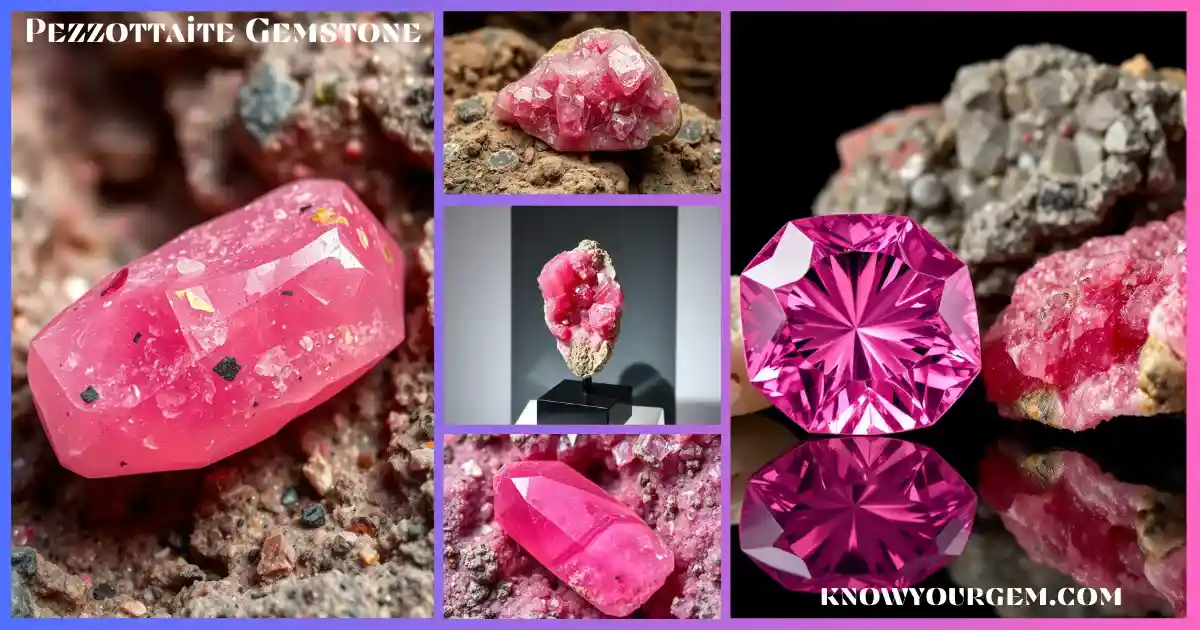

Quick Summary: Pezzottaite is the rarest gemstone in the world. Initially it has first discovered in Madagascar since 2002. It was recognized for its vivid pink to raspberry to red hues. While having 8 mohs scale, it is durable enough for jewelry, but its scarcity makes it far more prized by collectors than everyday wearers. Fine quality stones can demand price like $300 to more than $3000 per carat, cementing pezzottaite’s reputation as highly valuable and sought after mineral.
Quick facts about Pezzottaite:
- Mineral Family: Pezzottaite relates to the Beryl family with having cesium-dominant vibrant it is rare.
- Color Range: It displays several colors like, intense raspberry pink, rose pink, peachy pink, vivid magenta.
- Hardness: Pezzottaite ranks 8.0 on the mohs scale
- Discovery Location: It was first discovered in Ambatovita, Madagascar (2002)
- Market Rarity: A gem is extremely rare among the top 10 rarest gemstones globally
- Chemical Formula: Its chemical formula is Cs(Be₂Li)Al₂Si₆O₁₈
- Primary Sources: The primary sources of Madagascar, Afghanistan (limited occurences)
What is Pezzottaite?
- What it is: Pezzottaite is a rare gem belongs to the beryl family as Emerald and Aquamarine belong but its structure contains caesium and lithium.
- Discovery: It was first discovered in 2002 in Madagascar, was called Federico angles after geologist.
- Look: It looks like raspberry-red to pink, sometimes orange-red. It showcases vary colors angles.
- Rarity: It is very scarce, only a small amount was mined in Madagascar, with the tiny deposits later that were later found in Afghanistan and Myanmar.
- Properties: Hardness of 8 (durable). Its color comes from manganese and radiation effects.
Classification of scientific perspective:
The institute (IMA) international mineralogical Association has recognized pezzottaite is a different mineral species was found in 2003. Not similar as like traditional beryl varieties that contain beryllium and aluminum, this gemstone incorporates significant cesium and lithium into its crystal structure. This cesium-rich composition creates the intense coloration that collectors treasure.
Difference from red beryl:
Both minerals pezzottaite and red beryl display pink to red coloration, but several key difference make their separation:
- Crystal Structure: Red beryl forms in rhyolitic volcanic environments, whether pezzottaite crystallizes in lithium rich pegmatites.
- Geographic Occurrence: Red beryl appears exclusively in Utah and New Mexico’s wah Mountains, whether pezzottaite originates primarily from Madagascar with minor Afghan deposits.
- Chemical Signature: The cesium content in pezzottaite distinguishes it chemically from manganese colored red beryl.
- Market Availability: Both rank as an exceptionally scare, since red beryl faces stricter mining limitations.
Why it is Rare:
Multiple geological factors believe to contribute to pezzottaite extraordinary scarcity. Since, the mineral demands exceptionally specific pegmatite conditions, simultaneous precise concentrations. These geological circumstances lies in only a handful of the worldwide locations. Additionally, even within known deposits , gem quality crystals embody a tiny fraction of extracted material. Most specimens contain inclusions or fractures that resist faceting.
History & discovery:
The tale of Pezzottaite is a fascinating as the gem itself. Madagascar quickly unfolded into the recognition of an entirely new gemstone species. From its misidentification in the mines to its celebrated debut in museums and collections worldwide, pezzottaite’s discovery is marked as a rare and exciting chapter in a modern mineralogy.
Madagascar discovery:
In 2002, Italian gemstone dealer Federico Pezzotta is received samples of unusual pink crystals from the Ambatovita region in central Madagascar. Local miners had initially classified these specimens as pink tourmaline or morganite. However, preliminary test has revealed properties inconsistent with known gem species.
Naming origin:
The gemstone honors Federico Pezzotta, Curator of mineralogy at the natural history museum in main, which has provided critical research during the identification process. The international mineralogical association approved the name as “pezzottaite” in November 22003, following rigorous scientific validation by several laboratories.
Early market reaction:
Gem collectors and investors have responded enthusiastically to the announcement. Within months, prices escalated dramatically as mineral enthusiasts have recognized the discovery’s significance. Early specimens entered major museum collections, including the Smithsonian Institution and Harvard Mineralogical Museum, the initial mining area has produced limited quantities before depleting, further intensifying market demand.
Geological formation:
The birth of pezzottaite is deeply linked with the surface of the earth’s slow cooling magmas. Hidden inside rare pegmatites, this stone forms under extraordinary geological conditions where uncommon elements gather, that shape crystals are not like any other in the beryl family.
Pegmatite formation:
Pezzottaite forms exclusively in a granitic pegmatites, those are so called grained igneous rocks that from during the final stages of magma cooling. Although, these gemological environments concentrate rare elements that have rejected by common rock which forms minerals. Hence the slow cooling process allows large, well formed crystals to develop more than million of years.
Chemical composition:
The mineral contains formula like, Cs(Be₂Li)Al₂Si₆O₁₈, and reveals its complex chemistry. Cesium atoms occupy structural positions that is typically held by sodium or potassium in other beryl varieties. This substitution significantly alters the crystal’s optical and physical properties. The lithium content further distinguishes pezzottaite from conventional beryl species.
Trace elements:
Manganese serves as the preeminent chromophore, that creates the characteristic pink to raspberry coloration. Iron traces can introduce subtle peachy or orange secondary hues. The concentration and oxidation state of these infinitesimal elements determine color saturation. Since the most valued specimens display pure, vivid raspberry tones without brownish or grayish modifies.
Physical & optical properties:
Pezzottaite’s glamour occurs not just in its rarity but also in the way it plays light and color. From its vivid pink to its shifting hues that are seen as at the different angles, this gemstone reveals a personality as dynamic as it is beautiful. Although its optical traits set it apart from other beryl varieties, that make each crystal a unique visual experience.
Color variations:
Pezzottaite exhibits a remarkable spectrum from delicate rose to the intense raspberry. The finest present a saturated, electric pink reminiscent of premium pink sapphire. Some specimens showcase subtle peachy undertones, whether others display cooler magenta hues. Color intensity typically increases with the crystal size, since exceptional saturation occurs even in a smaller stones.
Transparency:
A quality material of gem ranges from transparent to translucent. Since, eye cleaned specimens without having visible inclusions command premium prices. Many crystals contain growth tubes, healed fractures, or mineral inclusions that can cause to reduce transparency.
Pleochroism:
The gemstone exhibits a distinct pleochroism, which displays vary colors when it is viewed from different angles. Observes typically note two distinct color: Purplish-pink along on axis and orange-pink along another. Cutters orient faceted stones to present the most attractive pleochroic face through the table facet.
Refractive index:
The refractive index of pezzottaite measures in between 1.602 and 1.620, which is slightly lower that the standard beryl varieties. Since this optical property aids gemologists in distinction between minimum refractive indices ranges from 0.008 to 0.0122, that create subtle double of rear facet edges when it is viewed through the table.
How to identify genuine pezzottaite:
The rarity and value of pezzottaite make it a tricky stone to pin down. Its vivid pink glow leads people to confuse it with other gems, and sometimes it even use to mimic of synthetic. Although spotting a genuine article is not only about glance but it takes careful test and the expertise of trained gemologists that’s how collectors and jewelers can make sure they are holding a true piece of Pezzottaite, rather than a convincing look alike.
Lab testing:
Professional gemological laboratories employ multiple techniques to authenticate pezzottaite:
- Spectroscopy: An advanced instruments detect the characteristic cesium adsorption signature that distinguishes this mineral from all other pink gemstones.
- Chemical Analysis: X-ray fluorescene or election microprob test confirms the elemental composition, particularly the presence of the cesium and lithium.
- Microscopic Examination: Internal characteristics, including growth patterns and inclusion types, endow identification clues.
- Specific Gravity: Pezzottaites’s density is approximately 2.97-3.02 g/cm³ falls within a diagnostic range that believes to help eliminate look-alike.
Common imitations:
Several materials superficially resemble pezzottaite:
- Pink Tourmaline: It lacks the distinctive refractive index and chemical signature.
- Morganite: It also belongs to beryl family but it contains no cesium and displays vary optical properties.
- Treated Synthetic Materials: Glass and synthetic corundum sometimes receive treatments to mimic pezzottaite’s color, but these lack the proper physical properties.
- Enhanced Quartz: It is rose quartz or treated quartz that can’t match pezzottaite’s brilliance and hardness characteristics.
Certification bodies:
Reputable laboratories believe to provide pezzottaite identification include:
- Gemological Institute of America (GIA)
- Swiss Gemmological Institute (SSEF)
- Gübelin Gem Lab
- American Gemological Laboratories (AGL)
These institutions provide detailed report like documenting authenticity, treatments (if any), and quality characteristics.
Pezzottaite value & pricing guide:
As one of the rarest gemstones ever discovered, pezzottaite, commands extraordinary prices in the market. Since, its vivid raspberry colors, that combine with extreme scarcity, make a gem collector’s dram and an investment piece. From modest commercial grade stones to the museum quality specimens, the value of pezzottaite reflects, the value of the both its beauty and its rarity.
Price per carat:
Current market data indicates a substantial variation based on quality:
- Commercial Grade of gem are sold for $300-$800 per carat for lighter tones, visible inclusions, or smaller sizes
- Fine quality gems can command prices from $1,000–$2,000 per carat because they own rich color saturation, eye clean clarity, and weights over 1 carat.
- Gemstones that own premium specimens can command prices from $2,500 to $3,500+ per carat.
- Large, rare stones have clean specimens and more than 5 carats weight that command significantly higher prices due to their extreme scarcity.
Quality factors:
- Color Intensity: Vivid saturated raspberry colors achieve top valuations. Since, pale or grayish stones are sold for significantly less.
- Clarity: Eye cleaned stones command 40-60% premiums more included examples of similar color size.
- Cut Quality: Precision faceting that maximizes a brilliance and color presentation increases desirability.
- Carat Weight: Stones which exceed 2 carats face dramatically demand price escalation, as larger rough crystals remain exceptionally scarce.
- Origin: Madagascar specimens currently dominate the market, since Afghan material occasionally appears.
Investment potential:
Pezzottaite presents compelling investment characteristics:
- Limited Supply: Most recognized deposits showcase minimal production, with no significant new sources have discovered since the original find.
- Growing Recognition: As awareness increases, demand consistently rises whether supply remains static.
- Museum Quality: An exceptional specimens attract institutional buyers and serious collectors.
- Historical Performance: Prices have appreciated steadily since discovery, with the minimal market volatility.
However, investors should recognize that colored gemstone markets can experience fluctuations, and liquidity can be limited for extremely rare species.
Pezzottaite in Jewelry:
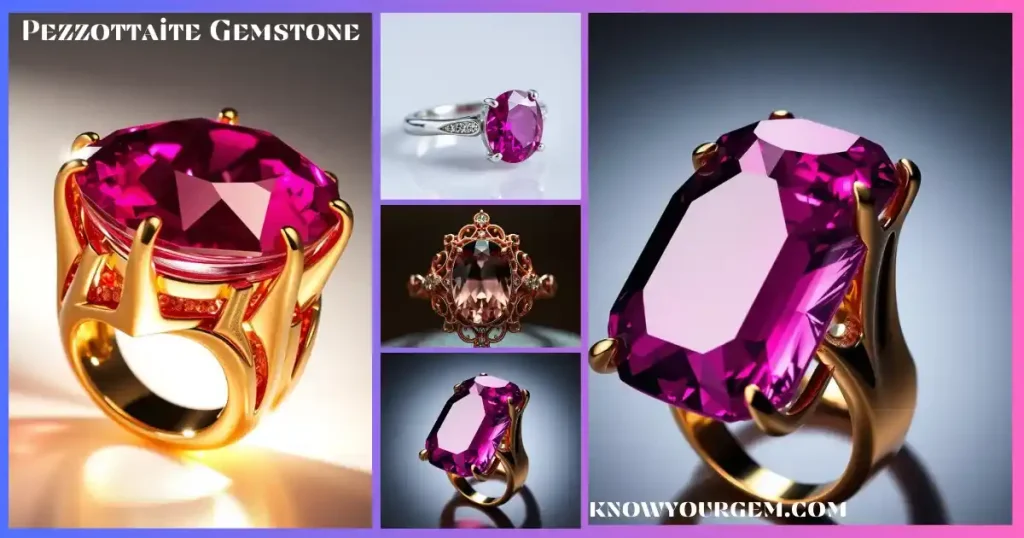
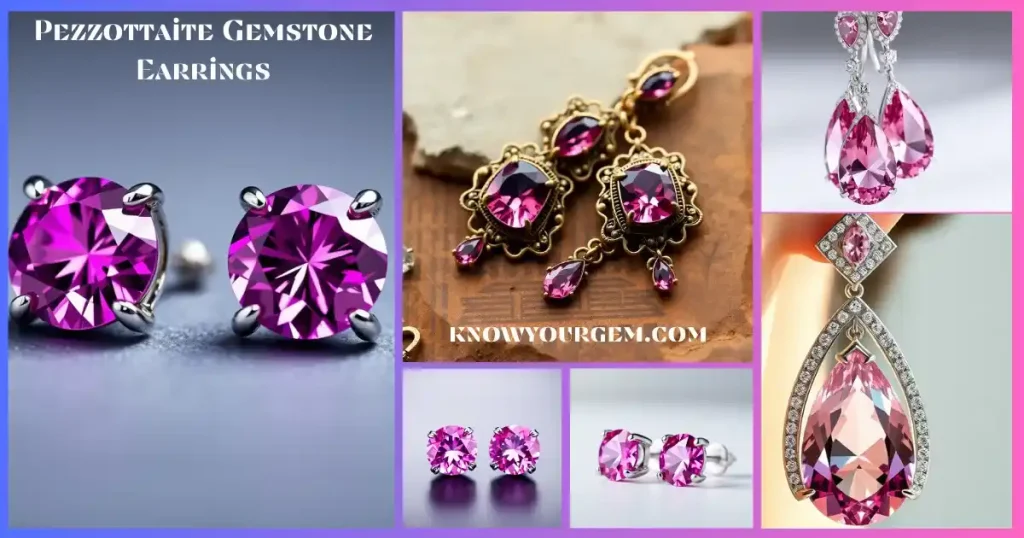
Rare radiant, and resilient, pezzottaite gem brings a splash of vivid raspberry-pink elegance to a fine jewelry. Since, a gem is durable enough for everyday wear, its scarcity and unique optical make it especially treasured in carefully designed pieces that highlight both its beauty and fragility.
Ring suitability:
With its impressive hardness like, 8 mohs scale offers an excellent durability for ring settings. However prudent design considerations enhance longevity:
- Protective Settings: Bezel or semi bezel designs shield vulnerable edges from impact can be more protective as compared to others.
- Engagement Ring use: Whether it is suitable for daily wear but demands more care than diamond or sapphire.
- Occasional Wear: Pezzottaite excels in statement rings that are worn for special occasions.
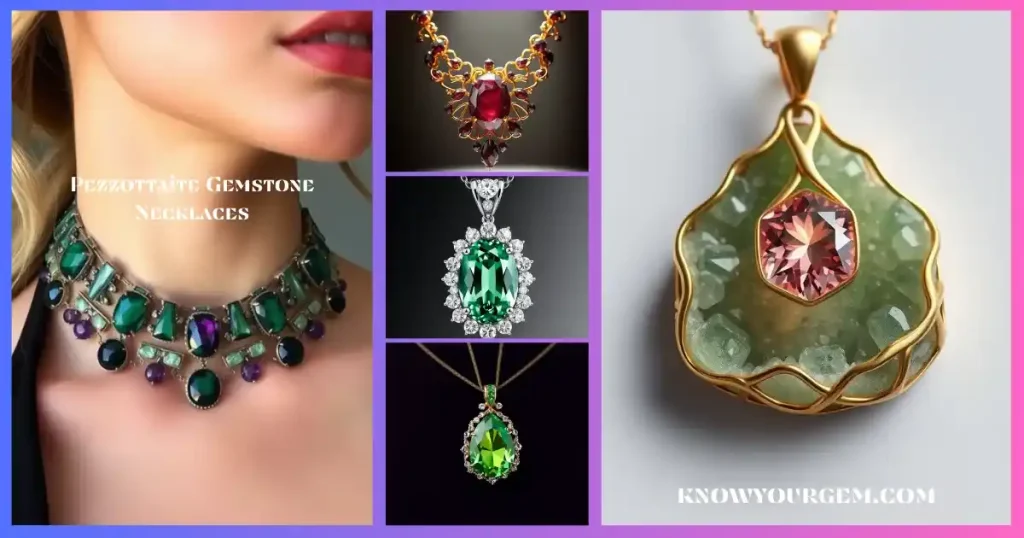
Pendant use:
Necklace and pendant applications believe to provide an ideal showcases for pezzottaite. Since, the reduction impact risk allows the gem’s beauty to shine without durability that concerns. Design options including:
- Solitaire Pendants: Simple setting emphasizes the stone’s natural beauty.
- Halo Designs: Diamond is surrounded by the design which enhances pezzottaite’s brilliance and perceived size.
- Artistic Creations: Custom metalwork complements the gem’s unique character.
Durability considerations:
Despite an excellent hardness, pezzottaite demands thoughtful handling:
- Cleavage: It has cleavage like all beryl varieties, pezzottaite exhibits imperfect cleavage in one direction, that makes it susceptible to the sharp impacts.
- Thermal Shock: Sudden changes in temperature can cause internal stress fractures.
- Chemical Exposure: Don’t use harsh household chemicals, since chlorine, and ultrasonic cleaners with having strong solution.
- Professional Mounting: Expert jewelers should handle setting to resist mounting pressure damage.
Bracelet applications believe to face higher abrasion and impact risks, that makes them less ideal for this rare gem.
Care, cleaning & storage:
Owning pezzottatite means carry for one rarest gems on Earth. Since the hardness of a stone gives it resilience, thoughtful cleaning and careful storage are essential to resist its vivid raspberry glow. With the right handle, this extraordinary stone can remain dazzling for various generations.
Cleaning methods:
To maintain pezzottaite’s beauty gentle cleaning maintenance is must as:
- Warm Soapy Water: Mix mild dish soap with lukewarm water, gently brush with the soft toothbrush, and wash thoroughly can be fruitful for your gem.
- Microfiber Cloth: Dry and polish with lint free non abrasive cloth.
- Professional Cleaning: Yearly professional inspection and cleaning ensures setting remains secure.
Hardness considerations:
While having 8 mohs scale a stone provides good scratch resistance, since, harder materials like diamond, sapphire, topaz can still damage it. So, it is best to store pezzottaite separately from the harder gems to resist scratches.
Storage advice:
- Individual Compartments: Use fabric lined jewelry boxes with sections.
- Soft Pouches: Wrap pieces in soft cloth or store in padded pouches.
- Climate Control: Don’t keep your gem in extreme temperature fluctuations and low environments.
- Separation: Store your Pezzottaite separately from other pieces.
Ethical sources & sustainability:
Resposible pezzottaite acquisition addresses environmental and social concerns:
- Artisanal mining impact: Since small mining operations of Madagascar provide livelihoods for local communities but can lack environmental oversight. So, buyers should inquire about mining practices and community benefit programs.
- Transparency: Reputable dealers endow origin documentation and chain of custody information.
- Fair trade practices: These practices support suppliers who ensure fair wages and safe work conditions benefits communities.
- Environmental stewardship: Responsible mining like, land reclamation and minimal ecosystem disruption.
- Conflict-Free Verification: Whether Madagascar lacks the conflict issues affect some gem producing regions, due to diligence remains important.
Collectors and jewelers can promote sustainability by:
- Requesting supplier transparency regard mining conditions.
- Supporting dealers who participate in ethical source initiatives.
- Choosing stones with documented provenance.
Encouraging industry development of sustainability standards for rare gem species.
Comparison with similar Gemstones:
While recognizing how pezzottaite relates to the similar pink stones help buyers to make informed decisions:
Pezzottaite vs Red Beryl:
- Rarity: Both rank among the world’s scarcest gemstones, since red beryl faces more restricted mining access.
- Color: Red beryl tends toward deeper crimson, whether pezzottaite displays lighter raspberry to the pink tones.
- Availability: Pezzottaite appears slightly more frequently in the marketplace.
- Price: Quality examples of both command similar premium prices, that typically range from $2,000 to $4,000 plus per carat.
- Durability: Both share an identical hardness like 8 mohs scale and similar care requirements.
Pezzottaite vs Morganite:
- Color Intensity: Pezzottaite usually exhibits more vivid saturation than Morganite’s softer peachy pink.
- Chemistry: Whether both belong to the beryl family, Morganite lacks pezzottaite’s cesium content.
- Rarity: Pezzottaite dramatically exceeds Morganite in scarcity.
- Price: Morganite usually demands price like $50-$300 per carat, significantly less than pezzottaite..
- Size Availability: Large Morganite exists in abundance; large pezzottaite remains extraordinary rare.
Pezzottaite vs pink Tourmaline:
- Hardness: Pezzottaite ranks (8) surpasses pink tourmaline which (7-7.5)on the mohs scale in scratch resistance.
- Brilliance: Pezzottaite’s higher refractive index creates superior sparkle.
- Color Range: Pink tourmaline offers broader variation, from pale pink to hot magenta.
- Market Availability: Pink Tourmaline appears far more frequently and in larger size.
- Investment Angle: Pezzottaite’s extreme rarity makes it more compelling for collectors who have focused on scarce species.
Pezzottaite vs Bixbite:
“Bixbite” Embodies and outdated name for red beryl. The comparison parallels the red beryl discussion above, with the bixbite and red beryl being identical materials.
Pezzottaite vs Smithsonite:
Whether both display an attractive pink coloration, these minerals differ fundamentally:
- Composition: Smithsonite is a zinc carbonate, whether pezzottaite belongs to the beryl silicate family
- Hardness: Smithsonite owns 4.5 mohs scale and demands an extreme care; Pezzottaite offers superior durability.
- Jewelry use: Smithsonite is rarely appearing in jewelry because of its softness. Whether pezzottaite suits various applications.
- Appearance: Smithsonite often displays botryoidal formations whether pezzottaite forms prismatic crystals.
Expert Buying Advice:
After various years of experience with the rare colored gemstones, I offer these recommendation for pezzottaite acquisition:
- Prioritize Color: Invest in stones that own vivid saturated raspberry tones. Pale or washed out specimens offer limited appreciation potential regardless of clarity or size.
- Demand Certification: Always ask for laboratory documentation from trusted source like, GIA,SSEF, Gubelin, or comparable institutions. Since authentication protects against misidentification and ensures you are purchasing genuine material.
- Understand Inclusions: Whether eye clean stones command premiums, minor inclusions visible only under magnification shouldn’t disqualify an attractive specimens. Various collectors prize is included stones that display characteristic growth features.
- Consider Future Mounting: If you going to go to purchase loose stones for eventual setting, you would have to select pieces with sufficient weight and durability for your intended jewelry application.
- Evaluate Dealers Carefully: Working with an established suppliers who specialize in rare gemstones and provide transparent information about origin, treatment and price.
- Document Everything: Maintain complete records like purchase receipts, certificates, photographs,, and correspondence. Since proper documentation supports to insurance claims and future resale..
- Start Small: If new to rare gemstone collecting, begin with modestly priced examples to develop your eye before investing in the premium specimens.
- Beware Too-Good Prices: Exceptional low price for purported pezzottaite should trigger skepticism. This gem’s scarcity establishes a firm price floor; dramatically discounted stones likely embody misidentified materials or undisclosed treatments.
Conclusion:
Pezzottaite is an exciting gem gemology’s modern discoveries, a testament to Earth’s continuing ability to surprise even it is experienced mineralogists. This cesium bearing beryl variety integrates an exceptional beauty, owns impressive durability, and profound rarity into a package that appeals to serious collectors and jewelry enthusiasts. Whether you are about to own pezzottaite behave of its vivid raspberry color, its fascinating geological story, or its investment potential, this gemstone rewards those who take time to understand its unique characteristics. From Madagascar pegmatites to museum exhibits and fine jewelry, pezzottaite has established itself as a permanent fixture in the upper echelons of colored stone appreciation.
As with all rare gemstone, knowledge protects investments. Always seek for certified reputable sources, prioritize quality over size, and enjoy the journey of owning on of the nature’s rare and most remarkable creations.
Expert Authority Statement: Given above the comprehensive guide draws upon gemological research, market analysis, and hands on experience with the rare beryl varieties. Information reflects to the current scientific understanding insights from leading gemological institutions and marketplace conditions.
FAQS:
1. Does pezzottaite more rare than ruby?
Yes, whether fine rubies command higher prices because of established market demand, Pezzottaite lies far less frequently in nature. Since only a handful of mining locations have ever produced this gemstone, whether ruby deposits exist across multiple continents.
2. Is pezzottaite treated?
According to current market research it is best to say that pezzottaite typically receives no treatment. The natural color proves stable and attractive without enhancement. Since, reputable laboratories test for heat treatment and other modifications, with certified natural specimens that command premium prices.
3. Can pezzottaite be synthetic?
To date, no commercial synthetic pezzottaite exists in the marketplace. The complex chemistry and specific growth conditions make laboratory synthesis economically impractical that give the limited demand and small market size.
4. What is the pronunciation of pezzottaite?
The pronunciation of pezzottaite is “peh-TSOT-ite” it emphasis on the second syllable. The name derives from Federico Pezzotta, honoring the mineralogist’s contributions to its discovery and classification.
5. Where is pezzottaite found?
Madagascar’s Ambatovita region remains the preeminent source. Since Afghanistan has produced limited qualities from pegmatite deposits. Gemologists continue exploring other potential locations, but not significant new deposits have emerged.
6. What is pezzottaite used for?
Further jewelry applications like rings, earrings, pendants, and bracelets, pezzottaite serves an important roles in:
> Mineral collections and museum displays
> Gemological research and education
>Investment portfolios focused on rare colored stones
> Scientific study of pegmatite formation and rare element concentration.
7. Does pezzottaite have metaphysical properties?
Pezzottaite owns emotional healing, compassion, and heart chakra activation. The spiritual meaning often divine love, emotional release, and connection to the higher consciousness.
8. How does pezzottaite compare to the most expensive crystals?
Because it doesn’t compete the price of top tier like diamonds, jadeite, or exceptional Paraiba tourmaline. Since, fine pezzottaite ranks among valuable collectors gemstones.
9. What determines pezzottaite value?
Quality assessment considers color intensity and purity, clarity and eye clean versus included, cut precision and proportions , and carat weight. Origin documentation and certification from recognized laboratories also influence pricing.

Welcome to KnowYourGem.com! your ultimate destination for uncovering the fascinating world of gems and their secrets! I'm Kamil Hussain, a passionate blogger with a Master’s degree in Economics, dedicated to bringing you insightful, well researched content that blends the beauty of gemstones with the art of storytelling. With a keen analytical mind and a love for discovering hidden treasures, I created this platform to help you explore the brilliance, history, and value of every gem.

