

Summary:
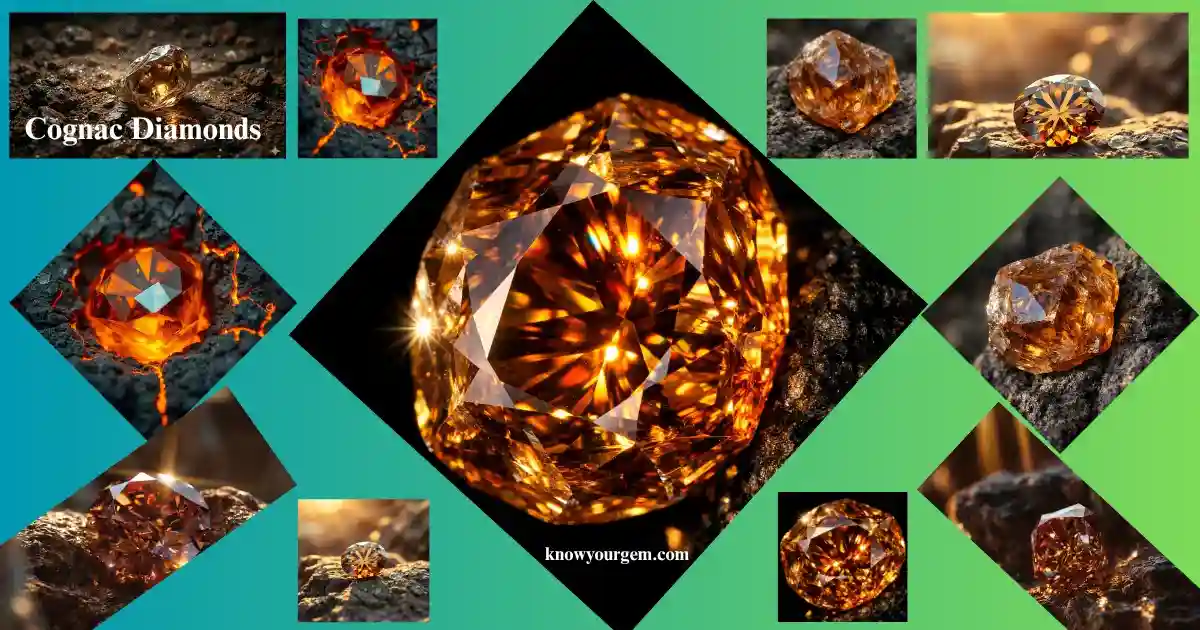
Cognac diamond is naturally found in brown color. It is prized for its warm, rich color that glows from champagne to the deep chocolate. Although, this rare, untreated gemstone basically offers distinctive beauty and excellent value as compared to white diamond, that make it increasingly popular for engagement rings, pendants, and luxury jewelry.
Blue diamonds are best ever choices for modern jewelry learn more:
What is a Cognac Diamond?
A cognac diamond is naturally colored brown gemstone formed deep within the Earth for more than billions of years. Not same as white diamond, it displays its color as an intrinsic property of the crystal structure itself, not from external treatment or coating.
The term “cognac” specifically refers to the diamond with having warm, medium to deep brown hues reminiscent of the liqueur. Since, this diamond occurs when infinitesimal elements and structural lattice defects interact during the formation, creates characteristic warm tone. The color is permanent, it won’t fade, through cleaning or wear.
Cognac diamond is a rare gemstone but not exceptionally scarce. It represents roughly 1-2% of diamond mined globally, that makes it far more available than blue, pink, or red diamonds.
Are Cognac Diamonds real Diamonds?
Yes, Cognac diamond is 100% authentic which is composed of carbon atoms that are arranged in a crystalline lattice. It is not imitation, synthetic material, or treated white diamond. While mining, grading, and certification used to follow identical standards to colorless diamond.
The only difference among them is color and origin. Cognac diamond gets its color through the natural process during formation which makes it fundamentally different from enhanced diamond and people highly desire to buyer Cognac diamond behave of its authenticity and permanency.
Cognac Diamond color scale and grading:
The most trust laboratory GIA color scale usually runs from D (colorless) to Z (lightly colored). Cognac diamond is richer than Z, so it is classified as fancy colored diamond with having more deeper, more saturated brown tones.
GIA fancy color scale for Cognac Diamonds:
| Color Grade | Description | Saturation Level |
| Fancy Light Brown | It owns light warm tone, like subtle color | Its saturation level is very subtle |
| Fancy Brown | It has medium warm brown, balanced saturation | Its saturation is moderate |
| Fancy Dark Brown | It carries deep, rich brown similar to cognac liqueur | It has strong color saturation |
| Fancy Deep Brown | It has deep, intense brown color | It is very strong in saturation level |
| Fancy Intense Brown | It has saturated, and vivid brown color | It has maximum saturation |
Cognac diamond comes in various shades of brown, however the best ones keep a warm, golden glow without dull gray or green tones. Some stones lean toward chocolate, while others showcase hints of orange or red.
This richer and deeper the color, is considered as the more striking and more expensive. However a stone with having lighter color is generally considered as softer and low cost.
Differences between Cognac Diamond vs. Champagne Diamond:
Champagne and cognac diamond both own naturally brown color. Since, champagne diamond showcases richer, deeper like amber-brown tones budget friendly. However Cognac diamond is often seen as richer and deeper brown colored command higher prices.
- Champagne diamonds used to display pale, light brown colors that range from very light to brown. Although they sit at the lower en of the color saturation spectrum and often contain yellowish or tan undertones. Champagne stones are more abundant and significantly less expensive than their cognac counterparts.
- Cognac diamond displays medium to deep brown color with golden or reddish undertones. It has stronger color saturation and a warmer, more luxurious look, that often commands higher prices because it is rare and visually distinctive.
- In terms, champagne diamond having a subtle and delicate, whether cognac diamond makes a bolder, more dramatic statement. Champagne appeals to those buyers who want understated elegance or on tighter budget
Cognac Diamond vs. brown Diamond: Understanding the terminology
Both terms “cognac diamond” and “brown diamond” are often used interchangeably, however subtle distinctions exist in how the industry applies the.
- Brown diamond is the technical gemological classification used by grading labs. It’s a neutral descriptor covering all diamonds with brown hue, regardless of saturation or undertones. This category includes everything from very light champagne tones to deep chocolate browns.
- Cognac diamond is a trade term for brown diamonds which showcase warm, golden brown undertones and sit in the Fancy Light Dark range. The label is more specific than just a brown and highlights the luxurious, warm look buyers who are associated with that color.
Calling a stone “cognac diamond” usually signals a premium brown diamond with having warm, attractive color. Simply named as “brown diamond” can mean anything from a light champagne tone to a dull, grayish brown, so “cognac” act as a quality cure.
How rare are Cognac Diamonds?
Cognac diamond occupies a middle ground in rarity, it is more common than fancy vivid colored diamonds like (pink, blue, and red) however it is substantially rare than colorless diamond.
- Natural occurrence: Around 1-2% of diamonds are mined worldwide which display brown color. And only a fraction qualify as true cognac stones with having rich , warm saturation. This means that cognac diamonds make up roughly 0.1-0.2% of annual diamond protection.
For perspective:
- Colorless diamonds (D-Z): 98% of production
- All fancy colored diamonds: 2% of production
- Cognac diamonds specifically: 0.1-0.2% of production
- Pink diamonds: 0.01% of production
- Blue diamonds: 0.01% of production
- Red diamonds: 0.001% of production
This rarity supports to increase the price of cognac diamonds. They are rare enough to feel special and exclusive, and available enough that buyers can find quality stones without waiting months or paying astronomical premiums.
Although rarity also varies by size and quality. Cognac diamonds under 2 carats with having good clarity and cut are relatively available. Whether larger stone (3+carats) with Fancy intense color saturation and excellent clarity become substantially rarer and command steep premium prices.
Cognac diamond formation process:
Cognac diamonds are forming through natural geological processes that occur 100 miles beneath the Earth’s surface in the mantle. Although, the formation timeline spans billions of years, that make of each cognac a geologically ancient object.
- Carbon crystallization: The formation diamond begins with carbon atoms that are subjected to the extreme pressure which is roughly counted as (725,000 psi) and temperature is approximately (1,800-2,200°F). Under these conditions, carbon atoms bond in the tetrahedral crystal structure that makes unique diamond. This process can take 1-3 billion years.
- Color-causing defects: During crystallization, lattice defects and impurities create color. In cognac diamond, brown color result from structural defects in the crystal lattice, not get from from infinitesimal elements as like other stones get.These defects scatter specific wavelengths of the light, that allows only brown and warm tones to reflect back to the eye.
- Mantle ascent: After formation, diamond remains buried in the mantle until volcanic eruptions that carry them upward in kimberlite pipes, like virtual channels of magma that breach the Earth’s crust. This violent ascent preserves the diamond’s original color and structure.
- Mining and discovery: Diamonds reach the surface with kimberlite rock. Since, mining operations extract rough diamonds which are then organized by color, clarity, size, and quality. Since, a rough cognac diamond can appear dull or cloudy until it is cut and polished, that reveals its true color depth and brilliance.
This natural formation process, spans geological timescales, that’s why cognac diamond is considered as permanent and authentic as it can’t be be artificially replicated through heating, irradiation, or laboratory synthesis without altering their fundamental properties.
Natural cognac Diamond vs. Lab-Grown Cognac Diamond:
Lab grown diamond is also called synthetic diamond or man made diamond that has emerged as a significant market alternative. So, understanding their differences are critical for informed purchasing.
Key Differences:
- Origin and creation method: Naturally originated cognac forms through geological process for more than millions of years, deep within the Earth’s surface. Whether synthetic diamond is produced by laboratory in controlled environments in weeks to months while using high temperature (HPHT) or Chemical Vapor Deposition (CVD) technology.
- Physical composition: Both natural and lab grown diamond are carbon and physically identical at the molecular level. Lab grown cognac diamond. However gemological instructions can’t definitively distinguish them without specialized testing.
- Disclosure requirements: Synthetic diamond must be clearly disclosed and labeled as such by law and industry standard. Since, reputable sellers always identify the origin. If a diamond’s origin is not explicitly stated, it should be assumed natural.
- Price differential: Lab grown cognac diamond commands cost 40-60% less than naturally formed diamond of equivalent quality. A natural 2 carat Fancy dark brown diamond can cost $8,000-$12, 000, whether Lab grown equivalent can cost $3500-$5,00 per carat. This pricing gap reflects to the cost savings of laboratory production.
- Resale value: The original diamonds retain their resale value and hold market liquidity. Whether synthetic diamond own limited resale value and poor secondary market demand. If you want to sell diamond in future your first priority should natural diamond.
- Longevity and permanence: Both are permanent and will not degrade, can’t fade color and their durability is also same.
- Ethical and environmental considerations: Lab-grown diamond requires less mining and environmental disruption. Whether, natural diamond from conflict free sources carries also ethically sound. Some buyers prefer natural diamond for their geological uniqueness and investment characteristics; other prefer synthetic for sustainability reasons.
- Availability: Synthetic diamonds are more readily available in consistent qualities. Whether natural cognac diamonds require mining and sorting, so scouring specific integration of color, clarity, and size can take longer time.
Which should you choose?
If you are selecting natural cognac diamond you should prioritize:
- Investment and resale value
- Geological uniqueness
- Traditional diamond symbolism
- Long-term value retention
Choose lab grown cognac diamond if you prioritize:
- Lower cost
- Environmental impact reduction
- Consistent quality and availability
- Modern values around sustainability
Both stones are considered as legitimate choices. So, the decision should be reflected to your values, budget, and term intentions.
Clarity and cut impact on beauty and value:
The color of a gemstone is considered as its biggest attraction, however clarity and cut also play a big role. Together, they can determine the brilliance and transparent the stone looks and ultimately how it is priced.
Clarity grading:
Diamond clarity is graded on a scale like FL (Flawless) to I3 (Included 3). Although this scale measure the internal and external imperfections as diamond has, and visible they are. Since, the fewer and less noticeable the flaws, having the higher clarity grade and the valuable the stone.
- FL to VVS1: Diamond is graded as FL to VVS1 means very slightly included, with imperfections invisible even under 10x magnification.
- VVS2 to VS1: Very slightly included. Since, tiny inclusions exist but are not visible to the naked eye. These grades offer an excellent clarity at more moderate pricing.
- VS2 to SI1: Slightly included to slightly included 1. Since, small inclusions can be visible upon close inspection or magnification but are apparent under normal viewing. These grades provide excellent value and are the most commonly purchased.
- SI2 to I3: Included grades where imperfections are visible to the naked eye. Since, these grades offer the lowest prices but reduced transparency and sparkle.
- Cognac diamond clarity advantage: Cognac diamonds have a distinct advantage more than colorless diamonds when we talk about clarity. The warm brown color masks many inclusions, that make SI1 and even SI2 cognac appear clearer and more brilliant than equivalent clarity grades in white diamonds.
So, for cognac, VS1 to SI1 clarity embodies the optical balance of visual perfection and value. These grade deliver eye clean stones that carry no visible inclusions to the naked eye at significantly lower costs than VVS grades.
Quality cut matters:
Cut usually refers to the diamond’s proportions, symmetry , and polish. Although, cutting well the rough means it is shaped into a finished gem. Excellent cuts can maximize reflection and brilliance; whether poor cuts result in dull, lifeless stones.
GIA grades cut from excellent to poor. For colored diamonds like cognac, cut quality directly impacts:
- Color saturation: Since a well cut cognac diamond used to display deeper, richer color saturation than a poorly cut stone. Optimal proportions concentrate light reflection within the stone, intensifying color perception.
- Sparkle and brilliance: A well cut diamond can reflect light beautifully, that makes its look bright,lively, and full of sparkle.
- Clarity appearance: Even is a diamond has small flaws, an excellent cut can help light passing though the stone. It looks clearer and more transparent.
- Value impact: High quality cuts can raise the price of cognac diamonds by 10-20% as compared to poorly cut stones with having the same color and size.
- Cutting preferences: Cuts like , cushion, oval, and radiant are considered as favorite for cognac diamonds because they highlight the rich color and keep the stone sparkle.
Choose diamonds with having excellent or very good cuts the better the cut, the richer the color and the higher the value.
Cognac diamond price per carat and pricing factors:
Fancy brown diamond price is drive by multiple interrelated factors. While understanding these allow you informed budgeting and value assessment.
Base price ranges: (2026 Market Data)
| Color Grade | Clarity (VS1) | Price Per Carat | 2-Carat Price |
| Fancy Light Brown | SI1 | Can command prices like $800 to $1,200 | Is sold for $1,600 to $2,400 |
| Fancy Brown | VS1 | It is sold for $1,800 to $2,800 | Commands price from $3,600 to $5,600 for 2carat |
| Fancy Dark Brown | VS1 | It demands prices like, $3,000 to $4,500 | And 2 carat of the same stone is sold for $6,000 to $9,000 2 carat |
| Fancy Intense Brown | VVS1 | It commands prices from $4,500 to $7,000 | And the same stone with 2 carat can command prices like $9,000 to $14,000 |
Important context: These prices can be applied only on natural, untreated, GIA certified cognac diamonds. Since actual cost can be shifted depending on market trend.
Primary pricing factors:
- Color saturation: The deeper brown color commands higher price. Since, Fancy Intense stones command cost 3-5× more than lighter ones, and even one grade higher can mean 30-50% jump in pricing.
- Carat weight: Larger stone aren’t counted double for price but they are much rarer. A 2 carat can cost 2.5-3.5× more than a 1 carat.
- Clarity: Cleaner stone (VS1) can cost 40-60% more than SI1, however, cognac’s rich color hides flaws well, so SI1 often looks just as good.
- Cut quality: Excellent cuts add 10-25% to the price because they make the color and sparkle stronger.
- Certification: GIA certified stones can cost more but the paperwork proves are required for diamond’s quality and authenticity.
- Treatment and origin: Natural untreated stones are worth much more than treated browns.
Price per carat vs. total price strategy:
When you are selecting diamonds, it is must to look at overall size and presence rather than just price per carat.
For example:
- A 1.8 carat Fancy Brown SI1 diamond can common prices like $4,500.
- A 1.5 carat Fancy Brown VS1 diamond can command price like $5,000.
Even though the second diamond has higher clarity, so the first one often looks more striking for less money and the clarity difference is barely noticeable to the naked eye.
Cognacdiamond Engagement Ring: Design and selection guide
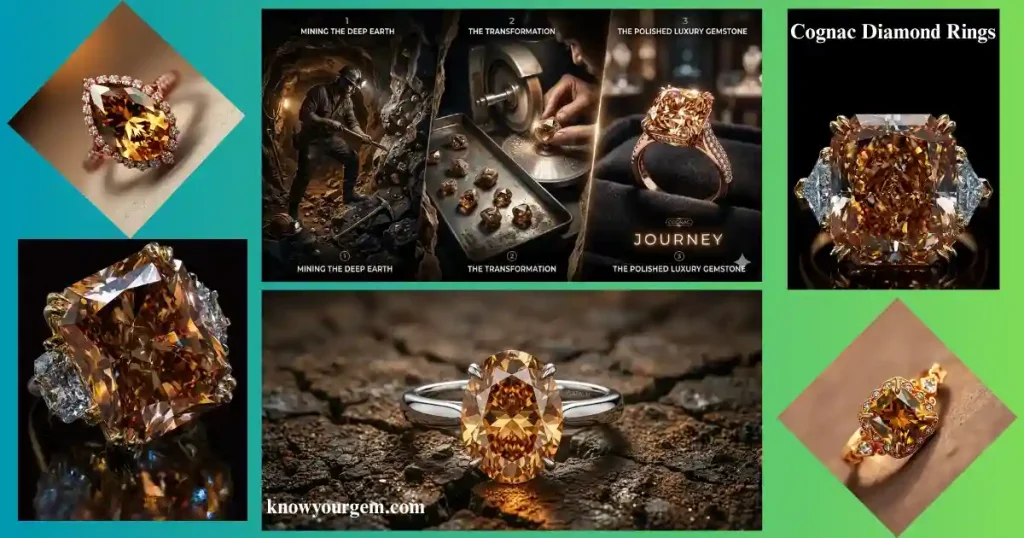
Fancy brown diamond engagement rings have become rapidly popular as alternative to the traditional white diamond rings. Although, their warmth, rarity, and distinctive beauty to those seekers who want something unique.
Why choose cognac diamonds?
- Distinctive beauty: They stand out from traditional white diamonds and offer individuality without feeling unconventional.
- Emotional resonance: Their warm brown tones that suggest luxury, timelessness, and endure love.
- Value proposition: Means that a larger stone owns more impressive cognac diamond for the same price as smaller white diamond.
- Versatility: Means the stone owns all skin tones, and appear warm on lighter complexions and bold on deeper ones.
- Trend strength: Colored diamond rings are rising in popularity, and cognac appeals to people who want color without the intensity of pink yellow.
Best setting metals:
- Yellow gold: This setting is considered as cohesive, enhances warmth and can command cost 20-40% more than white gold.
- White gold: It owns modern contrast that makes the diamond’s color pop. It is more affordable than yellow gold.
- Rose gold: It is considered as romantic and trendy, and creates a warm palette. It commands price between yellow and white gold.
- Platinum: It is luxurious and durable, lets the diamond shine and commands price 40-60% more than white gold.
In short: Fancy brown diamonds bring warmth, rarity, and individuality to engagement rings. Since the choice of metal fine tunes the style like yellow gold for a classic look, white gold for a modern elegance, rose gold for romance, and platinum for ultra luxury.
Recommendations for selection:
- Color over clarity: A Fancy dark brown diamond with having SI1 clarity usually looks richer and more beautiful than a lighter Fancy diamond with having VVS1 clarity. The deep color matters more, and small clarity differences are invisible to the eye.
- Metal choice: Always choose skin based tone and lifestyle. Since, yellow or rose gold adds warmth, white gold or platinum give modern sophist. The best option is one which feels right for you.
- Setting style: Vintage designs are stunning but need more care. Since, solitaire or three stone settings are practical for everyday wear while still showcasing the diamond’s beauty.
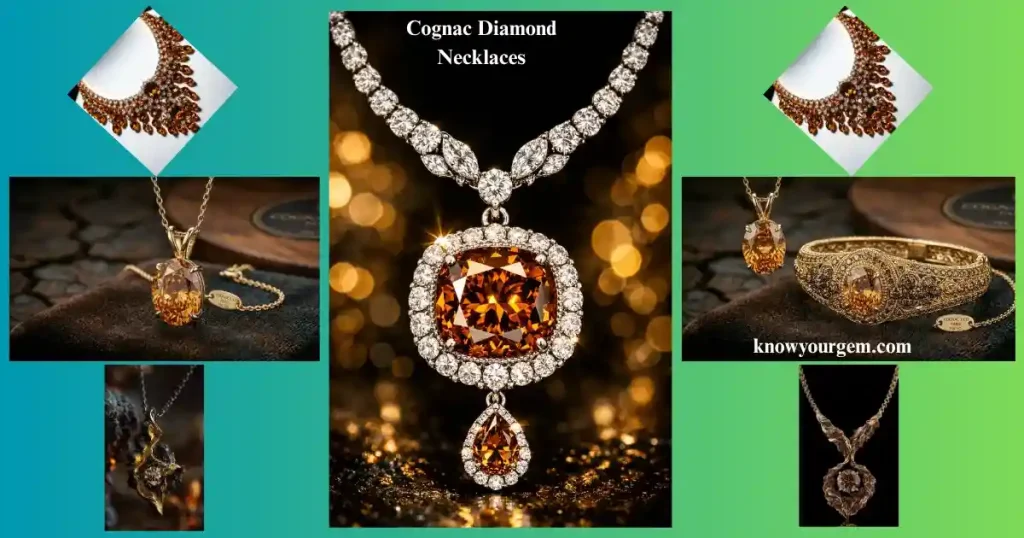
Cognac Diamond Necklace and Pendant Jewelry:
Cognac diamond necklaces and pendants believe to showcase warmth without the daily wear considerations of rings.
Pendant Styles:
- Solitaire pendant: It is a single cognac diamond on a chain that is simple, timeless, and perfect for showcasing the stone’s warm glow.
- Halo pendant: It holds Cognac diamond surrounded by white diamonds, and adds sparkle and drama for statement pieces.
- Drop pendant: It is a pendant style in which diamond hangs below decorative metalwork or gems, that create movement and elegance.
- Geometric pendant: It is called a modern, angular design that highlights Fancy dark or Fancy Intense brown diamonds.
- Three-stone pendant: It is style which pairs diamond with supporting gems for luxurious, and balanced look.
Metal and chain choices:
- Yellow gold: This metal owns warm and traditional look.
- White gold or platinum: It is a sleek modern contrast that makes the diamond color pop.
- Rose gold: It owns romantic and contemporary look.
- Chain style: It is so called fine chain which owns 0.7-1mm and suits everyday wear; whether heavier chain having 1.5-2mm plus can add strength and boldness.
Everyday vs. Statement:
- Everyday wear: Since, 0.3-0.8 carat diamonds with having VS1 or SI1 clarity are affordable, and still full of color.
- Special occasions: 1 plus carat Fancy dark or Fancy Intense diamond with having maximum impact and luxury appeal can be more pricier.
This way buyers can match pendant style, metal, and chain to their lifestyle whether letting the stone’s warmth shine.
Cognac Diamond Bracelet and Jewelry Suites:
Cognac diamond bracelets, whether tennis bracelets or bangles, make compelling luxury statements.
Tennis Bracelet designs:
Tennis bracelets usually feature diamond set in a continuous line along with the bracelet. Since, Cognac diamond tennis bracelets can create warm, cohesive luxury without the boldness of colored gemstone bracelets.
- Cognac-only: Uniform Fancy brown diamond along with the bracelet for warm, monochromatic luxury look.
- Cognac + white diamonds: While alternate stones add sparkle and contrast to stay elegant
- Mixed-color: Cognac blends with champagne or other warm tones for gradient effect.
- Daily wear: Since, 1-2 carats are considered as total smaller stones, VS1 or VS2 clarity, secure settings.
- Special occasions: Since 2-4 carats having total richer color saturation for dramatic impact.
Bracelet metals:
- Yellow gold & rose gold: Warm, cohesive designs.
- White gold & platinum: Modern contrast, though they show fingerprints more easily.
Jewelry suite coordination:
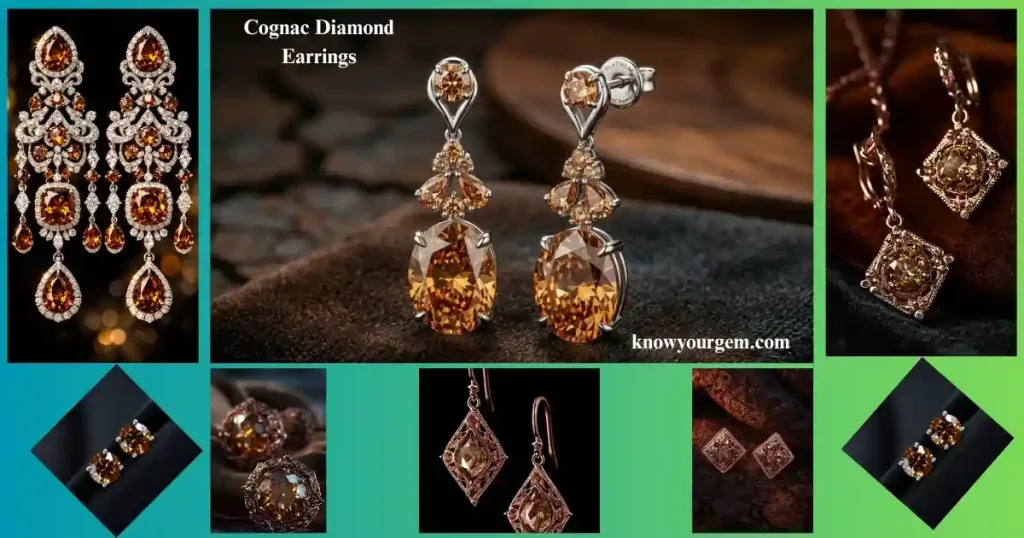
Cognac diamond jewelry suits coordinating jewelry like ring, necklace, earring and bracelet that create powerful luxury statements. Since, a cognac diamond engagement ring with having cognac diamond earrings and necklace create sophisticated, intentional luxury.
Suite coordination in Fancy brown diamond is practical since, the warm tone harmonizes beautifully with itself. Not like mixing white and yellow gold, that combines multiple cognac pieces always look intentional and elegant.
Ultimate buying guide for Cognac diamonds:
Given below is the complete guide about how to buy and where to buy this gemstone:
Where to buy:
- Certified retailers: Since, trusted dealers can provide expert guidance, authentic certification, and warranties.
- Online platforms: Online sites like James Allen or Blue Nile usually offer wide selection, detailed photos/ videos, and competitive prices. So, always verify your gemstone stone with GIA certification and return policies.
- Local jewelers: They look personalized service and custom designs, plus long term relationships for future value.
- Auction houses: They occasionally feature rare stones, however they require to judge condition and pricing.
Certification essentials:
- GIA certification: It appeals non-negotiable, and confirms color, clarity, carat wright, cut treatment status and origin.
- Grading report details: Always look for color grade such as Fancy dark brown, treatment status (“No treatment detected”), origin (Natural ), clarity grade, carat weight/dimensions, and cut quality.
- Avoid uncertified stones: Because they can be misrepresented or treated. Since, small savings rarely justify the risk.
This is the way you can shop confidently, while knowing their authenticity, fairly priced, and properly documented.
Red flags and what to avoid:
- “Treated” or “irradiated” stones: Diamonds that have undergone heat treatment or irradiation are far less valuable than natural diamonds. Since, treatment can be reversible or unstable. So, always purchase natural, untreated stones.
- Undisclosed lab-grown diamonds: Any cognac which is sold without explicit lab grown disclosure should be assumed natural. However, verifying a stone assumption by requesting GIA certification that clearly identifies origin.
- Unrealistic pricing: Cognac stones are priced dramatically below market rates are likely misrepresented, of inferior quality, or treated. Although, market price is relatively consistent; extreme outliers warrant skepticism.
- Poor quality photography or vague descriptions: Reputable sellers usually provide detailed diamond photography, 360 degree video, and complete specifications. Vague listings or poor photography suggest the seller owns something to hide.
- Lack of return policy: Legitimate dealers usually offer return policies. Whether no return policy indicates the seller lacks confidence in the product or embodies a less professional operation.
Evaluating your options:
When you are comparing cognac stone, you should request GIA certified stones and evaluate side by side using:
- Color saturation: As compared to color depth. Richer saturation typically justifies higher pricing. View images under consistent lighting.
- Apparent clarity: Always request high resolution images and videos. Evaluate whether any inclusions are visible. SI1 stones often appear identical to oVS1 under normal conditions.
- Cut quality and proportions: Examine cut grades. Although, well cut stones will display richer color and superior light reflection.
- Price per carat and total price: Calculate both metrics. Consider whether a slightly larger stone with having marginally lower clarity can embody better overall value.
- Return and warranty policies: Understand your protection. Since, longer return windows and warranties indicate seller confidence.
Quick question answers:
1. What is a cognac diamond?
A cognac gemstone is a type of brown diamond with having warm, golden tones and medium to the deep color saturation. It is a marketed name for higher quality brown stones.
2. Are cognac diamonds real diamonds?
Cognac diamonds are real and naturally originated diamonds made of carbon. Since, their rich brown color comes naturally from the stone itself.
3. How much should I spend on a cognac diamond engagement ring?
Prices are slightly vary, expected is around $2,000 for small/less intense and $15,000 plus for larger, highly saturated stones.
4. Can you tell if a cognac diamond is natural or lab-grown by looking?
Not at all, natural, and lab grown diamonds look like the same to eye however only lab testing and certification reliably origin.
5. Do cognac diamonds look brown in all lighting?
The brown tone is stronger in daylight and neutral indoor light. Since warm light can make their look richer; cool light can make them appear lighter. Whether strongly saturated stones still read brown in most lights.
6. Which metal best suits a cognac diamond?
Yellow gold and rose gold enhance warmth. Whether gold or platinum gives modern contrast. So, choose by style and skin tone.
7. Can cognac diamonds be resized or reset?
Yes, they can be reset or the ring can be resized. So, cost can depend on complexity, work with an experienced jeweler.
8. Do cognac diamonds hold their value?
Natural, untreated stones retain value better than lab grown stones, however they are not guaranteed investments. Since, expected moderate resale value; larger, higher quality natural quality stones hold value best.
9. Are cognac diamonds good for everyday wear?
Yes, diamonds are best choice for everyday wear jewelry because they are the hardest gemstones they won’t get scratched if you wear them on daily bases. So, for daily wear, only choose secure and consider clarity like VS or better for frequent wear.
Conclusion:
Cognac diamonds are representing a rare blend of beauty and individuality. Since their warm, golden warm-brown tones used to deliver elegance that white diamonds simple can’t replicate, whether often offer better value for the price.
When you buy this stone, online or physically from any store you should prioritize GIA certification, focus on color saturation over minor clarity differences, and select reputable sellers who own transparent documentation and return policies.
The stone is rapidly holding popularity of this stone and reflects broader trends individuality, sustainability, and value a fine jewelry.
Verify your Gem with GIA before purchasing it ! Gemstone Enthusiast KamilHussain

Welcome to KnowYourGem.com! your ultimate destination for uncovering the fascinating world of gems and their secrets! I'm Kamil Hussain, a passionate blogger with a Master’s degree in Economics, dedicated to bringing you insightful, well researched content that blends the beauty of gemstones with the art of storytelling. With a keen analytical mind and a love for discovering hidden treasures, I created this platform to help you explore the brilliance, history, and value of every gem.

