

Quick Answer:
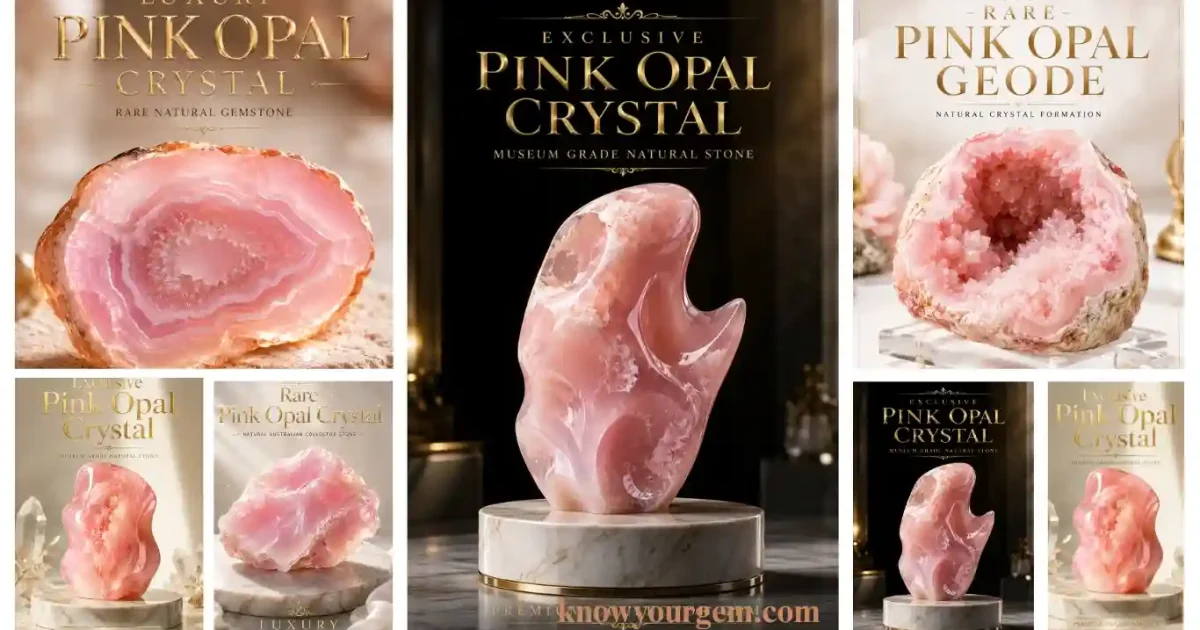
Pink opal, an opaque soft gemstone, shows off different shades from rose and salmon to blush stone with a waxy finish.
The stone lacks rainbow flashes, which generally precious opal contains. This pink stone is valued having calming pastel look. Jewelry like pendants and earrings, as well as cabochons, can work well for this soft opal, but wearing it as rings and bracelets requires protective settings; without them, it is a big risk for daily use.
Key Facts at a Glance:
Opaque variety can easily be found in almost every location, but with gentle pastel colors and smooth, waxy finished pieces only come from its primary location.
| Property | Details |
| Type | It is a common variety of precious opal, but it is itself not precious. |
| Mineral Family | It belongs to the Opal (hydrated silica) family |
| Chemical Formula of | “SiO2⋅nH2O\mathrm{SiO_2\cdot nH_2O}SiO2⋅nH2O” is the chemical formula that reflects the stone. |
| Mohs Scale | The stone is softer at 5.5-6.5 on the Mohs scale |
| Color range | It has different color looks, from Pale pink and salmon to rose, peach, blush, and dark pink. |
| Transparency | It is translucent to opaque |
| Major sources | Its sources are Peru, Australia, and Mexico |
| Birthstone association | It is October’s alternative birthstone |
| Jewelry suitability | It is suitable for Rings, pendants, earrings, bracelets (occasional wear recommended) but can’t be suitable for daily wear jewelry |
| Durability | It has moderate durability and requires proper care |
| Typical price range | It is sold for $1–$25 per carat for cabochons; higher for fine Peruvian material |
| Common treatments | It is usually found untreated; occasionally dyed or stabilized |
What Is Pink Opal?
Opal’s common variety gets colors from trace minerals, especially manganese, which introduces its signature pink tone. Its relation with broader opal makes it hydrated silica.
Is Pink Opal a Precious Opal or Common Opal?
Pink opal is a common variety, not a precious opal. The stone is classified as hydrated silica, but sometimes the variety is called “potch opal,” which is its trade name. The most common missing factor is that the gem can’t shift rainbow flashes like precious opal.
That’s why this variety of opal lacks the ordered silica sphere structure that diffracts light. And the fact is that its value comes from color saturation, smoothness, and pattern rather than rainbow flashes that it doesn’t carry.
Why Pink Opal Is Different from Other Opals?
People often see opal in white and black colors, which are valued for their fire. But pink opal is usually considered a different kind of opal because of the opposite reason: it reflects a calm, uniform color field, and those factors make it initially different from others, and it is most buyers’ favorite variety.
Pink Opal vs Other Pink Gemstones:
Pink opal is softer than crystalline pink gems like rose quartz and pink tourmaline, with having cracker texture and a lower price point. So, this porous stone is less durable, as it requires proper care compared to other pink gemstones.
Pink Opal Meaning, Symbolism & Birthstone:
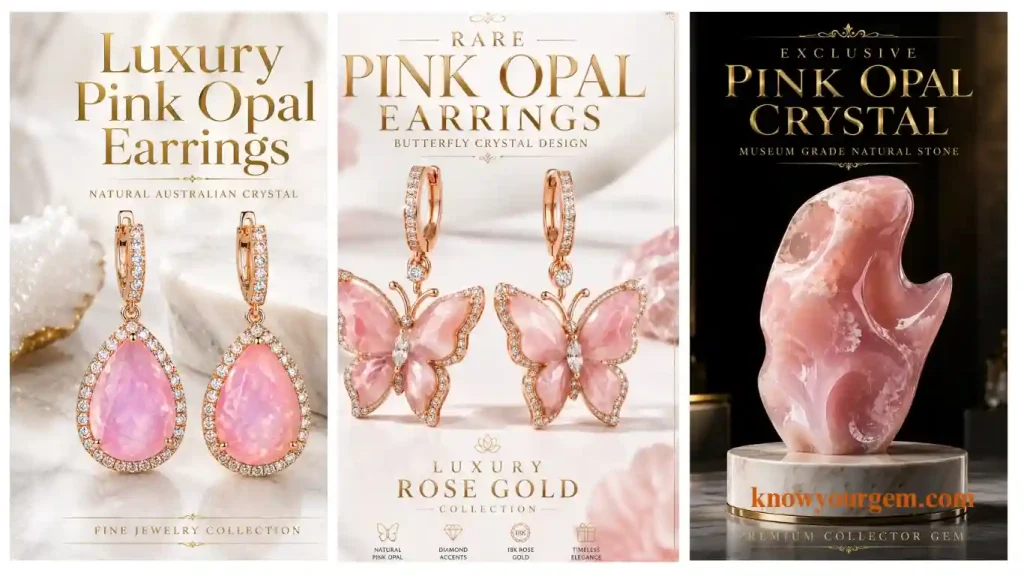
Symbols which relate to the pink colored opal are emotional stability, compassion, and a quiet, calming presence. Its association with these meaningful symbols generally comes from traditional practices and can’t compete with scientific studies or medicines.
Opals have long held symbolic weight. Since ancient Roman cultures saw this stone as a symbol of hope and purity, and communities around Peruvian deposits have used pink opal in local crafts and ritual objects.
In the modern era, opal is mostly seen as holding the ability for emotional balance, self-love, and gentle new beginning ideas that resonate strongly in wellness and crystal healing circles.
Birthstone & gift associations:
Astrological experts didn’t set pink colored opal as a birthstone, but sellers in the market sell this stone as October’s alternative birthstone for the attention of people born in October and looking for precious opal that is an actual birthstone.
Due to its association with softness and comforting symbolism, the stone is picked especially for gifts that can benefit from recovery, personal growth, or quiet milestones. Some jewelers also suggest it for 14th wedding anniversaries, drawing on opal’s broader anniversary associations.
Geological Formation, Sources & Mining
The stone forms deep within the earth’s surface; see how:
How Pink Opal Forms?
Its formation process is simple: when silica-rich groundwater seeps into cavities in volcanic or sedimentary rock, the stone solidifies more than thousands of years.
The stone can’t develop as true lattice crystalline minerals; that is the reason pink colored opal is classified as a mineraloid rather than a true mineral. So, this unique formation process explains both its internal play of color and its softer, more delicate nature as compared to structured gemstones.
Mineral Composition & Why It’s Pink:
The chemical formula which the stone has SiO2·nH2O, which reflects a variable trapped water content, typically 3% to 21%, that directly affects durability and crack susceptibility.
The pink color of this gem comes mainly from trace manganese, and in some deposits from mineral inclusions and iron oxide intersections within the hardening silica gel.
Major Mining Locations:
Pink colored opal is majorly mined in Peru’s Andes region, particularly around Acari, which produces a large amount of the world’s commercial pink opal. This location is known for providing consistent bubblegum to salmon tones. Australia and Mexico are the secondary locations that provide different pieces.
Australian mining fields occasionally find yield pink-toned material, and this location is also well known for supplying precious opal. While Mexico has smaller deposits, some of them are connected to parts of the United States, but they rarely reach commercial market scale.
Australian Pink Opal vs Peruvian Pink Opal:
Peruvian pink colored opal showcases saturated, uniform color with smooth texture. Whether Australian pink opal is rarer due to having a rare pink tone and often displays matrix or mottling. Peru remains the leading commercial source by far.
Ethical Mining & Sustainability:
Peru’s pink colored opal is mined through small-scale artisanal operations mostly. Buyers mindful of sourcing should ask retailers about mining origin and labor practices, since certification programs are less developed for common opal as compared to precious gems like diamonds.
Pink Opal Colors & Appearance:
As softer opal contains a different color saturation, collectors are advised to know what these colors are:
Natural Pink colored Opal Color Range:
Pink opal can look almost white with just a blush, or it can glow in deeper rosy shades, like salmon, peach, and dusty rose tones, while adding variety.
Pale, Soft, Rose & Dark Pink Opal:
Soft colors like pales are the most casual and budget-friendly; however, richer rose or magenta hues are tougher to find and fetch higher prices, especially from Peruvian deposits.
Transparency & Luster:
Larger amounts of pink opals are described as translucent to opaque; they showcase waxy to slightly glassy shine. Its luster is totally different from quartz, which generally contains true transparency.
Matrix Patterns:
Several pieces carry veins of white, gray, or brown host rock. But these natural matrix patterns are often highlighted rather than hidden; they give each unique character.
What Determines Color Quality:
The most desirable stones showcase an even, saturated pink with little chalkiness or matrix intrusion. Clean, matrix-free examples are seldom and usually priced higher.
How Color Affects Value:
Stones with having deeper, consistent pink tones and minimal matrix are worthy, whether paler or heavily mottled pieces tend to be more affordable.
Physical & Gemological Properties:
The following physical and gemological properties of pink opal showcase durability, structure, water stability, treatments, and everything is all in one:
Hardness, Durability & Structure:
5-6.7 Mohs hardness says the stone is softer, but brighter, and its softness makes it less durable; more easily scratchable as compared to quartz. And this structure generally tells that the stone is vulnerable to chipping; it needs more gentle care.
Stability & Water Content:
Sudden temperature changes, from cooling into heating immediately and long exposure to the sun, can dull or fade the stone, and the stone can also get stressed or cracked. Its trapped water makes it prone to drying out, leading to “opal sickness” with surface cracking.
Common Treatments:
Commercial pink colored opal minerals are untreated and are considered high-quality gems. But low-quality pieces can be found as resin or dyed. So, buyers should always ask for treatment status from sellers, especially for quality gems, before buying.
Does Pink Opal Glow in the Dark?
Pink colored opal generally doesn’t glow in the dark because it has no phosphorescent or self-luminous properties like precious opal, and under UV light, some of its fluorescent pieces can’t be able to define their trait.
Is Pink Opal Suitable for Everyday Wear?
No, this stone is not suitable for daily wear jewelry without protective settings and careful handling. As far it is suitable for pendants and earrings because such jewelry rarely hits hard surfaces; they also avoid sharp bowls which can chip or scratch the stone.
Pink Opal Jewelry Guide:
A comprehensive deep guide below explains how this pink colored opal fits for individual jewelry design:
Pink Opal Rings:
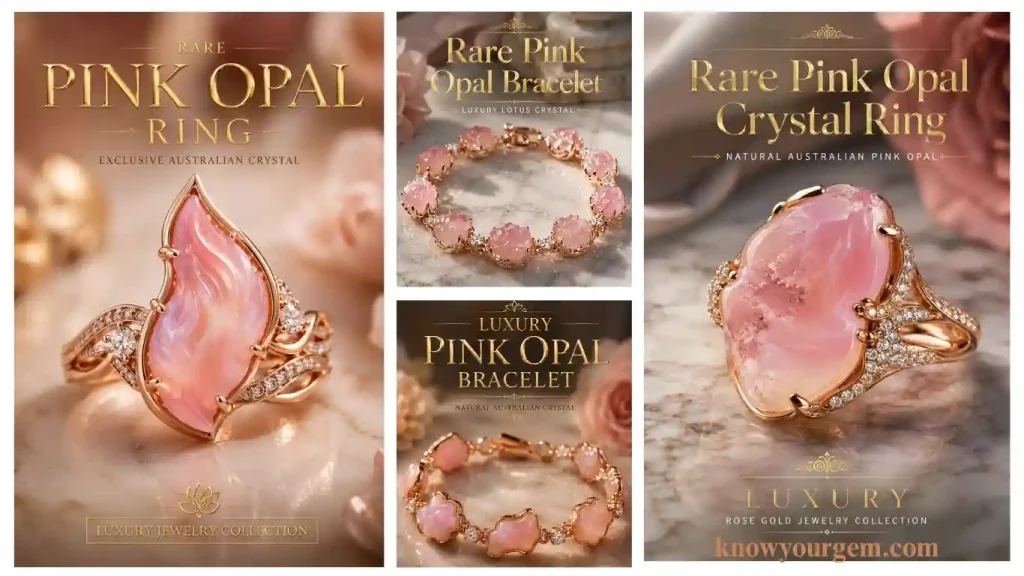
Pink opal rings usually require a bezel protective setting because it can protect the stone’s edges, but larger cocktail cabochons can make soft statement pieces.
Some designs pair pink opal with diamond or white opal for contrast. Since engagement rings gain popularity because they are set in safe or protective settings that usually resist scratches.
Pink Opal Necklaces & Pendants:
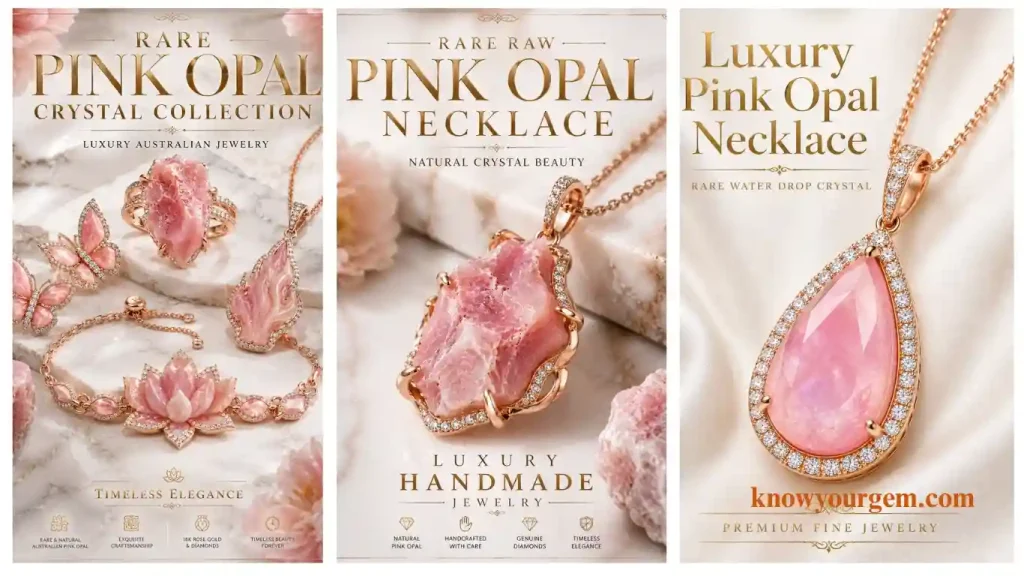
From delicate single stone pendant to full standard, pink colored opal pair beautifully with gold or silver. So, oval and teardrop cabochons are especially popular since the settings shield the edges.
Pink Opal Earrings:
Stud earrings offer a simple, low-exposure way to wear pink opal, whether dangling drops showcase larger cabochons for more dramatic occasions.
Pink Opal Bracelets & Beads:
Bracelets of this stone face more friction, so lighter wear is best. Beaded strands are common in fine jewelry and wellness pieces, that are often mixed with rose quartz or morganite for a soft tonal palette.
Pink Opal Cabochons & Carvings:
Cabochon cutting is standard, which gives a smooth dome finish that suits its opacity. Therefore, skilled lapidaries sometimes carve pink opal into small figures, as carving reduces durability.
Choosing the Best Jewelry Style:
Its softness only allows the pink gem to be worn as pendants and earrings, but with gentle care and protective settings like bezel and prong, it can be worn as rings and bracelets, but requires more protective settings compared to hard gemstones.
Pink colored Opal Quality & Value:
The quality and value of this pink gem depend on the following key factors:
Color, Clarity, Cut & Size:
This valuable opal displays a saturated pink glow rather than heavy white or brown patches. There is no grading applied for this stone geologically.
But buyers love this stone for its smooth surface and a well-shaped cabochon cut with a polished finish. Its larger pieces with consistent glow are rare and can generally command higher prices.
Origin & Treatments:
Peruvian pink opal often holds a premium quality due to having strong saturation. Whether untreated stones are valued more highly than dyed or resin-stabilized material, so disclosure is the key when assessing value.
Natural vs Treated Pink color Opal:
Natural pink opal showcases organic color variation and matrix under magnification, while dyed stones often reveal concentrated color in surface cracks. The finest examples integrate strong, even saturation, minimal matrix, high polish, and confirmed untreated origin.
Pink Opal Price Guide:
Opal’s prices hinge on its quality, cut, color, origin, Mohs, and durability, which is deeply explained below:
What Determines Pink Opal Price?
The prices of each gem are driven primarily through key factors like color saturation, size, origin, treatment, and cutting quality; these are the important factors buyers should know first before buying the stone.
Price by Quality:
Low-quality stones usually command prices under $1 per carat, but high-quality pieces start from $15 to $25 or more.
Price by Origin:
Pale stones with having heavy matrix can be sold for under $15-$25 per carat or more.
Price by Jewelry Type:
Finished jewelry prices hinge heavily on the metal used, as a sterling silver pink opal ring can command a price from $30 to $50, while a gold setting with having larger, finer stone can go up to a hundred dollars or more.
Is Pink Opal a Good Investment?
It is not typically considered as investment-grade quality. As diamond or fine colored stones are investment-grade stones. So, it is best to purchase pink opal for personal enjoyment rather than resale value.
Buying Guide:
A complete buying guide below is about how pink colored opal is more fruitful for each buyer who wants a genuine piece:
How to Choose Genuine Pink Opal & Spot Fakes?
Check the color variation and its smooth, waxy luster because genuine pieces usually contain such factors. Also, ask sellers about the treatment, ethical sourcing, and certification; if they provide all these details, the stone is genuine, not fake.
Questions to Ask & Certifications:
It is essential to ask whether the stone is certified with trusted labs like GIA, IGS, and IGI for quality gems because common gems are rarely found as certified.
Best Settings & Where to Buy:
Bezel and prongs are the most protective and best settings for daily-wear jewelry like rings and bracelets because, without these settings, the stone can be chipped or scratched when it hits the surfaces.
From a buying point of view, you should only trust dealers or suppliers who are open to communicating about a stone’s treatment status, ethical sourcing, and grading, etc.
Common Buying Mistakes & Expert Tips:
Most buyers usually overlook treatment disclosure or choose fragile settings rather than protective bezel or prong settings for rings and bracelets; it is a big mistake. They should buy this gem from trusted dealers who have perfect knowledge of treatments and the stone’s ethical sourcing.
Pink Opal Metaphysical Properties: (Traditional Beliefs)
The section reflects spiritual traditions and personal crystal healing practices but can’t compete with scientifically verified claims.
Pink Opal Energy & Chakra Association:
Its association with the heart chakra and connection with empathy makes it the pink stone. And this connection can mitigate stress and enhance inner power.
Benefits of Wearing Pink Opal:
Delivers say wearing pink opal as jewelry can encourage kindness toward oneself and ease anxious feelings, as these effects are not clinically established.
Pink Opal in Meditation & Crystal Healing:
The stone is used as a focal point in heart-centered breathing by traditional and spiritual practitioners. They also wear it as a pendant that touches the chest, and the stone provides relaxation rituals as part of personal wellness practices rather than medical treatment.
Common Spiritual Beliefs:
Common traditions connect this stone with emotional balance after, fostering self-acceptance, and offer support during major life transitions, all rooted in spiritual practice only.
Pink Opal Care & Maintenance:
The following caring and cleaning guide for pink opal can better help buyers or gemstone enthusiasts to take care of their stone to keep its natural glow:
How to Clean & Store Pink Opal:
The only and best method for cleaning this stone is using lukewarm water for soaking, a soft brush for dust removal, and a soft cloth for pat drying.
Can Pink Opal Get Wet?
Normal water contact is fine, but prolonged water soaking or sudden temperature changes generally damage the stone internally.
Preventing Cracks, Scratches & Long-Term Care:
Wear-off your jewelry before engaging in any physical activity. Must check the setting regularly because mounts increase chipping risk.
Pink Opal vs Similar Gemstones:
- Pink opal vs rose quartz: Both stones contain different hardness and transparency. Since pink has 5.5-5.6 Mohs hardness while rose quartz owns 7 Mohs, and it is more transparent and more suitable for daily wear jewelry compared to opal.
- Other pink gems: Mostly Morganite, rhodolite, pink chalcedony, and pink tourmaline look like this stone, but they have different transparency, different origin, different hardness, and they are found in separate locations.
- Story & facts: It is a fact that pink opal doesn’t glow in the dark. The stone has a memorable story, like its pale, matrix-heavy pieces are commonly more affordable than the stones that have low matrix and are found rarely.
Key Takeaways:
- Gem Type: Common pieces of opal show pink hues, and it is formed from hydrated silica, and its popular source is Peru.
- Hardness & Care: It is softer, with a 5.5- 6.5 Mohs scale and needs gentle care.
- Quality & Value: Prices for common stone are lower, but higher quality can command a premium price.
- Affordability: Common stones are generally affordable.
Frequently Asked Questions:
1. What is Pink Opal?
Pink opal is a common type of colored opal. Trace manganese colored it and the stone is valued for its soft, uniform color rather than the rainbow flash that is seen in precious opal.
2. What does Pink Opal symbolize?
It is symbolized by emotional balance, compassion, and calm, based on cultural and traditional practices.
3. Is Pink Opal a real gemstone?
Yes, pink opal is real, and it is formed in hydrated silica and is classified as common opal due to its softness.
4. Is Pink Opal a birthstone?
Geologists didn’t set it as a birthstone initially, but sellers sell it as October’s alternative birthstone.
5. Where is Pink Opal found?
The major commercial source is Peru, with smaller quantities reported from Australia and Mexico.
6. Why is Pink Opal pink?
Trace manganese content and mineral inclusions within the silica structure produce the stone’s characteristic pink hue.
7. How much is Pink Opal worth?
A common variety can command prices under $1 per carat, but high-quality pieces are sold for $15-$25.
8. Is Pink Opal expensive?
Overall, it is affordable, but its high-quality pieces can be sold for higher prices.
9. Is Pink Opal suitable for engagement rings?
Yes, with protective settings like bezel and prong, and with gentle care, it can be set in engagement rings.
10. Can Pink Opal be worn every day?
Yes, with proper care, but it is less suitable for regular wear, as it owns moderate hardness and needs occasional wear rather than daily use.
11. How do you clean Pink Opal jewelry?
You can safely clean it with mild soap and lukewarm water, a soft brush, and pat dry with a soft brush.
12. Does Pink Opal glow in the dark?
No, this stone has not glow like precious opal.
13. Is Pink Opal good for everyday jewelry?
It is fine for daily wear as a pendant and earring.
14. What are the traditional metaphysical beliefs associated with Pink Opal?
Old spiritual healing practitioners linked this stone with the root chakra, which is an energy booster, emotional controller, and self-confidence enhancer.
Gemstone enthusiast KamilHussain!

Welcome to KnowYourGem.com! your ultimate destination for uncovering the fascinating world of gems and their secrets! I'm Kamil Hussain, a passionate blogger with a Master’s degree in Economics, dedicated to bringing you insightful, well researched content that blends the beauty of gemstones with the art of storytelling. With a keen analytical mind and a love for discovering hidden treasures, I created this platform to help you explore the brilliance, history, and value of every gem.
