

QuickView:
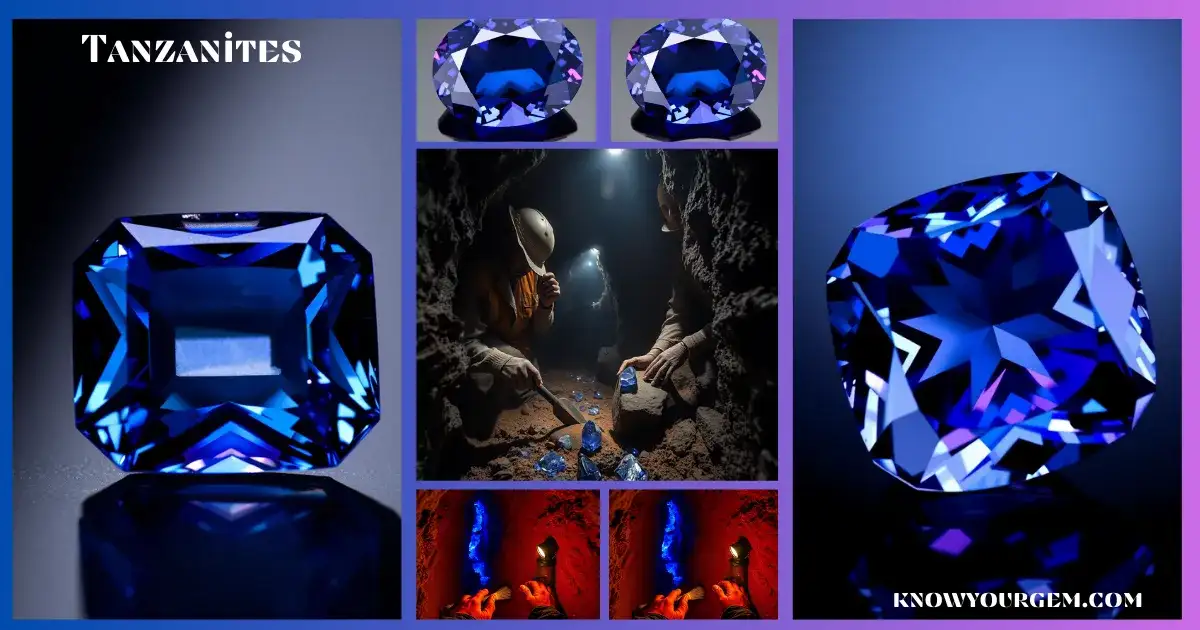
A rare gemstone comes only from northern Tanzania. No other deposits exist on Earth for this rare masterpiece. That makes it unique.
However, “raw tanzanite” generally confuses people. Sellers generally use the same label for very different things. Since a crystal shop, a gem supplier, and an online marketplace can call their product “rough tanzanite,” but they are not generally selling the same thing.
What “Raw Tanzanite” Actually Means?
“Raw Tanzanite can’t only one thing but it splits into two markets that nearly never meet, and combining them up is where collectors lose money or feel disappointed.
The metaphysical/display market usually sells out small, uncut specimens must be often in brown or pale in color, for healing, altars, or collections. Its value commonly comes from authenticity and belief, not gem quality.
The lapidary market basically sells rough specimens for cutting. Prices hinge on how much qualitative a gem it is and how perfectly finished its cut.
This stone can be genuinely natural, unquestionably “raw tanzanite,” and still it can be worthless for cutting. That is not a contradiction; it has two separate value systems attached to the same mineral.
| Metaphysical-Market Rough | Lapidary-Market Rough | |
| Typical appearance | It is brownish, can dull, small in size. | It is sold as variable that is evaluated by windowing, not surface look. |
| Price basis | Stone’s rarity/authenticity narrative | Estimated cutting and having color potential |
| Typical price | Some specimens can be sold for $1–$20 per carat | Some for $50–$500+ per carat, but it depends on quality, clarity, treatment, and color of the stone. |
| Common seller | Common sellers are found on Etsy, in crystal shops, gem shows. | However, Lapidary suppliers and mine-direct dealers. |
| Buyer question that matters most | “Is this real?” | “What will this cut into?” |
Ask before this question if raw Tanzanite is a good deal; make sure you know which market you are buying in.
Where Is Tanzanite Found? The Only Location on Earth
Raw Tanzanite is only found in one location; the Merelani Hills of northern Tanzania, close to Mount Kilimanjaro. This 7 km-long range is the world’s only ethical source for the occasional tanzanite rough.
Geographic location:
- It is located at a distance of approximately 40 km from Mount Kilimanjaro.
- A bit over 10 kilometers from Arusha City.
- Its Mining corridor: Long, 7 km × expansive 2km (14 km2.)
Because of the only one major deposit on Earth, this stone is so-called rare. While diamonds come from 30+ countries, sapphire also exists in 15 plus locations, including Tanzania.
The Four Mining Blocks:
The Merelani deposit holds four licensed blocks, each with having its own scale and charater.”
| Block | Operation Type | Notes |
| Block A | Artisanal | Site of the original 1967 discovery |
| Block B | Medium-scale | Known for high-quality stone production |
| Block C | Industrial | TanzaniteOne / Richland Resources; ~65% of total production |
| Block D | Developing | Mixed operations, still being assessed |
The figure of 40,000-70,000 people is generally employed directly in a mine or in the hand-cutting, polishing, and support trades just near Arusha or Manyara.
Why Tanzanite Forms Only in Merelani?
There is only one color of tanzanite gemstone is blue, which ocurred because three geological conditions coincided in one place only.
- The right heat: What you are aiming for is approx. 485- 540 °C. Anything lower than this and the magnesioferrites don’t fully form, too high and other minerals form. Generally too cold to initiate growth.
- Vanadium: They are Trace elements and in most cases give the tanzanite its characteristic blue-violet color. This is when it has replaced one of the aluminum atoms in the crystal.
- Pressure: 2- 4 kbar, formed from the East African Rift zone that has subjected zoisite to the right conditions to give it the blue tanzanite color.
Mining companies are known to exist in Kenya, Madagascar, Malawi, India, Sri Lanka, Myanmar, and Brazil, but they have not found anything about tanzanite. It’s getting confirmation from lab such as GIA and SSEF: it comes from one origin.
Discovery: How Tanzanite Was Found
July 1967: A bolt of lightning brought a brush fire in the Merelani Hills. As intense as the lightning was (extremely hot), an equally hot fire turned the light brown surface crystals the stunning blue that gained their fame.7
Maasai herdsman called Ali Juuyawatu collected the blue stones after the blaze, and early samples were thought to be sapphire. Soon, however, the gemologists identified the stones as a new type of blue zoisite, which is colored by vanadium.
1968: Tiffany & Co. hired Henry Platt to name the stone after where it was found, and inaugurated the “gem of the 20th century”- tanzanite.
2002: Tanzanite designated as the official national gemstone of Tanzania. December birthstone.
How Deep Is Tanzanite Found?
Mining depth varies significantly by operation type:
- Artisanal mines: 10–100 meters
- Commercial operations: 50–200 meters
- Industrial mining (Block C): up to 600 meters, currently the deepest active operations
The larger the stones, the more even their coloring and the whiter they appear. Gems that have greater depths are most likely to possess optimal color. 5+ carat gems with the best color originate from depths over 300 meters.
Why Most Blue Raw Tanzanite Sold Online Isn’t Natural Rough Color?
One of the most confused and least clearly communicated facts among in the raw tanzanite market–undocumented by but a handful of buyer guides.
Tanzanite in its original, rough state is not dazzling blue-violet but rather brown, olive, or grayish, which is what it looks like generally when sat out if it’s just been excavated, prior to cutting. The vibrant coloring buyers desire is normally imparted to rough stones by means of being heat-treated, after extraction and prior to cutting.
How to read a listing skeptically:
- Color that’s perfectly even across the whole piece is a red flag, natural crystals usually show zoning, with color concentrated unevenly through the stone.
- Color sitting visibly in surface fractures rather than distributed through the body of the stone suggests dye or coating, not natural or even heat-treated color.
- Listing photos shot under warm, saturated lighting can make dull brownish rough look far more blue than it is in hand, tanzanite’s pleochroism makes it especially sensitive to lighting and angle.
- A seller who markets rough as “natural raw tanzanite” without mentioning heat treatment isn’t necessarily lying, treatment disclosure norms are even looser at the raw/wholesale level than for finished stones.
- Genuinely natural, uncut, vivid-blue rough does exist. It’s rare, and it’s priced accordingly, well above typical “raw tanzanite” marketplace listings.
If a raw tanzanite listing shows jewelry-counter color at crystal-shop prices, that mismatch is the signal to slow down, not a bargain.
Raw Tanzanite for Crystal Healing:
The following is in accordance with practice within the crystal healing and metaphysical community. Such properties are not claimed to be a scientific solution.
For crystal healers, other descriptions for tanzanite include: transformation and spiritual evolution, freeing emotional blockages, and connecting to the third eye and throat chakras, can improve intuitive attributes, peace, and individual linking when meditating.
Raw, uncut tanzanite has a particular role in this process. A significant number of people feel that unrefined stones have a ‘cleaner’ or ‘purer’ energy as opposed to faceted stones, which explains why raw pieces are often used for grid work, kept in a pocket, or worn directly on the body rather than in jewelry.
Whatever framework a buyer uses, some physical realities apply regardless of belief system:
- Raw tanzanite, with all its surface showing and its obvious fracture planes, will be more delicate to handle than one that has been faceted with its protective setting.
- Cleaning: Use only soft cloth with lukewarm water, don’t soak. Don’t ultrasonic cleaner or chemical.
- Extended direct sunlight can, in some treated material, gradually affect color stability.
- Store separately from harder stones to prevent surface scratching.
Metaphysical-market raw tanzanite is priced entirely differently from lapidary rough. Comparing a $5 crystal-shop specimen to a $200-per-carat cutting rough listing isn’t an apples-to-apples comparison, they’re serving different buyers.
Tanzania’s Economic Connection:
The Merelani deposit is central to the regional and national economy, not just the jewelry trade.
Government revenue is derived from a 5% mining royalty plus export taxes and corporate taxes, bringing in an estimated $100–300 million USD per annum.
The employment generation is about 40,000 70,000 direct employment of miners, about 5,000 10,000 cutters and polishers, and other industries within the area of Arusha and Manyara.
Raw Tanzanite is designated as the national gemstone of Tanzania and is a major contributor to the tourism industry of the region. As much of the deposit lies in the shadow of Mount Kilimanjaro, it is often marketed worldwide as “the treasure under Kilimanjaro”.
The Depletion Question: Why the “10-30 Years Left” Headline Is Only Half the Story
Almost every raw tanzanite article I can recall runs through similar broad stone statistics: the deposit has 10-30 years of proven reserves left in the ground. This figure has been mentioned since around 2010 and it’s interesting to see how it has originally been reached.
Depletion estimates over time:
- 2010 study: ~30 years remaining
- 2018 study: 10–25 years remaining
- 2025 consensus: 10–30 years remaining at current mining rates
That’s a wide, largely unchanged range spanning 15 years which itself is a clue. A few things get consistently left out of the headline version:
- These estimates are frequently produced or cited by mining companies and industry marketing bodies, who have a direct financial incentive to frame the resource as urgently scarce
- “Depletion” and “exploration has slowed” are often conflated deeper deposits below 600 meters remain largely untested, not confirmed absent.
- The 2006 Benitoite mine closure is commonly cited as a preview of what happens post-depletion, but Benitoite never had industrial-scale production or global marketing infrastructure behind it, making the comparison weaker than it’s usually presented.
- Realistically, depletion would likely mean a slow, multi-decade supply tightening rather than the cliff-edge price shock implied in most “buy now” marketing.
None of this means tanzanite isn’t finite, it is, by definition, single-sourced. But scarcity marketing and geological reality are two different things, and conflating them is a large part of how tanzanite gets pitched as an investment.
Visiting Where Tanzanite Is Found:
The Merelani mining area does provide some genuine tourism opportunities for the prospector who wishes to see the source in operation.
- Mine Tours: TanzaniteOne/Richland (Block C) offers tours whenever feasible and costs approximately $50-200 USD. The tours include the underground tour, processing works, and displays of geology.
- Arusha (about 10km from the mines): home of the Tanzanite Experience Center, with opportunities to view local gem markets, cutting demonstrations, and learn about its history.
- Getting there: To the airport of Kilimanjaro (JRO), then one hour by car to Aruscha, tours should be booked through commercial representatives.
Buying tips when purchasing on the ground:
- GIA/AGS certification should be requested for any large purchase.
- Purchase from reliable, well-known outlets and avoid dealings from the street.
- Understand Tanzanian export documentation requirements before buying.
- Treat unusually low prices from unlicensed sellers as a warning sign, not a deal.
Tanzanite Meaning and Symbolism:
Given below reflection beliefs within the crystal and metaphysical community.
Raw Tanzanite is related to transformation, growth, and spiritual elevation. It is believed by healers to clear emotional blockages, bring calm and relaxation, and help with communication and intuition. Because of these properties, it is used in many spiritual contexts.
Emotionally, raw tanzanite is said to ease stress and clear the mind. Metaphysically, it is related to the third eye and throat chakras, and is said to assist in genuine communication and self-expression and to help the evolution of the spirit. Some use it in meditation to help tune into the higher mind.
December Birthstone: Tanzanite
As one of the other December birthstones with turquoise and blue topaz, the tanzanite offers the buyer an infrequently seen, original new choice at a much higher cost than the other two earlier options. Birthstone or not, the gem is said to represent new beginnings, prosperity, and goodwill.
Raw Tanzanite Color and Grading:
Color: As expected, tanzanite can naturally display deep blue, violet, and blue violetish hues. When a stone is subjected to pleochroism, it can exhibit a change in color when viewed from different angles, frequently going from blue to violet, occasionally flashing red.
Be aware that lighting conditions can significantly influence the color of tanzanite; it naturally looks more violet at indoor lighting and has a bluer appearance when in the sunshine.
Value: The intensity of the color and the degree of clarity are the main influences on value. The darker, more intense colors such as the jewel-grade blues and the highly saturated purples are the rarest and most expensive, while the more delicate pastel hues (which constitute the bulk of mined material) can be sold for far less. An eye-clean stone (free of visible inclusions) will command a higher price, too. Larger stones (over approx.
Why Most Tanzanite on the Market Isn’t What the Certificate Implies?
Almost every piece of raw tanzanite currently being available on the market has been heat-treated, and that fact is treated quite differently on paper than is discussed around the water cooler.
In its unheated condition, tanzanite appears brownish or dull. Heating will largely eliminate the brownish coloration to reveal the bright blues and violets associated with the market. This process is stable, permanent, and universally accepted in the trade, but disclosure conventions create a common misunderstanding.
- Many lab reports don’t separately flag heat treatment for tanzanite the way they would for a ruby or sapphire, because it’s treated as an industry-wide default buyers often wrongly assume “no mention” means “untreated”
- Genuinely untreated tanzanite can sometimes be identified by retained brownish “ghosting” visible under certain angles, and by an explicit “no indication of heating” notation from major labs like GIA.
- Untreated material carries a significant premium often 2–4x comparable heated stones which has created a market flooded with mislabeled or unverifiable “natural color” claims, especially online.
- A useful pattern for buyers: a seller who volunteers “natural color” without being asked is often worth more scrutiny, not less.
- The most reliable question to ask a dealer is direct “was this heated, and can you provide lab documentation either way?” which tends to surface an honest answer quickly.
Fracture Filling: The Treatment Almost Nobody Mentions
Heat treatment gets all the attention in raw tanzanite content, but it isn’t the only enhancement circulating in the market. Crystals of tanzanite that aren’t high-grade commercial quality are sometimes clarity-impregnated with oil or resin to hide fractures. This practice, although more common with emeralds, has been noted in the tanzanite market.
This is mainly found in less valuable, lower carat weight, commercial-grade material and not the gem-quality stones. It is not similar to heat treatment, but instead hides surface and structural imperfections, not the chemistry of color.
Some test performed with a naked eye and sure, without use of laboratory machinery, are: uncommon lustre of surface, “flashi”, seen under magnification, or change of colors or lacking stability when close to a source of heat. This last one is a test for learned professionals.
This is particularly relevant for ring settings, as fracture-filled material is more likely to disintegrate with an ultrasonic cleaner or impact than untreated material. It is worth emphasizing that this is uncommon with heat treatment, but “treated tanzanite” is not a single type, and most consumer education gets one step short!
Raw Tanzanite Hardness: (Mohs Scale)
The raw tanzanite hardness is between 6.5–7 on the Mohs scale of a moderate hardness level, and significantly softer than sapphire and diamond. It will scratch relatively easily with daily use than stones of a higher hardness.
Tanzanite has perfect cleavage in one direction as well, so it tends to chip or break more easily from a heavy impact than the Mohs hardness of 6‐7 would imply.
It is a good idea to use protective settings, especially for rings. Tanzanite jewellery is suitable for wearing every day for a very long time if care is taken.
Raw Tanzanite vs. Other Rare Gemstones:
Raw Tanzanite is considerably more rare than the diamond. Since tanzanite is only mined in one location, compared to many (listing 30+ countries), access to such gems is considerably narrow.
The bluish violet glitter of tanzanite also upholds a natural sign of its savoir-faire, not photographically white. However, diamonds are 10 on the Mohs scale of hardness compared to tanzanite 6.5 7, making it a much bulkier and more durable gem perfect for common use.
Diamonds also have the advantage of natural validity to be put back into a resale market and can be bought and sold all over the world. Items like this have a shoehorn for value also due to the smaller market for tanzanite and its value is centered more on its known natural set of worldwide limitations than for any sense of worldwide recognizable value.
Raw Tanzanite vs. sapphire. As a novelty tanzanite is at a clear edge over sapphires, with its unparalleled rarity (a single country of origin where the mineral is found combined with over a dozen producer countries for sapphires) and generally great eye-clean.
As a durable, everyday jewelry type for a ring, sapphires win, as well as a much broader color palette, and are generally more expensive due to their durability, long popularity, and association to royalty; tanzanite articles have a less expensive tag and offer an interesting color story and one-of-a-kind rarity that sapphire cannot deliver.
Raw Tanzanite vs. amethyst vs. blue topaz. Amethyst is quite common and inexpensive, is a type of quartz, and is usually pale violet to deep violet, 7 on the Mohs scale, and maintains its color under varying lighting conditions, as opposed to tanzanite, with its pleochroic color change.
Blue topaz is rated 8 on the Mohs scale and thus more durable still, cheaper, and more readily available, being promoted as a good sapphire alternative. Within these three, raw tanzanite has the middle hardness and the highest rarity and color complexity.
Best Tanzanite Jewelry Styles:
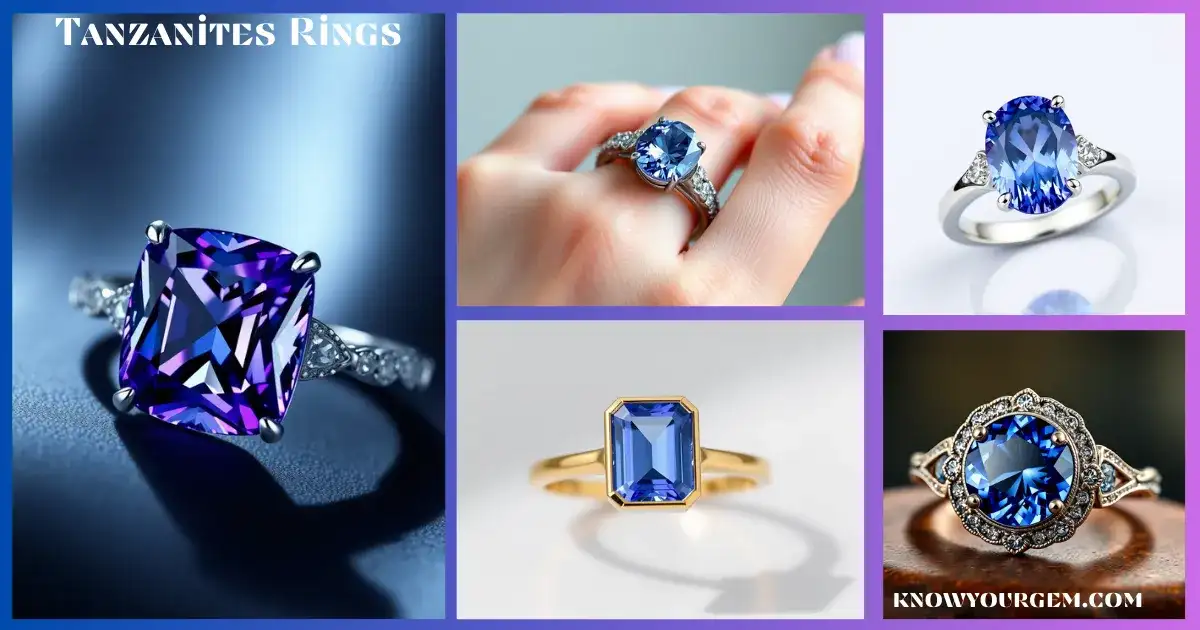
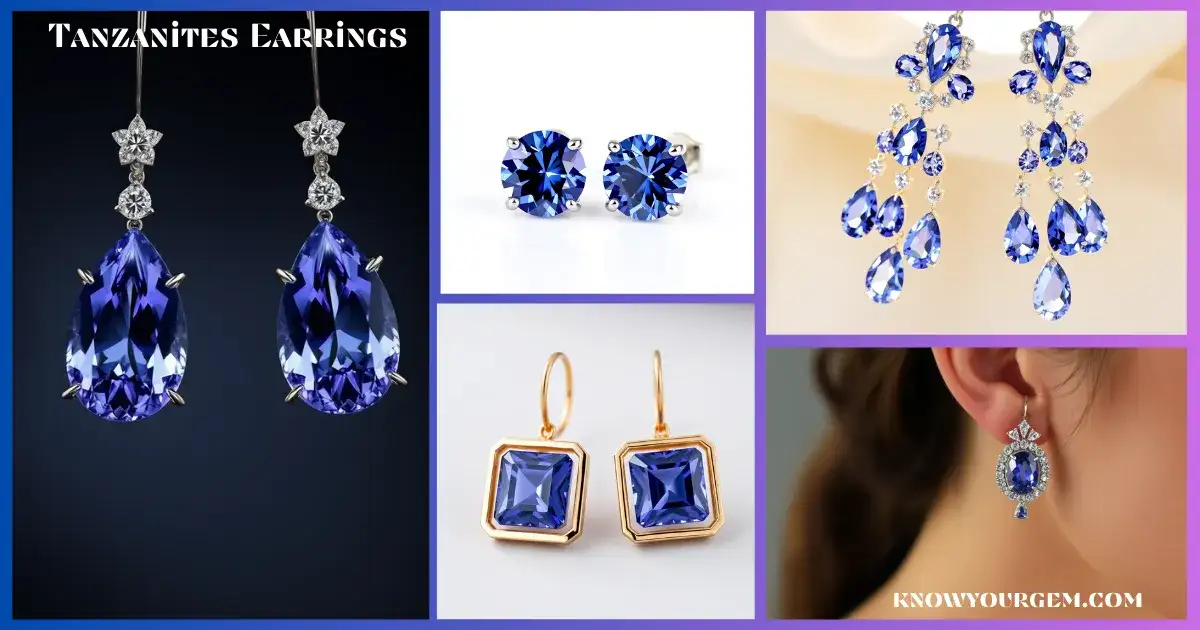
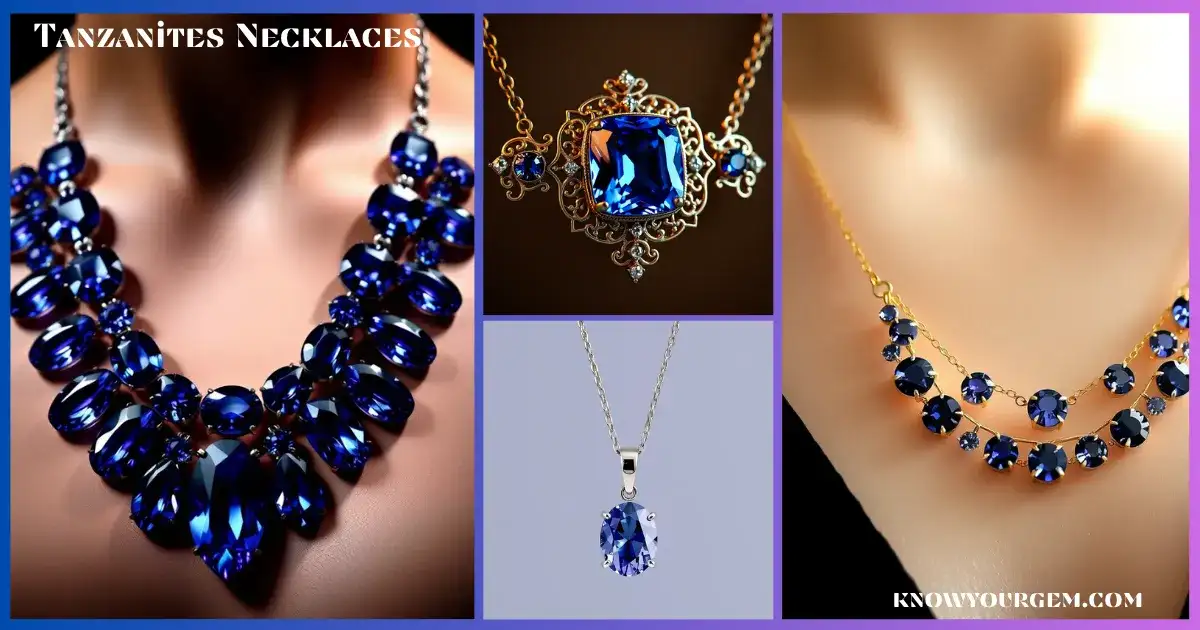
Tanzanite’s strong violet-blue color and availability fuel mass market appeal, and it is used in all types of jewelry from rings, earrings, necklaces, and the very popular engagement rings, each variety displaying the color shift differently.
Raw Tanzanite glows in the presence of white gold and platinum, both of which highlight its color. Alternatively, yellow gold offers a more conservative complement, while also emphasizing the richness of the stone.
As for the cut of the tanzanite, oval, cushion, pear, and emerald cuts are common, popular choices that are selected by our shop to maximize the color change and brilliance of the tanzanite.
Various engagement ring designs have a glow. Many engagement ring designs have a glow of accent stones, such as diamonds, which makes a little more brilliance and supports the softer stone than a traditional diamond-cut center.
Raw Tanzanite Value and Price Guide:
A number of factors contribute to its appreciation, the most influential of which is color. Like with the green and pink varieties, the darker and the more intense the hue, the higher quantity of tanzanites will command in the market.
Stones with a medium-dark tone are favored, those that are too light or too violet are comparatively inexpensive. Clarity is important as well; the clearer, the more you will be charged. Size is also important; a big stone is much rarer than a tiny stone of the same quality and thus more expensive.
Treatment is a factor as well; untreated stones are more valuable than the majority, which are heat-treated. Cut quality and craftsmanship matter more because they maximize the stone’s color quality.
Blue tanzanite of very high quality usually costs around a few hundred dollars per carat. The price for other colors (purple, green, yellow) varies an enormous amount depending on availability and rarity. Other colors (purple, green, yellow) vary enormously depending on availability and rarity.
Myth vs. Reality: Tanzanite and Raw Tanzanite
| Myth | Reality |
| “Tanzanite is seldom compared to diamond, so it’s a better investment.” | “Raw Tanzanite is seldom compared to diamond, so it’s a better investment.” Single-locality sourcing doesn’t equal investment-grade liquidity, diamond has a controlled distribution network and resale infrastructure tanzanite has never developed. |
| “Tanzanite is seldom compared to diamond, so it’s a better investment.” | Single-locality sourcing doesn’t equal investment-grade liquidity, diamond has a controlled distribution network and resale infrastructure tanzanite has never developed. |
| AAA grading is an industry standard, certified grade. | However, the tanzanite AAA/AA/A grades are relative to the dealer they are not standardized across the trade like the diamond GIA 4 Cs. |
| “Deeper color always means more valuable.” | Beyond a certain saturation point, very dark stones become less worth taking because they read as black even in low light. There’s a happy medium, not a linear one. |
| “Buying rough and cutting it yourself is cheaper than buying a finished stone.” | Cutting loss, lapidary fees, and the risk of a disappointing finished result usually erase any savings for non-trade buyers. |
| “Raw tanzanite retains more ‘natural energy’ because it’s untreated.” | Belief-based claim, not verifiable, and most rough, including material marketed as untreated, is still typically heated before or shortly after cutting. |
| “Tanzanite will inevitably keep rising in price due to depletion.” | Price has actually been volatile and regionally inconsistent over the past two decades, not a smooth upward curve. |
Advanced: How Cutters Evaluate Raw Tanzanite Before Buying (Windowing and Yield)
This section is for the buyer who has already had some experience with the basics of raw tanzanite and wishes to buy rough as a serious collector or someone exploring lapidary work.
Windowing:
Veteran buyers will wet or polish a tiny flat spot on the rough to see the color and quality underneath the old surface. Skipping this step judging rough by its dry, unpolished exterior alone is the most common mistake new buyers make, since surface appearance rarely reflects what’s inside.
Yield estimation:
Typically only 15–25% of a rough stone’s weight survives as a finished, faceted gem. Quoted “raw carat weight” on its own is a misleading value metric a 10-carat piece of rough might realistically yield a 2-carat finished stone, and pricing needs to account for that from the start.
Color zoning and orientation:
Raw Tanzanite frequently shows uneven color distribution through a single crystal. The cutting orientation a lapidary chooses has a major effect on the finished stone’s face-up color, meaning two cutters working the same rough can produce noticeably different results.
Fracture and cleavage risk:
Because of tanzanite’s perfect cleavage plane, a poorly oriented cut or an internal fracture invisible without windowing can cause a stone to split during the cutting process itself, effectively destroying value that was paid for upfront.
Realistic cost comparison for non-trade buyers:
| DIY: Buy Rough & Cut | Buy Finished Stone | |
| Rough cost | Variable, often opaque pricing | N/A |
| Lapidary fee | $50–150+ per stone | Included in price |
| Yield loss | 75–85% of weight lost | None priced as-is |
| Result risk | Unknown until cut | Visible before purchase |
| Best suited for | Hobbyist lapidaries, collectors | Most buyers |
For most non-trade buyers, “the rough is cheaper” doesn’t hold up once yield loss, cutting fees, and result uncertainty are factored in.
Sourcing Tanzanite as a Jeweler or Reseller:
Tanzanite procurement at a professional level looks nothing like retail buying, and grading inconsistency is the biggest challenge trade buyers face.
Block C’s TanzaniteOne/Richland Resources auction system structurally favors larger buyers, often pushing small jewelers toward secondary markets with less traceability and less consistent quality documentation.
Parcel buying purchasing mixed lots of rough looks cost-efficient per carat on paper, but hides significant stone-to-stone variance in cutting yield and treatment status, a reality that rarely gets discussed outside the trade.
Grading language compounds the problem: “AAA,” “fine,” and “commercial” mean something different from every supplier, which is why experienced buyers build their own internal grading crosswalk rather than trusting a seller’s label at face value.
Margin math makes tanzanite even more challenging than a more established gemstone like sapphire or diamond, where price-per-carat is more fixed or predictable and still subjected to some color and treatment premiums, and that pricing risk must simply be baked into retail markup.
Certainly, good practical due diligence before a bulk or parcel order should also involve an independent lab spot check on a sample of the lot, partnering with a trusted cutter who can give a realistic rough/finished yield prediction before you order, and direct contact with Arusha traders instead of going through middlemen.
Can Raw Tanzanite Be Found Anywhere Else?
Natural tanzanite: No. Despite extensive global exploration, no other commercial deposit has ever been confirmed. Vanadium-bearing zoisite exists in trace amounts in Norway, Austria, and Switzerland, but this material lacks gem quality. Poor color, insufficient size for cutting.
Alternatives to be aware of:
- Synthetic tanzanite: Present but accounts for some 1% of the market.
- Simulants: While blue spinel, synthetic sapphire, and cubic zirconia are sometimes all sold by informal traders as tanzanites, they are not all tanzanites.
- Verification section: color change between blue-violet and burgundy by using the pleochroism test when looked at from different angles; requires GIA/AGS certification for more expensive items, while check refractive index (in the range of 1.691-1.700) of tanzanite.
Final Thoughts:
The rarest stone in the world begins and ends with one tiny patch of a Tanzanian hillside that single-minerality is what makes it truly unique, not the buzzwords that some marketing campaigns have created around it.
That single-minerality, however, has been the breeding ground for a rough tanzanite market where color, treatment, and even authenticity are far more muddled than most buyers care to believe.
Maybe you only want that raw stone because you buy into its energetic meaning, you think of rough as a lapidary project, or you want a finished product and are sure of what you’re paying for.
Both of these are fine as long as you realize what market you’re in and exactly what to ask for before you drop that dollar.
FAQS:
1. What does raw tanzanite actually look like?
Most raw material of tanzanite is found in brownish, olive, or greyish colors rather than the strikingly beautiful blue violet which is seen in jewelry.
2. Is raw tanzanite cheaper than cut tanzanite?
Not necessarily once cutting fees and yield loss are factored in. Typically only 15–25% of a rough stone’s weight survives cutting, which often erases any apparent savings for non-trade buyers.
3. How can you tell if raw tanzanite is real?
Check for pleochroism, look for natural color zoning rather than perfectly even saturation, and request lab verification for any significant purchase dyed quartz and glass are commonly sold as “raw tanzanite” in unregulated marketplaces.
4. What is tanzanite gem meaning?
Tanzanite. Feelings. The association of tanzanite is with change and growth. Anger, fear, and anything else that is not calming are alleviated, allowing a sense of peaceful growth. It is associated with intuition and the wisdom of the soul.
5. How can you identify natural tanzanite?
Natural tanzanite is generally formed by a strong blue-violet color change with viewing direction. It usually looks clear and is very frequently heat-treated to improve its attractive coloration.
6. What is gem-quality tanzanite?
Very high quality tanzanite (gem-quality) should have a rich, deep, saturated color which appears “eye-clean”. That is, the best are a desirable shade of blue or violet without visible inclusions.
7. How do you care for tanzanite?
Tanzanite stone is delicate, so you can clean it gently with mild soap and water. So, store it separately to avoid scratches from harder stones.
8. Is tanzanite a precious gem?
Although its single-locality source is a factor in the general concept of it being a rarity and a valued stone, it is officially semi-precious, which is the term used for inexpensive and relatively soft stones as opposed to gems like sapphire or diamond.

Welcome to KnowYourGem.com! your ultimate destination for uncovering the fascinating world of gems and their secrets! I'm Kamil Hussain, a passionate blogger with a Master’s degree in Economics, dedicated to bringing you insightful, well researched content that blends the beauty of gemstones with the art of storytelling. With a keen analytical mind and a love for discovering hidden treasures, I created this platform to help you explore the brilliance, history, and value of every gem.


[…] is an odd love object. Just twelve years older than your average tanzanite buyer; born in a patch of earth less than a golf course in size; and alters its traits depending on […]
[…] material has been documented elsewhere. Tanzania produced yellow-green stones in 2003, and the Gem Society notes they have a lower refractive index […]