
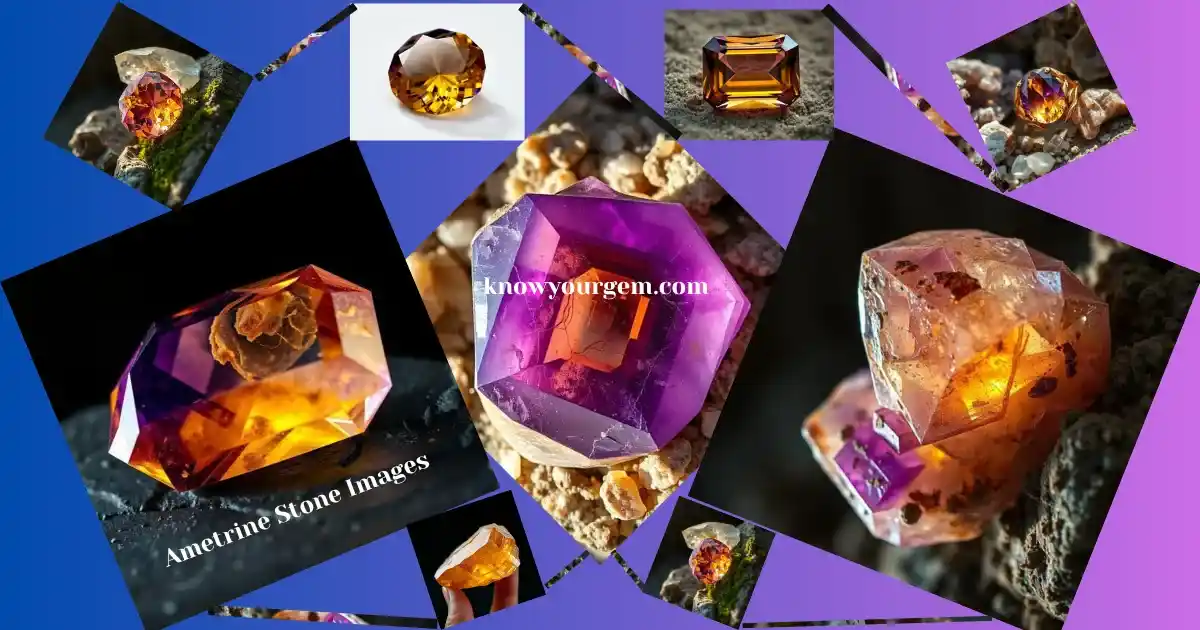

Quick view: Ametrine is a kind of quartz mineral which mixes amethyst and gold citrine in one rock. This stone is only formed in Bolivia’s Anahi mine. While buying, collecting, or crystal newbie? Here is the scoop on where it comes from , quality, price, and care.
What Is Ametrine?
The two tone quartz like ametrine blends amethyst and citrine in one crystal violet-purple zones right next to a golden-yellow or orange ones, for standout dual-color vibe is not same as like any other everyday gem.
The name’s simple mashup like amethyst + citrine = ametrine. Some people call it bolivianite or trystine, but ametrine sticks as the go to trade name.
Both amethyst and citrine are kinds of quartz and with having a chemical formula of (silicon dioxide or SiO₂). Both stones is looking vibrant with having colors in one single, unbroken crystal, it is truly one gem with two personalities, ot two pieces glued together.
The mineralogy in-front of the two Colors:
Amethyst uniforms its purple color from impurities and natural radiation when it forms in the crystal. Whether Citrine which owns yellow-orange color that is made by iron, but both stones are in different state and conditions.
In two tone quartz, both oxidation state of iron is existing in different zones of the same crystal. The reason is that both states coexist in a single stone that comes down to temperature gradients during crystal growth. As the quartz grew within its host rock, different sections of the crystal were exposed to different temperatures, that produces two distinct color zones which crystallized together rather than separately.
How Ametrine forms:
Ametrine’s split colors happen because uneven temps during growth: one side hits amethyst range, the other citrine locked together in one crystal.
This process is rare. The specific combination of geology, iron content, and thermal gradient required to produce gem quality ametrine is found in commercially significant quantities in only one location worldwide.
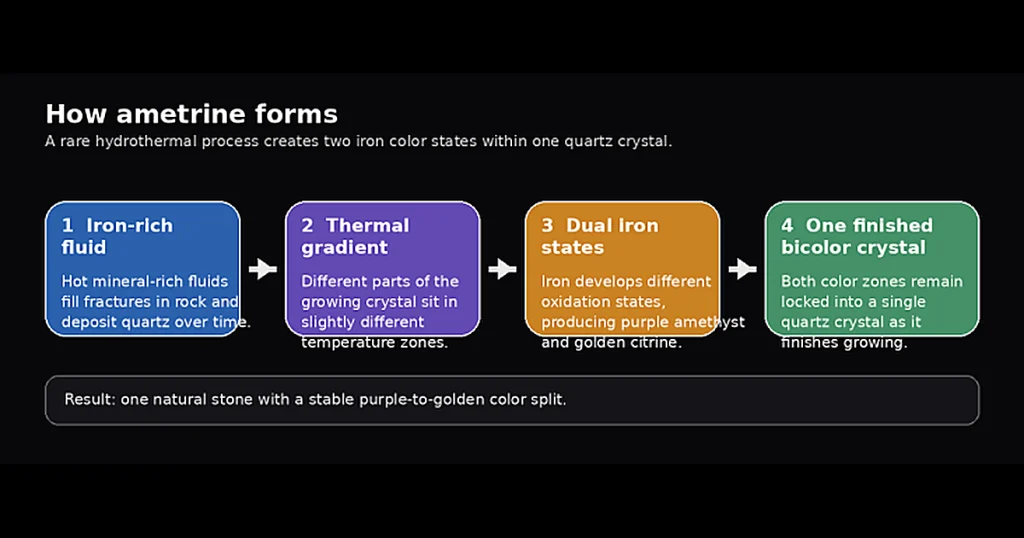
Process diagram — Hydrothermal formation of ametrine
Where Ametrine Comes From: The Anahi Mine in Bolivia:
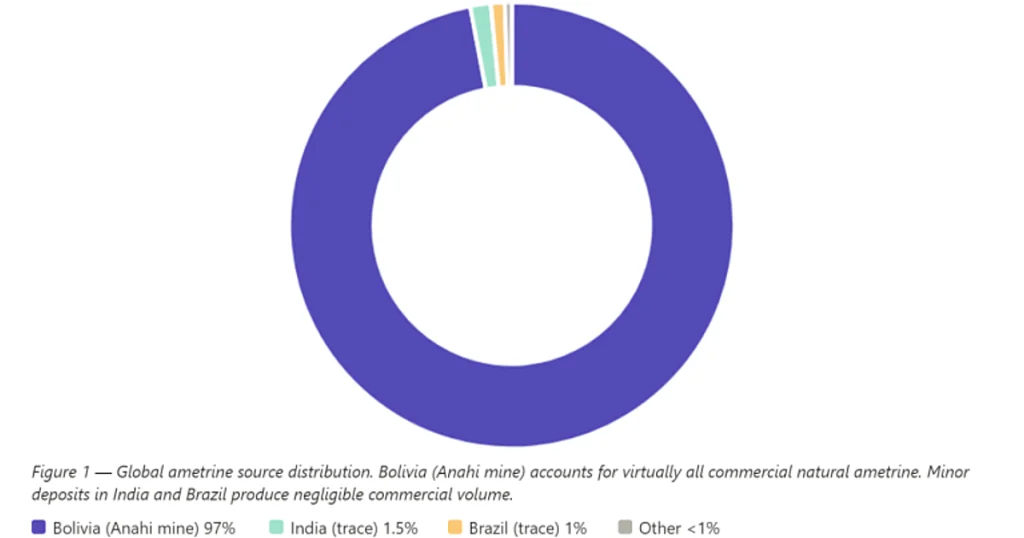
Pretty much all natural ametrine are found in Anahi mine in eastern Bolivia’s Santa Cruz region,, right near the Brail border. It is super remote you can only reach it by small plane or boat.
The mine’s discovery by the outside world traces t the 17th century, when a Spanish conquistador reportedly received the property as a dowry upon marrying a local princess named Anahí. Two tone quartz from this gift was said to have reached the Spanish court, but the deposit remained largely unknown internationally until commercial mining began in the 1980s.
Today, Bolivia is the world’s only significant commercial source of the natural two tone quartz. Small quatities have been comparable quality or in commercially viable volumes.
The Aanhi mine’s monopoly on natural ametrine supply makes Bolivian two tone quartz the recognized standard for quality and authenticity. When a seller specifics “Bolivian ametrine,” it is both a geographic fact and a quality signal.
Two tone quartz color and quality factors:
Color is the dominant quality factor in two tone quartz. Not same as diamond, where cut precision often value, ametrine price is anchored first in color quality, then in color balance, then in cut and clarity.
Color saturation:
Bi-color amethyst is basically valued for its deep, rich colors like a strong reddish-purple amethyst side and a vivid golden citrine side. While pale or washed out color in either one tank its value bit time.
Buyers should look for stones where both halves are bold and distinct. A stone with having rich amethyst and weak citrine, or vice versa, is less desirable than one where both zones hold their own visually.
Color zoning and boundary character:
Color zoning refers to how the purple and yellow regions are distributed within the stone. There are two primary approaches to how cutters handle this zoning:
- 50/50 split: They cut the stone because amethyst and citrine each take up right around half the top surface. It is the classic, go to ametrine look everyone loves super balanced with a crisp line spliting the two colors.
- Blended or mixed-cut: Some cutters angle facets to create a mixed color zone in the center, that produces a gradual transition or a flame-like blend of purple and orange. This style is often seen in fantasy cuts and high end custom work.
Neither style is inherent superior preference is personal but the 50/50 split is more commercially standard and easier to evaluate consistently.
The best bi-color amethyst owns deep, rich colors in both zones, a strong reddish-purple amethyst side and a vivid golden citrine side. Pale or washed out color in either one tanks its value bit time.
Hue range:
Amethyst zones range from light lavender to the deep reddish-purple. The most valued amethyst color is a medium to deep purple with red or blue flash.
Citrine zones range from pale lemon yellow to the deep orange-gold. The most valued citrine color in two color quartz is a warm, saturated golden-orange, sometimes called “Madeira” tone rather than a pale or greenish yellow.
Clarity:
Bi-color quartz is a type ll gemstone, means carry minor inclusions naturally and expected at the most quality levels. Eye-clean stones those with no inclusions visible to the naked eye are the standard for fine quality gem and command a premium prices.
Common inclusion in ametrine including wispy veils, needle-like rutile crystals, and growth planes. Most inclusions in commercial-grade ametrine are minor and don’t significantly affect the stone’s durability or visual impact when the stone is viewed face up.Transparent, eye-clean ametrine with strong, saturated color represents the best combination of quality factors.
Cut quality:
Cut plays a dual role in this stone; and it shapes the stone’s outline and determines how the color zones appear in the finished gem.
Faceted bi-color quartz is the most common presentation for jewelry. The most popular cuts for this quartz including:
- Rectangular or emerald cut: It is ideal for ametrine because the elongated shape accommodates a clean 50/50 color division. An emerald cut amtrine is a classic and highly wearable choice.
- Oval: It allows both colors to showcase prominently across the stone’s broad face.
- Cushion: It softens edges whether maintaining strong color visibility.
- Fantasy/freeform cuts: Specialist cutters in Brazil and Germany produce artistic cuts that exploit the color transition for dramatic visual effects.
Cut quality affects light return, brilliance, and how vividly each color zone displays. Since, a well-cut two tone quartz maximizes the saturation and evenness of both zones.
Ametrine value and price:
Bi color amethyst is an affordable gemstone available in the market. Its price reflects to its quality factors rather than artificial scarcity, that make it an accessible to a wide range of buyers.
What drives Ametrine’s price:
The primary value derives are:
- Color intensity: Deep, saturated color in both zones commands the highest prices.
- Color balance: A well balanced 50/50 split generally appeals to the broadest market and supports stronger prices.
- Clarity: An eye clean stones carry a premium prices over included material.
- Cut quality: Well-proportioned, symmetrical faceting adds value.
- Carat weight: Larger stone with having strong color are proportionally more valuable.
- Natural vs. treated: Naturally formed untreated ametrine is more valuable than the heat treated or irradiated material.
Typical price ranges:
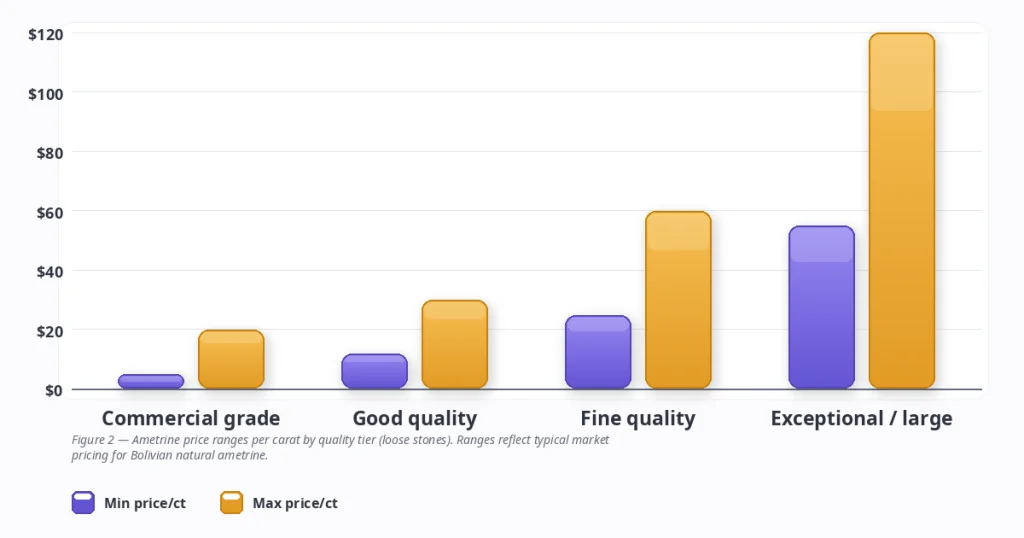
Commercial grade bi-color amethyst with having moderate color and minor inclusions typically commands $5 to $20 per carat in loose form. Since, fine quality Bolivian ametrine with having rich, balanced color and eye clean clarity ranges from $20-$60 per carat or more. An exceptional stones in large sizes with ideal color balanced color can reach higher, but ametrine generally doesn’t approach the per carat prices of fine amethyst, sapphire, or emerald.
Set of two tone amethyst jewelry like ring, pendant, earring, and bracelet are priced on both quality and the metal setting. Since, sterling silver ametrine ring pendant embodies the most affordable entry; 14k or 18k gold settings command proportionally higher prices.
Is Ametrine a good value?
Those buyers who want visually distinctive, naturally formed bicolor gemstone at an accessible price point, bi color amethyst can an ideal choice for them. It is genuinely rare in that its natural bicolor formation is geologically uncommon and tied to a single mine. Yet it remains affordable as compared to many other colored gemstones, that make it an attractive choice for collectors, jewelry buyers, and anyone who are looking for something visually unusual.
Natural vs. treated Ametrine:
Not all two tone quartzs on the market are natural. While understanding the difference among natural and synthetic matters for buyers who care about authenticity.
Natural Ametrine:
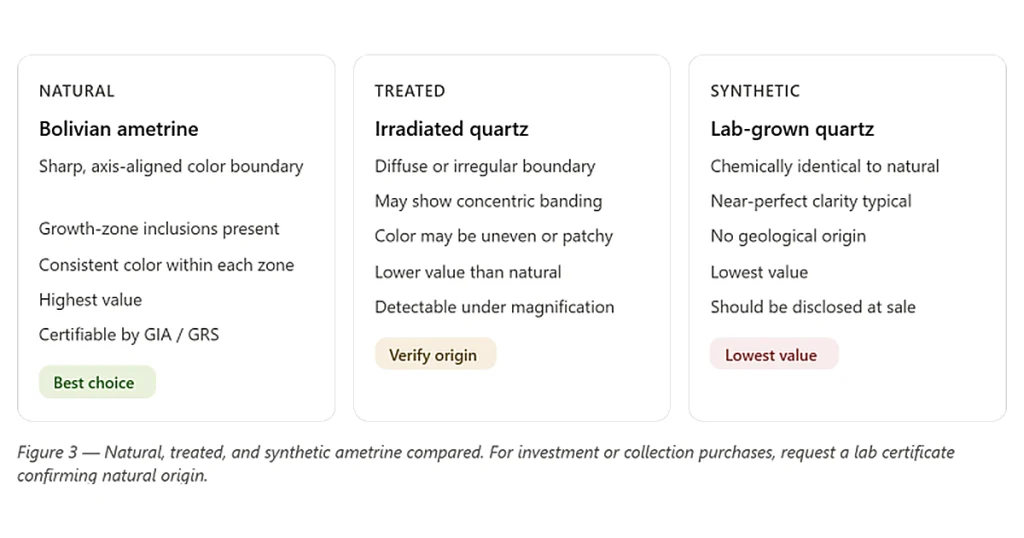
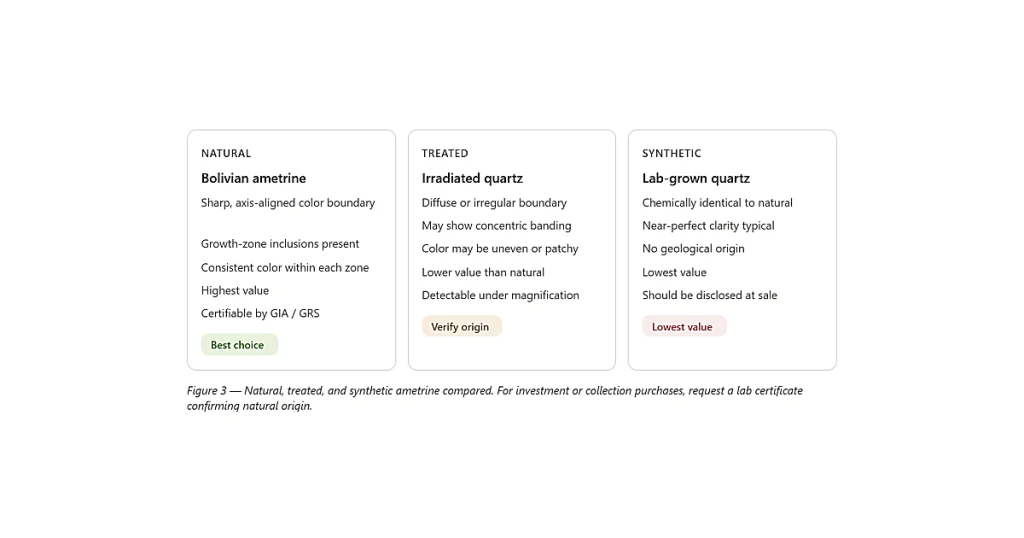
Natural bi color amethyst generally forms through the geological process which has already described above, both color zones develop simultaneously within a single crystal for more than millions of years. The color boundary in natural stones reflects the actual growth zones of the crystal and typically sharp and unambiguous when it is examined under magnification.
All high quality ametrine from the Anahi mine is natural. Reputable sellers sell “Bollivian ametrine” or “natural ametrine” that refer to untreated material from this source.
Treated and synthetic ametrine:
Two forms of non-natural exist:
- Heat-treated or partially irradiated quartz: It is a colorless or pale quartz crystal which can be selectively irradiated or heat treated in specific zones to produce amethyst and citrine colors in adjacent sections, that mimic natural ametrine. These stones are typically reallistic quartz but not naturally bicolor.
- Synthetic ametrine: Lab grown or synthetic bicolor stone has been produce while using hydro-Lab-grown two tone amethyst has been produced using hydrothermal synthesis, replicating the crystal structure of natural two tone quartz. Synthetic stones are chemically identical to natural ametrine but lack geological origin.
Treated ametrine is generally less valuable than natural material. Synthetic is the least expensive form.
Gemological testing includes examination of color zone boundaries, inclusions, and growth patterns under magnification can distinguish natural from treated or synthetic material. When you buy bi color amethyst for investment or collection purposes, you should request a gemological certificate from recognized lab like, GIA, GRS, or IGI.
How to identify real ametrine:
Identify genuine natural stone requires to several key characteristics.
Color zone boundary: In natural ametrine, the boundary between purple and yellow is typically sharp and follows the crystal’s growth axis. Whether treated stones can showcase a more diffuse or irregular transition, sometmes with concentric banding visible under magnification.
Inclusion pattern: Natural ametrine from the Anahi mine often contains characteristic growth planes and minor veils consistent with the mine’s geology. Completely inclusion free material in large sizes warrants closer scrutiny.
Consistency of color: In natural stones, the purple and yellow zones are internally consistent within each zone and the color doesn’t shift randomly or appear painted. Whether lab grown or treated material can showcase unnatural color gradients.
Refractive index and specific gravity: Both measure within the quartz range with having refractive index approximately 1.544–1.553; SG approximately 2.65. While testing these refractive index values do confirm the material is quartz but doesn’t confirm natural vs. Treated origin.
Certification: The most dependable way to confirm natural ametrine is getting certificate from a reputable independent gemological laboratory. While a certificate from GIA, Gübelin, SSEF, or GRS stat natural origin and no detectable treatment provides the strongest buyer assurance.
For casual purchases, buying this stone from established, reputable dealers with having clear disclosure policies offers reasonable confidence. For high qualitative purchase, independent certification is worth the cost.
Ametrine vs. Amethyst: Key differences
Given below table showcases the differences of both gems:
| Factor | Ametrine | Amethyst |
| Colors | Purple + yellow/orange | Purple only |
| Origin | Primarily Bolivia (Anahi mine) | Brazil, Zambia, Uruguay, and more |
| Rarity | Rarer; single primary source | Widely available |
| Price per carat | $5–$60+ (fine quality) | $1–$30+ (fine quality) |
| Visual appeal | Bicolor contrast | Single saturated color |
| Cut options | Shaped to showcase both zones | Standard faceted cuts |
Amethyst is everywhere, in all sorts of shades and sizes. Amentrine stands out with its wild two tone look and true rarity since it only comes from a single mine, not as like most amethysts.
Both stones share the same hardness, durability and basic requirements.
Ametrine hardness and durability:
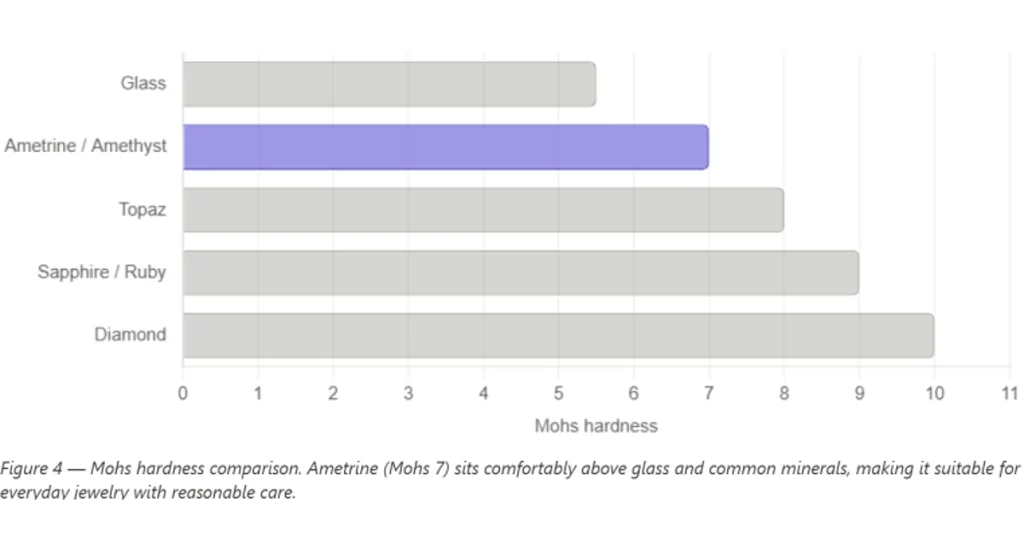
Ametrine is 7 on the mohs scale of hardness, same as the quartz other varieties share. This makes place for it in the solid middle range of gemstone hardness which is harder than glass and most common minerals, but softer than sapphire, ruby, and diamond which owns high mohs scale.
Since a 7 mohs scale means ametrine is durable enough and suitable for most jewelry applications, including rings, pendant, earring, necklace, and bracelet. It resists scratches from everyday surfaces but can be scratched by harder gemstones or abrasives.
Ametrine has no cleavage, it fractures rather than cleaving which gives it reasonable toughness for daily wear. However, like all quartz, sharp impacts can chip or crack the stone, particularly at pointed facet junctions or thin edges. Settings that protect the stone’s girdle like bezel settings offer better protection for everyday wear than prong settings that leave more of the stone exposed.
For engagement rings or rings that are worn on daily basis a protective setting style and reasonable care will extend the stone’s life significantly.
Ametrine care and cleaning:
Ametrine is straight to care for, its quartz composition makes it stable under normal conditions, and its lack of special sensitivity as compared to, emerald or opal which makes maintenance simple.
Cleaning at home: Warm water, with a mild dish soap, and a soft brush are better usage for its cleaning process. Since, gentle scrub, thorough wash, and dry with a soft, lint free cloth are more ideal to protect your stone’s glamour.
What to avoid: While cleaning process you should avoid ultrasonic cleaners: which is are generally safe for ametrine but avoid if the stone has significant inclusions, fractures, or surface reaching cracks. You should also avoid steam cleaner because sudden thermal shock can stress the stone as well as you will need you keep away harsh chemicals like, bleach, chlorine, and strong acids can damage the stone internally.
Storage: Keep stored your ametrine jewelry separately from harder gemstones like diamond, sapphire, and ruby to resist scratches. Since, fabric lined jewelry box or individual pouches will work better.
Professional cleaning: Yearly cleaning or inspection by professional jeweler is worthwhile for regularly worn ametrine jewelry, particularly for prong settings where debris can accumulate and loosen the stone’s security.
Ametrine in Jewelry:
Ametrine’s bicolor character makes it a natural centerpiece stone. Although its visual contrast purple meeting gold works in a wide range of metal types and styles.
Metal pairings:
- Yellow gold: Enhances the citrine zone and creates warm, harmonious contrast with the amethyst side. Since, 14k and 18k yellow gold settings are a classic pairing.
- White gold or platinum: Provides a natural backdrop that lets both colors speak equally without do favor either tone.
- Sterling silver: It is the most affordable option; that works beautifully with ametrine’s natural palette and is widely available in the market.
- Rose gold: Complements the warm orange-gold citrine zone particularly well.
Jewelry types:
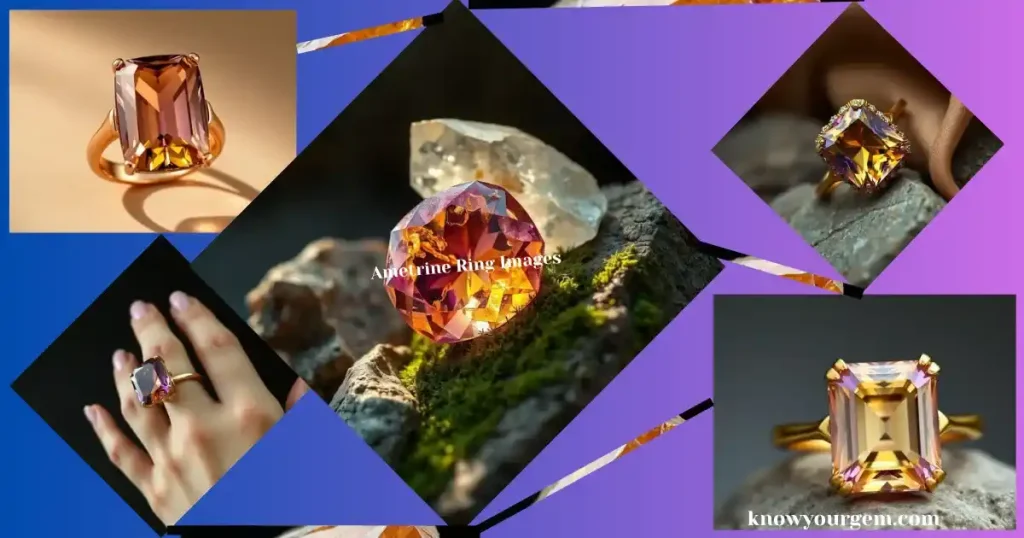
Ametrine rings: Including stone rings, cocktail rings, and engagement rings are among the most popular uses. Since, emerald cut ametrine ring in a bezel or four-prong setting is clean, elegant choice. Whether Ametrine engagement rings offer a distinctive alternative to conventional stones; the bicolor character symbolizes duality and balance, which some buyers find meaningful.
Ametrine pendants and necklaces showcase the full face of stones and are often the best format for displaying large, high qualitative ametrine. A bezel set ametrine pendant tin gold or silver is a versatile everyday piece.
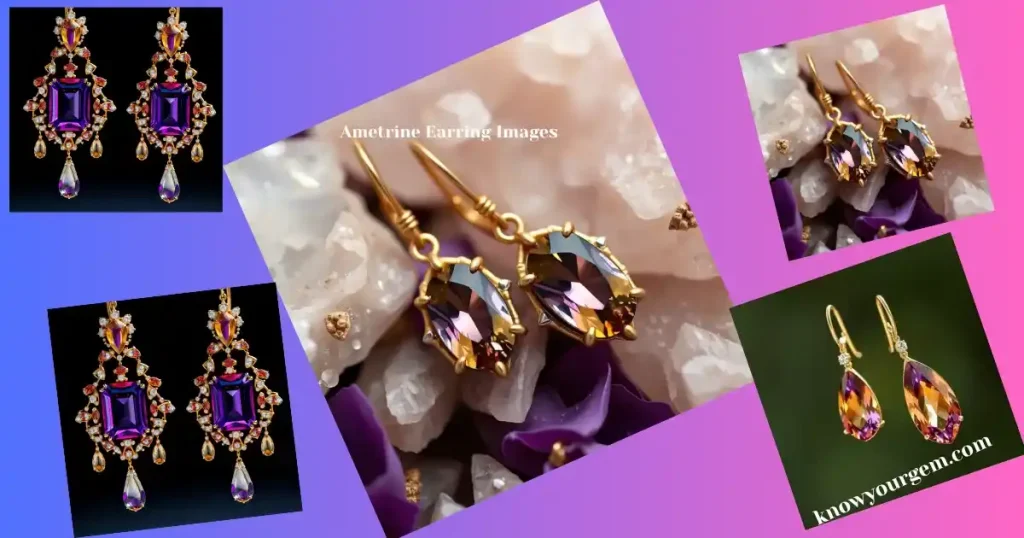
Ametrine earrings: Especially drop or stud styles enable matched pairs to exhibit the stone’s color from multiple angle.
Ametrine bracelets: They typically feature smaller stones set in a line or cluster, or occasionally a single larger focal stone in a cuff design.
Men’s ametrine rings are really catching on these days, especially as guys get more into bold color stones. Since, a big rectangle or cushion-cut ametrine in a sleek, minimalist bezel setting just nails that rugged, masculine vibe.
Ametrine crystal: Metaphysical beliefs and properties
Beyond its use , ametrine has following in crystal healing and metaphysical traditions. It is important to distinguish these beliefs scientific fact.
What the Crystal Community Believes:
In the crystal world, ametrine is treasured as gemstones that brings clarity, balance, and a creative spark to your life. It has gotten the cool mix of amethyst’s chill, spiritual vibe that help you to feel calm and tuned in with citrine’s upbeat energy, optimism, and knack for drawing in good stuff abundance. People who work with it say it is like having the best of both stones in one, smoothing out your energy and firing up inspiration.
- Balancing mental clarity with the spiritual insight
- Supporting decision making and releasing blockages
- Amplifying creativity and motivation
- Promoting a sense of well being and inner harmony
Ametrne crystal meaning typically centers on this theme on this of duality and integration two forces in harmonious coexistence.
What science says:
These metaphysical vibes around ametrine are traditional fun, but they have gotten no real science behind them. No solid studies prove the crystal zap out energy, tweak your mood, or do anything for health beyond can be a placebo boost from believing in it. It is all just natural geological at work, like heat minerals mix to make those cool purple yellow colors, nothing mystical.
Amentrine’s genuine qualities its beauty, bicolor rarity, and geological uniqueness are remarkable are on their own terms. Buyers who find meaning in crystal properties are free to do so; buyers who are seeking for fact based gemstone education should approach these claims as cultural or spiritual tradition rather than gemological fact.
Common misunderstandings about ametrine:
“Ametrine is just amethyst and citrine glued together.” No Ametrine is a single crystal with having two naturally occurring color zones. There is no bond or junction the entire stone is one continuous piece of quartz.
“All bicolor quartz is ametrine.” Not quite. The stone specifically refers to the bicolor quartz that combines amethyst like purple, iron irradiation based color and citrine which has yellow-orange, iron oxidation based color. Other quartz color combinations display but not classified as ametrine.
“Ametrine fades quickly.” The amethyst zone in this gem can fade with prolonged, intense UV exposure, just as standalone amethyst can . However, under normal indoor lighting and everyday wear condition, color stability is not a practical concern for most buyers.
“Synthetic ametrine is the same as natural ametrine.” Synthetic stone is chemically identical but lacks natural geological origin. For collectors and investment buyers, origin matters significantly.
“Ametrine is extremely rare and expensive.” Ametrine is genuinely uncommon as compared to amethyst or citrine, but fine quality material from the Anahi mine is available at accessible price points. It is rare as compared to most gemstones but stratospherically priced like fine alexandrite or Paraíba tourmaline.
Buying Ametrine: What to look for
Whether you are looking to buy loose ametrine stone or want to wear jewelry, you must consider few simple tips that will help you to buy this stone with confidence.
Color prioritization. You should prioritize deep, saturated color in both the purple and yellow zones. While pale, or uneven color reduces both beauty and value.
Confirm natural origin. Don’t forget to ask seller explicitly that confirms whether stone is natural, treated, or synthetic. For significant purchases, request for a gemological certificate.
Examine the cut. A well cut stone can maximize color visibility in both zones. So, it is must to avoid stones where one color dominates so completely that the bicolor effect is barely visible.
Check clarity face-up. A few tiny inclusions are fine, however ones smack in the center kill the vibe. Aim for “eye clean” where flaws aren’t noticeable without a loupe.
Match the setting to your lifestyle. Bezel and channel settings use to protect the stone better as compared to prong settings for everyday wear. If the ring is worn on daily basis, choose a protective setting style.
Stand with reputable sellers. Always consider established gem dealers, certified jewelers, or trusted online spots with having easy returns and full disclosure. Way safer than sketchy than unknown sources.
Conclusion:
Ametrine stands out as one of those truly unique gemstones you can actually snag without breaking the bank. That wild bicolor vibe where purple amethyst flows right into warm golden citrine all in one natural crystal that comes from an uncommon geological fluke that’s pretty much only found in a single mine in Bolivia. If you are after something eye catching, naturally formed, and fairly priced, ametrine checks every box.
1. What is ametrine?
Ametrine is an uncommon bicolor quartz gem which owns two different color zones purple amethyst, and golden citrine, it is so called all in one natural crystal. The two colors form side by side as it grows, we are grateful to vary iron levels in the stone that completely showcase two different coloration.
2. Where does ametrine come from?
Mostly all good stuff comes from one mine in Bolivia called Anahi. Since, Tiny deposits pop up elsewhere, but only real player for gem quality pieces.
3. Is ametrine natural or man-made?
Real ametrine happens naturally there in Bolivia. You will also find out treated version like irradiated quartz or lab made ones, so always ask for proof like a gem cert if it is essential.
4. What is ametrine worth?
Everyday commercial ametrine commands $5-$20 per carat. Since, top bolivian pieces with having with, even color and no visible flaws, can command more prices like $20-460 + per carat. Jewelry prices jump based on the setting too.
5. How hard is ametrine?
While having 7 mohs scale of hardness it is a solid quartz, fine for rings or bracelets if you are gentle.
6. Can ametrine fade?
The purple side can lighten with tons of sun, but daily wear or indoor life can’t be a big deal.
7. How do I clean ametrine jewelry?
Clean you jewelry with a warm soap water and a soft brush to give it gentle wash, and pat dry it with a soft cloth. If you to safe your jewelry avoid ultrasonic cleaners that can damage your stone if it has inclusions.
8. What is the difference of ametrine and amethyst?
Amethyst is just a purple quartz. However this stone has both purple and yellow in one stone that is rarer, bolder contrast, straight from that Bolivian mine.
9. Is ametrine good for an engagement ring?
Yes, you can use this stone in bezel setting for protection because it is hard enough for daily wear, and the unique pop makes it special if color’s your thing.
10. What does ametrine mean in crystal healing?
People always consider that the stone blends two colors like purple amethyst and clam clarity with citrine upbeat energy for balance and creativity.
11. How can I tell if ametrine is real?
Always check for a sharp color line along the growth direction, even tones in each half, and natural quartz flaws. For pricey buys, grab a GIA or GRS cert.
The comprehensive guide is published by gemstone Enthusiast and expert by KamilHussain!

Welcome to KnowYourGem.com! your ultimate destination for uncovering the fascinating world of gems and their secrets! I'm Kamil Hussain, a passionate blogger with a Master’s degree in Economics, dedicated to bringing you insightful, well researched content that blends the beauty of gemstones with the art of storytelling. With a keen analytical mind and a love for discovering hidden treasures, I created this platform to help you explore the brilliance, history, and value of every gem.

