
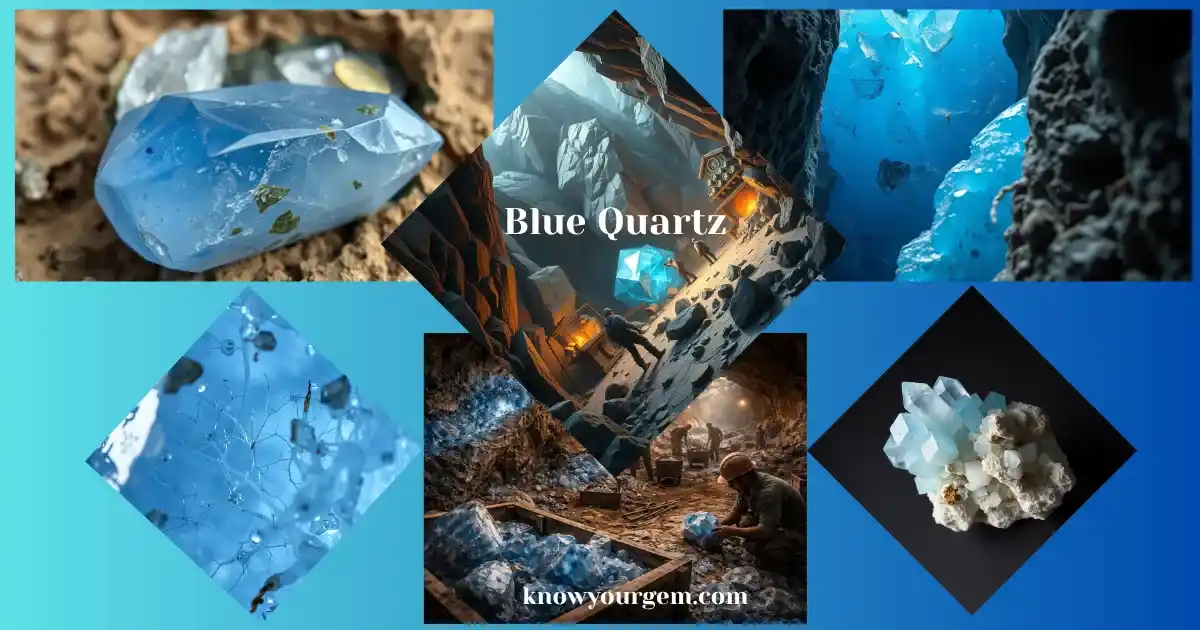

| Key takeaways: Blue quartz is a rare, naturally occurring silicate mineral with having 7 mohs scale of hardness it is tough enough to use in daily wear Jewelry but still requires a gentle care. It colors ranges from pale sky blue to deep cobalt, and valued for its metaphysical properties, jewelry applications and rapid growing investment appeal, blue quartz commands prices from $5 to $50+ per carat which depends on origin and clarity. Natural blue quartz from Brazil and Alabama is the most valued. |
know what are the benefits and pricing guide of Smoky Quartz:
Quick solutions:
These are the quick solutions of basic questions that are roaming around your mind:
| Question | Answer |
| What is blue quartz? | It is variety of quartz which appears blue due to mineral inclusions like gumortierite, that gives it a soft to deep blue color. |
| Is blue quartz natural or treated? | Mostly bluish quartz is the natural, but some stones can be dyed or enhance to improve their color. |
| How rare is blue quartz? | The stone is fairly common overall, however high quality stones with rich color and clarity are less common and more treasure-able |
| What is blue quartz used for? | Bluish quartz is generally used sin jewelry, decorate items, and sometimes it is used in industrial applications like glass and electronics. |
| Can you wear blue quartz every day? | Yes, bluish quartz can be used in daily wear jewelry because of having its durability but requires a gentle care which can resist it from scratches. |
| What is the hardness of blue quartz? | Blue quartz owns 7 mohs scale of hardness |
| How can you tell whether blue quartz is real or fake? | Realistic blue owns natural inclusions and subtle color variations. Whether fake stones appear overly perfect and uniform under a loupe. |
| Does blue quartz fade over time? | Natural blue quartz doesn’t fade easily . Whether dyed versions can lose color with prolonged sunlight exposure. |
| Where is blue quartz found? | Blue quartz is most found in countries like, Brazil, Madagascar, Spain and United states. |
| Is blue quartz expensive? | This gem is usually affordable. Since higher qualitative stone with having deep color can be more expensive, however blue quartz remains budget friendly vs. Premium gemstones. |
| How much is blue quartz worth in 2026? | Most prices remain budget friendly in 2026. Since, fine natural material runs $15-$120/ct; rate star and quartz can reach $400+/ct. |
| Is blue quartz a good investment? | Neither a major investment gemstone, but rare highly qualitative pieces, especially blue rose quartz and varieties can increase in value. |
| What should I look for when buying blue quartz? | You should, look for strong color, good clarity, minimal inclusions, and purchase from a reputable seller with treatment disclosure. |
| Where can I buy blue quartz? | Blue quartz or even all gemstones are bought from jewelry store, gemstone dealers, and from online trusted marketplaces. |
| Is blue quartz the same as sapphire? | Blue quartz is not actually same as blue sapphire because both stones are made from different chemical composition and own different mohs scale, price ,value. |
| What is the difference between quartz and amethyst? | Blue color quartz is made by quartz’s color inclusions, whether Amethyst is a purple quartz gets color from iron and natural radiation. |
| Is blue quartz better than aquamarine? | Blue quartz is more consumable and accessible whether Aquamarine is uncommon, transparent, and generally more valuable per carat. |
| What type of mineral is blue quartz? | Blue quartz is basically known as a silicate mineral which is made by silicon dioxide (Ai02). |
| Is blue quartz transparent or opaque? | Usually translucent. Some higher-quality stones may appear more transparent, but fully transparent natural blue quartz is rare. |
| Are there different types of blue quartz? | Yes, Key types including dumortieeite quartz, star blue quartz, star blue quartz, blue rose quartz, blule aura, and blue aventurine quartz. |
| What are the benefits of blue quartz? | It is associated with calmness, clarity, and improved communication in spiritual practices. It is physically durable for all jewelry applications. |
| Is blue quartz good for anxiety? | Many people swear by blue quartz for its soothing vibes, it can make stronger your thinking, discard negativity, reduce anxiety, and gives you breathe taking moment but all these benefits are only considered by astrology not scientifically proven. |
1. What is blue quartz? Definition and mineral properties
Blue quartz is naturally occurring variety of the mineral called (silicon dioxide, SiO2) which displays a blue coloration due to having inclusions of fibrous or articular minerals, most commonly dumortierite, tourmaline, or rulite is scattered throughout the crystal lattice. Bluish quartz pops up in the trigonal crystal family, it forms in pegmatites, metamorphic rocks, and hydrothermal veins all over the world. It is now like most blue gems that get their color color from infinitesimal chemical swaps inside the crystal, this one’s blues comes from Rayleigh scattering, basically, light bouncing off supper tiny inclusions, just like why looks blue. That’s what gives it cool translucent to opaque vibe, not the crystal clear shine of something like Aquamarine.
Chemical composition and Mohs hardness:
- Chemical formula: The stone owns chemical formula like plain old SiO2 (which is a silicon dioxide, same as regular quartz).
- Crystal system: It has Trigonal three sided crystal shapes.
- Mohs hardness: While having 7.0 mohs scale it is tough enough to srug off scratches and handle daily wear jewelry.
- Specific gravity: The stone carries 2.65 g/cm³ specific gravity
- Luster: It has vitreous luster to waxy.
- Transparency: It is usually translucent to opaque; rarely fully clear.
- Refractive index: 1.544–1.553 (how it bends light for that sparkly effect).
With having 7 Mohs scale , it is harder than feldspar but softer than topaz plenty durable for everyday jewelry like rings, necklaces, or bracelets . No need for fancy protective settings!
Natural vs. synthetic blue quartz: How to tell them apart:
The gemstone market include both authentically pigmented bluish quartz and color enhanced varieties. Their distinction protects buyers and ensures accurate valuation.
- Natural bluish quartz: This color originates from fibrous mineral inclusions visible under magnification. The blue color distributes unevenly and appears thorough in inclusion dense zones.
- Dyed quartz: It is uniform, artificially saturated color with having no inclusions visible under 10x loupe. Color often in surface fractures.
- Irradiated quartz: Pale blue stones are produced by gamma irradiation of colorless quartz. Since, color can fade with prolonged UV exposure.
| Lab tip: Always ask for gemological certification from trusted labs like GIA, IGS, or an accredited lab when you about to purchase quartz above $200. since, natural specimens always command a premium prices than treated stones. |
2. Types of blue quartz: A complete classification:
Blue quartz is a catch all term for different types of quartz with having blue colors.
Dumortierite in quartz:
Durmortierite is the most essential type of bluish quartz in the market. Since, infinitesimal fibers of the mineral dumortierites inside the quartz which give it a strong blue to violet blue color. Although, the best mineral comes from Bahia in Brazil as well as Madagascar and Mozambique. Some pieces are opaque and are used for carvings, whether clearer pieces are cut as cabochons for jewelry. The color doesn’t fade which makes it especially attractive for buyers.
Star blue quartz:
It is an uncommon phenomenon where needle like rutile or tourmaline inclusions align along crystallographic axes, that produces a six rayed asterism (star effect) when cut cabochon and lit from above. Star bluish quartz commands a significant premium than non asteriated material. The finest specimens display a sharper, well centered star against a medium to deep blue background.
Blue rose quartz:
It is an exceptionally rare variety of quartz and is was first identified in Pitorra Mine, Minas Gerais, Brazil. Its soft lavender-blue color comes from aligned fibrous inclusions of a phosphate mineral, that produces strong diasterism (star effect visible in transmitted light.) Gem quality material is scarce, and top grade blue rose quartz sells for multiples of ordinary rose quartz.
Blue aura quartz and aqua aura quartz:
It is created by bounding vaporized gold (aqua aura) or platinum and indium (tanzine aura) onto natural clear quartz in a vacuum chamber at 871°C. The metallic coating produces a vivid electric are popular in the metaphysical market and crystal healing communities. They are always identified and sold as treated stones.
Blue Aventurine quartz:
It contains fuchsite (green mica) or other refractive inclusions, however certain specimens from India Russia showcase a blue-green body color with aventurescene, a shimmering optical effect is caused with lapis lazuli or sodalite by the uninitiated.
Cobalt blue quartz and imperial bluish quartz:
These are trade names used by gem dealers for particularly saturated, deep-blue dumortierite quartz or other treated quartz. These are the marketing designations rather than minerogically distinct varieties. Verify the source and any treatment history before purchasing stones sold under these premium names.
Blue Smoky quartz and blue sky quartz:
Blue Smoky quartz integrates the gray-brown coloration of the natural radiation-induced smoky quartz with having secondary blue inclusions, that produce a steely, atmospheric tone. Whether bluish quartz has pale, translucent material with having light cerulean color reminiscent of a clear sky.
3. Blue quartz meaning and metaphysical properties:
Blue quartz is symbolized with clarity, communication, and calmness across various cultures. Although gemology can be harder than science but the spiritual beliefs around fuel much of its market.
Spiritual significance and chakra associations:
Blue quartz is strongly associated with Throat Chakra and also connected to the lesser degree, the third eye chakra. People use it to enhance clear communication, honest self expression, and quiet the mind during meditation.
In crystal healing traditions, bluish quartz is believed to :
- It encourages clear, compassionate communication.
- It reduces anxiety and emotional overwhelm.
- It supports, orderly, structured thinking which makes it popular among writers, speakers, and teacher.
- It strengthen connections between the conscious mind and intuition.
Blue quartz benefits for wellness and energy work:
The wellness for blue quartz has expanded significantly since 2020. It has driven by increase consumer interest in mindfulness products and the growth crystal healing communities on social platforms. Key claimed benefits are as follows:
- Emotional regulation: Practitioners place bluish quartz on the throat during meditation to promote calm self reflection and reduce responses.
- Sleep support: Light blue quartz tumbled stones are placed near the bed are used in intention setting for restful sleep.
- Creativity and focus: Writers and artists own bluish quartz points as pocket stones to maintain creative flow.
- Anxiety reduction: The cool, calming visual quality of the blue stones is consistent with color psychology on the blue hues that reduce perceived stress.
Note: metaphysical properties are part of the cultural value system surrounding by gemstones and are not verified by peer- reviewed science. They embody the belief framework of a significant portion of the buying market.
4. Blue quartz in Jewelry: Design, durability, and settings
With having 7 mohs scale of hardness bluish quartz is widely available in large , clean pieces which make it a versatile gemstone for jewelry designers. It cuts perfectly as both faceted stones and cabochons, holds a good polish, and is resistant to everyday wear when it set appropriately.
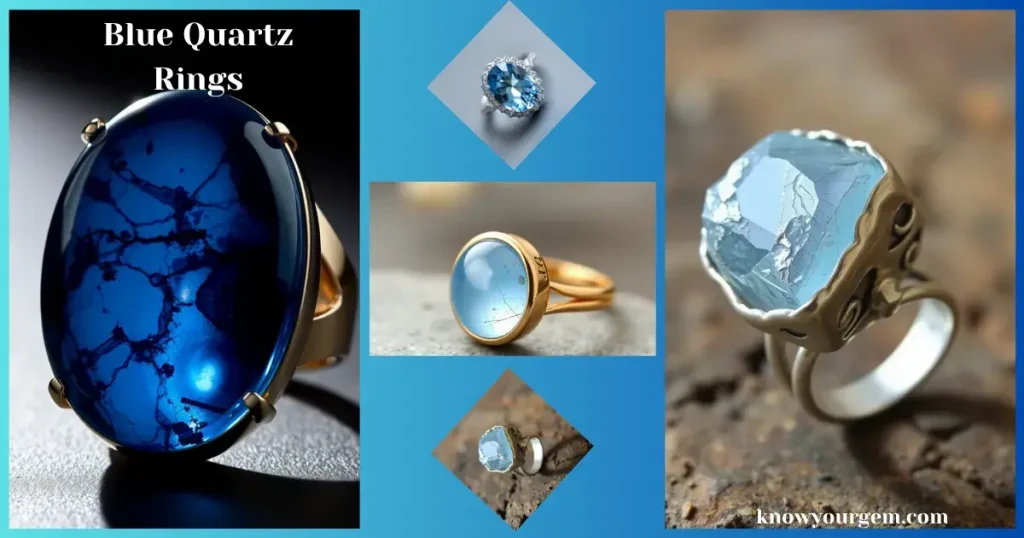
Blue quartz rings: Engagement rings and statement pieces
Blue quartz engagement rings have grown in popularity as couples seek ethical, distinctive alternatives to the traditional diamonds. The stone’s calm blue hue reminiscent of Aquamarine but at fraction of the cost pairs beautifully with:
- Yellow gold settings (creates warm contrast with the cool blue)
- Rose gold bezels (emphasizes the stone’s gentle, romantic quality)
- Sterling silver solitaires (clean, minimalist aesthetic)
- White gold halo settings (maximizes visual size and brilliance)
For engagement ring use, a bezel or semi bezel setting which is recommended over prong settings to protect a gem’s edges. Don’t use ultrasonic cleaners, that can disturb inclusions in opaque material.
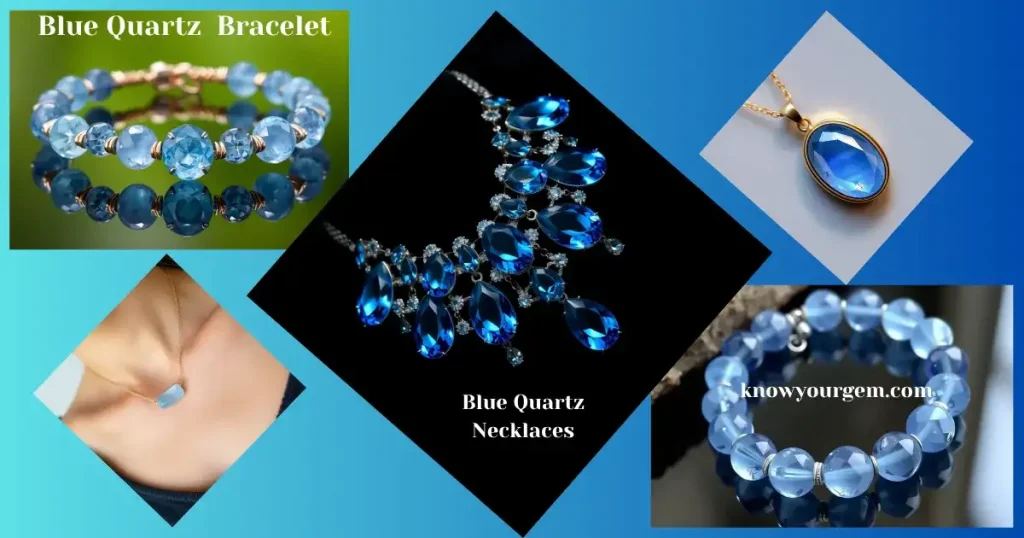
Blue quartz necklaces and pendants:
Th most popular bluish quartz jewelry format . Since rough blue quartz crystals are wrapped in sterling silver wire, polished oval cabochons set in gold fill bezels, and faceted the quartz briolettes on delicate chains all rank consistently among to p selling gemstone jewelry in the $30-$300 price on platforms like Esty and Amazon handmade bluish quartz necklace centers on the Throat Chakra symbolism. So, wearing the stone near the throat is considered by practitioners to support communication.
Blue quartz earrings and bracelets:
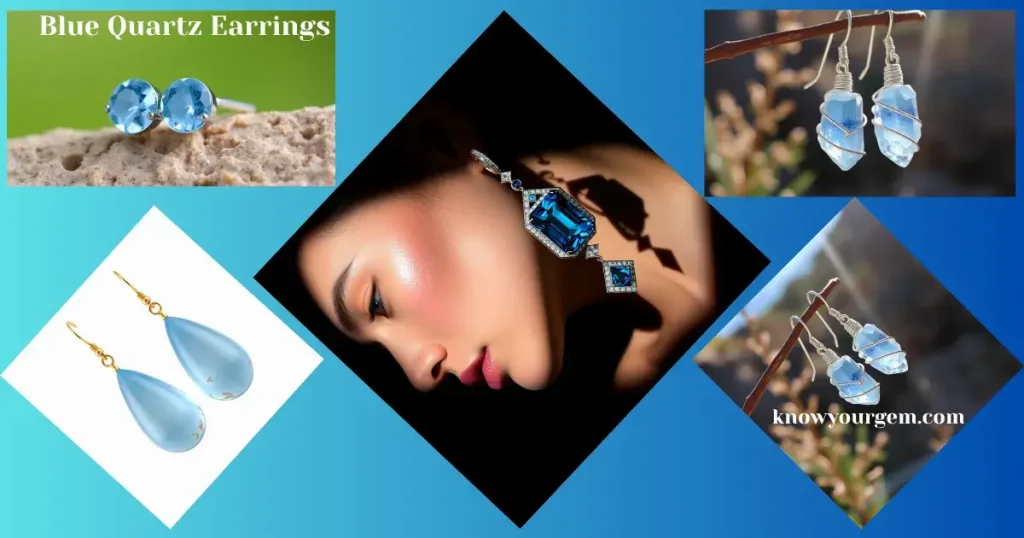
Drop earrings pear shaped or teardrop blue quartz cabochons are a perennial favorite for both fashion and fine jewelry. Bluish quartz beaded bracelets sell strongly in the wellness and crystal healing market, it is often combined with clear quartz, lapis lazuli, or labradorite for complementary energy properties. Stretch bracelets in 8-10mm beeds are most commercially active format.
5. How Much is blue quartz worth? 2026 pricing guide
Bluish quartz value hinges on five primary factors like, ethical clearance, color saturation, inclusions (type and visibility), cut quality, and whether the stone has been treated. The market spans a wide range from tumbled stones at $2-5 each to collector specimens exceeding $500.
Natural blue quartz price per carat: (2026)
| Quality Grade | Price Range (USD/ct) | Notes |
| Commercial | $5 to $15 | It is commercially tumbled, opaque, treated or dyed material |
| Fine Cabochon | $15 to $45 | It is a natural dumortierite quartz, good color |
| Premium | $45 to $120 | It deep saturated color, from Brazilian origin |
| Star Blue Quartz | $60 to $200+ | It is Asterism visible, well centered star |
| Blue Rose Quartz | $100 to $400+ | It is rare; Minas Gerais provenance |
| Collector Specimens | $200 to $800+ | It displays quality, museum grade inclusions |
Golden blue quartz and rare variety premiums:
Golden bluish quartz owns a trade name like blue quartz with having warm golden rutile inclusions that create a bicolor effect and commands 30-60% more premium price as compare to single color material. The combination of Rayleigh scattered blue and warm rutile needle reflections creates a visually distinctive stone popular with having high end jewelry designers.
6. Blue quartz investment outlook 2026:
Always look, the case for investing in bluish quartz boils down to the three trends just lining up perfectly. You have got this huge boom in demand from the wellness and crystal healing crowed, people sear by them for good vibes.
Market trends and demand drivers:
- Global wellness boom: The wellness market is topped $5.6 trillion in 2024. Crystal healing especially stones like blue quartz is rapidly growing niche in this current era.
- Social media magic: Crystal videos rack up hundreds of millions of view yearly on Instagram and TikTok, sparkle real purchase interest in eye catching stones like blue quartz.
- Colored gem trend: Big names like Tiffany and Bulgari, plus indie designers, are all about colored stones now, make people way more comfortable and skip diamonds.
- True rarity: The top saturated, deeply colored blue quartz, especially star varieties and blue rose quartz is genuinely scarce.
Brazilian and Alabama blue quartz: key sourcing regions
- Brazil (Minas Gerais and Bahia): The global center of a fine blue quartz production. Since Bahia state produces the densest,, most richly colored dumortierite quartz, whether Minas Gerais is an expensive source of the blue rose quartz. Brazilian origin adds a 25-40% premium to appraised value.
- Alabama Blue Quartz: The Hillabee Greenstone Belt in Alabama produces a distinctive blue quartz which is associated with the metamorphic schist. Alabama blue holds collectors appeal for American buyers and is frequently cited in US lapidary literature.
- India: A significant commercial producer of the blue aventurine quartz and lower grade dumortierite quartz is used in bead jewelry and carvings.
- Madagascar and Mozambique: Emerging sources of a fine quality dumortierite in quartz enter the international gem trade since 2018.
| Investment note: Documented provenance from a named Brazilian mine, is combined with a gemological certificate that confirms natural ethical origin, currently embodies the strongest combination of factors for resale value the bluish quartz market. Maintain purchase records and original certificates. |
7. Blue quartz geology: How blue quartz forms
Getting the geology behind quartz really helps buyers and collectors to spot the realistic deal and guage its rarity. It forms through few processes, each leaving its own signature on the stone and the rocks it is found in.
- Metamorphic origin: This is the big one, most commercial bluish quartz comes this way. Dumortierite crystals form when aluminum-rich sediments get cooked under heat and pressure during regional metamorphism because host rock recrystallizes, those blue dumortirrite needle get locked into the growing quartz gains.
- Hydrothermal origin: Hot, silica-rich fluids hold infinitesimal blue minerals into cracks and cavities in the rock, then deposit bluish quartz there in veins or little pockets.
- Pegmatitic origin: This is origin where rare once show up in granite pegmatites, and where slow cooling of magmatic melts let huge crystals grow, trap colorful inclusions along the way.
8. Caring for blue quartz Jewelry and specimens:
Blue quartz is tough enough but still requires a gentle care:
- Cleaning: Use warm water with mild dish soap, and soft brush to clean it well. After the cleaning process wash your gemstone thoroughly and dry it with a soft fabric cloth.
- Storage: Store you gem separately from hard gems like topaz, corundum, or diamond that could scratch it. Just pop it in its own cloth pouch or padded spot.
- Light exposure: Natural blue quartz carries its color fine in normal light, however direct sunlight can fade irradiated or dyed version.
- Chemical exposure: Wear-off your jewelry before chlorinated pools, perfumes, or household cleaners because those hash chemical s etch the polish and hurt metal settings.
- Specimen display: Show off raw pieces away from sunlight in steady humidity to avoid thermal shock or surface dulling.
Quick quarries and answer case:
1. Is blue quartz natural or man-made?
Both natural and treated bluish quartz exist. Since natural stone forms with inclusions like dumortierite, tourmaline, or other blue minerals. Whether treated versions get irradiated, ,dyed, or coated with metal (aura quartz). Always ask for treatment disclosure, and get a gem lab certificate for big buys.
2. How can we differentiate blue aquamarine with blue quartz?
Aquamarine gemstone belongs to beryl family. The stone gets its blue color from trace elements and it transparent, super hard with having 7.5-8 mohs scale, which make aquamarine more expensive or pricier . While bluish quartz is translucent to opaque, colored by mineral inclusions, and a total bargain, affordable than aquamarine. Both rocks own blue vibe, but they are totally different minerals.
3. What chakra is blue quartz associated with?
Bluish quartz vibes are attached mostly with the Throat Chakra (Vishuddha, the fifth one), helps to boost communication, self expression, and straight up truthfulness. Although it also ties into the third eye chakra (Ajna) for sharpening intuition and mental clarity.
4. How much is blue quartz worth?
Commercial-grade (tumbled, treated) commands prices from $5-$15 par carat. Since, fine natural dumortierite quartz cabochons range from $15-45 per carat. Rare varieties including star blue rose quartz command $60-$400+ per carat. Exceptional collector specimens exceed $800 per carat.
5. What is blue quartz good for?
From a physical standpoint, bluish quartz’s on 7 mohs scale of hardness which makes it suitable for all jewelry applications. Practitioners use blue quartz for throat chakra work, communication support, anxiety reduction, and clarity of thought that are so, called it metaphysical properties.
6. Where does blue quartz come from?
Its top ethical sources where it come s from are (Bahia and Minas Gerais for the finest stuff), India (solid commercial grade), Madagascar, Mozambique, Spain, Austria, and the US (Alabama). Brazilian ones, especially dumortierite quartz and blue rose quartz fetch the top prices.
7. Is blue quartz expensive?
Bluish quartz is a steal as compared to the other blue gems, and cheaper than aquamarine, blue sapphire, tanzanite, or blue tourmaline. Since, rare types like gem quality blue rose quartz or starry can match mid grade aquamarine prices, however for most folks, top natural bluish quartz killer value.
About this Guide:
| Gemologist-verified content: This guide comes from a GIA certified gemologist, backed by top sources like mineralogical Society of America, and peer reviewed articles in American Mineralogist. Pricing are based on realistic Q1 2026 market deals. |
This Guide is written by Gemstone enthusiast KamilHussain!

Welcome to KnowYourGem.com! your ultimate destination for uncovering the fascinating world of gems and their secrets! I'm Kamil Hussain, a passionate blogger with a Master’s degree in Economics, dedicated to bringing you insightful, well researched content that blends the beauty of gemstones with the art of storytelling. With a keen analytical mind and a love for discovering hidden treasures, I created this platform to help you explore the brilliance, history, and value of every gem.


[…] diagram is used for identification. “Sodalitic blue quartz” is a commercial name that can refer to a mixture of decoration material, but not a formal […]