

Quick Importance:
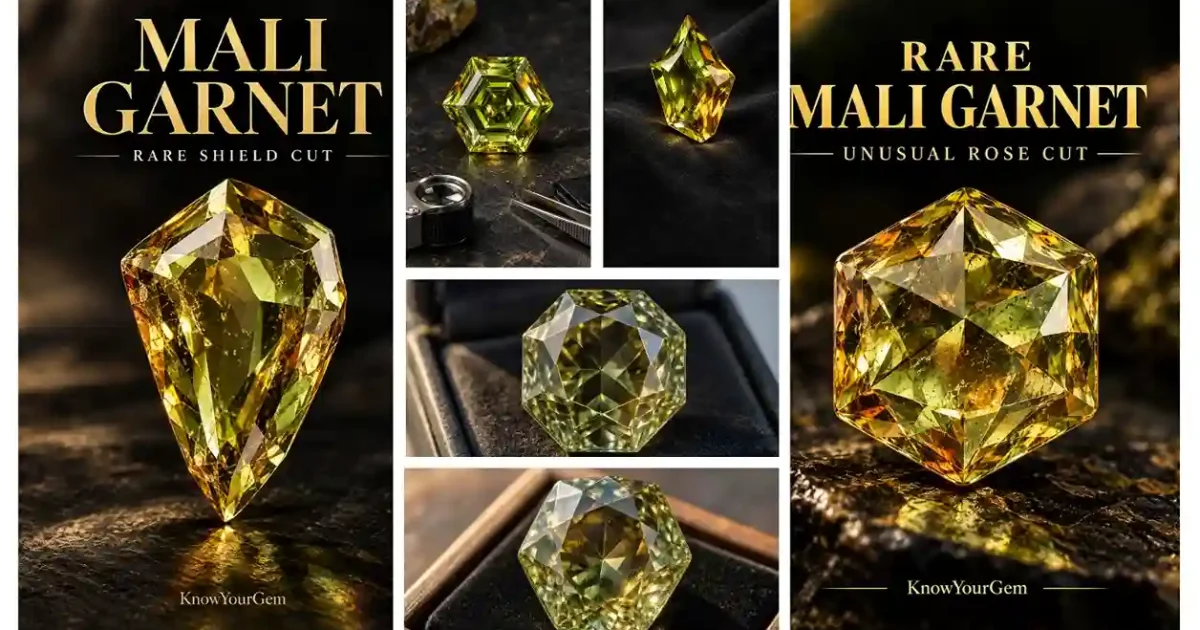
Mali Garnet is a type of mixed-species garnet means a combination of grossular and andradite. It was first discovered in Mali in the early 1990s and exhibits a range from pale yellow to olive-green to brown.
While the coloration is too warm to be classified as in a garnet species, the two species that are combined here are the reason for the dispersion and the color shifts that pilots love.
Top-quality colors ranging from yellow to green to color-change are trading for premium prices, whereas gardeners maintain more affordable price points for the brown vessels.
Individual prices are characteristic of saturation, clarity, and cut more than carats. Here is what you need to know before purchasing.
What Is Mali Garnet?
Mali Garnet belongs to the garnet group, which has a wide range of composition along the grossulbar-andradite solid solution series, so individual stones will have different proportions of the end members.
The stone first appeared in the gem market in 1994, while following the discovery of deposits near Kayes, western Mali, which gave the stone its name.
So typical grossular garnet is known as calcium aluminum silicate, andradite is calcium iron silicate. Mali Garnet is smack in between, and this mixed chemistry causes its extreme fire and a broader range of colors than normal.
The issue of whether this is a distinct variety or merely a local trade name for a grossular-andradite species has not been settled. The most communication programs consider it a compositional description like that of a “tsavorite”, which merely describes a fiery green grossular color rather than a new species altogether.
Grossular Component:
Grossular influences the yellow and pale green colors in the lighter stones. As you move from the end of the grossular, the stones tend to be light, transparent, and soft in color saturation.
Andradite Component:
The andradite component is the cause of the darker greens, browns, and much of the dispersion. The higher the andradite percent, the more intense the fire and darker the tone, sometimes diminishing transparency.
Is Mali Garnet Rare?
Mali Garnets in their usual yellow-brown hues are not really rare, but they are very much an uncommon find; the beautiful green and changes of color varieties are quite rare.
Mainstream commercial quality stones in the darker browns and yellowish shades are easy to come by and even give buyers excellent value for money. The difficult tones to get hold of are the much richer greens coupled with good translucent appearance over two carats.
What Is the Rarest Mali Garnet Color?
Perhaps the most costly are the chrome-green and yellow-green stones which are highly saturated and more rare. The very best, non-ordinary, daytime to incandescent color change stones are also more rare and generally the most costly per carat.
Garnet Origin and Mining:
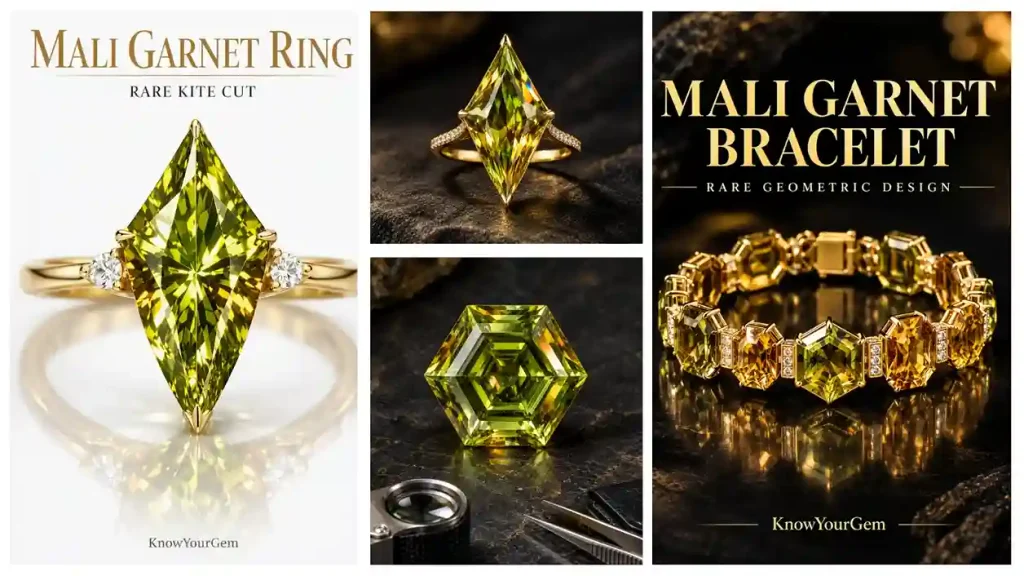
The entire commercial source occurs in Mali with deposits mined mainly in the western region surrounding Kayes. The mineral occurs in alluvial and eluvial deposits therefore, the material is generally mined from gravel and weathered soil.
Where Is Mali Garnet Found?
It’s all produced by relatively small artisanal units, and the level has never been high, and varies from year to year. This maintains a tight supply in the market despite the material isn’t advertising as rarity, like tsavorite and paraiba tourmaline.
Rough Garnet:
Rough crystals are usually rounded during stream transport, with a noticeable resinous to faintly greasy surface luster prior to cutting.
The color of the rough may look a little darker, perhaps more olive, than it will when finished, so cutters make a few small window tests before selecting a shape.
When purchasing rough, use the tip of a knife to the see if the material is translucent, heavily opaque material is difficult to cleave into an eye-clean finished stone.
Mali Garnet Colors:
The color range runs from pale yellow through green, orange, and brown, occasionally reaching a very dark tone that reads as near-black.
| Color | Typical Cause | Relative Value |
| Green | Andradite-influenced saturation | High, especially chrome-green |
| Yellow | Grossular-dominant composition | Moderate |
| Orange | Mixed iron content | Moderate to high |
| Brown | Higher iron, lower saturation | Lower, common |
| Black/near-black | Dense iron content, low transparency | Low unless translucent |
Green Mali Garnet:
Green stones of this color range from dull olive to a bright, intense chrome-green that has so much saturation that it is darker than demantoid. Bright uniform green in a clean stone will sell for the most.
Yellow Mali Garnet:
The yellow range includes a pale lemon through a richer gold. This is usually the most common colour and, in the cleaner grades, can produce good brilliance at a reasonable price.
The yellow range includes a pale lemon through a richer gold. This is usually the most common colour and, in the cleaner grades, can produce good brilliance at a reasonable price.
Orange Mali Garnet:
Orange and yellow-orange Mali Garnets are caused by a somewhat different chemistry; although they are caused by the same iron foundation as spessartite garnet, the dual-iron andradite basis is a more subtle one.
The spessartite is a Mali orange garnet that contains no andradite component so the color it produces is a clear, lively, orange; the orange mali garnet will occasionally look a duller brownish color.
Brown Mali Garnet:
Brown is the most prevalent color, from the “honey” color to a darker brown/chocolate. Brown is the “color” of the beginning of the market; it is also where most of the commercial-grade material ends up.
Black Mali Garnet:
Real black Mali Garnets are rare; what is known as black is normally an extremely dark green or brown which appears black in normal light conditions.
If the stone is opaque, bright light should be used to see if it can be seen through at the edges before presuming it to be Mali Garnet (many other black opaque minerals suffer similar misrepresentation).
Does Mali Garnet Change Color?
Certain samples do effectively change color from outside daylight to incandescent or LED from green to brownish-orange, true color change material.
Genuine color change is not pleochroism, or the directional change of a stone’s color when viewed from various crystallographic directions.
Images taken with mixed lighting or under incandescent or fluorescent light can distort the true color of a stone, so color change material should be viewed in real life or in a light booth before purchase.
Mali Garnet Gemological Properties:
| Property | Mali Garnet |
| Mineral family | Garnet |
| Composition | Grossular-andradite series |
| Crystal system | Cubic |
| Mohs hardness | About 7 |
| Refractive index | Approximately 1.74–1.81 |
| Specific gravity | Approximately 3.5–3.9 |
| Birefringence | None (singly refractive) |
| Dispersion | Relatively high (around 0.028–0.057) |
| Luster | Vitreous to resinous |
| Transparency | Transparent to translucent |
Mali Garnet Mohs Scale and Hardness:
At approximately 7, on the Mohs scale of hardness, Mali Garnet has the same hardness as quartz, which is lower on the scale than topaz (8) and well below sapphire (9) and diamond (10).
Hardness determines scratch resistance, not durability; a stone may be hard but may chip if it has internal stress fractures.
Mohs 7 is thought to be the practical minimum for jewelry to be worn every day, as it is resistant to scratching by household dust and most stones but is not resistant to hard impact.
Is Mali Garnet Hard Enough for Everyday Jewelry?
Yes, assuming careful wear of rings. A bezel or low-set prong setting provides a guard against chipping at facet edges a larger practical concern than scratching the surface.
Mali Garnet Refractive Index:
Refractive index is usually between 1.74 and 1.81, but varies considerably depending on the proportion of andradite versus grossular present in a given stone.
Gemologists use a refractometer to measure RI, which is singly refractive with no birefringence. A stable (rather than doubled) reading is itself therefore a useful ID.
Appearance by eye alone is insufficient to accurately ID the material, as the majority of garnet species have some overlap in coloration and brilliance.
Mali Garnet Specific Gravity:
Specific gravity is somewhere around 3.5 to 3.9 depending on composition and is determined through a hydrostatic balance by weighing the stone in air and water.
This is a good identification method in a lab setting, but it is not an easy home test as would need sophisticated equipment and a loose stone.
Mali Garnet Dispersion and Fire:
Dispersion: How much the stone separates white light into spectral colors. In Mali Garnet, the dispersion (whatever that value turns out to be 0.028 to 0.057 depending on source) is very high for a garnet and “almost approaches the demantoid’s famous fiery splays.”
Dispersion is different to brilliance which is a measure of the overall light return and brilliance of a cut stone. Proper facet angles lead to flashes of color being visible which are not evident in a shallow or poorly cut stone with the same rough.
What Gives Garnet Its Brilliance?
The brilliance arises from the relatively high refractive index, clean facet junctions, transparency and a cut back to bring the light back up through the crown. Dispersion further adds the flashes of spectral color on top of this baseline brilliance.
Garnet Inclusions:
Common internal inclusions of alluvial garnets are growth-related features, such as needles, fractures, and crystal inclusions which are often of typical alluvial formation. Eye-clean stones are found but are more rare in larger sizes; commercial and smaller-size stones tend to be included.
Transparency will be affected by inclusions, and the value diminished if the inclusions hinder transmission of light. However, a limited number of inclusions may allow a “natural” property to be awarded, because synthetic garnet is not normally commercially produced. Inclusions cannot authenticate a stone on their own.
Are Inclusions a Sign of Natural Mali Garnet?
They‘re supportive evidence so I do not think they be proof. Natural growth inclusions are possible when origin be untreated but no definitive ID with the combination of the refractive index, specific gravity and the microscope.
How to Identify Natural Garnet?
Check color no patchy, blocky, or zoneyness.
- Transparency (check the stone): Is it see-through or cloudy?
- Check the luster: The true material will have a glassy to sometimes just slightly resinous appearance.
- Observe inclusions: These are natural growth characteristics viewed through 10x magnification.
- Measure refractive index: Index should be in the range 1.74-1.81.
- Measure specific gravity: within 3.5 3.9
- Test hardness well a scratch: Test is not something that should be performed by a non-professional, as it can harm the stone if it is not carried out properly.
- Investigation of dispersion spectral flashes: A point of light source.
- Keep the origin in mind: Mali is still the main trader and this is a clue. (not for sure, though)
- Get a guarantee from a gem lab: This is the only one where you have documented, defensible ID.
Mali Garnet and GIA Testing:
A gemological lab report or analysis can verify species and variety, identify treatments, and sometimes determine origin by trace-element analysis.
What a lab report provides over a listing is independently documented determination. Not every Mali Garnet needs certification and it makes the most sense with larger, more expensive stones with origin opinions being based on statistical comparison of reference material.
Mali Garnet vs Other Gemstones:
| Gemstone | Composition | RI | SG | Dispersion | Hardness | Typical Price Position |
| Mali Garnet | Grossular-andradite | 1.74–1.81 | 3.5–3.9 | High | 7 | Moderate |
| Tsavorite | Grossular (chromium/vanadium green) | 1.73–1.75 | 3.61 | Moderate | 7–7.5 | High |
| Demantoid | Andradite | 1.88–1.94 | 3.8–3.9 | Very high | 6.5–7 | Very high |
| Grossular (general) | Grossular | 1.73–1.75 | 3.4–3.7 | Moderate | 7–7.5 | Varies widely |
| Andradite (general) | Andradite | 1.88–1.94 | 3.8–3.9 | Very high | 6.5–7 | Varies widely |
| Peridot | Magnesium-iron silicate | 1.65–1.69 | 3.3–3.5 | Low | 6.5–7 | Low to moderate |
| Green Tourmaline | Complex borosilicate | 1.62–1.65 | 3.06 | Low | 7–7.5 | Moderate |
Mali Garnet vs Tsavorite:
The chromophores responsible for Tsavorite‘s color are chromium and vanadium, and it tends to have a less cloudy, more saturated green, which compensates and pushes the rough price up overall. Mali Garnet’s dispersion is in general, more pronounced and more visible fire will be seen in similar surroundings.
Mali Garnet vs Demantoid:
Demantoid is really the andradite end member without any Mali Garnet end member included, with a higher RI, SG, and dispersion than Mali Garnet. It’s also much rarer and commands a much higher price tag, particularly with the horsetail inclusions that collectors hunt for.
Mali Garnet vs Grossular / vs Andradite:
Mali Garnet should be seen as more of a composite of the pair than a competitor to either…its characteristics are just in between the heavier andradite dispersion profile, and the lighter grossular fim.
Mali Garnet vs Peridot and Green Tourmaline:
Both of these exhibit significantly less dispersion (loweright), and thus display less fire in their similar green hues compared to the Mali Garnet. Peridot also exhibits visible birefringence (double facet edges), which were not observed in the Mali Garnet.
Mali Garnet Price:
Mali garnet prices range widely by quality, from a few dollars per carat for included brown material up to the hundreds of dollars per carat for fine green color or excellent color change stones.
The number one driver of price is color and saturation, followed by clarity, cut quality and weight. Other premium factors include certification of origin, no enhancement and good seller reputation.
Mali Garnet Price Per Carat: (2026 Market Guide)
| Quality | Typical Appearance | Indicative Price/ct |
| Commercial | Dark, heavily included brown | $10–$30 |
| Good | Yellow to yellow-brown, moderate clarity | $30–$80 |
| Fine | Yellow-green, good clarity | $80–$200 |
| Fine green | Saturated, well-cut green | $200–$500 |
| Exceptional | Rare hue plus strong clarity | $500–$1,000+ |
| Collector | Chrome-green or strong color-change | Market dependent, often $1,000+ |
These prices are all the general asking-price ranges being quoted within the colored gemstone trade and will vary by dealer, cut, and availability.
Small Mali Garnet Price:
Small stones (less than ½ carat) may have a fairly high per-carat price if the color and clarity are good (size and grade are independent). A tiny, intensely colored green Mali Garnet will often be priced a higher cost per carat than a much larger dark brown stone.
Mali Garnet Value: What Makes a Stone Expensive?
- Color: what is the hue? First value tier.
- Saturation: Rich, pure, intense color overpowers dull or inconsistent color.
- Clarity: (fewer the inclusions which are seen with eyes the higher the price).
- Before I begin, transparency: Directly influences the brilliance and fire.
- Cut: the more exact the facets, the more light will be returned.
- Carat weigh: Clean quality larger stones command membership premiums.
- More visible fire, increased desirability: Increased visibility of fire dispersion.
- Rarity: like chrome-green and color-change at the high end.
- Natural status: Undisclosed treatment reduces value.
- Doc lab reports: (Grades) support resale confidence.
Does Bigger Always Mean More Valuable?
Not always. An individual would usually pay a set price per carat, but a considerable rarity of this color and clarity grading might result in the smaller stone being priced at a higher per-carat rate.
What Is the Best Garnet?
Clearly there is not one “best” garnet. Each can be the “best” given criteria. Diamondlike fire? (re)Get hyped from a demantoid. Pale but intense saturation? Tsavorite.
Cheap & cheerful wide range of saturation & strength of dispersion? Mali Garnet. Vibrant orange? Spessartite. Soft rose purple? Rhodolite. Novel color change glow? Color change garnet. Deep red? Almandine. It all comes down to specific demands of the buyer: Color? Price? Rarity?
What Is the Best Quality Garnet?
As far as quality (no matter the variety), I look for bright, even color; high and even transparency; sharp, precisely-cut facets that accentuate the brilliance; limit of any eye-visible inclusions; a size that is suitable for intended purpose; proven natural origin; and trusted lab reports for higher-priced pieces.
What Is the Most Valuable Garnet?
Demantoid, especially fine Russian material with good horsetail inclusions, is, on the whole, generally the most expensive garnet material, with the even more spectacular, top-quality tsavorite coming close.
The order of prices can be varied depending on the quality of individual stones, as there can be a degree of ‘out-pricing’ top-quality demantoid or tsavorite with a very good Mali Garnet of unusual colour.
Mali Garnet Jewelry
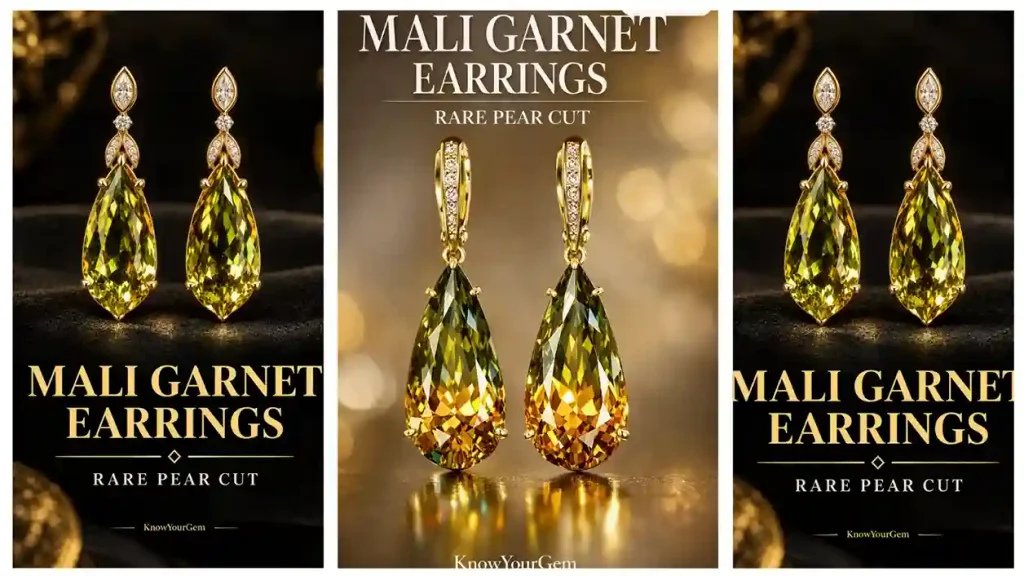
Given its Guascan origin, the Mali garnet’s 7 Mohs hardness and intense brilliance provide a stunning, very wearable gem characterized by excellent durability and versatility in all jewelry types, provided some extra care for stones worn under daily stress.
Mali Garnet Ring
The more standard cuts are round brilliant, oval, and cushion, as they enhance the dispersion of the stone. An open high set stone isn’t very practical with everyday wear, so a bezel or guard prong setting in white or yellow gold is better suited.
Mali Garnet Engagement Ring
Mali Garnet may serve as an engagement stone for someone wishing for an uncommon color for less than a tsavorite or demantoid, although the 7 Mohs means it requires a safer setting and greater care in wear than sapphire or diamond.
Someone looking for an easy-care and long-lasting daily-wear stone to use as a center setting may select Mali Garnet as an accent.
Garnet Wedding Band
Small garnets, such as the Mali Garnet, are such as used as an accent in wedding bands, with the stones set off with diamonds.
Mali Garnet Earrings, Necklace, and Pendant
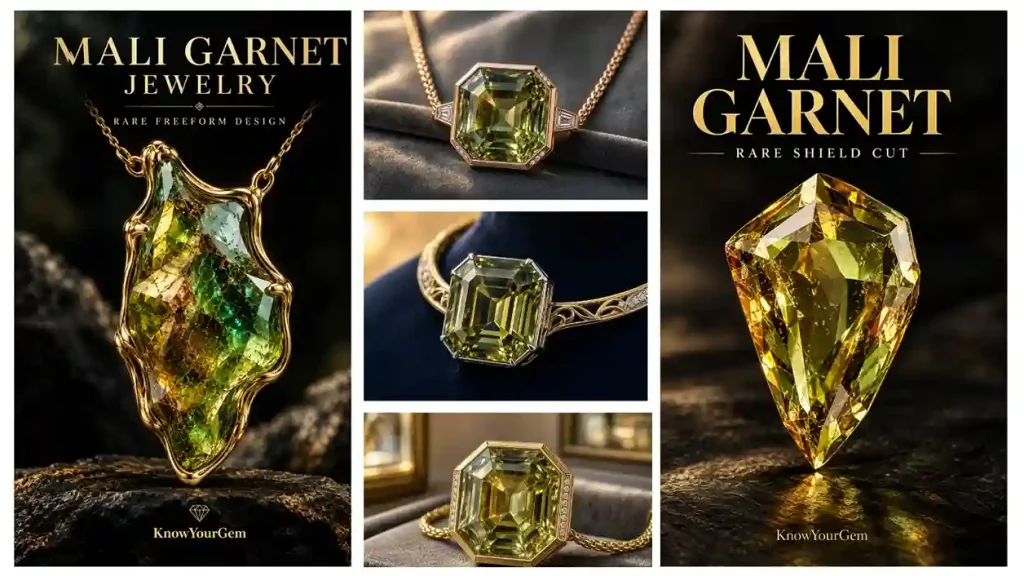
Earrings and pendants are exposed to less impact than rings, they are therefore practical to wear all the time, even at Mohs 7. Halo earrings with small melee-size stones are attractive, and single large stones are impressive as pendant centers.
Mali Garnet Bracelet
If a bracelet is given a good, secure setting, the needles can cause accidental hits to be minimized. Bracelets are subject to more incidental hits than any other jewelry.
Mali Garnet Cabochon
Cabochons are rare compared to faceted stones, these are usually cut from more heavily included or lower transparency rough, which would not work so well as a faceted stone. Goods such as this are more aimed at collectors rather than those seeking brilliance.
How to Shine Garnet
Always clean it with lukewarm water with drop of mild soap, and a soft brush for removing dust. Dry it with a lint-free cloth. You should avoid harsh chemicals and also avoid ultrasonic or steam cleaners because the stone can contain internal fractures can be sensitive.
Mali Garnet Meaning
Malli Garnet doesn’t have the centuries-old symbolic history of red garnet, as it hasn’t been in commerce until the 1990s.
When it can be used symbolically or spiritually, it tends to be subsumed within the broad garnet symbolism of energy and rooting, evoking custom and belief rather than proven elemental or mineral properties.
Mali Garnet Benefits
Proven show/gemological qualities: a generally broad color range for a single garnet variety, a strong dispersion comparable to far more costly stones, a good jewelry hardness ( Mohs 7), and a relatively low price point versus tsavorite or demantoid.
Symbolic/metaphysical: In some crystal-healing systems, garnets have a wide association with energy and life-force. These are faith-based claims derived from tradition, rather than scientific fact, and should be classified accordingly.
Mali Garnet Metaphysical Properties
In metaphysics, garnet as a family stone is sometimes tied to grounding, confidence, and passion (with green stones related to abundance, and yellow stones related to clarity in some systems). This, of course, is not gemological but is tradition and metaphysical belief.
Mali Garnet Care Guide
- Cleaning: Warm water with some washing-up liquid (with or without the washing-up brush)
- Storage: Keep apart from non-precious harder stones as putting them together may scratch their surfaces.
- Scratches: Mohs 7, scratches all except other stones and hard steel.
- Effect: Delicate edges of the protection will be accommodated in a secure, low-profile setting.
- Chemicals: Stay away from chlorine, harsh detergents and sun for long time.
- Jewellery setting: Prongs should be tested regularly for wear.
- Accidents happen: Aprofessional inspection. It is worth getting your jewelry checked once a year to identify any loose stones and prevent losing one.
Mali Garnet Buying Guide:
Before buying, check:
- ☐ Natural status
- ☐ Color
- ☐ Clarity
- ☐ Cut
- ☐ Carat weight
- ☐ Dimensions
- ☐ RI/SG when available
- ☐ Treatment disclosure
- ☐ Laboratory report where appropriate
- ☐ Seller reputation
- ☐ Return policy
- ☐ Price per carat
Mali Garnet Buying Mistakes to Avoid:
- Buying solely because a listing calls the stone “rare.”
- Assuming every green garnet is a Mali Garnet.
- Confusing ordinary grossular with Mali Garnet.
- Comparing prices across listings without comparing quality first.
- Ignoring cut quality in favor of carat weight.
- Overlooking visible inclusions in photos.
- Trusting color-adjusted or filtered product photography.
- Assuming an origin claim is proven without documentation.
- Treating metaphysical claims as gemological evidence.
Mali Garnet Frequently Asked Questions:
1. Is Mali Garnet rare?
No. The stone is not rare, but it is a common brown and yellow form of garnet, however, fine green and color-changing material is genuinely scarce.
2. What is a Mali Garnet?
A grossular-andradite garnet was first found in Mali in 1994, it was known for a wide color range and strong dispersion.
3. What colors does Mali Garnet come in?
It can come in yellow, green, orange, brown, and occasionally near-black, with some pieces showcasing color change.
4. Is green Mali Garnet rare?
Yes. Particularly, the stone has saturated chrome-green material in larger, clean sizes.
5. Is brown Mali Garnet valuable?
This mineral is common and generally the most affordable color.
6. Is yellow Mali Garnet natural?
Yellow Mali is generally considered as trade material; it is usually found as untreated.
7. Is orange Mali Garnet rare?
The stone is less common than yellow or brown but as scarce as fine green.
8. Is Mali Garnet a grossular?
Might be partly because it has a blend of grossular and andradite, not pure grossular.
9. Is Mali Garnet an andradite garnet?
Might be for the same reason, because it sits along the grossular-andradite series.
10. What is Mali Garnet’s Mohs hardness?
About 7.
11. What is the Mali Garnet refractive index?
Approximately 1.74 to 1.81.
12. What is Mali Garnet’s specific gravity?
Approximately 3.5 to 3.9.
13. Does Mali Garnet have high dispersion?
Yes. It has notably high dispersion, which approaches that of demantoid in some specimens.
14. Does Mali Garnet change color?
Some specimens can change their color between daylight and incandescent light.
15. What inclusions occur in Mali Garnet?
The stone carries growth-related needles, fractures, and sometimes crystal inclusions of alluvial formation.
16. How can you identify natural Mali Garnet?
By visual examination, RI and SG testing, and acceptance by a gemological laboratory.
17. Can GIA prove this is Mali Garnet?
Yes. A reputable and knowledgeable laboratory can identify species, determine if it is treated and often name the possible source of origin.
18. What is a mali garnet worth?
It is price is Listed from about US$10 to over US$1,000 per carat depending on color, clarity and cut.
19. How much does Mali Garnet sell for per carat?
Trading material is available from approximately $10–$30/ct and high quality green and color-change material fetching in excess of $500–$1,000/ct.
20. What is it about some of the Mali Garnet that makes it one of the most expensive stones on the market?
It’s for the following reasons: rare saturated color, intense dispersion, high clarity and proven natural origin.
21. Is ring suitable for a Mali Garnet?
Yes in a protection setting for a Mohs 7 stone.
22. Can Mali Garnet be an engagement ring?
Yes. It can be used in an engagement ring, but the stone should be treated more gently than harder stones like sapphire and diamond.
23. Is Maligarnet good for earrings?
Yes, just that the durability isn’t as great as a ring in a ring setting as the earrings don’t get used as much/much everyday.
24. Doesn’t Mali Garnet make a beautiful necklace?
Yes, for that very reason.
25. Is it safe for Mali Garnet to be worn in a bracelet?
It can, just keep in mind that bracelets are subject to more bumps and knocks than other forms of jewelry.
26. Is Mali Garnet superior to Tsavorite?
Neither is superior or inferior a point of parity tsavorite possesses more precise, cleaner green saturation, but Mali Garnet offers more dispersion at an excellent price.
27. Which is the best garnet?
It depends what is the most important to you, the fire of the demantoid, the pure green of the Tsavorite, the range and value of the Mali Garnet
28. Which one is the most precious garnet?
Generally the fine demantoid is in a step at the top of the market and than the good grade tsavorite.
29. What are the Mali Garnet advantages?
A broad natural color spectrum, fairly high brilliance and dispersion, and reasonable jewelry-grade hardness.
30. What does Mali Garnet signify?
Not exactly loaded historically, though occasionally loosely grouped with the traditional garnet associations of vitality.
31. What are the metaphysical properties of Mali Garnet?
Usually associated with stability and abundance in certain belief systems culture-tradition rather than scientific fact.
Quick Check: Is Mali Garnet Worth Buying?
For collectors, Mali Garnet is an excellent pick, offering color variety and dispersion few garnets in its price range can match. For unusual green or yellow gemstones, it’s a strong choice.
In jewelry, it performs well with a protective setting. As an investment, don’t expect guaranteed appreciation buy it for the stone, not a promised return. Beginners should focus on verified color, clarity, and documentation over the novelty of the name.
Not sure what you’re holding? Check current market value with our Gemstone Price Calculator.
Gemstone Enthusiast and Expert {Kamil Hussain}

Welcome to KnowYourGem.com! your ultimate destination for uncovering the fascinating world of gems and their secrets! I'm Kamil Hussain, a passionate blogger with a Master’s degree in Economics, dedicated to bringing you insightful, well researched content that blends the beauty of gemstones with the art of storytelling. With a keen analytical mind and a love for discovering hidden treasures, I created this platform to help you explore the brilliance, history, and value of every gem.

