


Quick view: Imperial Topaz is a rare and highly valuable gemstone recognized for its golden orange to reddish-pink hues, it owns 8 mohs scale of hardness, the gem is primarily mined in Brazil, Russia, and Sri Lanka. Since, this precious aluminum silicate mineral commands premium prices due to an exceptional color saturation, natural, rarity, and strong investment potential that attracts collectors worldwide who are seeking both aesthetic beauty and portfolio diversification opportunities.
What is Imperial Topaz?
Imperial Topaz embodies the principle of the Topaz family, that is distinguished by extraordinary warmth and brilliance that captivates collectors and investors alike. This aluminum silicate fluoride hydroxide mineral crystallizes in orthorhombic structures, that create gems which are cherished for an exceptional fire, durability, and captivating color play. The meaning of Topaz is historically connected to the solar energy and divine power, with an ancient civilization which used believe these stones have channeled celestial forces into the earthly realms for protection and prosperity.
The meaning of Imperial Topaz holds beauty goes far as gemstone. In 19th century Russia, had reserved the most exquisite pieces for the Romanov royal family, which cements its reputation as a jewel of privilege and prestige. That legacy of exclusivity gave an imperial Topaz an aura that still lingers today . It isn’t just seen as decoration, it has become a symbol of wealth, influence, and refined taste, which is admired across generations and cherished in modern luxury markets.
Definition: Imperial Topaz is uncommon highly treasured gemstone which is generally recognized for its golden-orange to reddish-pink hues, it is 8 on the mohs scale of hardness, and the primary locations of this gems are, Brazil, Russia, and SriLanka.
Key Properties at a Glance:
| Property | Imperial Topaz |
| Color | Its color ranges are like Golden-orange to reddish-pink |
| Mohs scale | It owns 8 on the mohs scale of hardness |
| Index | Its refractive index is 1.609–1.643 |
| Crystal System | Its is Orthorhombic |
| Chemical Formula | Al₂SiO₄(F,OH)₂ |
| Typical Sizes | 1–10 carats |
The gem Topaz crystal meaning extends beyond physical properties to embrace symbolic dimensions that are developed across diverse cultures. An ancient traditions have linked these with gem protection, healing, and spiritual enlightenment, attributing supernatural power to their radiant appearance. Since modern metaphysical practitioners believe to continue exploring these connections, through, scientific validation remains elusive for claimed supernatural benefits.
While recognizing what distinguishes this premium variety requires examining a specific quality parameters and market position. Although, the orange Topaz variation displays warm sunset tones which range from peachy champagne to deep amber, create a visual effect that transform dramatically under different lighting conditions. Natural specimens derive color from chromium impurities within the crystal lattice rather than an artificial treatments that make authentic stones significantly more valuable than enhanced alternatives.
Comparison Table:
| Gemstone | Color | Hardness | Price per Carat |
| Imperial Topaz | Golden-orange to reddish-pink | 8 | High |
| Citrine | Yellow to brownish | 7 | Medium |
| Golden Topaz | Yellow | 8 | Medium-High |
This comparison discloses fundamental differences between similar appearing stones that influence both market positioning and practical considerations. The imperial Topaz color spectrum encompasses warmer, more saturated tones than typical yellow varieties, whether superior hardness distinguishes it from citrine. Market valuations reflect these material differences, with an authentic specimens that command substantial premium over alternatives.
Properties:
- Hardness: Imperial Topaz owns 8 mohs scale, means that it is quite durable for jewelry.
- Composition: The stone relates the chemical formula like Al₂SiO₄(F,OH)₂, an aluminum silicate with fluoride and hydroxide.
- Size: Stones which in 1-10 carats are considered as larger gems and they are rare.
- Origins: The finest specimens majorly come from Brazil, but deposits also exist in Russia and Sri Lanka.
- Colors: Imperial owns colors like golden-orange to reddish-pink and often showcases parochialism.
- Value: High qualitative Topaz is considered as an investment grade, with premium stones that are steadily appreciate in value.
Imperial Topaz vs Citrine and Golden Topaz:
While Recognizing the difference between Topaz and imperial Topaz demand examining specific color parameters, quality standards, and market positioning conversations that are developed over generations of international trade. Since, all specimens relate to the broader Topaz species which share fundamental chemical structure, only stone that exhibit golden to pinkish-red hues with having sufficient saturation use to get the imperial designation through recognized gemological standards.
Mandatory differences:
Spectrum differences: Imperial Topaz is valued for its golden-orange and reddish-pink colors, that come from infinitesimal elements of chromium. Citrine, by contrast, and owes its yellow to brown shades to iron. Whether golden topaz shows a pure yellow color, but it lacks the warm, peachy tones that make Imperial Topaz so distinctive because chromium colored stones from under very rare geological conditions.
Price per Carat: Imperial Topaz demands prices from $400-$3,500plus per carat for quality specimens, whether citrine typically owns prices like, $20-$100 per carat and golden topaz ranges $100-$400 per carat. This dramatic price differential reflects genuine scarcity rather than marketing manipulation, with an annual Imperial production that measure in kilogras as compared to Citrine’s ton scale availability.
Rarity and Investment Potential: Natural Imperial offers strong long term appreciation which is based on documented scarcity and sustained collector demand. Whether Citrine, is commonly sourced from heat treated Amethyst, that lacks investment viability due to abundant supply. Since, Golden Topaz occupies a middle position, that offer better durability than Citrine but lacks the prestige and color saturation the drive Imperial valuations.
Durability Considerations: Both Imperial topaz and golden topaz register 8 on the mohs scale of hardness, significantly exceeds Citrine’s 7 rating. This durability difference makes imperial specimens an ideal for engagement rings and daily wear jewelry, Whether Citrine demands more careful handling to resist scratches and abrasion damage over time.
Market Positioning: The blue Topaz vs Imperial Topaz comparison illustrates how different varieties within the similar mineral species to occupy distinct market niches. Since Blue Topaz, almost universally treated to achieve color, sells at modest prices despite attractive appearance. This contrast highlights how natural origin and rarity create value differentials that superficial beauty alone can’t overcome in sophisticated collector markets.
History and origins of Imperial Topaz:
The first documented exploration of the significant deposits have occurred in Brazil’s Ouro Preto region during 18th century, when Portuguese colonizers have explored mountainous terrain which was seeking for gold and Diamonds. Imperial Topaz has first discovered in Brazil’s Ouro Preto mines and then it became treasured in royal jewelry collections because of its rare golden-orange hue. Portuguese mineralogists have eventually identified these brilliant crystals as distinct species with the unique chemical composition and physical properties that deserve separate classification.
The Brazilian Imperial Topaz became synonymous with the quality standards that persists across an international markets today. Mining operations in Minas Gerais state continue to produce the majority of fine specimens, since output has declined dramatically from historical peaks as easily accessible deposits become exhausted. Modern extraction techniques employ geological mapping and sophisticated equipment, now annual production remains limited by genuine geological scarcity rather than operational constraints.
Since, Russian mines in the Ural Mountains have produced an exceptional specimens that adorned the Romanov crown jewels during the empire’s zenith in the 18th and 19th centuries. Czars decreed that the finest pink tinted stones belonged exclusively to the imperial family, that create legal prohibitions against unauthorized civilian possession that is carried severe penalties. This royal monopoly has elevated the gem’s status beyond commercial valuation, that establish price precedents and prestige associations that influence contemporary markets centuries later.
Workers who have discovered an exceptional crystals that received the modest rewards but faced imprisonment or exile for attempting personal retention of premium specimens. These historical controls have created artificial scarcity layered atop natural rarity that amplifies mystique and desirability among European aristocracy. The imperial topaz Australia market developed much later during 20th century , while serving collectors in the Southern Hemisphere with the specimens that are sourced primarily form traditional Brazilian and Russian origins rather than domestic Australian production.
Timeline of Major Discoveries:
- 1735: Portuguese colonizers have recorded the first major Topaz deposit s in Brazil’s Ouro Perto region.
- 1750s: Mines in Russia’s Ural mountains began systematic production, which supply gems directly to the imperial treasury.
- 1768: Catherine the greae commissioned grand jewelry pieces feature Russian specimens, that evaluate the stone’s prestige.
- 1820s: Advanves in mining and transforamtion have enhanced Brazilian production, that makes the gem more widely available.
- 1880s: New deposits were discovered in Sri Lanka that adds third major source to the global supply.
- 1950s: The Gemological Institute of America (GIA) has introduced standardized grading criteria, that formalizing what qualifies as Imperial.
- 2000s: As primary deposits dwindled, scracity drove prices higher, reinforcing Imperial Topaz’s reputation as uncommon and valuable treasure.
GIA research has documented specimens in the royal collections worldwide, which includes pieces that are survived revolutions and regime changes through centuries of political upheaval. Since, these historical artifacts demonstrate remarkable durability, with stones that maintain brilliance across generations despite vary storage conditions and occasional neglect during turbulent periods. Museum collections provide invaluable authentication references, that allow gemologists to compare contemporary finds against verified example with established provenance.
Famous collections include the Portuguese Crown Jewels housed in Libon’s Ajuda reflect Portugal’s historical connection to Brazilian colonial mining operations. The Russian Diamond Fund contains important examples from Ural Mountain deposits, including pieces that have created for successive czars demonstrate evolution in cutting technology and setting styles across centuries of craftsmanship development.
Mining and extraction techniques
Step-by-step mining Process:
- Ore Processing: Raw material undergoes washing, screening, and hand sorting to the gemstone, quality crystals from waste rock.
- Initial Grading: Experienced sorters evaluate rough specimens by color, clarity, size and crystal formation quality.
- Transport: Selected material ships to the cutting centers where lapidaries believe to maximize beauty through precise faceting.
- Geological Survey: Specialists believe to start their study about the land with the help of satellite imagery, ground surveys, and historical mining records. These are the methods that widely help them to implement geological formations and identify areas that can contain valuable mineral deposits.
- Site Preparation: Once a committed location is captured they prepare their for the site. This involves the clear vegetation, building access roads, setting up water supplies, create staging areas for heavy equipment and workers.
- Extraction: It depends on the depth and stability of the deposit, miners use wither open pit methods or underground techniques. Often a combination of the both approaches are employed to the maximize efficiency and safety.
Modern mining operations aim to be efficient whether protecting the environment . Companies create reclamation plans to restore land after mining and work to discard damage to ecosystems. Consumers are now caring more nature, and share benefits with the local communities. This can help to separate responsible miners from those who exploit people and the environment.
Physical and chemical properties:
The natural imperial topaz displays refractive index between 1.609 and 1.643, produce an exceptional light dispersion that creates rainbow flashes under proper illumination. This optical performance rivals significantly more expensive gemstones including certain diamond cuts, that contribute sustainability to desirability among connoisseurs who appreciate technical excellence alongside aesthetic beauty. The birefringence measures approximately 0.008 to 0.010, creates doubling effects visible under magnification that aids authentication and origin determination.
Clarity standards mirror those applied to diamonds through internationally recognized grade systems, with eye clean specimens that achieve highest valuations in commercial transactions. Internal characteristics include negative crystals, growth tubes, and two phase inclusions that gemologists use for authentication and origin determination. The cushion cut Imperial topaz maximizes color saturation by increasing light penetration depth through the stone, whether the emerald cut imperial topaz emphasizes clarity and brilliance through large table facets and step cut pavilions that showcase internal perfection.
The imperial gem crystal structure relates to the orthorhombic system, that create prismatic formations with vertical striations along crystal faces that provide diagnostic identification features. Terminated crystals exhibit pyramidal endings that collectors prize for mineral specimen purposes beyond faceted gemstones applications. Since these natural formations provide geological insights into the growth conditions and can command significant prices when it shows an exceptional clarity and color in uncut form.
Authentication guidelines:
How to identify real Imperial Topaz? Check hardness while using the Mohs scale, the stone must be registered as 8 on mohs scale, examine color for characteristic golden-orange to reddish-pink colors with pleochroiism, assess clarity for natural inclusions rather than bubble patterns that indicates glass, and request GIA certification documenting natural origin without treatments. Since, professional gemological testing reveals refractive indices and specific gravity measurements that distinguish natural stones from simulants using precision instruments.
Is Imperial Topaz synthetic? Most commercially available Imperial is natural, synthetic options exist but remain rare because of production costs that exceed natural stone market values. Reputable dealers disclose synthesis when present, though sophisticated buyers should demand laboratory certification that verify natural formation. Heat treated alternatives often showcase internal stress patterns visible under magnification as halos around existing inclusions, are created when thermal expansion differs between inclusion material and host crystal.
The topaz symbolism in crystallography relates to the perfect geometric order that represent universal harmony according to the esoteric mineralogical traditions. This scientific perfection appeals to collectors who appreciate both aesthetic beauty and mathematical precision that is embodied in crystal structures that nature create through millions of years of geological processes.
Detailed properties table:
| Property | Imperial Topaz Details |
| Color | The gem owns colors like, Golden-orange to reddish-pink |
| Hardness | It owns 8 mohs scale |
| Refractive Index | Its refractive index is 1.609–1.643 |
| Crystal System | Orthorhombic |
| Chemical Formula | It has chemical formula like Al₂SiO₄(F,OH)₂ |
| Specific Gravity | Its specific gravity is 3.49–3.57 |
| Cleavage | Perfect in one direction |
| Fracture | Conchoidal to uneven |
| Luster | Vitreous |
| Transparency | Transparent to translucent |
| Pleochroism | Distinct (multiple colors from different angles) |
Pink Imperial Topaz is the most valuable gemstone, it is cherished for its feminine charm and extreme rarity. Pink Imperial Topaz owns color like, soft peachy -pink to vivid reddish-pink. The finest stones more than three carats often demand prices for over $5,000 per carat. In contrast, brown Topaz is considered much lower than golden or pink varieties, but still attracts collectors who want to enjoy its bold vintage appeal.
The dark imperial Topaz designation applies to stones that own deep brownish-red saturation, and appeal to those who prefer dramatic appearance over delicate pastels. These darker varieties sometimes receive mixed market reception, that command premiums among the specialists whether selling at the discounts in mainstream retail channels where lighter tones dominate consumer preferences.
Buying Imperial Topaz:
While navigating the jewelry imperial topaz market demands understanding price structures and quality factors that determine value in commercial transactions. Per carat costs vary dramatically based on size, color intensity, clarity, origin documentation, and treatment status, with each factor the gem contributes independently to final valuations. Since small stones under one carat can be sold under for hundreds of dollars in retail settings, whether exceptional specimens exceed five carats command five figure prices at speciality dealers, auction houses, and direct from mining sources.
The cost of imperial topaz believes to reflect genuine scarcity rather than marketing manipulation, with annual production from all global sources that measure in kilograms rather than tone. Market trends 2026 showcase continued appreciation, particularly for certified stones with documented Brazilian provenance and minimal enhancement. Since, Economic uncertainties drive some sophisticated investors toward tangible assets, that increase competition for investment grade specimens meet strict quality criteria that is established by leading gemological laboratories.
Price per Carat and market trends 2026:
| Carat Weight | Color Grade | Price Range per Carat |
| Under 1ct | Light-Medium | $400–$800 |
| 1–3ct | Medium-Strong | $800–$2,000 |
| 3–5ct | Strong-Vivid | $2,000–$3,500 |
| 5–10ct | Vivid | $3,500–$7,000 |
| Over 10ct | Exceptional | $7,000+ |
Market dynamics in 2026 reflect to sustained demand from emerging Asian collector bases, particularly in China and India where rising affluence creates new luxury markets. Depletion of the primary Brazilian deposits creates supply constrains support premium valuations as existing mines exhaust accessible ore bodies without significant new discoveries to offset declining production.
Jewelry types and settings:
The Imperial Topaz ring:
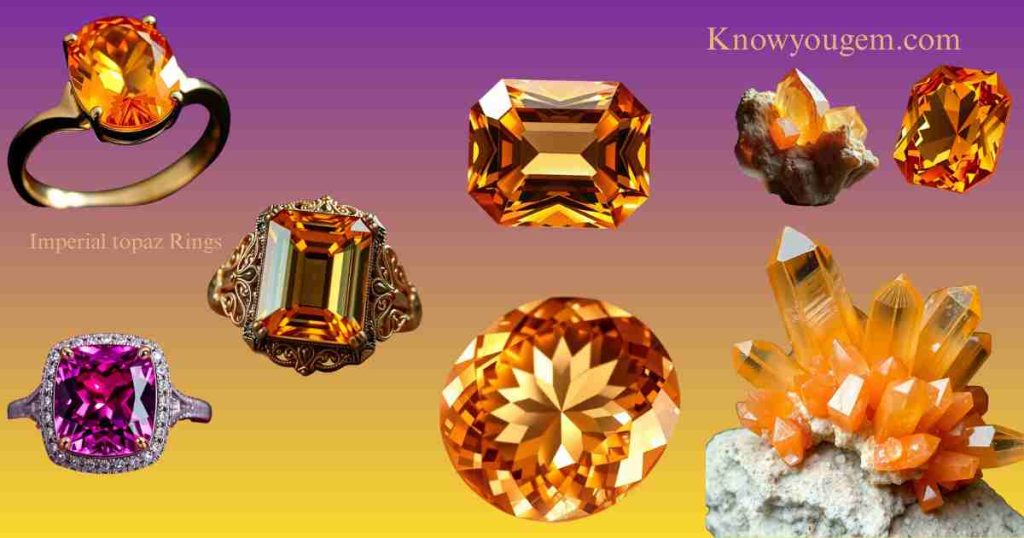
The Imperial Topaz ring remains the most popular setting choice, while enabling daily appreciation while showcasing color to the maximum advantage through elevated positions that catch natural light. The men’s imperial Topaz ring appeals to professionals who are seeking for a distinctive accessories that convey success and refined taste without diamond ostentation. Contemporary designs incorporate bold geometries and mixed metals that complement warm stone colors through innovative metalwork.
The imperial topaz necklace:
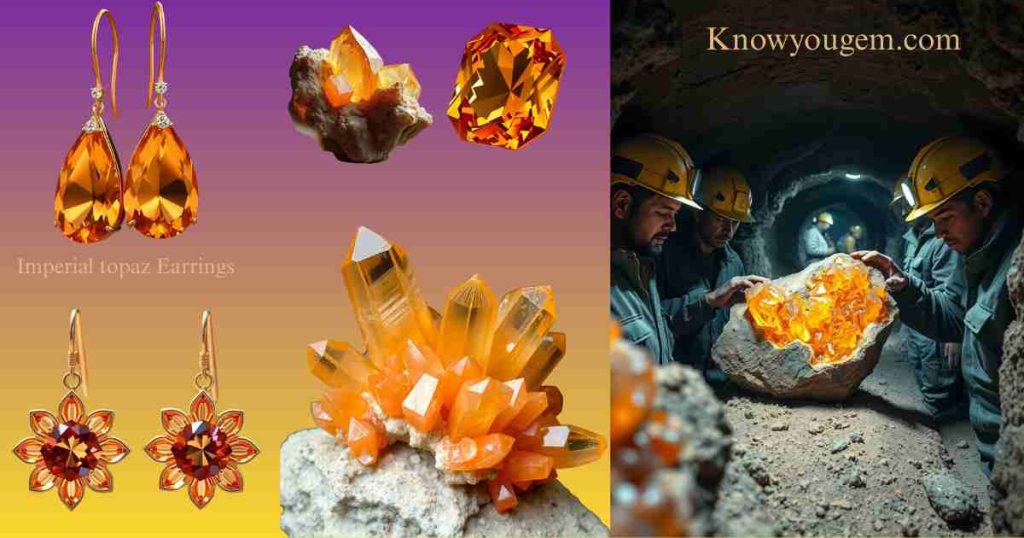
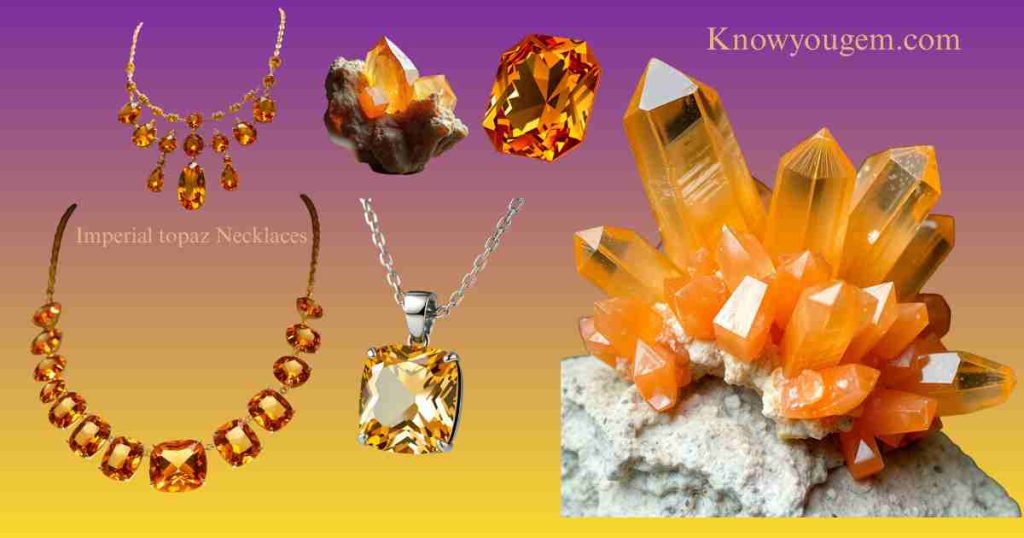
The imperial Topaz necklace provides a dramatic impact for formal occasion, with pendant settings protecting stones from impacts whether maximizing visibility against incorporate multiple gems that decrease in size from center clasp to create cascading visual effects. The topaz earrings versatility suitable for both business and social environments, with stud, drop, and chandelier designs that address different style preferences and face shapes through varied constructions.
The imperial topaz bracelet:
The imperial topaz bracelet integrates multiple smaller stones for affordability without sacrificing visual impact, creates linear arrangements that believe to catch light wrist movement during natural gestures. The imperial engagement ring challenges traditional diamond dominance, that appeal to those couples who are seeking meaningful alternatives which can express individuality and personal style. Warm colors symbolize passion and commitment and offer distinctiveness in social settings where diamond solitaires predominate among conversational choices.
The Imperial topaz eternity ring :
The imperial topaz eternity ring symbolizes to endure commitment through continuous stone placement around bands, that create unbroken circles that embody eternal love and partnership. The Imperial drop earrings elongate necks through vertical orientation, that creates flattering proportions for various face shapes through strategic placement and movement
5 Steps to Buy Imperial Topaz Safely:
- Demand Certification: It is must to request documentation from recognized gemological laboratories such as GIA confirms natural origin, treatment status, and quality characteristics through standardized testing protocols that believe to ensure authenticity and accurate representation.
- Examine Under Multiple Light Sources: It is must to check specimens under daylight, incandescent, and fluorescent illumination that ensure color consistency and saturation across varied viewing conditions that are encountered during regular wear in different environments.
- Verify Seller Credentials: Research about dealers through professional associations, customer reviews, business longevity, and industry reputation indicators demonstrate established accountability for representations have made during sales transactions.
- Compare Market Prices: Evaluate offers across multiple vendors to estabilish fair market value baselines and identify significant deviations that suggest either exceptional quality that justify premiums or potential misrepresentation require additional scrutiny.
- Request Detailed Documentation: While obtaining photography can show inclusions and color distribution from multiple angles, complete provenance records when it is available, and written guarantees cover authenticity and treatment disclosure according to industry standards.
Authentication and certification tips:
Reputable sources believe to endow clear certification. Since, GIA or other internationally recognized laboratory reports documents all relevant to the characteristics that include color grade, clarity assessment, weight, dimension, and treatment disclosure. These reports include unique identification numbers that allow verification through laboratory databases, protect buyers against substitution or fraudulent documentation through independent confirmation systems.
The Imperial topaz diamond ring integration creates spectacular contrast, with colorless diamonds that amplify central stone warm tones through complementary opposition that enhances both elements simultaneously. Halo designs own sourced colored centers with diamond pavé, that increase apparent size whether adding brilliance that draws attention to the featured gemstone.
The antique imperial earrings and antique imperial ring pieces carry historical premiums beyond material value, that reflect craftsmanship traditions and design aesthetics from previous eras that can’t be replicated through modern mass production.
Trusted vendors and online shops:
While identifying reputable sources demands evaluating trust indicators which includes GIA certification partnerships, transparent return policies, detailed photography, comprehensive product descriptions, and established business histories that demonstrate sustained commitment to quality and customer satisfaction. Leading vendors believe to maintain physical locations that allow in person examination, because many collectors successfully purchase online though careful due diligence and verification protocols.
Key vendor characteristics:
- GIA certified inventory with accessible laboratory reports
- Verified provenance documentation for premium specimens
- Comprehensive insurance and secure shipping procedures
- Transparent return policies allowing examination periods
- Responsive customer service with gemological expertise
- Industry association memberships (AGS, JA, IJO)
- Positive customer reviews across independent platforms
The Imperial topaz and citrine integration occasionally appear in vintage jewelry designs, since disparate values complicate insurance and replacement scenarios if pieces experience partial loss that require stone substitution. The imperial and sapphire pair offers complementary color harmony, and combines warm and cool tones in bicolor designs that appeal to collectors who are seeking for a unique aesthetic combination that showcases multiple premium gemstones.
Online marketplaces provide access to global inventory but demands enhanced security to avoid fraudulent listings or misrepresented high end specimens with professional cataloging, because buyers compete against experienced collectors and institutional purchases that drive prices for retail levels.
Investing in Imperial Topaz:
Portfolio diversification through tangible assets that have driven increased interest in gemstone investments as alternatives to the traditional securities vulnerable to market volatility and economic disruption. The market offers advantages over stocks and bonds, that combine aesthetic pleasure with potential appreciation that occurs independently from broader financial cycles. Since, insurance companies now recognize quality gemstones as legitimate portfolio components, facilitate coverage comparable to the fine art through specialized policies that address unique valuation challenges and loss scenarios.
The imperial auction market demonstrates consistent demand for superior specimens across economic cycles and market conditions. Recent events have featured stones that achieve prices to exceed pre-sale estimate by substantial margins, and indicates robust competition among bidders including buyers, private collectors, and investment funds that recognize gemstone’s appreciation potential.
Current market trends:
| Quality Grade | 5-Year Appreciation | 10-Year Projection |
| Commercial | 8–12% annually | Moderate growth |
| Fine | 12–18% annually | Strong growth |
| Extra Fine | 18–25% annually | Exceptional growth |
| Museum | 25%+ annually | Premium growth |
Storage considerations can be vary fundamentally from paper assets, that require secure facilities with climate control and insurance riders specifically addresses gemstone characteristics including gradual disappearance through setting wear, theft, damage, and loss scenarios unique to portable luxury goods. Bank safety deposit boxes offer affordable security for smaller collections, whether dedicated vault services provide comprehensive solutions including insurance, inventory management, and periodic condition assessments by qualified gemologists.
How to invest in Imperial Topaz in 5 Steps:
- Establish Budget Parameters: Allocate 5-15% of alternative investment capital to gemstones, that maintain the entire portfolio diversification across multiple asset classes whether committing sufficient resources to acquire meaningful quality that demonstrates appreciation potential.
- Identify Qualified Dealers: Research specialists believe to focus on investment -grade material with transparent price structures, that are documented inventory histories and willingness to provide previous client references verify business practices and satisfaction outcomes.
- Acquire Certified Specimens: Purchase only stones with having complete documentation packages which include origin reports, treatment disclosures, and grading certificates from internationally recognized laboratories that employ consistent standard that facilitate future resale and valuation.
- Arrange Proper Insurance: Secure coverage through specialized that carry familiar with gemstone valuations and unique loss scenarios, that ensure adequate protection limits and understanding policy exclusions that might affect specific circumstances.
- Schedule Regular Appraisals: Maintain current market valuations through tr-annual professional assessments adjust insurance coverage as stones appreciate and market conditions evolve, to create updated documentation that supports estate planning and potential sale transactions.
The topaz gem meaning in invest contexts encompasses tangible beauty that is to be enjoyed while values appreciate , unlike paper assets provide only numerical satisfaction without aesthetic component or emotional connection to holdings.
Auction results and appraisal:
Christie’s and Sotheby’s regularly feature important specimens in their jewelry auctions, attract global bidding competition that establishes transparent market prices. Recent notable sales include:
| Auction House | Carat Weight | Final Price | Price per Carat |
| Christie’s Geneva | 47.50ct | $287,500 | $6,053 |
| Sotheby’s New York | 22.80ct | $136,800 | $6,000 |
| Bonhams London demands | 15.30ct | $76,500 | $5,000 |
| Heritage Dallas demands | 8.75ct | $35,000 | $4,000 |
Professional gem appraisals are carried by qualified experts who usually use standardized methods. They believe to evaluate factors like, color, clarity, cut carat weight, treatment ad current market trends. Appraisal values are often higher than auction prices because they include replacement costs and dealer markups. Still they endow essential documentation for insurance coverage and estate planning.
The benefits of imperial stone extend beyond financial returns, and offers tangible assets that provide aesthetic pleasure, emotional satisfaction, and portfolio diversification benefits that uncorrelated assets deliver during turbulence. Since, GIA reports document increasing premiums for stones that exceed three carat with superior color saturation and minimal inclusions, as these larger specimens grow exponentially scarcer with size increase.
Care and maintenance:
Proper maintenance ensures generations of enjoyment from these durable gemstones across multiple owners and changing fashion contexts.Whether the structure stands with normal wear more valued than softer alternatives including , emeralds, pearls, and opals, its certain precautions resist damage and preserve brilliance through decades of regular use without requiring expensive restoration or re-polishing services.
Step-by-Step Cleaning Guide:
- Prepare Cleaning Solution: It is must to mix up water with mild dish soap and must to avoid harsh chemicals or abrasive ingredients which can damage mental settings or affect stone surface polish.
- Soak Jewelry: Submerge your gem pieces for 10-15 minutes, and refuse to enable solution to loosen accumulated oils, cosmetics, and debris that diminish brilliance through surface coating.
- Gentle Brushing: Only use soft britstle toothbrush that reaches behined stones and under settings where debris accumulates, so avoid excessive pressure that might loosen prongs or damage delicate metal work.
- Rinse Thoroughly: Flush with clean lukewarm water that ensures complete soap removal that might leave residue dulling appearance or attract dirt through sticky film.
- Dry Carefully: Pat with lint free cloth paper products that can resist scratch surfaces, while allowing complete air drying before storage to prevent moisture trapped in settings from causing tarnish or corrosion.
Annual professional inspection with jeweler can keep shine that sparkle of the gem for years.
Storage and handling tips:
How to store Imperial Topaz jewelry? Keep stored your Imperial jewelry pieces separately in a fabric-lined compartments that can resist contact with harder stones which can cause abrasion during transport or storage movement. Individual pouches provide portable protection for travel, whether dedicated jewelry boxes offer an organized storage for home collections preventing tangible, scratches, and mental tarnish through controlled environments.
Climate controlled environments believe to protect settings from accelerated tarnish whether secure storage locations theft risk through physical barriers, electronic monitoring, and restricted access systems appropriate to the collection value. Insurance documentation should include recent appraisals and detailed photography that establish condition and characteristics for claims that process if loss occurs.
Do’s and Avoids:
DO:
- Takeoff your jewelry before swimming, cleaning, or excercising.
- Keep stored your jewelry in individual compartment to prevent contact damage.
- Regularly clean your jewelry with a warm soapy water and soft brush
- Schedule annual professional inspections with a professional jeweler to secure the sparkle
- Don’t use harsh chemicals including chlorine and bleach
- Protect your jewelry from sudden temperature changes because it can cause thermal shock.
DON’T:
- While exposing to household cleaners or industrial chemicals can be harmful for your jewelry.
- Keep stored mixed with harder diamonds that can scratch the softer one.
- Subject to impacts during sports or manual labor work that can cause chip.
- Wear your jewelry during activities like dirt or abrasive materials can be thorough harmful
- Using ultrasonic cleaners on heavily fractured stones can also be harmful for you jewelry or stone.
- Applying lotions or perfumes directly onto jewelry can reduce the quality of your jewelry or stone.
Temperature fluctuations uncommonly affect these stable crystals not same emeralds and opals that can crack from thermal shock, because prolonged sun exposure can fade poorly-cut stones with color concentrated that near to the surfaces rather than distributed throughout crystal volume. Quality cutting distributes color evenly, create fade resistance that inferior work can’t match through strategic facet placement and depth proportions.
The Topaz metaphysical properties are attributed by alternative wellness practitioners include promoting confidence, manifesting abundance, and align energy centers according to the chakra theories have developed in various spiritual traditions. Whether scientific evidence for such effects remains unestabilished, many owners appreciate cultural associations to enhance emotional connections to pieces beyond material value.
Imperial Topaz Jewelry and culture:
Royal collections worldwide feature spectacular examples set in the crowns, necklaces, and ceremonial regalia that demonstrate the gem’s historical importance across diverse cultures and geographic regions. Hence the Portuguese Crown Jewels housed colonial in Lisbon’s Ajuda National Palace including an exceptional specimens that reflect Portugal’s colonial connection to Brazilian mining operations that have dominated in 18th and 19th century production. Russian imperial treasures believe to showcase pink varieties that give the stone regal designation, with pieces that have created for successive czars to demonstrate evolution in cutting technology and setting styles across centuries craftsmanship development.
Famous Jewelry Pieces:
Catherine the Great’s Brooch: 48-5 pink Imperial Topaz is surrounded by diamonds, that have created in 1770s, currently housed in Russian Diamond Fund.
Portuguese Royal Necklace: Seven graduated stones totaling 175 carats, commissioned in 1820, that features perfectly matched golden pink specimens.
Victorian Era Parure: Complete jewelry suite including, necklace, earrings, brooch, and featuring more than 200 carats of Brazilian material.
These historical pieces demonstrate a remarkable durability, maintains brilliance across centuries that despite vary storage conditions and occasional neglect during periods of political upheaval. Therefore Museum exhibitions provide public access to these treasure which preserve them for future generations through controlled environments and professional conversation.
The association of November month the gem makes it particularly meaningful for autumn-born individuals who are seeking for a personalized jewelry with astrological connections and symbolic significance.
Modern Trends and AR/VR Interactive Previews:
Contemporary designers push boundaries with unconventional settings and mixed metal applications that change the traditional yellow gold associations that dominate historical designs. Platinum and white gold create modern aesthetics that emphasize intrinsic color without metallic competition, whether rose gold complements, peachy tones through harmonious warmth that enhances natural beauty. Since mixed metal designs incorporate multiple alloys that create complex visual effects that appeal to contemporary tastes that favor electric combinations.
Sustainable jewelry movements incorporate ethically sourced stones that appear to environmentally-conscious consumers that willing to pay premiums for transparent supply chains and verified mining practices respect worker welfare and environmental protection. Block chain technology enables provenance tracking from mine to market, that provide consumers confidence that purchases support responsible operations rather than exploitative practices.
Augmented reality applications enable try-on experiences that enable consumers to visualize pieces before purchase, and reducing return rates whether increasing consumer confidence in online transactions. Virtual reality showrooms provide immersive shopping experiences that showcase inventory through photorealistic 3D models that customers manipulate and examine from all angles, revolutionizing remote luxury goods purchasing.
Infographics and visual discovery:
Color grading charts illustrate saturation levels from pale champagne through intense reddish-pink, that help consumers to understand quality parameters and price structures. Cut style comparisons demonstrate how different faceting approaches affect brilliance, color distribution, and entire visual impact, that educate buyers about lapidary craftsmanship value
The Imperial stone designation occasionally appears in the consolidated marketing, because proper nomenclature maintains the two-word format according to an established gemological conventions. While understanding regional preferences believe to help dealers position inventory appropriately and marketers craft messages that resonate with the specific demographic audiences and cultural contexts.
The imperial gem benefit astrology practitioners claim to include alignment with the personal birth charts and planetary energies that affect life circumstances and spiritual development. Whether lacking empirical support, these beliefs influence to purchase decisions for buyers who are seeking for metaphysical benefits aesthetic beauty and potential investment appreciation.
Conclusion and related resources:
Imperial Topaz embodies an exceptionally intersection of the natural beauty, geological rarity, and cultural significance that is accumulated across centuries of human appreciation and collection. From Brazilian mines extract spectacular crystals through sophisticated modern techniques to the royal collections that preserve historical masterpieces that demonstrate enduring appeal, since these magnificent gems have captivated humanity through their warm brilliance, exceptional durability, and aesthetic that transcends to change fashion trends.
Investment potential integrates with an aesthetic pleasure, that offers tangible assets that owners enjoy daily whether portfolios appreciate over extended holding periods independent of stock market volatility. While understanding quality factors that distinguishes superior specimens from ordinary examples, authentication methods that protect against fraud and misrepresentation, and market dynamics drive price formation empowers informed purchasing decisions that maximize and minimize value and minimizing risk.
While you are going to select an engagement ring centerpieces believe to express an individuality and commitment, that builds investment portfolios to provide inflation and diversification, or simply appreciating mineralogical wonder that nature creates through extraordinary geological processes that span millions of years, and this guide will provide you an essential knowledge for navigating markets confidently and making decisions aligned with personal goals and circumstance.
Explore more resources:
- Buying Guides: Detailed strategies for acquiring specimens with vary quality grades and points, including vendor evaluation criteria and negotiation techniques.
- Investment Guides: Portfolio construction principles , tax implications, insurance considerations, and exit strategy planning for gemstone holdings.
- Care and Maintenance: Advanced cleaning protocols, restoration options, and professional service selection criteria ensure lasting beauty.
- Jewelry Design: Contemporary setting styles, custom creation processes, and selection guidelines for personalized pieces.
- Historical Context: Detailed exploration of the royal collections, famous specimens, and cultural significance across civilizations and time periods.
Contemporary designs believe to showcase innovation whether honoring traditional aesthetics that have proven timeless appeal through centuries of evolving fashion preferences. Classic cutting styles maximize natural beauty through established principles, whether experimental shapes attract collectors who are seeking for distinctive pieces that reflect personal style and contemporary sensibilities.
FAQS:
1. How to identify real Imperial Topaz?
An Authentic specimen displays characteristic pleochroism and showcases vary colors when it is viewed from various angles due to light interaction with the crystal structure. Since professional gemological testing reveals refractive indices between 1.609-1.643 and specific gravity measurements of 3.49-3.57 that distinguish natural stones from glass simulants or synthetic alternatives.
2. Citrine vs Imperial Topaz – which is better?
The choice hinges on priorities balanced aesthetics, budget, and investment considerations within an individual circumstances. Imperial specimens believe to offer superior hardness at 8 versus 7 on the mohs scale, greater brilliance through higher refractive index, and stronger value retention due to genuine scarcity versus Citrine’s abundance from heat treated Amethyst. Citrine suits budget-conscious buyers who look forward to an attractive options for casual fashion jewelry without significant investment.
3. What can be the average price per carat in 2026?
It totally depends on stones factors, since qualitative specimens range from $400 to $3,500 per carat that depends on color intensity, clarity, size, and origin documentation. Since, exceptional stones with having perfect color saturation and minimal inclusions can exceed these ranges significantly, particularly in sizes above three carats where rarity premiums compound exceptionally.
4. Can Imperial Topaz be a safe investment?
When it is acquired from reputable sources with proper GIA certification documenting natural origin and quality characteristics, specimens demonstrate strong long term appreciation potential based historical performance data spanning decades. Diversification across multiple stones and transparent documentation can enhance safety by reducing concentration risk and facilitating eventual resale through established provenance.
5. How to care for Imperial Topaz jewelry?
Clean consistently while using a warm soapy water and soft brushes, and avoid to use harsh chemicals and ultrasonic cleaners on fractured stones. Keep store separately your Imperial jewelry in a fabric lined compartment to prevent contact with harder gemstone.
6. What is the difference between topaz and imperial topaz?
Topaz is a common mineral, often colorless or treated for color such as blue, imperial topaz is the rare, displays naturally golden-orange or pink untreated variety.
7. Why is it called imperial topaz?
It was named for 19th century Russian tsars who reserved its pinkish-gold stones from the Ural Mountains.

Welcome to KnowYourGem.com! your ultimate destination for uncovering the fascinating world of gems and their secrets! I'm Kamil Hussain, a passionate blogger with a Master’s degree in Economics, dedicated to bringing you insightful, well researched content that blends the beauty of gemstones with the art of storytelling. With a keen analytical mind and a love for discovering hidden treasures, I created this platform to help you explore the brilliance, history, and value of every gem.


