

Quick Insights:
That doesn’t render the concept useless. Humans have been using stones as symbols for millennia, well before anyone even realized you could measure a refractive index. What has happened is that you can now combine that tradition with real gemological understanding, which ensures that your chosen stone is both significant to you and also something you understand.
This is a resource that explains the etymology, lists which gems make suitable soul stones, details how to select your own, and also how to determine whether the stone you are holding is authentic. It also separates tradition versus science as we both count, but just not in the same way.
What is a soul stone?
A soul stone is a mineral or crystal one picks to symbolize one’s inner self, life journey, or soul. Where as a birthstone plays a big role of giving intuition, resonance, or life experience.
Crystal-healing communities generally use this stone during work to gain energy and for spiritual literature, but they should know there is no definition of it, and they should also check a dictionary or encyclopedia. Because the same question, like “what makes the crystal ‘soul stone,’ ” is asked by ten different spiritual practitioners, then each one answers differently.
Gemology, as a science, has nothing for that because mineralogists identify gems through chemical composition, crystal system, and optical properties rather than their feelings when they hold it. That disconnect between spiritual utilization and gemological nonexistence is key to grasp before you go searching for “your” stone.
Does a Soul Stone exist?
No. “Soul stone” is not any mineral species or recognized gemstone variety in any system of gemological classification.
It seems more like a spiritual or mythological variation on a place to put a gemstone, a role that nearly any natural stone, crystal, or mineral can play: amethyst, rose quartz, and sapphire are all genuine gemstones; “soul stone” is just the name that one of them can play.
That distinction is more significant than it might appear. When purchasing a piece that is identified as “soul stone jewelry,” you are not purchasing a particular mineral; you are purchasing whatever mineral the vendor has tagged it with, commonly amethyst or quartz because they are inexpensive and common.
Knowing what the actual mineral is, you can evaluate the piece in terms of its actual value, not the best marketing that could be done to it.
Why do people call a crystal a soul stone?
There are a variety of personal reasons why someone might choose to use a label, and they often have little to do with any set rule.
You could be drawn to a stone simply because it seems to be the right hue for the intended feeling, or because it appeared in a time when your life was shifting dramatically, or because some ancient custom associates that mineral with intuition, becoming, or safety.
In many of the circles practicing crystal healing, it is inconsistently borrowed from or loosely based on those practices, like the use of birthstones, zodiac stones, or talismans, but without the rules of assignment with which they come.
While a birthstone is determined by one’s birth month and a zodiac stone is assigned to a person’s sign, the choice of a soul stone is purposefully open. That‘s the point. You’re supposed to pick one (not receive it).
That is the cultural context. In one form or another, stones with meanings behind them have been used in almost every living culture: lapis lazuli in ancient Egypt, jade in Chinese history, and much more. The newest form of soul-stone practice is essentially just a modernized and personalized version of old customs.
Soul Stone Meaning:
What a soul stone means will be a variation on your particular belief or tradition. There is no shoulder of authority dictating what it “means,” thus you can essentially use it to encapsulate whatever meaning is appropriate.
Soul Stone Meaning in Spiritual Traditions:
In the larger context of spiritual work, a soul stone is more often than not a concrete way to physically hold something intangible your focus, your progress, a trait you‘re trying to develop and some traditions see it as a stone that “picks you,” rather than the other way around, which is an older belief that some objects are “meant” for a certain person.
Soul Stone Meaning in Crystal Practices:
A soul stone, at least within crystal-healing communities, is generally the stone you find yourself gravitating toward when meditating, writing journal entries, or otherwise contemplating your life.
Rather than one clear picture, it is more about consistency, and the stone you keep returning to is the one now symbolic of this practice.
Soul Stone Symbolism:
Symbolically, soul stones are more often associated with one of those ideas: who they are, change, a place to and get stable again. A stone for clarity might be chosen by someone trying to work through a decision; a stone for calm by someone trying to work through a stressful situation.
Soul Stone and Personal Connection:
Most discounters who employ the term think more in terms of resonance than appropriateness. A stone that “resonates” with you through its shade, its provenance, the moment of discovery is legitimate, true to itself, even if it doesn’t correspond to a published table of standard loadings:
Soul Stone and Spiritual Growth:
A number of practitioners, however, will use a soul stone as a series of tangible representations of changes over time, changing stones as they change their goals or circumstances.
Others will use a single, stable soul stone for many years as a talisman or reference point. Neither is more “correct” than the other as no one version of the practice exists.
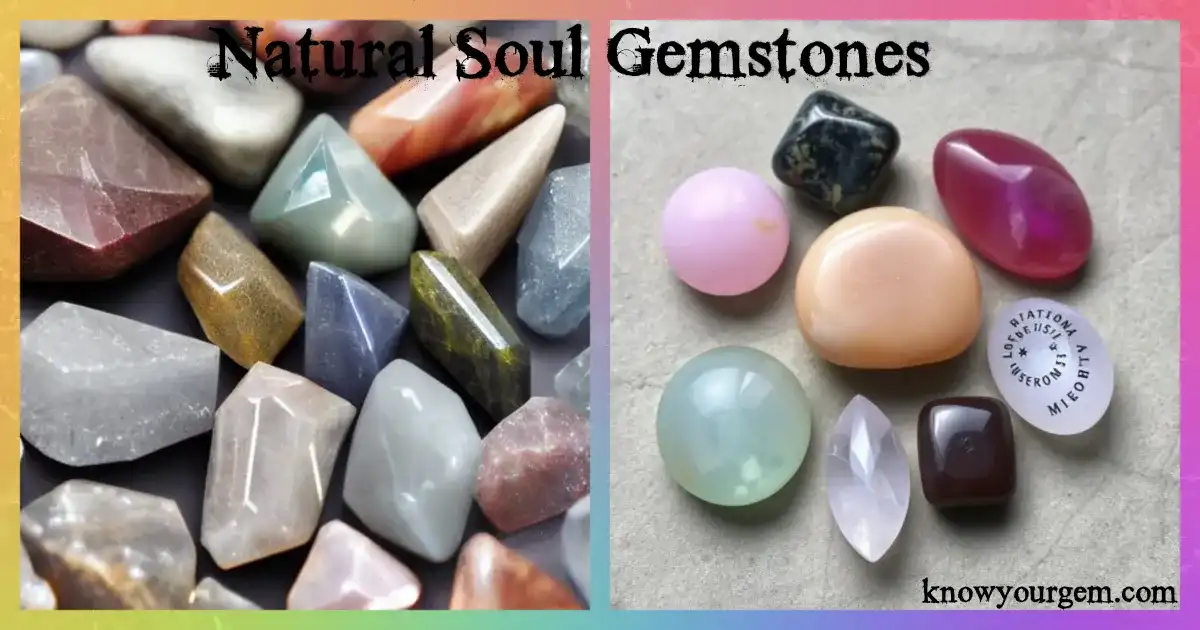
What Go Gems Used To Be as a Soul Stone?
The soul stone gemstone does not exist as a universally accepted item. Different cultures and people attribute spiritual or iconic powers to various minerals, any of which can serve the purpose.
The ten that I have included are the ones most commonly selected and are each explained here as a real mineral and then as an embedded icon.
Amethyst:
Amethyst is a purple variety of quartz mineral. The stone gets purple color from trace elements like iron and natural radiation. The stone carries 7 Mohs hardness which makes it durable and tough enough and suitable for daily use.
1.544–1.555 refractive index make it more shine and more brilliant in color. It is a common stone; that’s why it is sold price less compared to sapphire, diamond, and ruby.
Moonstone:
Moonstone is a part of feldspar. The stone is recognized as the element that has adularescence; this is a so-called soft glow that moves from the reflection of miner gliders over the surface of the stone.
They are usually caused by light bouncing off the various layers if two different feldspar minerals exist inside the mineral. It is 6-6.5 on the Mohs scale and is, therefore, quite a soft gemstone that needs to use a protective setting when used in rings.
The morphing light effect is also why moonstone tends to be associated with intuition and inward-looking spirituality; the visual metaphor of light passing beneath the surface corresponds readily to a proponent notion of buried wisdom.
In terms of gemology, the most desirable moonstone has a transparent, colorless body and displays a blue sheen; the majority of these are extracted in Sri Lanka and India.
Labradorite:
Labradorite is a feldspar mineral valued for its labradorescence, a flash of iridescent color, usually blue, green, or gold, that flashes only from certain angles.
It gets its color variations from the interference of light in the layered internal structure of the mineral. The stone has 6-6.5 Mohs hardness and a specific gravity like 2.70 make it moderate in hardness.
Labradorite is spiritually linked with transformation or depth of spirit due to its flashing appearance when the stone is tilted. Labradorite is mostly cut as cabochons to showcase the flash. The primary deposits come from Madagascar and Canada.
Rose Quartz:
Rose quartz is the pink variety of quartz, the coloration resulting from tiny mineral inclusions rather than a single colored ion. It has a 7 Mohs hardness, as with the other varieties, and a commonly cited value for the refractive index of 1.544 -1.553. This makes it the hardest easily wearable gemstone.
The reason why its traditional associations with love, self-love, and emotional healing in the crystal community are due to where else but in color psychology, as its color is so soft and pink.
While one can easily find transparent rose quartz on the market, most commercial rose quartz is translucent to opaque; star rose quartz (which possesses a six-ray asterism) is a distinct and highly collectible variety.
Sapphire:
A gem variety of corundum in any color other than red with blue is popular. With a hardness of 9 on the Mohs scale, sapphire is one of the hardest natural gemstones, second only to diamond; its refractive index is approximately 1.762 1.770 and also has high durability and is suitable for everyday use.
Historically, the symbolism of sapphire often has been related to the idea of wisdom, truth, and the clarity of thought, all of which have meanings utilized by individuals through centuries in royalty.
And other. Religious jewelry. As a gem, its value is based on how intense, transparent, and where it is found, with Kashmir, Burmese (Myanmar), and Ceylon (Sri Lankan) sapphires generally commanding the highest prices via auction.
Emerald:
Emerald is the green variety of beryl (“the mineral name” in fact), which owes its vivid color to a small amount of chromium in the stone, and, occasionally, vanadium.
It measures between 7.5 and 8 on the Mohs scale, but, unusually for an 8, it is included with visible and pronounced inclusions mar the appearance of most emeralds (“jardin” French, meaning “garden”), making them more fragile and prone to chipping than one might expect.
The symbolism of emerald has for centuries been centered around concepts of “growth, renewal and heart,” and this image is symbolically reinforced by its green appearance and an association with royalty extending back many hundreds of years.
Virtually all emeralds sold have been treated with either oil or resin to fill surface-reaching fissures and improve clarity and transparency. This is accepted and common practice.
Tourmaline:
The tourmaline group of minerals includes interesting varieties of colors, such as green, pink, and blue, and bicolor “watermelon” stones exhibiting pink and green in a single mineral. Its hardness is 7 to 7.5 Mohs, and specific gravity depends on the color variety, varying between 3.0 and 3.2.
Therefore, due to the glowing variety of colors, the stone is linked to well-crafted artistry as representing modern jewelry. Geologically, it is highly pleochroic, but every color shines differently.
Charoite:
Charoite is a natural silicate mineral. It is only found in a single deposit in Russia; its rarity defines its colors, like lavender-to dark purple material with sky blue.
It has a 5-6 Mohs hardness, which means that it is soft and not good for everyday use. Its brilliance is defined by a refractive index of 1.550 to 1.559, and its weight is measured through its specific gravity, which is reported at approximately 2.54 to 2.58.
Given its scarcity and its strangely beautiful, painterly look, many believe that charoite symbolizes transformation and spiritual awakening. It is just hard enough to require delicate fitting, perfect for pendants and earrings, but less suitable for rings and bracelets that continually get banged.
Sodalite:
Sodalite is a Dull blue ‘rock’ usually with white ‘calcite’ deposits through it and is a part of the feldspar mineral group. It is 5.5 to 6 on the hardness scale of 1 to 10, with a refractive index of 1.483 and a specific gravity of 2.15-2.3, which is considerably lower than most other blues, due to its hardness.
Its deep blue colour connects it, symbolically, with wise and relaxed logical thought, as there are other blue minerals that are associated with this as well.
Its color glow often confuses people to choice it as lapis lazuli, but lapis is a rock and a mixture of lazurite, calcite, and golden pyrite inclusions.
Ajoite:
If we call it the rarest, then we are not wrong. Ajoite is a very beautiful and quite intensely blue-green copper silicate mineral. The gem is most valued as quartz matrix, which the mineral generally includes within fibrous form. The table below shows some other useful properties.
Rare and bright in color, ajoite is a popular choice in more expensive healing circles, associated heavily with emotional healing and connection. Its softness makes it only eligible
Best Soul Stone?
There is no ‘best’ soul stone; it all depends on what symbolism you want to convey and actually feel centered around. One mineral may have a soothing hue to one individual, but will do nothing for another who is attracted to an entirely different mine for entirely different reasons.
However, there are a few stones that are widely believed to be associated with various “intentions” by many schools of crystal healing.
The table below is those popular associations, not archaeological or scientific claims, and not in any particular order:
| Intention | Gemstones Commonly Associated |
|---|---|
| Intuition | Moonstone, Labradorite |
| Love | Rose Quartz, Emerald |
| Wisdom | Sapphire, Sodalite |
| Transformation | Labradorite, Charoite |
| Grounding | Tourmaline |
| Spiritual connection | Ajoite, Charoite |
| Calm | Amethyst |
The pairing of the stones is not set in stone or ‘ethnically’ determined but ‘seemed’ to correlate. Two separate books you can rely on to give you different meanings and values for the stone. The findings of the stones remain a rough guideline.
How Do I Find My Soul Stone?
Discovering a soul stone is more about eliminating what feels nonsensical, aligning with what genuinely resonates with you, and ensuring that the one you keep is something you can rely on and wear.
Start With Your Personal Connection:
Remember that if a specific stone has already been your choice and has been fruitful for you, go with. For example, a particular time or place, or just attracted you at first sight. And that prior experience will often be more influential than a list of attributes.
Choose a Color You Naturally Prefer:
Color is generally the quickest criterion. If you find yourself continually attracted to dark blues, greens, or purples in garments, artwork, housewares, etc., the predilection is a fine first-cut criterion for filtering versions.
Consider the Symbolism You Connect With:
Determine what it really is that you want the stone to symbolize, whether it is clarity, serenity, nurture, or shield, and use that as a second level of filtering alongside color. Pannell found that by matching intention and color, the notion of a list of stones was almost cut in half.
Learn the Gemstone’s Real Properties:
Do research on the actual hardness, durability, and commonly used treatments a particular mineral gets before purchase.
For a gemstone you’re going to have in a ring you wear every day, you want a Mohs hardness of at least 7, whereas something on the softer end of the spectrum like charoite or ajoite is preferable for a pendant or earrings that won’t be rubbing up against other hard substances.
Consider How You Will Use It:
Make up your mind if you want to use the stone for wear, carry it, or just store it to see it. That influences which cut, setting, and hardness level really do make sense (a raw rough is a whole other application from a faceted ring stone).
Verify That the Stone Is Genuine:
Before you purchase the gemstone, make sure that it is the actual mineral and not some form of imitation such as painted, plastic, or glass. You can also find this out, in much greater detail, in the authenticity section below.
Soul Stone versus Geology: Which Is Truly Scientific?
It’s not about dismissing or devaluing spiritual practice, but about understanding which assertions can be measured and which are simply assertions you accept for yourself or your culture. Both are valuable, but they’re different sorts of data.
What Gemologists Can Measure?
Working with properties that can be tested and verified by anyone with the necessary instrumentation. Chemical composition shows what a mineral actually is.
Crystal system and hardness explain its origin and how resistant it is to scratching. Refractive index and specific gravity aid in differentiating similar stones, and inclusions or treatments give authentication and value. With none of this is dependent on the individual conducting the tests.
What Is should be considered Symbolic or spiritual connection?
These terms energy, spiritual connection, intention, emotional symbols, and the like are part of a belief system or tradition, not science. That doesn’t mean they are invalid to those who use them as spiritual healers.
It means one can’t separate their use of them from all other aspects of their practices. We can’t expect to see them discussed along with peer-reviewed scientific research.
Can Science Demonstrate Whether a Soul Stone Can Heal?
No. It has not been scientifically proven that any crystal has tangible healing effects, nor has any rigorous research been conducted that supports any specific physical or medical claim or conclusion related to crystal healing.
That is a statement about the evidence, not the worth and usefulness of the practice as people experience it; many report psychological and emotional benefits to ritual, attitude, mindfulness, and meaningful objects, and that is a statement separate from a claim about stones’ properties.
Choosing a Soul Stone for Jewelry:
Figure out what is ultimately calling to you. Then you have to decide how you are going to wear your stone or stones; every type of jewelry places different strains on a stone.
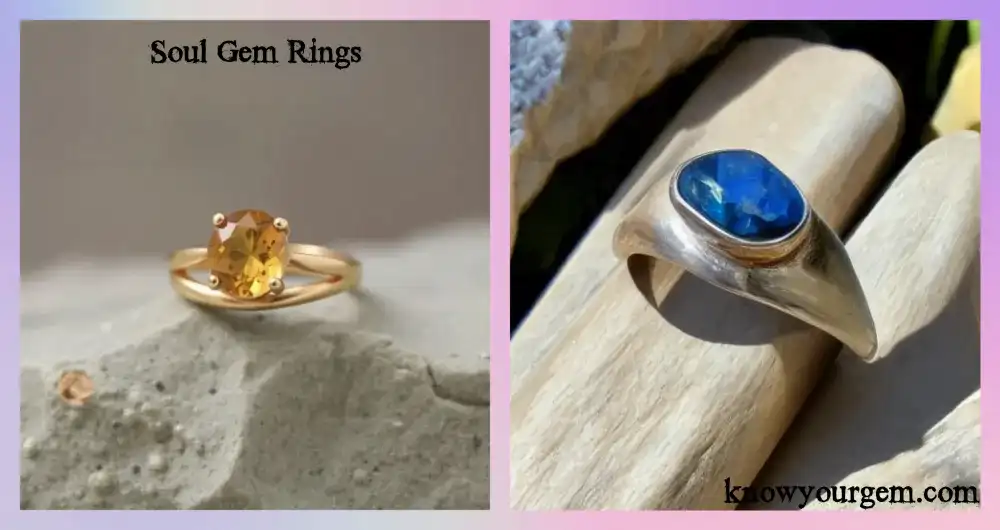
Soul Stone Rings
Soul stone rings are worn consistently, so users pick those stones that have more than 7 hardness because less durability can cause the stone to dull or chip quickly.
So you should go with amethyst, rose quartz, tourmaline, sapphire, or emerald for daily wear jewelry rather than opal and other softers.
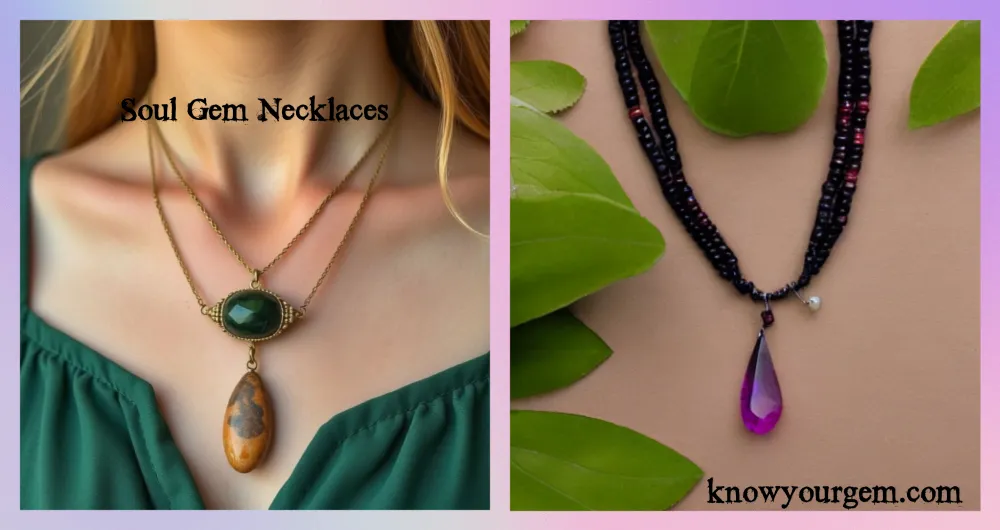
Soul Stone Necklaces:
Since necklaces and pendants are kept at a distance from most strikes, some softer stones, moonstone, labradorite, even charoite, become plausible options. This is often the most appropriate format for rarer or more fragile soul stones.
Soul Stone Pendants:
Pendants and necklaces are nearly the same jewelry, but pendants carry only a large gem as the visual focal point. So they are considered a more natural choice for displaying the stone with its natural color glow. Stones like labradorite flash or the glow of moonstone are well-suited.
Soul Stone Bracelets:
Bracelets are impacted quite frequently against hard surfaces in the same way that rings are. Use the harder stones in this format, and avoid anything below a 6 on the Mohs scale unless willing to accept wear.
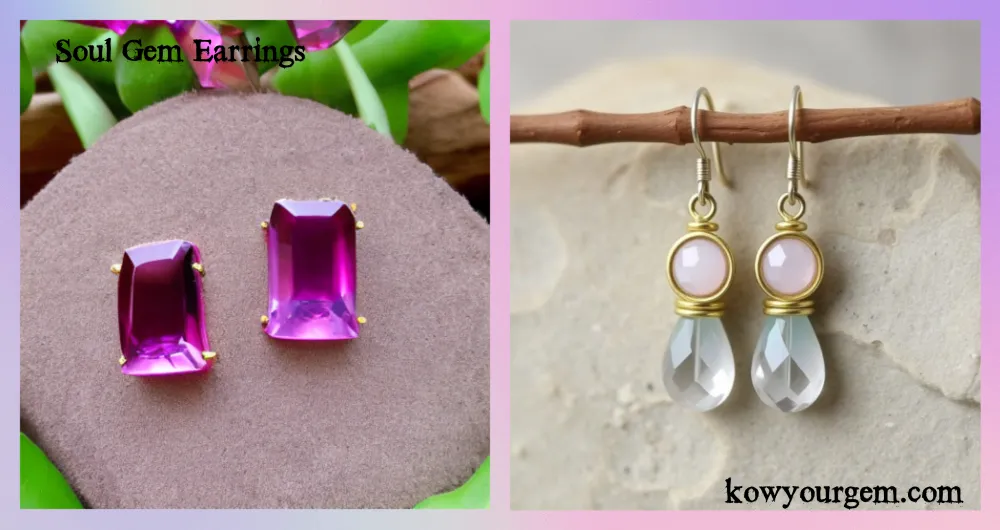
Soul Stone Earrings:
Softer or more fragile stones like ajoite, charoite, or sodalite, in the case of earrings, can also be worn fairly safely. Because earrings are an undemanding setting, subjected to very little physical impact.
For all five formats, the setting is as important as the stone. A soft gemstone in a protective bezel setting will wear/mount far better than a hard gemstone in a loose-prong setting, as the mineral and the mount operate in conjunction, not separately.
How do you know if you have a real soul gemstone?
Since ‘soul stone’ jewelry is carried more for its meaning than its mineral or gemstone name, it’s also a naturally popular category for misrepresentation; used glass, plastic, and reconstituted stone can all be marketed under spiritual crystals labels with minimal oversight. There are a few simple steps:
Identify the Mineral:
Begin by identifying precisely which mineral you are searching for. The good seller will identify the piece (amethyst, sodalite, charoite, etc.) rather than simply use the term “soul stone”(a term for intent rather than material).
Examine Color and Inclusions:
Typical for natural stones are some irregularities in color and at least very small inclusions when examined under magnification. Uniform color and no inclusions are very strong indicators of a glass or a synthetic analog.
Check Transparency and Luster:
For example, sodalite generally looks translucent to opaque with a dull to glassy shine. But labradorite showcases its flashes only at certain angles. If a gem doesn’t act as the mineral it is supposed to be checked it carefully.
Consider Gemstone Treatments:
Numerous jewels are indeed valid gemstone enhancements; green emeralds are nearly invariably oiled, and certain quartz types are heat- or irradiated to modify their color. Treatment is nothing inherently bad, but it must be mentioned and has an influence on price and maintenance.
Use Professional Gem Testing for Valuable Stones:
If you are buying something of actual value, a gemologist will be able to identify it with a refractometer, specific gravity test, and microscope, much more accurate than trying to tell with the color or feel of the stone.
Our own Gem Identifier is an excellent place to start if you’d like to help determine what you’re holding before going to a lab report.
Soul Stone vs Birthstone
Birthstone. Each birth month has a specified birthstone, listed in a standard, published matrix that is publicized widely. Soul stone. There is no such prescribed system; the soul stone is chosen intuitively, and the soul stone can change even while the birthstone remains unchanged.
Soul Stone vs Talisman:
The difference, as far as the talisman is concerned, is that a talisman is something that you carry for a protective purpose or written symbols, whereas a soul stone is far more conceptual and psychological. It is a symbol of who you are, or who you are becoming.
Soul Stone vs Zodiac Stone:
A zodiac stone is assigned on the basis of astrological sign, according to a system which may be so- or externally-defined but is nonetheless sign-reliant. A soul stone does away with sign-assignment entirely and is selected through a felt connection.
Soul Stone vs Healing Crystal:
“Healing crystal” is a much more generic term that could refer to any sort of stone being used in a healing or energy work practice, and is often associated with a specific desired result.
A soul stone is both more intimate and self-image driven; it is not necessarily aligned with a more specific goal, but rather with a certain person.
Soul Stone Meaning by Color:
Colors tend to be the primary guiding factor of a person’s initial and strongest filter when selecting a soul stone, and that they often relate to common traditional meanings across crystal-healing sources:
Red Soul Stones:
Soul stones in red color are rhodolite garnet and red tourmaline. These stones are linked with strength, vitality, and clear, focused energy.
Blue Soul Stones:
Blue stones that represent and can be associated with calm, communication, and clear thinking are sapphire, sodalite, and blue tourmaline.
Green Soul Stones:
Green soul stones like emerald and green tourmaline are associated with symbols of growth, renewal, and balance.
Purple Soul Stones:
The purple stones, like amethyst and charoite, are recognized for their role in enlightenment and change.
Pink Soul Stones:
Rose quartz and pink tourmaline are generally considered soul gems in pink color, and astrologically they are connected with compassion, love, and emotional healing.
Black Soul Stones:
The names of black stones are onyx and black tourmaline, which are linked with protection and grounding positive energies.
White Soul Stones:
Transparent clear quartz and pale blue moonstone are seen as soul gems in white color, and they are associated with clarity and new beginnings.
Orange Soul Stones:
Orange stones such as carnelian are associated with confidence and creativity. These associations are cultural, traditional, and not scientifically proven; they differ in each of these sources.
Soul Stone in Fiction and Popular Culture:
Whether you consider the phrase “soul stone” in terms of the gemstone world, it is still loaded with meaning, and it would be remiss of me not to make clear that these fictional items are nothing to do with natural gemstones and minerals.
Marvel Soul Stone:
The Soul Stone is one of six Infinity Stones in the Marvel Cinematic Universe and Comics, a fake item with the power of bending reality according to the soul and afterlife. It is just a story device and has nothing to do with any gemstone mentioned in this guide.
Skyrim Soul Gems:
In Skyrim, these gem paly a role of magical items for storing souls, like the marvel soul stone, but they are not real gemstones.
Fantasy Soul Stones:
Aside from the two noted cases, “soul stone” is a recurring motif in fantasy fiction in general, where it generally takes the form of a talisman with a magical link to a character’s essence or personality. None of these instances is anything akin to a known gemological definition.
Soul Stone Buying Guide:
In the case of purchasing a soul stone for jewelry or as a specimen and not keeping the one you currently own, a few unchanging black gemstone buying rules apply to any mineral you purchase.
Natural vs Synthetic:
Natural gemstones were created in the earth through geological time; synthetic gemstones are chemically and optically identical, but produced in a laboratory in just a matter of weeks.
Synthetics are perfectly valid, lower-priced products but should always be identified as such; the concept of selling synthetics as naturals ‘discreetly’ is unfortunately quite prevalent in the lower ranges.
Rough vs Faceted:
Untreated, naturally formed stones are preferable for those who seek to own a soul stone in its natural state for contemplation, while faceted stones are worthy of jewelry because they are cut and smoothed to bring out maximum reflectivity.
There is no more “true” to the soul as an untreated stone than there is to a faceted one. It’s a matter of choice, and between wearing and showing.
Treated vs Untreated:
Most of the gemstones on the market are treated in some way (fugues, oiling, irradiation, dyeing), there are some commonly accepted procedures/ materials for certain gemstones.
The question is, provided the treatment is disclosed, it is either a standard treatment at a good price, or a misleading treatment mis-sold as untreated.
How Rarity Affects Value?
Rarity of the stone can increase the stone’s price and attraction. Rare stones like charoite or high-grade ajoite can cost more than common gems because they come from only a few deposits worldwide.
How Durability Affects Jewelry Use:
Let the hardness of the stone on the Mohs scale be your guide in how you will wear it. A softer material is not a poor material; it’s merely one that requires softer settings and more delicate handling than a sapphire or tourmaline.
When You Need a Gemstone Certificate?
For any purchase over a few hundred dollars, or for rarer stones, such as charoite and ajoite, where synthetic and/or simulant material is available, a certificate from a reputable laboratory, GIA, IGI, AGS, SSEF, or Gübelin is well worth the expense.
This proves the stone is actually what it is claimed to be (and for some stones, where it is from and if it has been treated).
How to Avoid Misleading “Rare Crystal” Claims?
Be suspicious of lists that tout indistinct “rarity” claims alongside unverifiable metaphysical promises without offering any mineral identification.
A responsible seller can always tell you the name of the mineral, its hardness, and where it was found; if there is only spiritual language and no gemological information listed, head for the hills.
FAQS:
1.What is a soul stone?
It is a gem crystal, or any mineral. An individual can select it to represent who they are internally, who they want to be, as well as what their spiritual journey is.
2. Are soul stones actual gemstones?
No. They are not gemstones, actually, but people consider them for their spiritual healing.
3. What gemstone is known as a soul stone?
It depends on your choice and preferences. Because when you choose sapphire as your soul gem, it would definitely be, whether you say amethyst, and it will also be.
4. How do I locate my soul stone?
Pick a tone or semi-precious gemstone you’re naturally attracted to and then search out one that resonates with the symbolism you’re seeking. Verify the stone’s authentic hardness and density with your Wearer‘s needs.
5. Is any crystal a soul stone?
Yes. Since it is a personal term, as opposed to one that is defined and governed, any bit of gemstone or mineral can be a soul stone depending on whoever adopts it.
6. How do a soul stone and a birth stone differ?
The problem is that a birthstone is determined “by birth months on an established listing,” while a soul stone is a “personal choice…and may be changed as often as the individual desires.”
7. Can soul stones be called talismans?
No. They can’t play a role as a talisman because a talisman is astrologically associated with safeguarding or good fortune, and a soul stone is associated with self-existence or empowerment.
8. What gemstone is best for a soul stone?
There really isn’t one best gemstone. Only you can decide what color, meaning, and hardness are more applicable to you.
9. Are soul stone healing attributes based on science?
No. The truth is, there is no scientific proof that any gemstone has any particular healing powers. Such healing powers are based on tradition and personal experience and not based in the laboratory.
9. Is it possible to have a soul stone in jewelry?
Yes, but the hardness of the stone should dictate the type of jewelry – harder stones such as sapphire or tourmaline can be used to make rings, but the softer stones such as charoite would be more appropriate for pendants or earrings.
10. So how can you tell if you have a real soul stone?
Make sure the seller names the mineral; if you are in doubt, you should have a good look at it for natural variation and inclusions and then verify any expensive stone (jeweled ones in particular) with a professional gem tester.
11. What is the Marvel Soul Stone?
The Moffo, a fictional “Infinity Stone” in the Marvel Cinematic Universe and Marvel Comics, is not related to any real mineral or gemstone.
12. Skyrim Soul Gems: what the heck are these?
They are magic objects from the game The Elder Scrolls V: Skyrim used to imprison souls for the make process, something not at all related to gemology in the real world.
Must read:
Users are advised to check each gem above listed with professional geological labs for authenticity, ethical sourcing, Mohs, RI, and SG: Kamil Hussain (GEM ETHUSIAST)

Welcome to KnowYourGem.com! your ultimate destination for uncovering the fascinating world of gems and their secrets! I'm Kamil Hussain, a passionate blogger with a Master’s degree in Economics, dedicated to bringing you insightful, well researched content that blends the beauty of gemstones with the art of storytelling. With a keen analytical mind and a love for discovering hidden treasures, I created this platform to help you explore the brilliance, history, and value of every gem.


[…] really has a relaxed violet-pink tone, often called a soft “reset for the soul”. The stone naturally provides emotional healing. They are said to bring serenity, clarity, and […]