
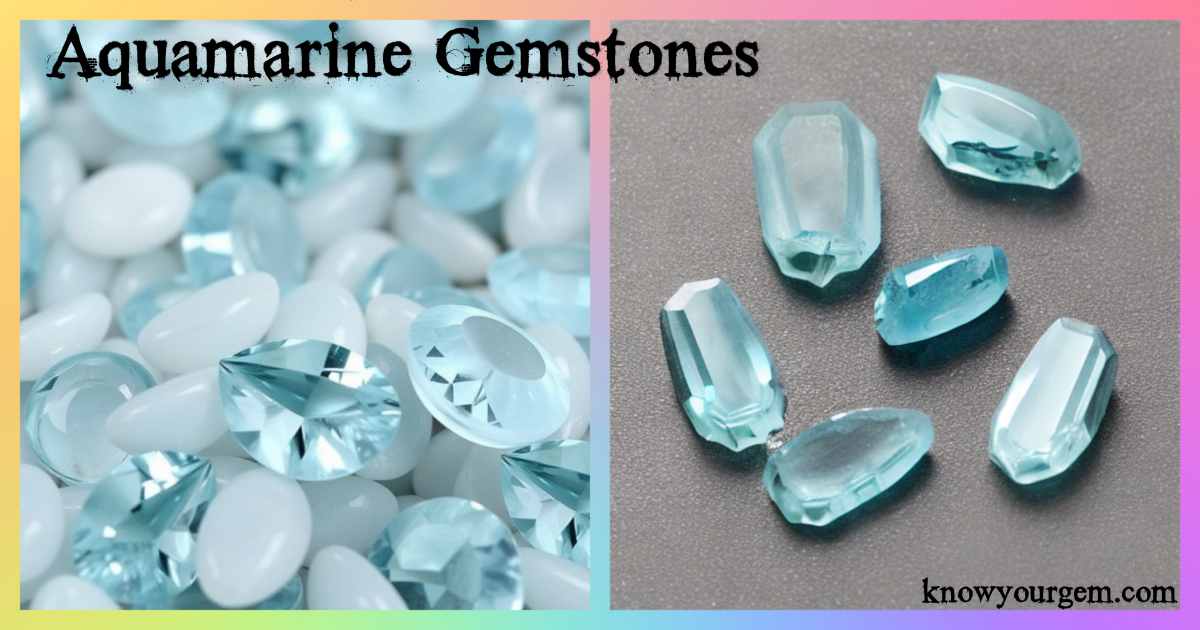

Known as the blue to blue-green variety of beryl, aquamarine’s color comes from the presence of iron. With a hardness of 7.5 to 8 on the Mohs scale, it’s highly durable and suitable for daily wear and it’s the March birthstone.
The name literally means “seawater,” and the stone has been associated with the ocean and calm for centuries. Read on to learn everything you need to know about aquamarine including its color, treatment, value and buying tips.
Quick Answer: What Is Aquamarine Stone?
Aquamarine is a natural stone belonging to the beryl mineral group, with the chemical formula Be₃Al₂Si₆O₁₈. Its color ranges from pale sky blue to deeper blue-green. The stone is commonly found, with those displaying a deep, consistent color typically being more costly.
| Mineral | Beryl (same family as emerald) |
| Chemistry | Be₃Al₂Si₆O₁₈, colored by iron |
| Crystal structure | Hexagonal |
| Mohs scale | 7.5 to 8 |
| Specific gravity is | 2.68 to 2.74 |
| Refractive index is | 1.57 to 1.59 |
| Color | Pale blue to deeper blue, sometimes greenish blue |
| Clarity type | Type I, usually eye-clean |
| Birthstone | March |
| The stone is commonly found in | Brazil, Nigeria, Madagascar, Mozambique, Zambia, Pakistan |
What Does Aquamarine Stone Mean?
The name is derived from 2 Latin words. Aqua means water, marina means sea. The color looks like tranquil sea water, so the sea has been telling the story of the stone ever since.
Symbolism:
Customs connect aquamarine stone with serenity, confidence and transparent argument. They are traditions and beliefs not scientific information.
Sailor’s Stone:
According to an ancient legend, it was believed sailors kept aquamarine for good luck. They used the gem to help them through rough water and protection from the waters during a storm. This story gave aquamarine the name “sailor’s stone.”
Birthstone and Anniversary Gem:
Since aquamarine is the birthstone for March, it’s a common gift for those born in the first part of spring, although it’s also typically the gift for a 19th wedding anniversary.
Where Does Aquamarine Come From?
Aquamarine stone grows in big, chunky volcanic rocks called pegmatites. As hot mineral-enriched solutions are forced through open pockets of the volcanic rock, crystals of beryl start to form there. The presence of a tiny amount of iron in the beryl produces the mineral’s blue color.
How Pegmatites Make Big Crystals:
Pegmatites cool slowly, and they leave open pockets. That gives crystals room to grow. It’s one reason aquamarine can be found in large pieces, far larger than most other gem crystals.
Main Sources:
| Brazil (Minas Gerais, Espírito Santo and others) | The world’s major source of fine aquamarine, and the home of the Santa Maria color |
| Nigeria | Steady supply of good material |
| Madagascar | Fine stones, often with strong color in small sizes |
| Mozambique and Zambia | Deeply saturated material sold under the “Santa Maria Africana” name |
| Pakistan (Karakoram region) | Notable crystals from the north |
Other countries also produce it, including Kenya, Tanzania, Vietnam, China and Russia. Stones from different places can look alike, so a seller’s story isn’t proof of origin.
Is Aquamarine Rare?
Not especially. Aquamarine stone is widely available, and big crystals turn up in many pegmatites. What’s harder to find is a large, clean stone with a deep, even blue. GIA mentions that we expect most of the stones to be less than a carat in weight and have pale color, while a small size with strong color is impressive.
Aquamarine Properties:
Aquamarine stone has a scratch resistance of 7.5-8 on the Mohs scale (the resistance of a mineral to be scratched), so it will be quite resistant to scratching in normal wear, although not as hard as Sapphire, Ruby and diamond. Quartz dust only 7 and not as hard as aquamarine!
Color:
Color varies from very light sky blue to deep medium blue. Most stones are faintly greenish. The most valuable color is a pure, richly saturated blue that is not greenish.
Aquamarine is only very slightly pleochroic. The colour may change slightly in different directions. The most valuable color is a crisp, highly saturated blue, not green.
Clarity: Type I Gemstone
Aquamarine stone is a type “I” stone for GIA. Therefore, they expect it to be eye-clean. The stone can have subtle inclusions and often do. For example, there can be fine hollow tubes within the gemstone. However, a stone with visible inclusions decreases in value quickly.
Cut and Size:
Because aquamarine crystals can grow quite large, many well-cut stones are available. Step cuts and fancy shapes such as ovals and cushions are especially desirable. A larger stone often shows deeper color, because depth builds the blue.
Aquamarine Color Types:
There are variations in the blue aquamarines. A few terms are used in the trade, and it is helpful to understand them.
Santa Maria:
“Santa Maria” refers to a deep, highly saturated blue. Its name originates from the Santa Maria de Itabira mine, Minas Gerais, Brazil, where it was first mined. Sources say that mine is essentially worked out.
Presently the term is used loosely. It conveys a color characteristic, instead of a specific source. A dealer may call stones from other places “Santa Maria,” so ask what the term means in that listing.
Santa Maria Africana:
This trade name covers deep blue material from Mozambique and Zambia. It can look close to Brazilian Santa Maria color, and it often costs a bit less.
Espírito Santo:
A lighter, brighter blue from Brazil’s Espírito Santo state. It’s lovely and wearable, but it doesn’t carry the premium of Santa Maria.
Greenish Blue Aquamarine:
A number of stones retain a greenish hue. A number of buyers like the green color of the sea, so a few stones are left untreated. Most buyers prefer a pure blue.
Is Aquamarine Heat-Treated?
Very often, yes. It’s a standard, accepted practice. Rough aquamarine stone can look green or yellowish. Gentle heating removes the green and leaves a cleaner blue.
The color is stable, and the treatment doesn’t hurt the stone. Major labs, including GIA, don’t routinely report heat on aquamarine the way they do for sapphire. Still, ask your seller whether the stone was heated.
Other Treatments To Know:
- Irradiation: This can create a deep blue beryl, sometimes called Maxixe type. That color can fade in light. If a very deep blue beryl appears to be remarkably inexpensive, find out what it is.
- Fracture filling: Uncommon in good aquamarine, but possible in lower grades. Oils or resins fill cracks. The filling isn’t stable and can break down with heat or cleaning.
- Dye: dyed stones are worth much less. Ask for disclosure.
Aquamarine in History and Lore:
These stories are traditions. They aren’t proven facts.
Sailors and Safe Travel:
Sailors carried aquamarine stone as a good-luck charm. They believed it kept them safe on the water.
Medieval Beliefs:
Aquamarine stone was once believed to have magical powers back during the middle ages. Supposedly, it could help clear up an angry mind, and was supposed to do the trick in making you more intelligent and help you be able to talk better. Kings and scholars set in it in rings and pendants.
Talisman of Courage:
Ancient stories also said aquamarine was a stone of courage and smooth speech. Those traditions continue to influence popular ideas about it.
Aquamarine Jewelry:
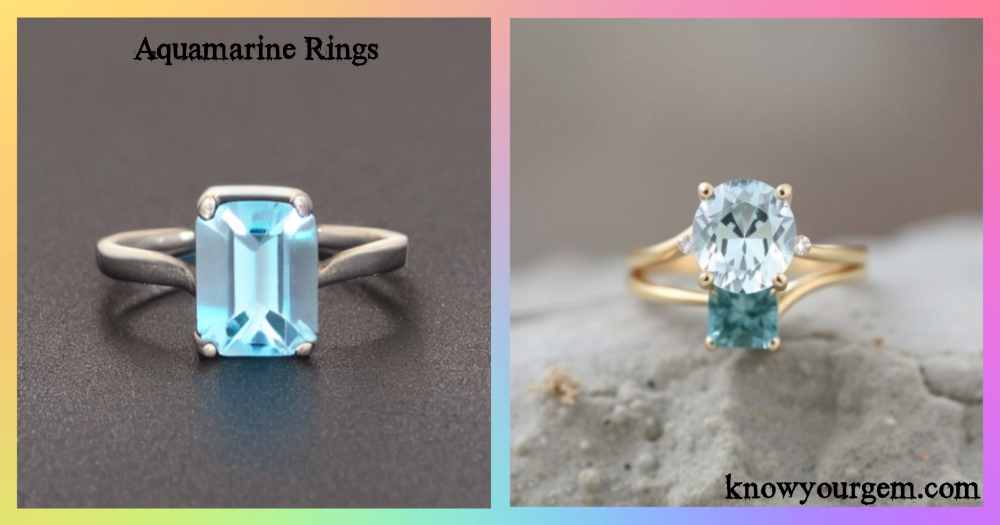
A steady favorite. Aquamarine works well with white metals, works with gold and comes in a size that makes a statement in bold designs.
Famous Aquamarine Pieces:
One of the largest cut aquamarines in the world is the Dom Pedro aquamarine, which is part of the Smithsonian collection. Another famous royal aquamarine is a suite of Brazilian aquamarine jewellery that was presented to Queen Elizabeth II in 1953.
Popular Settings:
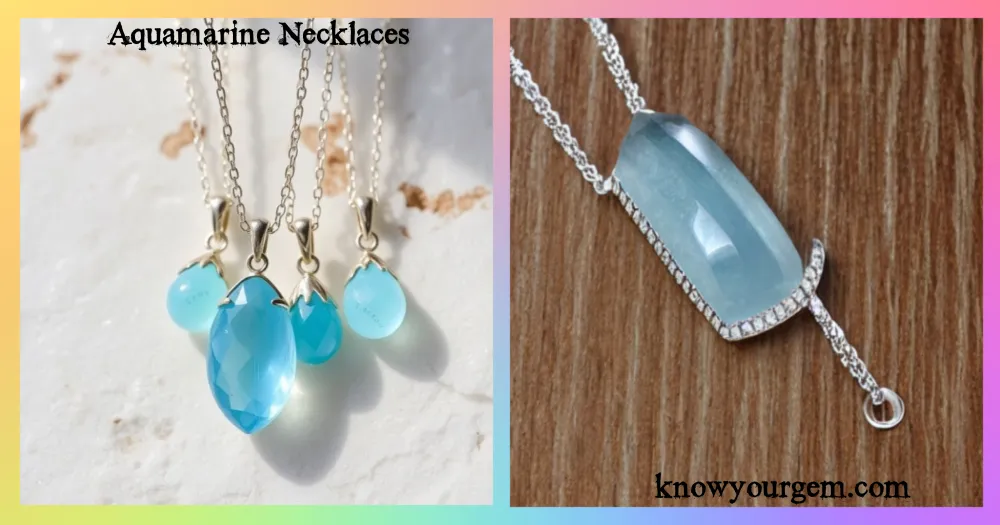
- Pendant solitaire: Elegance is key, so that the stone hanging from the pendant has a spotlight.
- Halo ring: The ring sparkles with diamonds surrounding the main stone.
- Old vintage ring: A gold vintage ring featuring a step-cut.
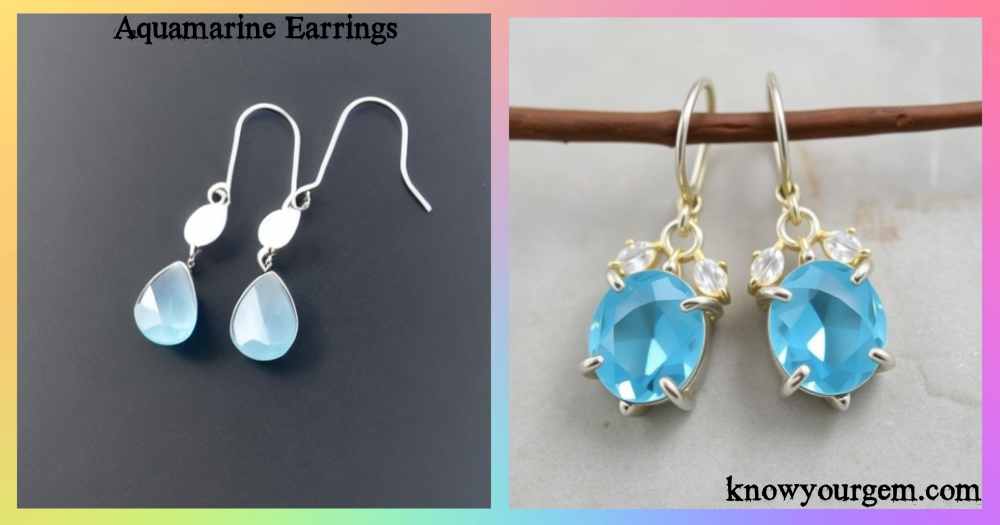
- Drop earrings: Light, and kind to the stone, since they rarely hit hard surfaces.
Blue Gemstone Engagement Rings:
Blue stones make a perfect substitute for diamonds. Aquamarine stone makes a fabulous ring because it’s strong enough for everyday wear. Wear it in a bezel or strong prong setting, but not when you’re doing hard labor.
How to Wear an Aquamarine Necklace?
Go for understated. A pendant is suitable for everyday and formal attire. The soft blue pairs with silver, white gold and yellow gold. Let the stone be the focus.
Aquamarine vs. Similar Blue Stones:
Several blue stones look like aquamarine. This table shows the key differences.
| Aquamarine | 7.5 to 8 | Soft sky to medium blue | Beryl, lower density |
| Blue topaz | 8 | Sky, Swiss or London blue | Denser, almost always treated |
| Blue spinel | 8 | Blue to grayish blue | Single refraction |
| Tanzanite | 6 to 7 | Violet-blue | Softer, strongly pleochroic |
| Blue glass | About 5 to 6 | Uniform blue | Bubbles, softer |
Aquamarine vs. Blue Topaz:
Buyers mix these up most. Topaz is denser, with a specific gravity of about 3.5 against aquamarine’s 2.7. Most blue topaz is treated, and it’s usually cheaper. A gemologist can separate them quickly.
Aquamarine vs. Emerald:
They’re both beryl. Aquamarine stone has a blue color from iron while Emerald has a green color from chromium or vanadium. Emerald is usually more included and more fragile. You can read more about emerald in our guide.
Natural, Lab-Grown and Imitation Aquamarine:
Lab-grown aquamarine stone exists but isn’t common, because natural stones are plentiful and affordable. Imitations are more common, such as blue glass and synthetic spinel.
| Natural | Formed in the earth | Is the color natural or heated? |
| Lab-grown | Made in a laboratory | Is it sold as lab-grown? |
| Imitation | Glass or another material | What is it made of? |
How to Identify Real Aquamarine?
No single home test is reliable. Use several clues together.
- Notice the Color. Real aquamarine is typically a subtle, uniform blue. If it looks “neon” in hue, it’s probably either treated or glass.
- Check within the gem. Magnify 10 times with a magnifier. Many glasses have round bubbles in the glass. Many aquamarines have tiny tubes and crystals.
- Ask about treatment. Heating is normal. Other treatments should be disclosed.
- Ask if it’s natural. Get the answer in writing.
- Get a laboratory report on expensive stones. Verify the report number with the lab.
Avoid scratch tests and chemical tests. They can damage the stone.
Aquamarine Value and Price:
Aquamarine stone prices vary a lot, and sources disagree. There’s no single price per carat.
What Drives the Price?
- Color: A rich, even blue costs more than a pale one.
- Clarity: It’s a Type I stone, so clean stones cost more.
- Size: Price per carat doesn’t climb as steeply as it does for ruby.
- Cut: A good cut shows the color and adds brilliance.
- Treatment and origin: Untreated stones and documented origin can add value, though GIA’s aquamarine buying guide says origin isn’t an important factor in value.
The Size Pattern:
Aquamarine stone comes in large sizes, so price per carat doesn’t rise much as stones get bigger. The International Gem Society notes that cut stones over about 25 carats can cost less per carat than smaller stones of the same quality. That’s unusual, and it’s good news if you want a big stone.
Price Examples From Public Sources:
These are asking prices and dealer guides, not completed sales. They disagree, and they aren’t dated.
| Dealer guide | Good-quality stones average about $130 to $400 per carat |
| Dealer guide | Finest deep blue stones can reach about $1,000 per carat or more |
| Dealer guide | A 1-carat stone about $675 per carat, 2 to 3 carats about $1,000 to $1,500 per carat |
| Online listing | 56.37-carat oval, “Santa Maria” color, listed at $146,562 (about $2,600 per carat) |
Treat these as a rough guide. A $40 listing for a large “Santa Maria” stone is a warning sign. The International Gem Society publishes a monthly price guide for members.
How to Buy Aquamarine Safely?
Buy from people who show their evidence.
In Person:
Observe the stone in natural and artificial light. Observe the stone from side. Change the position or angle of the stone. A good aquamarine has bluish hue under all lights.
Online:
Buyers are advised to ask for clear photos and a short video in more than one light. Check the dimentions in milimeters, and also read the return policy of a seller.
Questions to Ask Any Seller:
- Is the stone natural or lab-grown?
- Is the color natural or heat-treated?
- Are there any fillings or other treatments?
- Can I see a laboratory report, and can I verify the number?
- What is your return policy?
Red Flags:
- A price far below similar stones
- No answers about treatment
- A very deep blue beryl sold as “aquamarine” with no explanation
- No return policy
If you want a second opinion on a stone, you can contact us.
Aquamarine Meaning and Metaphysical Beliefs:
These are traditions and beliefs. They aren’t scientific facts.
It is known as a relaxing gemstone, aquamarine stone is linked to emotions, good judgment, and throat chakra, the energy center related to communication. Crystal lore believes that it can give you the freedom to freely express yourself when you wear or meditate on the stone.
No Scientific Evidence, there is no scientific evidence that aquamarine stone is an effective cure for stress, anxiety or any other health problem. If this is a reason for you to have an aquamarine, purchase the gemstone as a tradition, but only as a quality stone.
How to Care for Aquamarine?
With 7.5 – 8 Mohs hardness, aquamarine stone is relatively durable but requires some delicate care.
Cleaning:
Wash it with a soft-bristled brush in warm, soapy water. Rinse with clear water and dry completely with a soft, lint-free towel.
No to harsh chemicals. Most ultrasonic cleaners are fine with clean stones, but get advice from a jeweler before you use any ultrasonic cleaners. Never use on any fractured or filled stones.
Storage:
Store it in a separate compartment or a soft bag. It scratches very easily because of the following: -It is easily scratchable by hard stones such as sapphires and diamonds.
Wear:
Remove rings when using heavy machinery. Inspect setting yearly. Stone can chip at the corners of a long aquamarine, shield with prongs or bezel in step cut corners.
Light and Heat:
Heated aquamarine stone is not stressed. Do not subject to rapid changes in temperature, and do not have irradiated or very deep-blue specimens too long in intense light without first determining their composition.
Aquamarine Stone Buyer Checklist:
1. Check the color in daytime and indoor lighting.
2. “Is the hue natural or heated?”
3. Is the stone natural or lab-made?
4. Keep an eye out for chips, cracks and surface damage.
5. Compare prices for similar stones and mark as asking or sold.
6. Request for a laboratory report on costly stones.
7. Review the policies for returns.
You can read more about aquamarine stone in our guides, or browse the GemHub.
FAQS:
1. What Is Aquamarine?
A blue to blue-green variety of beryl. It is a hexagonal crystal, found mostly in pegmatite rocks.
2. Is Aquamarine Rare?
Not especially. Fine, deeply colored stones are the scarce part.
3. How Much Is Aquamarine Worth?
It depends. The quality of the dealer’s guide, the color, clarity, size and cut all play a part. A dealer’s guide can be as low as a few hundred dollars a carat, to over $1,000 or more for the deepest blue.
4. Is Aquamarine Heat-Treated?
Often. Heating removes green tints and is an accepted practice. Ask for disclosure.
5. What Is Santa Maria Aquamarine?
This deep, dark blue. Named after a mine in Brazil, it’s now used loosely to describe colour quality.
6. Is Aquamarine Good for Engagement Rings?
Yes, with a protective setting. It rates 7.5 to 8.
7. What’s the Difference Between Aquamarine and Blue Topaz?
They’re different minerals. Blue topaz is denser, and it’s almost always treated.
8. How Can I Tell If Aquamarine Is Real?
This deep, dark blue. Named after a mine in Brazil, it’s now used loosely to describe colour quality.
9. Who Should Not Wear Aquamarine?
They are not drugs and there are no rules of the road. If you are sensitive to metal, look for a setting. Who should not wear a stone is a matter of tradition.
This content is published by Gemstone Expert and Enthusiast KamilHussain.

Welcome to KnowYourGem.com! your ultimate destination for uncovering the fascinating world of gems and their secrets! I'm Kamil Hussain, a passionate blogger with a Master’s degree in Economics, dedicated to bringing you insightful, well researched content that blends the beauty of gemstones with the art of storytelling. With a keen analytical mind and a love for discovering hidden treasures, I created this platform to help you explore the brilliance, history, and value of every gem.


[…] the rare beryl crystal family; although its red luminescence is usually associated with emerald and aquamarine, its particular chemical composition causes it to differ from ruby. The stone has a saturated […]
[…] Aquamarine: It is a cool, oceanic blue colored gemstone. […]
[…] a small rose quartz, aquamarine or amethyst polished stone in one’s purse or pocket facilitates access to the positive energy […]
[…] aquamarine: Both can be in the blue-green range, but aquamarine (a beryl) is much more accessible, pleochroism is not anywhere near as drastic, and it has no risk […]
[…] Aquamarine is the blue to blue-green variety of beryl. Its name means “sea water.” The best stones are a pure blue without green. […]