


Insigths:
Best June Birthstone Alexandrite with three official birthstones–pearl, alexandrite, and moonstone; each one has its own intrinsic charm and significance. Therefore Pearl, known for its smooth, luscious appearance – an organic stone created in mollusks which is a symbol of innocence, purity, and wisdom. Its unattainable grace and natural glow-a sense of calm-makes it a favored jewel stone.
Thus, Alexandrine is a rare and fascinating gemstone with an extraordinary color-changing property; in daylight, it appears cool green to bluish green and under incandescent light turns in to a warm red or purplish red and represents balance, transformation, and adaptability.
Therefore, Alexanderite is a gemstone of magic that is always referred to as a symbol of growth. Therefore Moonlight, on the otherhand and its Milky blue glow and ‘blue fire’ that shines on themoon known as “blue fire” is the most popularfor intuitive qualities andinnerharmon, making a powerful talisman and for thoseresearching to find their inner self.
Therefore, pearls, Alexanderite, and moonstone as the June birthstone have a beautiful combination of elegance, mystery, and meaning, the perfect choice for celebrating the diverse characteristics and journeys of the ones born in June.
Best June Birthstone Alexandraine- Finest June Birthstone for Gemini:
June Birthstone-Alexanderinte is known as the best birthstone in June with its extremelyimaginative color changing characteristic. This particular phenomenon of Alexandrite can be described as follows:
Alexandrine turns cool green to bluish green in day and warm red to purplish red–in incandescent or candlelight. This particular characteristic of the Alexanderite’s effect is due to the gemstone’s complex mineral composition, which react with the light. The Alexandrite’s complexity also means Alexandrine is a valuable and highly desired stone.
The Alexanderite color changing property is a symbol of balance, transformation, and flexibility. Therefore Alexandrite’s attributes may be directly associated with Gemini, as it resonates strongly with this sign that corresponds with the zodiac’s communicationsruler, Mercury, the “final” of the twelveconstell ations-the Gemini’s have a dual nature that we are all aware of.
Although Gemini shares flexible, adapt ableand curious and they will thrive in the dual nature of the exi stenceas Alexandrite is such a fl exi ble stone that transcends between two colors.
Pearl June Birthstone Meaning & History:
The Pearl is one of June birthstones; it is a gem of unparalleled beauty, flawless and elegant. Unlike most other gemstones that exist deep beneath the surface of the earth, pearls are cosmic treasures.
Pearls were created in living tissues, the bodies of mollusks in this case oysters, and mussels. When foreign matter such as sand enters the mollusk, in retaliation it deposits coatings of nacre, a form of calcium carbonate with protein, around it, ultimately resulting in the birth of a pearl.
Because of this naturally occurring process, pearls are appreciated for their otherworldly luminous glow and subtle, shiny surface.
The use of pearls has a history of representing innocence, virtue, and wisdom. This is thought to be because the pearly glow suggests peacefulness, serenity, and purity, as well as the innocence of youth, while also symbolizing new starts and elegant simplicity.
Pearls can also represent wisdom obtained from life experiences as they are formed through a process of sacrifice and pain. This meaning can be given as a gift of pearls to mark important occasions such as weddings, the end of education, and other new beginnings in life.
In the past, they have also been associated with feminine beauty and grace. They have been desired by women for centuries and represented elegance and sophistication, often worn as a sign of nobility; thus, in ancient Rome, pearls were seen as the ultimate status symbol; in old China, they were thought to guard against fire and dragons.
Thus, the image of pearls as a status symbol has been developing since early civilizations and remains unchanged in modern times.
Where are Pearls June Birthstone Found?
Pearls are one of the most precious and beautiful gifts of nature and occur in a natural and cultivated state throughout the globe. So, their formation originates within mollusks, including oysters and mussels living in both fresh and salt water.
Thus, the formation of fresh and cultured pearls begins naturally or through cultivation, where a secretion of nacre (a mixture of calcium carbonate and protein) is formed around an irritant, eventually producing the glistening white pearl of the jewelry piece. Below are discussed the main locations and variations of pearl production.
Natural Pearls: Rare and Precious:(June Birthstone)
So that is how natural pearls are made – completely by chance without any human involvement. Hence, when an agent or irritant, such as a grain of sand or parasite, gets into a mollusk, the latter begins to produce layers of Nacre to safeguard itself.
Consequently, over time, a natural pearl is produced. In spite of this natural process, natural pearls are very scarce since only a small percentage of mollusks produce them and just a limited number of these are of a high quality.
Historically, some of the most famous sources of natural pearls include:
- The Persian Gulf: the best natural saltwater pearls were produced in this region, especially around Bahrain and Qatar. These were highly valued in the early days and were also exported in heavy quantities.
- The Gulf of Mannar: situated between India and Sri Lanka, this area was yet another valuable producer of natural pearls, especially in the Roman period.
- The Red Sea: Pearls from this area were similarly prized in ancient times.
- Freshwater Pearls: The origins of natural freshwater pearls were in the streams, rivers, and lakes of Europe, Asia, and North America, particularly in Scotland, Germany, China, and in the drainage basin of the Mississippi River.
Because of the increased scarcity in recent times, natural freshwater pearls are highly sought after by collectors and enthusiasts.
Cultivated Pearls: The Modern Way (June Birthstone)
Now the majority of pearls on sale are cultivated or cultured: they are grown under human control and can be the result of various techniques.
In general, the term represents a process of carefully placing an irritant, such as another pearl bead or piece of tissue, inside a mollusk. Cultured pearls can originate from either saltwater or freshwater and are classified into different types:
Akoya Pearls:
- Where they’re from: Primarily cultivated in Japan and China
- Qualities: With their wonderful luminescence and perfectly round shape, Akoyas are considered a timeless, classic beauty usually set in classical pearl necklaces.
South Sea Pearls:
- Where they’re from: They are native to warm waters that can be found off the coast of Australia, Indonesia, the Philippines, and also Myanmar.
- Qualities: They are also some of the larger and therefore most expensive pearls with a wonderfully soft, satiny glow to them. For this reason, colors found are silver, white, and also gold.
Tahitian Pearl:
- Where they’re from: The French Polynesian Islands; more particularly cultivated there locally on Tahiti.
- Qualities: Pearl enthusiasts go gaga for their mystical colors. With rich black, blue-green, green, purple, bluish, and gray qualities, black pearls make for a unique statement piece.
Freshwater Cultured Pearls: (June Birthstone)
Chinese Freshwater Pearls: In terms of freshwater production, the Chinese lead by far with production facilities around Weifang, Zhejiang province, and Jiangsu province.
Qualities: With a number of different shapes, colors (pink, white, gray, cream), and sizes, they have long been regarded as an economical alternative to saltwater pearls with an excellent value on aesthetic impact.
Other Freshwater Sources: (June Birthstone)
Freshwater pearls are also grown in the United States, Japan, and other nations where freshwater conditions are conducive to the farming of freshwater pearls.
Environmental Factors and Pearl Farming: (June Birthstone)
Pearl farming, whether it is farmed in saltwater or freshwater, is a fragile and complex system due to the specific environmental conditions that it requires.
The pearl farming industry and the quality and quantity of the pearls it produces are dependent on the health of the mollusks as well as the pristine environment the pearl farm is in. Here are the main factors of the environmental aspects as follows:
1. Water Quality:
Pollution- Because mollusks are very susceptible to pollution in the water they are grown in, this must be kept clean and free from harmful pollutants, chemicals, and other substances. They need clean water too, so that a good quality pearl can be produced. If the mollusks have pollutants weakening them, they are less likely to produce a pearl.
- Salinity: In saltwater pearl farming, the water body salinity must be controlled. Mollusks such as oysters grow in particular salinity, depending on the species as well as the area. So freshwater pearl culture, on the other hand, requires very low levels of salinity and a good mineral balance in the water body.
- Oxygen Levels: There is a wide range of oxygen available, but only one can be suitable that supports mollusks very well. Poor oxygen levels can generally destroy mollusks, and it generally happens in the production of nacre and the formation of pearls.
2. Temperature:
- Temperature: The mollusks generally require a consistent and appropriate temperature to grow. For instance, in Akoya oysters, both South Sea and Tahitian oysters flourish in warm tropical waters. As a result, abrupt changes in temperature can upset the combination of the mollusks.
- Climate Change: There is an increased boiling point of the ocean waters due to climate change. Will the warmer waters result in more disease outbreaks? Will it affect the balance of marine life? How will it affect pearl farming?
3. Availability of Resources (June Birthstone)
Food sources for mollusks are plankton and other minute creatures, and minerals and organic matter, which are used as feed for growth and which also serve for excellent quality of Nacre as an excellent supply of fuel. Overfishing, pollution, and shifting of main currents can create a shortage of these resources.
Algal bloom – Agricultural waste and industrial waste cause damaging algal blooms, which deplete oxygen from the water and also release toxic substances; thus causing danger for the survival of mollusks and other sea creatures.
4. Balancing Ecosystem and Habitat.
Mollusks are able to live comfortably on reefs, meadows, and other habitats on the sea floor. They are very important creatures in the ocean, since their presence helps to maintain ecological harmony. Loss or destruction of this habitat also affects the growth of pearls.
Mollusks are easily prone to being fed upon; that is, they can be found almost everywhere, such as rock formations, sea weeds, in a state of burrowing, etc.
Hence, their ability to live in different places helps them, and so when these habitats are threatened, their survival gets jeopardized, which has an impact on pearl growth.
Mollusks are easily fed upon due to a lack of abilities they possess and the kinds of creatures present in their habitat. Such predatory organisms include crabs, starfish, and certain fish.
The pearl farmer’s responsibility is to ensure the security of the mollusks from possible predators, diseases, and pests, especially where it concerns the mixed cultured system, which encourages a proliferation of these pests and diseases.
5. Sustainable methods of growing oysters for pearls:(June Birthstone)
Methods used to make pearl cultivation as eco-friendly as possible must take care not to damage the environment in which it takes place. An important factor is to avoid harmful substances, over-harvesting of native molluscs, and reducing waste products.
The involvement of the community: Pearl farming is important to the village economy as well as to the farmers, since it is a source of revenue. The fact that farming generates income highlights its role as an economic pillar of that area; hence, its preservation is dependent on sustainable farming activities both on the part of the user and the individual community and the system it utilizes and maintains the economic sustainability through its existence.
Using an official certifier: Bodies that look into environmentally sound cultivation- has encouraged users to rely more on them than ever before. Certification from the MSC (Marine Stewardship Council) and the RJC (Responsible Jewelry Council) should also be made use of by consumers so that they could have access to responsibly grown pearls.
6. The future prospects in pearl farming and some problems, especially for June Birthstone:
New farming techniques have been implemented in the industry in order to counter problems such as global warming and destruction of habitat. Innovative features like the use of climate-resistant shellfish, constant checks on water quality, and security systems against natural calamity events will play crucial roles in pearl farming.
It is anticipated that a mix of these features could enhance water quality in areas used for pearl farming, provide greater security against future natural catastrophes, and also improve the survival rate for the mollusks, hence boosting production efficiency.
Pearl June Birthstone Care & Cleaning:
A June birthstone and the world’s best-loved organic gem for its classic luster and evergreen elegance; the pearl is unfortunately, much less hardy than any other type of gem (such as diamonds or sapphires, to name just two), meaning that there is the risk of it being chipped or scratched.
Therefore its lasting sparkle can best be preserved through very careful storage and cleaning, as it can take scratches and damage more easily than stones. Care guidelines for cleaning pearls can be found below:
1. A Closer Look at Pearls’ Tender Quality:
Composed of a protein material (conchiolin) and calcium carbonate, the thin coating covering the exterior of pearls is responsible for their beautiful iridescent luster.
Rather than a hard structure and composition like many of our valuable June birthstones, the pearl exterior is not quite as resilient. Pearls are susceptible to scratching, nicking, and damage.
2. Handling and storing your pearls daily (June Birthstone)
Taking good care of your pearls ensures that they stay lustrous for long. Use these tips:
A. You can wear them as much as you like but carefully: The skin naturally secretes oil, and this oil helps keep the luster of pearls intact. Avoid wearing them during sports, exercise, etc., which can lead to their damage and harm.
B. Wear them last: Ensure that the pearls are last on when going out dressed or made-up.Their lotion, perfume, and hair spray should never come into direct contact with them since these produce nasty effects that tarnish pearls and deteriorate their fine sheen.
C. You should prevent any harm from heat and sunlight: Their skin can be damaged and turn a bit dull, and even crack if they are constantly exposed to sun rays and extreme heat.
3. Cleaning of pearls for June Birthstone:
Pearls have a delicate quality, so the best way to handle them is with extreme gentleness. The most optimal way to clean pearls is given hereunder.
A. Once pearls have been taken off the wearer, clean off body oil, traces of sweat, and other debris from them by wiping using a soft cotton cloth for hygiene purposes. This measure should always be taken if the pearls are put on frequently.
B. For a thorough cleaning process, one should dip soft cotton in clean potable water and gently wipe the pearl. Though it is not advised to dip pearls in water due to the nature of fine threads on which they are mounted or on which they are threaded, or if those pearls are composed of nacre components or any other substance that can weaken at the touch of water.
C. Never use cleaners that is too rough; those containing detergents that are harmful to the pearl’s delicate exterior and cause corrosion that will eat away the nacre may be quite injurious, similar also steam cleaning, ultrasonic cleaning devices can damage pearl necklaces.
D. Lastly, dry your pearls thoroughly. Your pearls can remain slightly wet after washing, and it is advisable to leave them dry on a nice flat towel since dangling them could cause the threads on the pearls to stretch and then their shine may diminish.
The July birthstone is called the alexandrite, which is rare with properties that enable it to be two colors due to a reflective change of color when viewed under different lighting, with a hardness of 7 on the Mohs scale.
Moonstone June Birthstone Meaning & History:
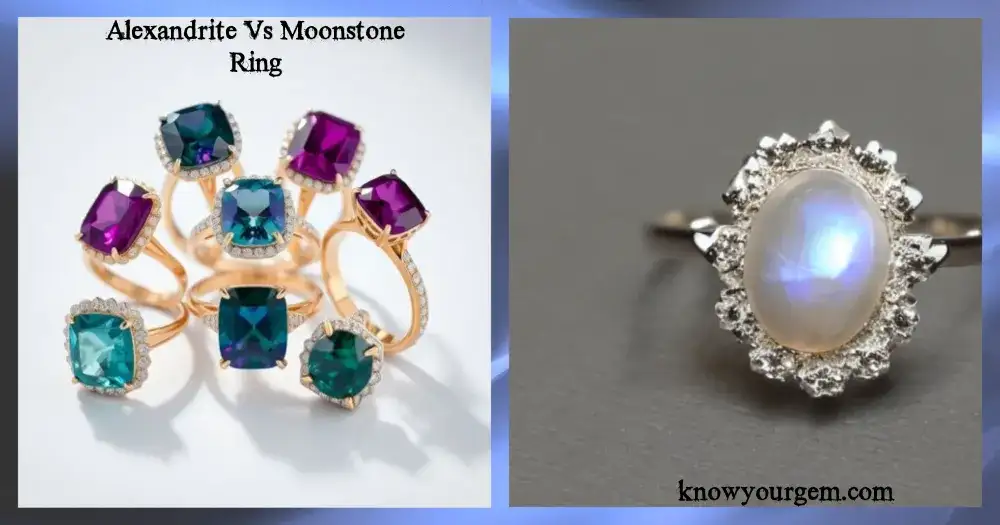
A stone of mystifying beauty, moonstone is one of June’s celebrated birthstones. Incredibly revered for its magical glowing, smooth light known as adularescence and a deep symbol of many precious qualities it represents.
It’s associated with both the moon and intuition, and has therefore remained a mystical stone with a long-valued history.
1. The Meaning of Moonstone: (June Birthstone)
Moonstone possesses a very unique, strong tie with the moon, and it is thought that these crystals were originally fragments of the moon that fell to Earth. Their shimmer resembles the moon’s glow, and this characteristic in particular gave birth to a vast number of symbols connected with this stone:
A. Intuition and Inner Growth: (June Birthstone)
The so-called “stone of intuition,” moonstone is said to amplify intuitive abilities and increase inner vision and emotional understanding. It works with individuals finding themselves on a journey of self-discovery while helping people reconnect with their inner self.
B. Emotional Balance and Harmony:
Moonstones are deeply in tune with calmness and emotional healing; they assist with stress and mood stabilization, allowing a wonderful feeling of peace to resonate throughout the user’s soul.
C. Feminine Energy and Divine Connection:
Strongly tied to the divine feminine, the moonstone is viewed as a representation of new beginnings, fertility, and nurturance. It is associated with deities of the moon in both past and current mythos.
D. Transformation and Renewal:
The phases the moon goes through day by day are mirrored by the moonstone as a symbol, representing personal growth and changing paths. Navigating personal transition becomes eased and overcome with graceful understanding by wearing it.
2. The History of Moonstone: (June Birthstone)
The history of moonstone is amazing; one of the most marvelous gemstones has existed for what looks like centuries upon millennia, and the world in general just seems to love moonstone so much.
A. Ancient Civilizations: (June Birthstone)
Roman Mythology: It was believed that the Roman gods themselves made moonstone from solidified lunar rays, and the stone was then associated with Diana and Selene of their mythologies. The crystal held symbolic meanings connected to luck, protection, and prophecy.
Indian Culture: Moonstones are highly sacred stones within Indian culture; they have held these sacred standings for years upon end as they symbolize good fortune and increase perception within not only relationships, but spiritual practice as well.
Asian Traditions: In ancient Asia, it was thought that putting a full moonstone into a full moon would grant individuals prophetic powers, while their eyes were closed; and during nighttime travel, it could also bring a safe voyage.
B. The Art Nouveau Era:
The period of Art Nouveau is also widely known for its combination of both mystical and naturally beautiful stones. Between the late nineteenth and early twentieth century, René Lalique, the jeweler, began to use and create many more moon stones and incorporate the mystical beauty of the moon stone into his finest work of jewelry.
C. The Modern Day:
The modern-day use of the moon stone is much valued for its properties of spiritual and physical appearance, and recently the use of the stone has become renewed. Within modern times, you can find a variety of moonstones within necklaces, rings, and crystals, all part of a Bohemian feel.
3. Cultural and Spiritual Significance: (June Birthstone)
The cultural and spiritual importance of moonstone holds significant value all around the world, due to numerous reasons.
A. Healing and Metaphysical Properties:
In terms of metaphysical values and its use in healing practices, the moonstone is understood to stimulate and harmonize our Chakras (specifically the Crown and third eye) to achieve mental intuition and spiritual growth.
Also beneficial in regulating and stabilizing hormonal growth within the female body; this gem has become favorable when it comes to treating all things female-related.
B. Symbol of Love and Romance:
Moonstone is fundamentally linked with affection and passion; the crystal is sometimes believed to have powers to spark up romance where lost feelings once seemed apparent.
C. Protective Talisman:
People use this for protection against negative and unwanted vibrations, energy to “push away” from you or “keep out” of your energy field. This stone would make a good protective stone while traveling to “keep you safe”.
4. Moonstone in Jewelry:(June Birthstone)
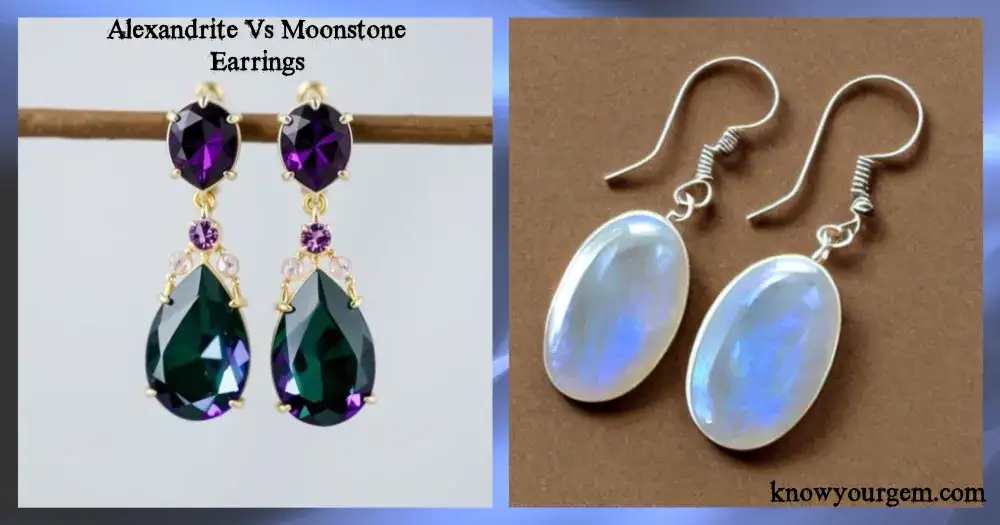
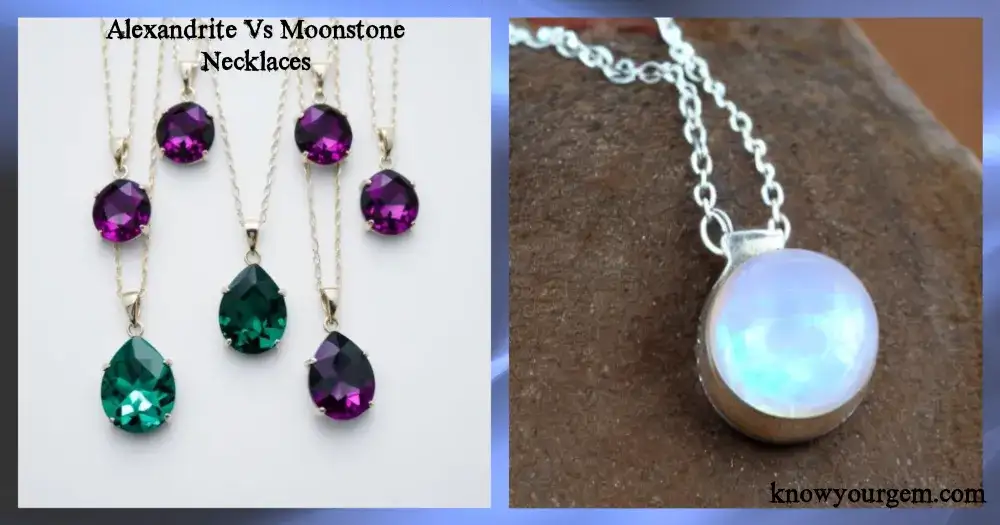
Thanks to its luminous glow, moonstone is a very attractive choice for jewelry. Cut mostly into cabochons to perfectly display its characteristic adularescence while also being commonly set in either silver or gold, you can see it in;
- Rings: Representing emotions balanced and a psychic future.
- Necklaces and Pendants: To inspire close bonding in a relationship through love and understanding.
- Earrings: To magnify spiritual intuition through both hearing and seeing.
5. Types of Moonstone:(June Birthstone)
The Moonstone can be found in a variety of different varieties:
- White Moonstone: The most obvious moonstone type with that cloudy white classic look. It is sometimes referred to as “peaches” just another silly silly name.
- Rainbow Moonstone: This gemstone is, in actuality, a variety of Orthoclase. The name originates from the dazzling display of rainbow light that bounces from the surface of the gem. The more you tumble and Polish it, the higher and clearer the rainbows become to show electric blue light. Rainbow moonstones make some spectacular statement pieces, and you’ll pay a good price to get the flashier ones.
- Gray Moonstone: This variation also happens to be the lesser-known version of the moonstone mineral. This type of stone usually occurs at the end of its formation phase producing a variety ranging from cool tones to those lovely pastel peach shades that were mentioned earlier.
6. Caring for Moonstone: (June Birthstone)
- Being only a 6-6.5 on the Mohs scale for hardness, the moonstone needs careful treatment:
- Clean with the softest material and a gentle liquid soap combined with clean water.
- Don’t expose it to chemicals or harsh heat sources; also, prolonged sunlight exposure is best avoided.
- Store the crystal in isolation to prevent it from becoming scratched by the contact of harder gemstones or materials.
Alexandrite June Birthstone Meaning and History:
Prized for their incredible beauty, alexandrites are the rarer, color-changing gemstones of June. They’re also known as the ‘color-shifting diamond, ‘ able to change from green at daylight hours to red when under tungsten light; the gemstone is truly one of its own kind in every sense of the word and also possesses quite profound history and symbolic meanings tied to its remarkable presence.
1. The Meaning of Alexandrite: (June Birthstone)
The alexandrite stone symbolizes transformation as the earth goes through its cycles and days, and it will bring change to you in all aspects of life too; thus making the stone an adaptable and inspiring gem for both healing and protection.
A. Balance and Transformation: (June Birthstone)
The alexandrite gem has long symbolized all aspects of life when it comes to balance and adaptability. Just like its name, alexandrite encourages life’s changes, and it’s believed to be an inspirational talisman for both our spirits and our own individual selves and journeys when undergoing transformation in our lives.
B. Creativity and Joy:
The alexandrite gem inspires your mind and spirit for imagination and creative flow; it brings you a joyous sense of wonder all throughout your days.
C. Good Fortune and Prosperity:
Popular as a gemstone known to bring good luck and fortune, the alexandrite will be a prized addition to anyone who wears it. As well as this, its beauty comes with wealth associated with its natural magnificence.
D. Emotional Healing:
The alexandrite will enhance your spiritual confidence through its association with balancing emotions and strengthening individuality. Overcoming life’s difficult ventures through resilience becomes an endeavor all the more simple and enjoyable, especially when one considers the symbolism embedded within.
2. The History of Alexandrite:(June Birthstone)
The striking alexandrite gem and its history are a very fascinating subject; considered one of the rarer stones, this valuable gem has truly been prized across many historical eras, mostly during the late 19th Century:
A. Discovery in Russia:(June Birthstone)
The alexandrite crystal has long since held value, especially since its discovery dating back to the Ural Mountain region in the 1830’s. When discovered during this time period, the unique hue of this gemstone from daylight to torchlight became extremely sought after, particularly within the time period of Tsarist reign; the stone at the time of its discovery belonged to Tsar Alexander the Second, its rightful discoverer.
B. A Gemstone of Royalty:
The luxury aspect and incredible coloring of the alexandrite gem have made this stone of incredibly high value, mainly within the Russian aristocracy, making it a symbol of royalty, wealth, and ultimate status.
C. Modern Sources:
Despite its rarity in the original Russian localities, which have been completely unearthed, alexandrite continues to be extracted and supplied across a vast number of geographical locations, including Australia, Zambia, and Sri Lanka, with Brazil also delivering some spectacular quality alexandrites at present.
3. The Science Behind Alexandrite’s Color Change:(June Birthstone)
The color-changing phenomenon that the alexandrite gemstone undergoes relies upon chemical reaction and certain light properties:
The crystal contains traces of the elemental metalloid chromium, which it then absorbs specific wavelengths of the light spectrum that the crystal is positioned in.
As this happens to daylight, which carries a slightly different light spectrum than that of incandescent light(which contains traces of the green spectrum of light), the gem changes from green through the daylight to red in the presence of tungsten and torchlight that comprise mostly the red spectrum, respectively.
This reaction has earned the gemstone the title of the Alexandrite Effect, making it one of the most prized stones around the world.
4. Cultural and Spiritual significance:(June Birthstone)
Alexandrite has its own special part in a lot of religions and traditions in a number of cultures:
A. A representation of transformation and growth:
The color-changing property of alexandrite makes it a great representation of change and adaptivity; therefore, it’s been used in meditation practices to aid individuals embrace transformation and progress in personal lives.
B. A lucky talisman:
As some believed, alexandrite can bring lots of good luck to any individual, especially those going through challenging transitions. It has an added benefit to your intuition and decision-making ability.
C. Connected to your heart and crown chakras:
Heart and Crown chakras (love, wisdom, awareness). Alexandrite stones can connect your heart chakra, which encourages love and compassion, as well as your crown chakra, which enhances the sense of divinity; therefore, you could balance your emotions and spiritual consciousness.
5. Alexandrite in jewelry: (June Birthstone)
This alexandrite gemstone, due to its precious quality, has been made a great addition to numerous jewelry pieces:
- Rings: To represent balance, growth, and change,
- Earrings and pendants: To bring out those eye-catching color shifts during the day.
- Statement Pieces: These are great pieces of accessories if you want to flaunt how exceptional alexandrite can be in different settings, such as elaborate rings or necklaces.
6. Alexandrite Types:
These types of alexandrites will depend on their type, color tone, etc:
- Russian Alexandrite: These can really dazzle those viewing them due to their bluish green to purplish red color and are incredibly rare.
- Brazilian Alexandrite: This is known to provide the brightest change, which will be a green-to-red color range.
- Other countries: Alexandrite can also come from countries like Sri Lanka, Madagascar, and Tanzania, and all can be seen in these distinct colors changing tones.
7. Caring for an Alexandrite: (June Birthstone)
Even though it is one of the hardest stones. It rates at 8.5 on the Mohs scale of hardness, yet you may need to take more care to prevent its damage during your care to maintain it:
- Care for using soapy warm water with a soft brush in order to clean Alexsandrite.
- You will have to prevent touching Alexandrite to all strong acids & chemical compounds and avoid extremes of temperature so it won’t be damaged.
- It must be stored away from the rest so as not to let any hard jewelry damage it.
8. Alexandrite in jewelry: (June birthstone)
For people who are born in June, alexandrite would be quite the thoughtful and meaningful choice for a June gemstone. Even though there are 3 birthstones, namely the pearl, alexandrite, and the moonstone.
Its symbolism of balance and growth could mean for you that it’s perfect if you’re a Gemini or Cancer-the two zodiac symbols that reside in June and embody what alexandrite represents.
June Birthstones Pricing Table:
| Gemstone | Type | Estimated Retail Value | Notes |
|---|---|---|---|
| Pearl | Freshwater Pearl | $10-$200+ each | Great budget-friendly option for June! |
| Pearl | Fresh water pearl strand | $50 – $1,500 + | Based on lustr, shape and matching |
| Pearl | Akoya Pearl Strand | $1,000–$10,000+ | The traditional white round pearl |
| Pearl | Tahitian Pearl | $100–$1,000+ each | tone and luster of colour greatly influences price, |
| Pearls | South Sea Pearl | Each 200-3,000 | White and gold pearls are valued |
| Moonstone | Commercial grade moonstone | $2–20 /ct | faint sheen, bluish white or peach white |
| Moonstone | A bright white and also rainbow moonstone | $20-$80 per ct. | Better clear, more bright flash, also make it precious |
| Moonstone | Beautiful blue moonstone | $50-250+ per ct. | Shade of blue; flashes and quality vital |
| Alexandrite | Natural Commercial quality | $500–$2,000 per ct. | The colour change is typically not that dramatic |
| Alexandrite | Natural fine quality. | $2000 $8000 per ct. | Good change of color when going from green to red/purple. |
| Alexandrite | Natural. Very fine quality | $8,000-40,000 per ct. | Possess top color-change characteristics and are clear. |
| Alexandrite | Natural Collector grade | $40,000– $100,000+per ct. | Extremely rare if there‘s a strong color change. |
| Alexandrite | Lab grown alexandrite | $20–$300+ p/ct | Excellent value for a colorful ring |
June Birthstones Conclusion:
So there you see, a month as marvelous as June has not one, yet three stones! From Pearl to Alexandrite and Moonstone. Each of these gems represents a lot of different characters, each individual and history, bringing joy to those born in this month.
There is never a stone that is more special than them; for individuals, their own personal belief system is what will tell a lot about themselves. Pearl represents wisdom and purity with inner joy and a calming nature that will inspire and influence you to accept yourself for whoever you may be.
Alexandrite, known for its awesome color-changing attributes gives you both balance and stability as its associated with your crown chakra and heart chakra where both you and balance are closely linked.
Lastly, the moonstone is believed to help increase our psychic insights with a beautiful pearly shine that represents both femininity and spirituality to bring you spiritual growth. All three are incredible stones that will bring forth many benefits into you as well.
FAQS:
1. What is the lucky stone for June?
June birthstones are three pearl, moonstone and alexandrite. Two of them are principal birthstones, while the classic and traditional stone is the pearl that signifies purity and wisdom.
2. What is June color?
The most popular month color for June is a mixture of white and soft orange, which reflect to pearly luster of june birthstone pearl.
3. What’s my gemstone June?
If you are born inJune; Your birthstones will be, the Pearl, Alexandrite and Moonstone to choose for which you best wear; Pearl is best known for its classicsilvertone’ or soft White with the Pearl and would make good jewelry .
4. Why is June born special?
People born in June can choose among 3 beautiful precious gemstones: classic pearl and the Alexandrite. Gemini and Cancer are the horoscope signs during the month of June, where some describe people as more caring, or more outgoing, or both, but people born in June really are unique just like the other people of the planet..
5. What flower is June?
June has two official birthday flowers, and each symbolizes qualities that may or may not be obvious to all . These birth flowers to include the birthflower of June are both the roseas a Symbol for loveliness and love; also, honeysuckle as a symbol of fidelity and love.
6. Are June born romantic?
Perhaps . Geminis and Cancers may not get it right every time but as they generally communicate well. The sign of the twins can make them romantic, and Cancers are affectionate and feel for each other so it depends on what type of relationship would take its course.
Verify Each stone with trust labs, GIA, IGS, and SSEF for authenticity, refractive index, specific gravity and ethical source.

Welcome to KnowYourGem.com! your ultimate destination for uncovering the fascinating world of gems and their secrets! I'm Kamil Hussain, a passionate blogger with a Master’s degree in Economics, dedicated to bringing you insightful, well researched content that blends the beauty of gemstones with the art of storytelling. With a keen analytical mind and a love for discovering hidden treasures, I created this platform to help you explore the brilliance, history, and value of every gem.

