
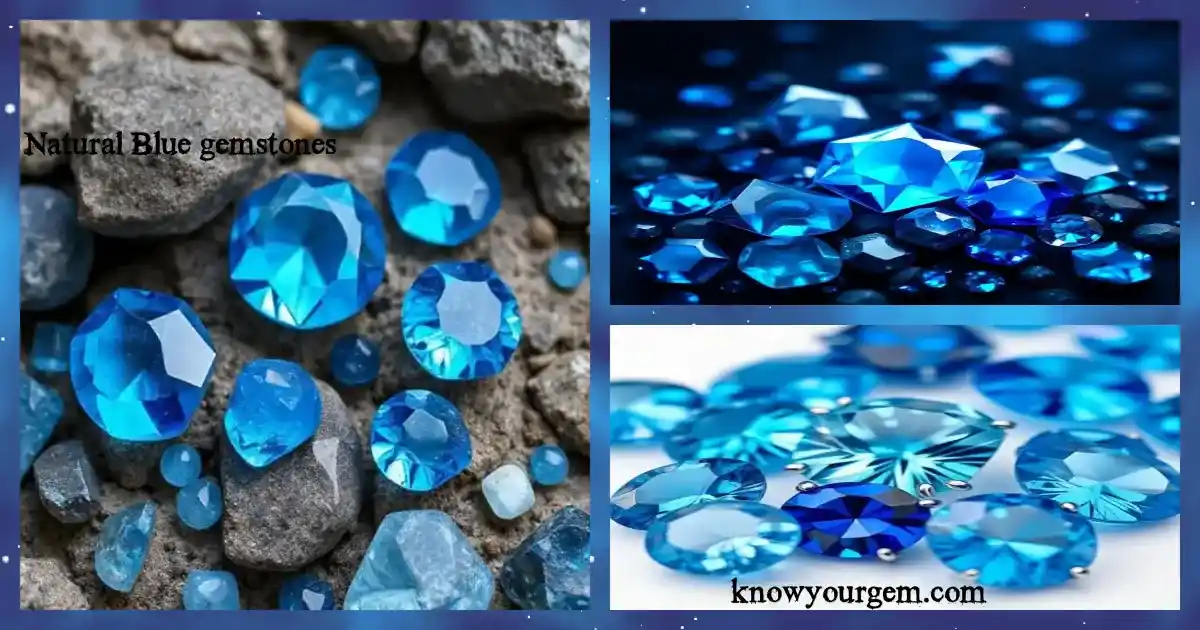

Blue gemstones are most desirable for modern jewelry. They are named from deep, velvety blue sapphire to the rare blue topaz and the earthy charm of turquoise. Their shades cover the whole spectrum icy pale blues that crisp and refresh, t midnight navy tones that radiate mystery and elegance.
Paraiba tourmaline is currently getting high demand for modern jewelry its beats diamond learn more.
Understanding Blue Gemstones: Formation, Varieties, and Quality
Blue gemstones are minerals which showcase a blue color, whether they form in nature or in a lab. They get their blue color when infinitesimal elements inside the stone interact with the light. Although, their structure and the way of passing light through them also affect their color. In simple terms, these stones absorb some colors of light and reflect the blue color that you usually see.
Different elements produce different shades of these blue gemstones. Such as iron and titanium give sapphire a deep blue color. While copper gives turquoise a blue color. Each gemstone integrates these elements in its own way, that gives it a unique and beautiful color.
Some gemstones appear through light scatter and this phenomenon is called the Tyndall effect rather than from any single element. Moonstone’s blue adularescene, a floating allure that shifts with viewing angle, in one example of the structural color rather than chemical color.
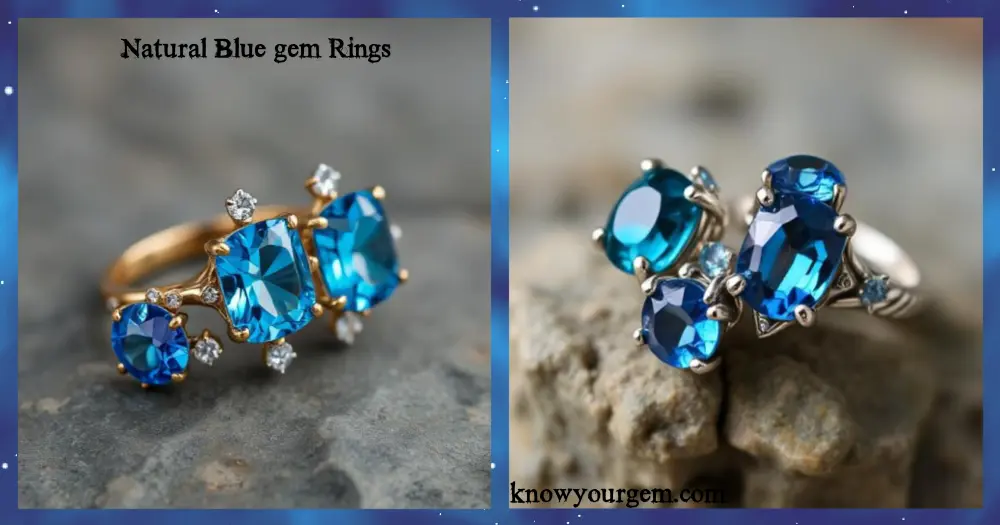
Types of blue gemstones:
A deep guide below about types of blue gemstones covers each and everything need collectors know:
Precious blue gemstones:
The term “precious” in the gemstone trade traditionally refers to diamond, ruby, sapphire, and emerald. Two of these blue sapphire and blue diamond sit at the blue gemstone hierarchy.
- Blue Sapphire is the defining precious blue gem. It is a variety of corundum (aluminum oxide), it registers 9 on the Mohs scale of hardness which makes it the second hardest natural gemstone after diamond. Its color ranges from pale cornflower blue to the deep royal blue and intense velvety blue. The most valued shade is medium dark, vivid blue with having slight violet, which is often called Kashmiri blue or Royal blue. Sapphires from Kashmir, Burma (Myanmar), and SriLanka command the highest prices. Most commercial sapphires undergo heat treatment to improve color and clarity, a widely accepted practices in the trade.
- Blue Diamond is among the rarest and most expensive gemstones on the earth. The blue color results from boron impurities within the crystal structure. Since, natural blue diamonds at gem quality are extraordinarily scarce; most come from the Cullinan mine in South Africa. Whether Lab grown blue diamonds exist and offer a same chemical composition at a fraction of the price.
- Tanzanite is sometimes grouped with precious stones due to its exceptional color and rarity. It is found only near Mount Kilimanjaro in Tanzania, it displays a striking blue violet trichroism appears different colors hinge on the viewing angle. It scores 6 to 7 on the Mohs scale of hardness, which makes it softer than sapphire, and geologists that consider it approximately 1,000 times rather than diamond. Current reserves are expected to be exhausted within decades.
Semi precious blue gemstones:
Semi previous blue gemstones are a broad old fashioned term that covers the most colored stones that except diamond, sapphire, ruby, sapphire, and emerald. Many of them are still beautiful and durable, even if they are not precious.
- Aquamarine is a blue to blue-green type of beryl. It gets its name from “Sea water” and ranges from pale sky blue to rich medium blue. Since top stones are pure blue without having green color. Aquamarine is quite hard ranks 7.5-8 on the mosh scale of hardness, means good for everyday wear, and mostly it is slightly heat treated to remove green tones. Brazil is the major source.
- Blue topaz is the most popular and affordable gemstone. Natural topaz is generally colorless or pale; almost all blue topaz stones are treated with irradiation and heat to create shades like 8 on the mohs scale of hardness means great for daily wear jewelry like ring, and bracelet.
- Turquoise is basically recognized as the oldest gemstone. It is a hydrated copper aluminum phosphate with a waxy shine and colors from sky blue to blue-green. The best turquoise is a clean, pure robin’s egg blue with little or no brown veining. It is porous and soft ranks 5-6 on mohs scale.
- Lapis lazuli is a rock and Lazurite mineral makes it with white calcite and shiny gold pyrite specks that look like a night sky. It has been used for thousands of years, even as a blue paint pigment. It is moderately soft and ranks 5-6 on Mohs scale, so it works best in earring, pendant, or protective setting rather than heavy use ring.
- Moonstone showcases a soft, floating blue glow called “adularescene,” that is caused by thin layers of feldspar that scatter light. The best stones have a strong blue sheen on nearly colorless base. It is slightly softer and ranks 6-6.5 on mohs scale and a bit fragile.
- Iolite which is also called water sapphire or Viking compass stone looks blue one direction but can appear yellow or almost colorless when it is turned. It is an affordable alternative to sapphire and is fairly hard ranks 7-7.5 on mohs.
- Blue kyanite is a striking blue mineral with having long, blade-like crystals. It has unusual hardness; softer along the 4.5-5 but harder across the width like 6.5-7. It is still an under appreciated and uncommon gem.
- Zircon is natural mineral with having very high sparkle, sometimes close to diamond. Blue zircon is a brilliant popular gem that showcases a bright, electric blue color.
Rare blue gemstones:
There are several blue gemstones are so rare which collectors generally see them only in specialist markets, not in everyday jewelry stores.
- Benitoite is a rare barium titanium silicate that forms almost exclusively in San Benito Country, California. Under shortwave UV light, it grows brightly, and its vivid blue color holds strong fire and sparkle. Benitoite serves as California’s state gem and commands high prices because of its scarcity and beauty.
- Blue grandidierite is a teal to blue-green gem comes from Madagascar that only recently entered the gem collector scene. Transparent, clean stones are extremely hard to find, and the gem showcases strong trichroism, which means it can shift between different blue and green tones as you turn it.
- Jeremejetive counts among the rarest minerals on Earth. When it forms gem quality crystals, they usually show up pale blue or nearly colorless and mostly attract mineral collectors rather than mass market buyers.
- Hauyne is a deep blue mineral that belongs to the sodalite group, found majorly in Germany and Morocco. Since, hauyne stones rarely appear outside private collections, because gem quality material is scarce and difficult to work.
- Paraíba tourmaline, is a special variety of tourmaline, that produces an electric neon blue to green color we are grateful to copper and manganese in its crystal structure. You can find it in Brazil, Nigeria, and Mozambique, but faceted stones of top quality rank among the most expensive gems per carat in the world.
Blue gemstone colors and variations:
Blue gemstones cover almost the entire visible blue range, and use clear color terms can help buyers to describe what they want and evaluate stones more effectively.
- Light blue and pale blue gemstones including softer stones like lighter aquamarine, light blue topaz (recognized as “Sky Blue” in trade) Moonstone, and pale blue chalcedony. These icy, gentle tones can be paired well with silver settings and suit delicate, feminine jewelry designs.
- Sky blue gemstones showcase a pure, medium strength blue without strong violet or green undertones. Whether Swiss blue topaz and some aquamarines of ten fall into this category, and their balanced shades remain the most popular and universally flattering colors in the market.
- Royal blue and deep blue introduce the classic sapphire look as like a rich, saturated, medium dark blue color that feels intense but not black.
- Navy blue gemstones lean toward very dark with having slightly lower saturation. London blue topaz fits this group, as do the similar darker sapphires and dark blue tourmalines. These deeper blues suit men’s jewelry and bold, statement that makes designs.
- Blue-green gemstones live in the space in between blue and teal. Although, Paraíba tourmaline, grandidierite, some aquamarines, and turquoise all showcase this blended color. Whether blue-green stones often look more vivid pure blues ones because the hint of green adds brightness and luminosity in many lighting conditions.
Are blue gemstones valuable?
Yes blue gemstones are among the most expensive substances on the earth to some of the most affordable gems in commerce. Value hinges almost entirely on the specific stone, its quality, and treatment status.
Pricing factors:
Five key factors that determine the values of any blue gemstones:
- Color is the most crucial factor. In colored gemstones, color accounts for roughly from 50 to 80% of value. The ideal color is typically a vivid, pure, well saturated blue without gray, brown, or expensive violet masking. Hue, tone, and saturation all matter a washed out blue or an overly dark blue both reduce value as compared to the ideal.
- Clarity matters differently across stone types. In sapphires and aquamarines, fine inclusions significantly reduce value. Whether in turquois and Lapis Lazuli, which are opaque blue nature, clarity in the traditional sense doesn’t apply instead, of the quality and evenness of color and matrix pattern drive value.
- Carat weight affects price per carat dramatically. A 3 carat of blue sapphire is equal quality to a 1carat stone that doesn’t cost three times as much it costs exponentially more, because larger clean sapphires are far rarer.
- Treatment status has major pricing implications. Since, natural, untreated gemstones hold premium prices over treated stones. Although, heat treated sapphire of identical appearance to an unheated one can cost 30 to 200% less. Certification from a respected gemological laboratory that confirms “not heat” treatment adds substantial value.
- Origin adds a premium for certain sources. Since, Kashmir sapphire, Burmese ruby, Colombian emerald, and Paraíba tourmalines from Brazil all command origin premiums due to historical reputation and quality associations. An origin certificate from a recognized lab is required for these premiums to apply.
Comparisons of blue gemstones:
| Gemstone | Approximate Price Range (per carat) | Notes | |
| Natural blue Diamond | $200,000 to $1,000,000plus | It is exceptionally rare | |
| Unheated blue Sapphire | $3,000 to $30,000 plus | Its Origin matters significantly | |
| Paraíba Tourmaline | $5,000 to $50,000 plus | It is copper-bearing, neon blue | |
| Commercial grade blue Sapphire | $300 to $3,000 | These are usually called market stones | |
| Fine Tanzanite | $300 to $2,000 | This stone is rapidly rising in and demanding for modern jewelry | |
| Fine Aquamarine | $100 to $500 | It is a larger and common stone can easily be found | |
| Blue Topaz | $5 to $50 | This stone is very affordable and, widely available in market | |
| Lapis Lazuli | $5 to $200 | Its quality is vary widely | |
| Turquoise | $5 to $500 | It is a natural, untreated highest stone |
Affordable blue gemstones optionally:
For those buyers who are seeking beautiful gems without having a high price point, blue topaz offers an excellent color at very low cost. Swiss blue topaz is bright and vivid; London blue topaz provides rich, dark elegance. Both stones are widely available and suit on any jewelry type.
Aquamarine at the lower grades and smaller sizes offers genuine gemstone quality at accessible prices that typically commands price like $100 per carat for commercial grade stones. Iolite delivers sapphires like blue violet color at a fraction of sapphire prices. Since, blue chalcedony and blue agate provide smooth, appealing color in beads and cabochons at minimal cost.
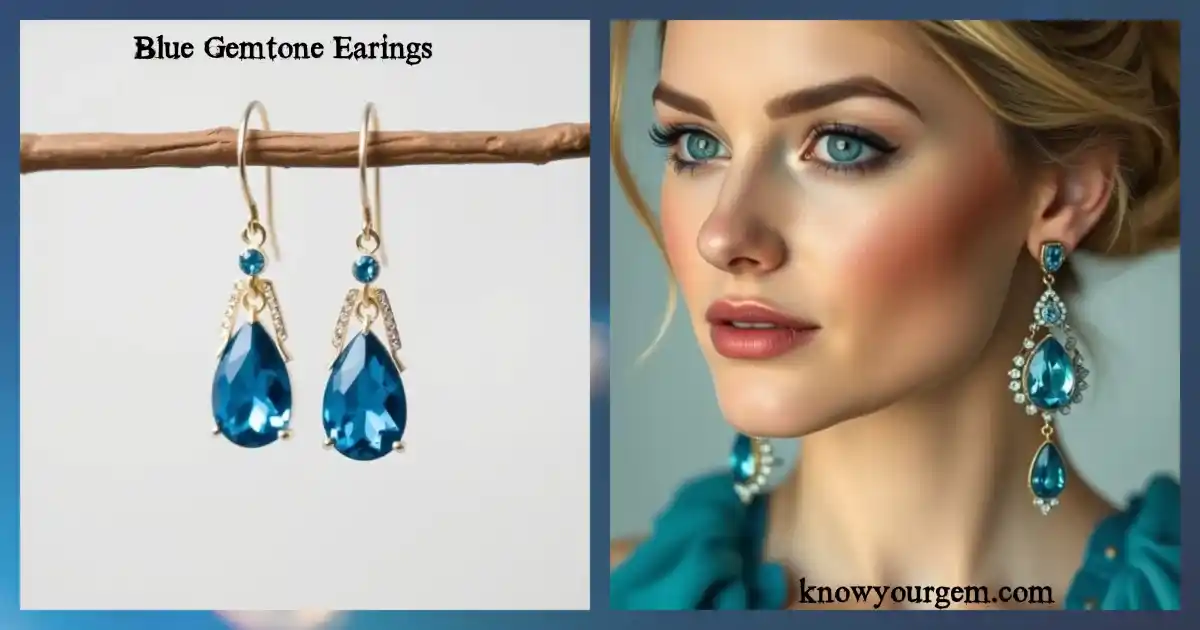
Best Blue Gemstones for Jewelry:
Each blue gemstones is different from other blue gem, they suit differently, jewelry, hold different prices, hardness, durability, sparkle, and cost.
For engagement rings:
Blue sapphires can be a wonderful choice because they on 9 mohs scale of hardness and have durability that resist scratches and make your engagement rings safe for daily wear. It holds polish for decades. Princess of Diana’s famous sapphire engagement ring now it is worn by Catherine.
Princess of Wales cemented its association with romantic commitment. Aquamarine is a reasonable alternative for people who prefer a lighter, airier blue, though it requires slightly more protective settings. Tanzanite and moonstone require protective settings because they are generally considered as too soft unsuitable for daily wear ring without a protective bezel or halo setting.
Necklaces & Earrings:
Soft stones like Turquoise, Lapis Lazuli, moonstone, tanzanite, and iolite work well in necklace and earring because they don’t face much wear.
Beads & Strands:
Blue topaz, aquamarine, Lapis Lazuli, turquoise, and blue agate are popular. Since, lower grade material still looks great when that cut into beads.
Statement & Collector Pieces:
Tanzanite is valued for its shifting blue violet color and other rare gems like benitoite, Paraíba tourmaline, and blue grandidierite attract collectors who value uniqueness.
During picking up a blue gemstone, you must need to think about jewelry setting. Since, harder stones can handle prong settings in rings, whether softer are safer in bezel settings that surround and protect their edges.
Meaning and symbolism of blue gemstones:
Blue is universally connected with trust, depth, calm, and clarity which make blue gemstones among the most meaningful in the world’s jewelry traditions.
Sapphire:
Thousands of years, ago sapphire has carried meanings of wisdom, loyalty, and divine favor. An ancient people have imagined that the sky blue color of sapphire came from a giant sapphire beneath the earth.
In medieval Europe, clergy wore sapphires as a symbol of heaven. Currently people see sapphire as a sign of sincerity, that’s why it remains a beloved choice for engagement rings.
Aquamarine:
It owned a spirit of the sea and the name. It has so called Latin American aqua marina, means “sea water,” enthusiast believed to used it as talisman for safe passage across the waves. In this modern era people value this stone for its qualities like, clarity, courage, and honest communication.
Turquoise:
Turquoise carried extreme cultural across Native American traditions, Persian cultural, and Tibetan Buddhism. This stone has seen as a protective, people believed it a safe guard against negative energy and bring good fortune.
Lapis Lazuli:
It was once ground into ultramarine pigment to paint the Virgin Mary’s robes in Renaissance art, that cements its link to divinity, truth, and spiritual power. In ancient Egypt, lapis andorned amulets and funerary objects, including the famous death mask of the Tutankhamun.
Tanzanite:
It Carries modern symbolism transformation and new beginnings, that fit for a gem discovered only in 1967. In 2002, it became the first new birthstone that is added by the American Gem Trade Association in over fifty years.
Astrology and healing properties of Blue Gemstones:
In Vedic astrology (Jyotish), blue sapphire is recognized as Neelam, a gemstone of Saturn (Shani). It is considered as one of the most powerful and quickest acting stones, believed to bring clarity, discipline, and success when Saturn is favorable. Although it is traditionally advised to wear only natural, untreated blue sapphire which is set in silver gold, on the middle finger of the right hand.
According to western astrology, sapphire is the birthstone for September, whether Aquamarine is set for march, and both topaz and turquoise can work for December.
In crystal healing traditions that are spiritual practices rather than medical science blue gemstones are associated to the throat chakra (Vishuddha), associated with the mind, ease anxiety, sharpen clarity of thought, encourage honest communication.
Whether, Lapis Lazuli is thought to stimulate the third eye, that enhance intuition and self knowledge. Aquamarine is known for balancing emotional turbulence and support clear dialogue, whether turquoise is valued for protecting and grounding a wearer.
The connections are deeply related to the metaphysical and spiritual traditions. They are symbol and cultural, but can’t be substituted for medical advice or treatment.
How to identify realistic blue gemstones:
Many practical tests and indicators can help buyers to differentiate between natural blue gemstones and synthetic lab created means heat treated gemstones:
Temperature test:
Natural blue gemstones, are mineral crystals, which make you feel noticeably cool to the touch at room temperature. Since, glass and plastic imitations warm up quickly in the hand. Whether a realistic sapphire or aquamarine hold against the cheek will feel distinctly cool. This is a first pass indicator, not a definitive test.
Hardness test:
Recognizing the Mohs scale of a stone can help to confirm identity. Sapphire is 9 can’t be scratched by knife blade owns around 5-5.5 or a glass plate 5.5; blue glass imitations can be. So the test must only be performed on areas of unset stones.
Inclusions under magnification:
Natural gemstones normally showcase tiny inclusions, like crystals, healed fractures, rulite needles in sapphires, or growth tubes in Aquamarine. Whether synthetic stones often look too clean or showcase curved growth lines under magnification. Imitation glass typically has curved bubbles.
Dichroism:
Several blue gemstones are pleochroic because they showcase vary colors in different viewing directions. Although, Aquamarine displays blue and near colorless. A simple dichroscope discloses this immediately. Glass and most imitations show no pleochroism.
Specific gravity:
Each mineral owns a characteristic density. A stone that seems unusually light for its size can be named by glass or synthetic. If we take an example of sapphire which has specific gravity of around 4.0 glassy typically runs 2.6 to 3.5.
UV fluorescence:
Some of the stones fluoresce characteristically under ultraviolet light. Whether many other Sri Lankan sapphires showcase orange to red fluorescence under longwave UV. Synthetic sapphires and natural sapphires from other origins often don’t. Whether Aquamarine can show weak blue to green fluorescence. Blue topaz is typically inter under UV.
Certification:
For any significant purchase, always request for a laboratory certificate from a recognized gemological laboratory like GIA, Gübelin, SSEF, GRS, or AGL.
Although, these labs test specific gravity, refractive index, spectroscopic absorption, and microscopic inclusions characteristics to confirm identity, origin, and treatment status. No other method comes close to lab certification in reliability.
Blue goldstone:
deserves a specific note, it is usually a man made glass with having embedded copper crystals that create a sparkly, deep blue appearance.
It is not a natural mineral or gemstone. It is sometimes sold without clear disclosure. Genuine natural blue gems don’t contain a regular lattice of metallic glitter that characteristic appearance is unique to gold-stone.
Rare Blue Gemstones:
Beyond the well recognized classics, the world of blue gemstones hold a handful for exceptionally rare blue treasures that are valued by collectors and connoisseurs.
- Benitoite stands out as America’s rarest gem found only in California, It dazzles with an intense blue color and brilliant sparkle. Since, faceted stones more than one carat are exceptionally scarce.
- Paraíba Tourmaline, comes from Brazil, glows with neon blue green hue that is caused by copper impurities. Its vivid color makes it the most valuable gem, and it is often sold for expensively than fine sapphire.
- Blue Spinel has gained recognition among collectors for its rarity and understated elegance. Its natural grayish-blue tone and excellent brilliance give it a refined appeal.
- Tanzanite (Blue Zoisite) is unique to Tanzania, with having no other known sources worldwide. Geologists expect the deposits to be exhausted within few decades, that make the gem quality stones increasingly precious.
- Blue Tiger Eye is a chatoyant quartz that showcases silky bands of shifting light across a blue gray surface. Doesn’t truly rare, genuine specimens are often confused with dyed or synthetic imitations.
- Hauyne and Jeremejevite are so scarce that lapidary quality crystals rarely appear outside specialist auctions. Cut stones more than half a carat are extraordinary finds.
How to Choose, Wear & Care for Blue gemstones?
- To select a realistic and sophisticated blue stones gems for your daily use, you must need to understand its hardness and durability. For example Sapphire blue gem is ranks a durable 9 Mohs sacle, while softer stones like Lapis Lazuli requires gentle care.
- Cutting matters: Admirable cuts are believed to maximize the looking of the gem, while cabochons highlight color and texture. Thus, proper storage, regular cleaning, and vigilance against imitations ensures your gem’s beauty lasts a lifetime.
Conclusion:
Basically Blue gemstones are much more than beautiful, attractive adornments; they are timeless symbols woven from the much fabric of Earth’s history in human culture and cosmic wonder. Throughback to the depth of ancient mines which are usually handy of the skilled artisans, these blue stones gems carry various stories like, elemental alchemy, royal legacies, and spiritual mysteries. Therefore their captivating colors are making them a versatile gems in the world.
Regal Sapphire, the mystical lapis lazuli, or the serene aquamarine, blue gemstones are embodying a unique blend of science, art. Thus, they are believed to remind us balance between nature’s forces and human creativity.
The modern technology of the world is now changing blue gems remain steadfast frozen of beauty and mystery which invite us to explore the depth of both Earth and spirit. While wearing or admiring these blue stones gems means connect you with the legacy which is like infinite as the skies make, that makes blue gems eternally relevant and profoundly enhancing.
Recommendation:
Those blue stones enthusiast who are actually seeking to see blue gems in modern jewelry, they must need to explore their history, forming, mining and should know how to choose a realistic gem for the modern and how to care for it. Whether GIA is the most trusted laboratory where you can check your gem if a gem is natural or lab grown.
FAQS:
1. What are blue gemstones called?
Blue gemstones are a wider choice for making jewelries because their distinctive blue coloration. Thus, these gemstones huge range of varieties like, blue sapphires, aquamarine, blue topaz, tanzanite, lapis lazuli, and so on. Although the term blue gemstones is a general category encompassing any gemstone which exhibits shades of blue in its natural form.
2. What stone is naturally blue?
Blue gemstones like sapphire, aquamarine, blue topaz, lapis lazuli, tanzanite, kyanite, and azurite are carrying blue color naturally. Thus, these are the gems prized for their beauty and unique properties, which make them a popular choices for jewelry and decorative purposes.
3. What is the rarest blue gemstone?
Paraiba tourmaline is the most rarest and brilliant gemstone. It is generally known for its captivating neon blue to greenish blue color. Thus this gem is determined in limited areas like Brazil, Mozambique, and Nigeria. Moreover a gem gets its unique color from trace amount of copper and manganese. So, now it is highly valued for its rarity and distinctive color. Paraiba tourmaline commands the high prices in the gemstone marketplace.
4. What is a popular blue gemstone?
Sapphire is known for the most versatile and brilliant gem due to having a deep rich blue hues, durability, and brilliance. Thus, this precious gemstone is commonly used in fine jewelries, which includes engagement rings, necklaces, and earrings. Moreover Sapphire comes in various shades of blue, ranging from light sky blue to deep royal blue and it is also associated with loyalty, wisdom and prosperity.
5. Is Blue Gem expensive?
The quality, size, and rarity of the gemstone can tells us the price of the realistic gem. Therefore the gems blue sapphires and Paraiba tourmalines can be more expensive than other gemstones because their rarity and good look, while blue topaz and aquamarine can beat others as well. Hence Factors like color, clarity, cut, carat weight, origin, and treatments can influence the price.
6. What are blue gems used for?
Blue gemstones are often used in jewelry, they bring calm, wisdom, and protection, so for that people wear them to get their spiritual healing or emotional balance.
7. What is the most expensive blue gem?
Blue Diamonds is are the most expensive blue gems. They are rare, stunning, and worth millions because of their beauty and scarcity.
8. What is the rich blue gemstone?
Sapphire blue gemstone are typically known as the rich blue gemstones, they are so famous for their deep royal blue color and timeless elegance.
Our responsibility is to bring insight facts about every gem however users must read and comment on their feedback on the comment section: Gemstone Enthusiast KamilHussain!

Welcome to KnowYourGem.com! your ultimate destination for uncovering the fascinating world of gems and their secrets! I'm Kamil Hussain, a passionate blogger with a Master’s degree in Economics, dedicated to bringing you insightful, well researched content that blends the beauty of gemstones with the art of storytelling. With a keen analytical mind and a love for discovering hidden treasures, I created this platform to help you explore the brilliance, history, and value of every gem.

