
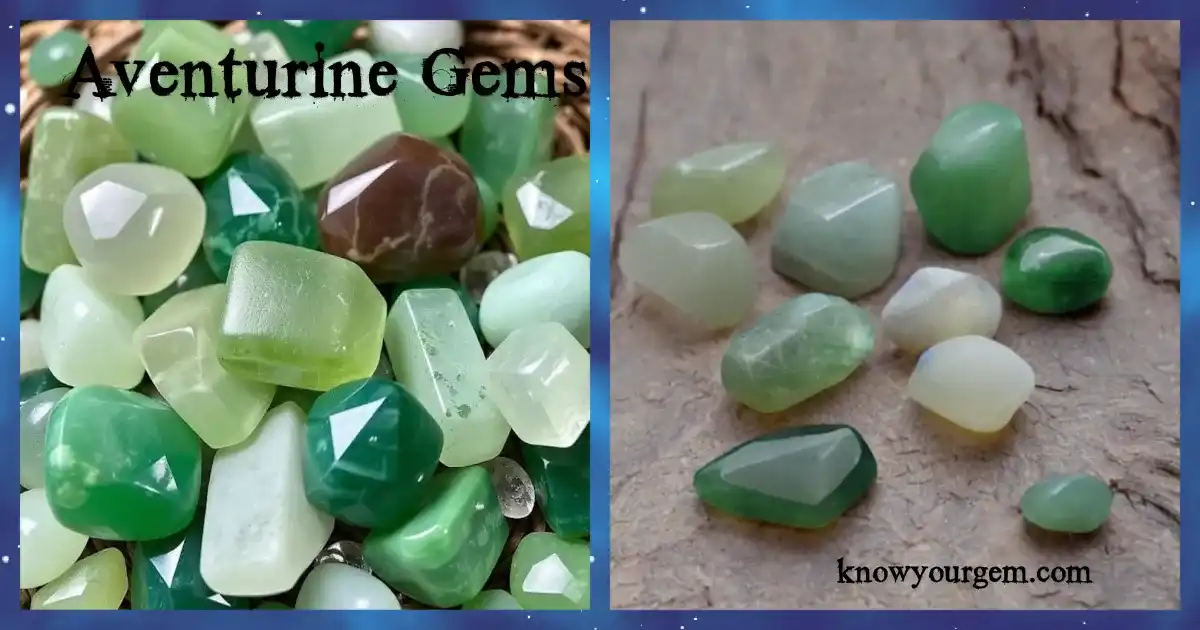

An aventurine stone is a striking quartz with a crystalline spark, an affordable price, and attractive colour and dim shimmer. The most popular result of aventurine is the green variety.
Its luminous tone and glittering visual qualities primarily derive from tiny trapped pieces of fuchsite mica frozen within the quartz. The dim glow is produced by the stone is recognized as aventuresence and fluctuates as it is moved across the light.
Therefore, rubbing aventurine is generally cut into cabs; it is formed as beads or used in carvings, tumbling stones, or jewelry designs. Known as ‘the stone of opportunity’ in many spiritual circles, aventurine inspires hope and confidence.
In the spiritual world, aventurine is commonly referred to as “The Stone of Opportunity,” a symbol of confidence, hope, growth, and luck. It’s important to note these interpretations are spiritual rather than scientifically proven effects of the stone.
Aventurine Stone Properties:
| Property | Details |
|---|---|
| Quartz Family composition: | Silicon dioxide, SiO |
| Average colour: | Green |
| Other Colours: | Red, yellow, grey, brown and orange |
| (Green source: | Fuchsite, chrome) |
| Effect: | Sparkling appearance, or Aventurescences |
| Mohs hardness: | 6.5-7 (about) |
| Transparency: | translucent-opaque |
| (Luster: | glossy and a bit waxy) |
| Cuts for jewelry: | beads, carvings, cabochons and polished spheres |
| Tumbles and spheres: | a popular option |
| Key locations for its extraction: | Brazil, India, China, Russia and Tanzania |
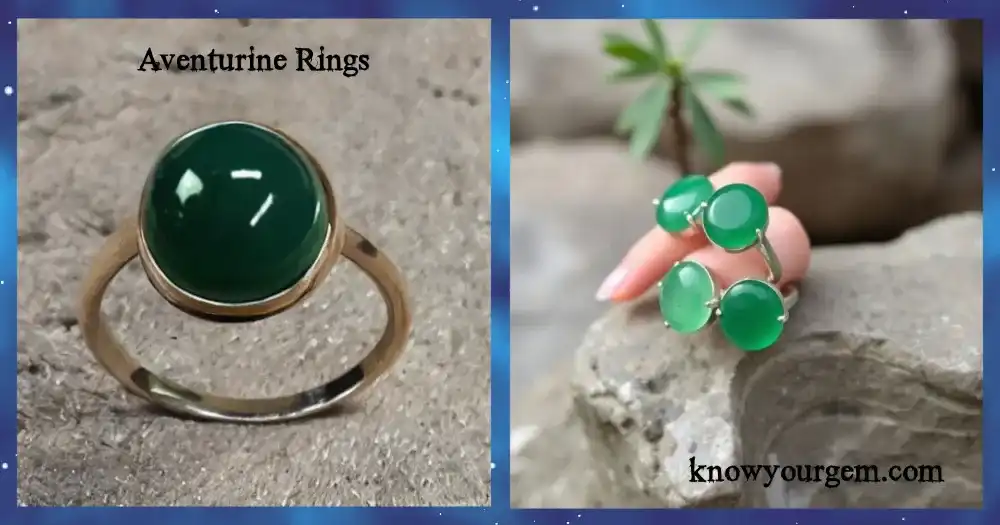
| Aventurine’s hardness of about 7 on the Mohs scale makes it an acceptable choice for jewelry. | However, such rings or bracelets will require extra care in their everyday usage as such jewelry may often come into close contact with abrasive objects or surfaces, unlike other rings. |
What Exactly Is Aventurine Stone?
The aventurine stone is simple naturally found quartz material, or a rock that contains small sparkling mineral inclusions which give the appearance of aventurine.
Such inclusions are the cause of aventurescence and make the material visually different from that of a regular quartz. Green aventurine mainly contains fuchsite, a chromium-rich form of mica that lends to the color and appearance of shimmering.
If the inclusions of the mica appear evenly scattered throughout the stone, this will make the aventurine more appealing. Most aventurine material is somewhat translucent and opaque rather than transparent; it is ideal to use the polishing technique that makes it a perfectly smooth cabochon, beads, palm stones, spheres, figurative statues, and custom carvings.
How Does Aventurine Stone Come About?
Aventurine stone comes about by the process of metamorphism in rock formation.
In the realm of geology, as the quartz grains begin to recrystallize due to temperature and pressure changes, smaller particles of other minerals get trapped in it, making it colored and acquiring different effects. Depending on the type of aventurine, inclusions could be the following:
- Green Aventurine: The chromium-bearing mica, or fuchsite.
- Orange, red, or brown aventurine: The iron-bearing minerals which cause this effect or hue ( hematite and goethite can contribute to color).
- Yellow Aventurine: Iron-bearing;
- Blue Aventurine: The dumortierite may contribute to the color. Aventurine is generally composed of interlocking granite grains with some mineral content rather than a solid, singular clear quartz stone.
Where Is It Found?
As several countries have reported deposits of aventurine, India is among the significant commercial suppliers for its widespread usage in carving beads and cabochons, and affordable fashion jewelry.
- India: It is the producer of beads, cabochons, and various trinkets from green aventurine, which is the most significant for this location in India.
- Brazil: It produces fair to good quartz materials from this location, including aventurine.
- Russia: The Urals in Russia have traditionally been a strong location for mining.
- Tanzania: Other minerals in the region include aventurine.
- China: Various types of carving are common here, and it’s also a source of decorative, jade-like material.
Aventurine Stone Origin:
India, Brazil, China, Russia, Tanzania, and the eastern part of Europe as well as have some sources of this beautiful-looking stone.
The actual origin of the Aventurine name came from the expression, “aventura,” by some Venice jewelers many decades ago as a descriptive indication that it had been “discovered by chance. The stone later got the name in reference to aventurine made for jewelry which featured a glitter effect or sparkle.
Etymology And Meaning Of The Word:
The aventurine stones were called aventurine glass later, or more technically, aventurine, which, in fact, means by chance or “unexpected.”
It was a type of glittering, reflective, scratchy glass with metallic inclusions introduced in Venice as a product of fortunate creation, and therefore was thought to have been introduced together with happy good luck! Since then, this type of aventurine gemstone was named after the aventurine glass.
Aventurine Stone Colors And Meaning:
| Color | Common cause (Appearance) |
|---|---|
| Green aventurine | Fuchsite mica, light to medium shades of green with an aquamarine sheen. |
| Dumortierite and similar minerals | Character 2002 medium to deep shades of blue, sometimes bluish-green, sparkle sheen may sometimes be slightly sparkly. |
| Red aventurine | Hematite and other mineral inclusions containing iron red to orange-yellow or darkish orange red, may seem to lack an obvious shine. |
| Orange aventurine | Iron-rich mineral inclusions, rich in orange, yellowish-orange and peach tones |
| Yellow aventurine | Iron-rich mineral inclusions; pale yellow to golden-yellow shades |
| Brown aventurine | Iron oxides and other mineral inclusions; earthy tone and subtle shiny appearance |
| Green aventurine | The most available and cheapest Aventurine stone. |
| Blue aventurine or red aventurine | Although they are less readily available than other types of aventurine, they may have much higher prices in comparison to green aventurine. |
Aventurine Stone Meaning:
In the practice of Crystal healing, aventurine is especially useful for opportunity, growth, prosperity, and emotional healing. It is considered a “personal protection stone” during any major new project, business, new job, a new house, school examination, or a new decision.
1. Green Aventurine stone Meaning:
Green aventurine stone meaning in green is mainly associated with the heart chakra in crystal healing, and it symbolizes compassion, happiness, and well-being, emotional development and growth, self acceptance and forgiveness.
It is not used for the power to provide infinite abundance but for empowering with hope and conviction so that it promotes inner peace and security to take action toward aspirations.
2. Blue Aventurine Stone Meaning:
Blue aventurine crystal is used to calm thoughts or mental stress, which aids in making rational and balanced decisions. For those who focus on writing, journaling, and public speaking, or creative activities, it can be useful to include blue aventurine in their space or use it as a talisman.
3. Red Aventurine Stone meaning:
For those who generally need an emblem that fosters drive, activity, and bravery toward goals, the red aventurine crystal is the one that will come to help; the red Aventurine also has a direct effect on physical body energies as it strengthens will and motivation.
Note: Aventurine stone meaning and its benefits do not replace medical diagnosis, therapy, legal advice, or any other professional guidance.
When and why to wear an aventurine bracelet?
You can enjoy Aventurine stone easily as a bracelet that can match any casual or professional attire, whether paired with silver, gold, or colored jewelry.
Benefits of wearing Aventurine Bracelets:
If you want a calming, shining green quartz on your wrist and also do love to symbolize an ‘opportunity stone’. It represents optimism, hope, and growth.
A budget-friendly natural stone bracelet you can afford. Make use of this crystal in meditation practice; wear an aventurine bracelet for business opportunities or new ventures. People who favor unique and raw natural beauty beyond perfection and bling generally adore these handmade aventurine bracelets.
Is the aventurine stone real?
Yes, it is real. Aventurine is a natural quartz gemstone, and the sparkle of aventurine stones is actually from tiny mineral inclusions suspended in quartz.
Other mineraloid stones that can be cut and polished to resemble aventurine but are actually commonly and widely called jade for selling purposes. Buying genuine aventurine from a real supplier and crystal dealers will be worthwhile in the end.
Aventurine stone vs Jade:
| Feature | aventurine | jade |
|---|---|---|
| Mineral Family of stone | Quartz | Jadeite/Nephrite |
| The stone comes with | Flecks of mica; such minerals give aventurine its characteristic shimmery look | Can have lots of inclusions, usually smooth and glossy. |
| The colors that aventurine crystals hold are | The most common form of aventurine is green. It can also be light to medium blue; medium yellow to Golden Yellow and a vibrant orange or red. |
Most Varieties Of Jade Occur In Green:
Some may be black, yellow, gray, lavender or white. The price of jade is the highest value; jadeite can be thousands of dollars per Carat.
Most Aventurines are usually quite affordable, with prices from just a couple of dollars to a hundred dollars per pound. They vary depending on the quality, color and clarity of the specimen. Aventurine is often incorrectly sold by sellers as “Indian Jade.
Identifying Authentic Aventurine Stone:
Know what to look for when buying aventurine; the best qualities will have a natural mixture of colours, a subtle glint, and be well polished. There should be no bright daffy colours or bright shiny metallic surface, or plastic-looking finish or spray of even glitter.
Signs of Natural Aventurine Stone:
- Soft, natural sparkle when illuminated.
- Luster and mineral variations on a natural scale.
- A smooth polish, which does not give a “plastic” appearance.
- Golden Green Uniforms – an intrinsic green colour with a subtle even dusting of fuchsite glitter.
- Translucent to sub-opaque body coloration.
- No distinct broken dye-filled cracks or drill holes.
Signs Of Danger To Be Alert For:
- Instead of brilliance, we have bright, synthetic, homogeneous colours.
- Even, powerful glitter that appears nearly identical to craft glitter.
- Introduction of air bubbles could be a sign of glass.
- Dye concentrated along natural fractures, drill holes.
- Sellers making the descriptions of the material unclear.
As most of the shops sell very cheap tumbled stones or simple bracelets, the shopping reports may not be necessary.
High-value purchases such as pricey carvings or elaborate jewelry require serious evaluation and a transparent treatment statement provided by the seller, plus an independent gemological report if in any case possible.
Aventurine Stone Price Guide:
Aventurine is a true inexpensive stone, with its price depending on its colour, size, polish, sparkle, quality of carving, rarity and setting in jewellery.
| Aventurine Stone Item | Average RRP |
|---|---|
| Small tumbled stone | $2- $15 |
| Anyone who has ever played billiards or pool will recognize it. Raw piece of aventurine | $5 – $30+ |
| Standard loose aventurine | $3 – $30/carat |
| Polished cabochon | 5 – $40+ |
| Strand of aventurine beads | $5 – $30+ |
| Beaded bracelet86 | $10 -$60+ |
| Fashion jewelry, is much more affordable than jewelry priced over.925 sterling, ranging from | $25 – $150+ |
| Large carvings or luxury items | $50 – $300+ |
| Fine collector carvings | $100 – $500+ |
Normal green aventurine prices can be about $3- $30/carat. Small tumbled stones are not so expensive. Other pieces such as large carvings or fine examples of green aventurine and/or are mounted in gold vermeil or silver may command a high price.
Aventurine Cost Determinants:
- Color: Green colors in the range of rich, natural shades are very appealing.
- Aventurescence: A uniform, subtle brilliance adds to the visual interest of a gem.
- Size: High-quality large stones fit to carve will add to the price.
- Carving: Fine detail work and detailed carving increase the value of the object
- Rareness: Some colors such as blue aventurine are much rarer than green.
Aventurine Stone Jewelry Care:
- Jewelry Setting: The price goes higher due to the usage of precious metals like gold or platinum.
- Treatment: The stones that have no treatment are widely accepted. Aventurine can be worn regularly; however, always try to protect the jewelry from unnecessary harm with normal precautions. Clean your aventurine jewelry with mild soap and warm water.
- Polish With Soft Cloth Do Not Use Bleach: Never polish it cannot do with hard or other chemicals, but most of all is the perfume to be avoid with it. Keep out the jewelry while working out, sports with quick motion, swimming, or when course cleaning.
Never put your aventurine jewelry where diamonds, sapphires like other hard stones exist, and always wear only aventurine stone when out there. You shouldn’t better impact it or drop your jewelry onto the hard floor. After processing, the Aventurine stone needs to be deposited in the lined jewelry box, so there will be no scratch for the jewelry as well.
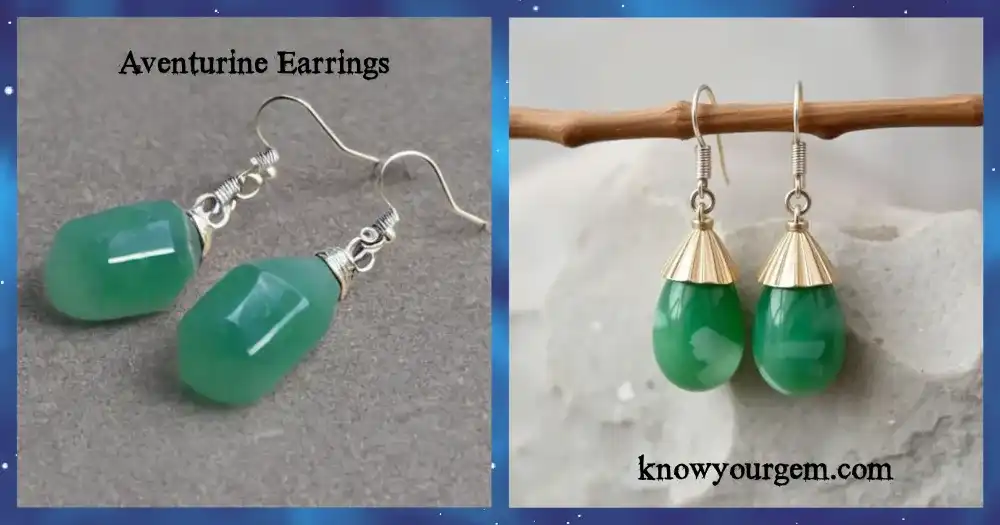
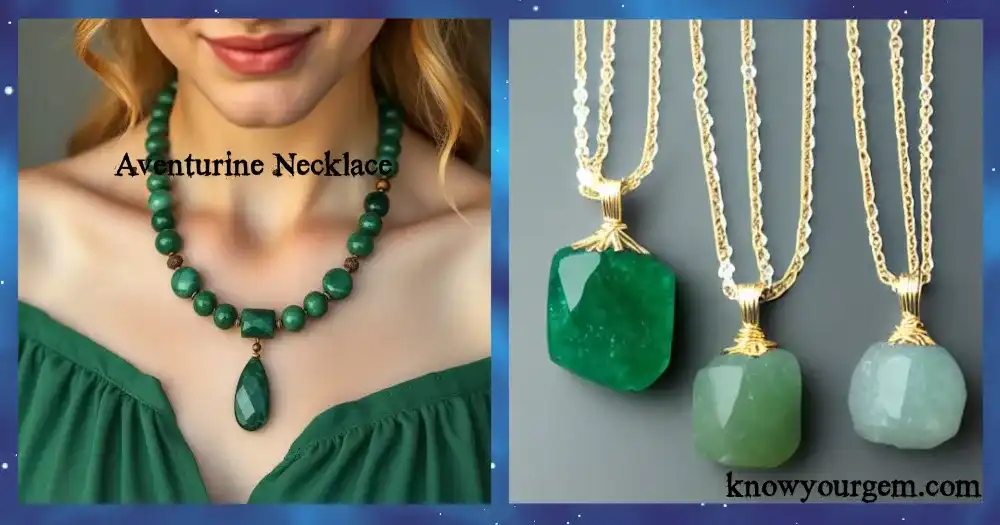
Best for daily use are earrings and pendants. They are less prone to damage due to their protected location in low-impact zones. Bracelets should be worn more cautiously as they are less well protected.
Is Aventurine an official birthstone?
Although aventurine has a strong symbolic value for some zodiac birth signs, it has not yet been officially adopted as a modern birthstone. However, its qualities are still largely appreciated and sought after by individuals by birth sign, as they are connected to a natural symbolism and theme, and are often used as modern crystal zodiac stones for aventurine.
And, whether you do or don’t claim aventurine as your birth month gemstone, this should not affect its manifest beauty and the nature of its correspondences in your hands.
Conclusion:
Aventurine: the naturally seductive quartz gem, which can be present in many different hues and has a unique glaze. The green aventurine is the most often supplied, as it can be related to inclusions of fuchsite within quartz that yield a gentle shimmer and is low-priced.
If you wear it to look good, you love it as a mineralogical specimen, or like the feeling of wishing you were wearing it because of what it represents, select stones with real color, visible dots, a pure, smooth polished surface, and full and transparent treatment disclosures. Its appeal, unquestionably, is in its mineralogy and what it has come to mean to so many people from its magnificent gemological roots.
FAQS:
1. What are the advantages of Aventurine?
This precious blue stone is often employed in the following mind or body applications, such as creating jewelry, adornments, and hieroglyphics, meditation, and as a collection. It is now known in many mind traditions to help bring positive thinking, enhance prosperity, aid progress, and balance emotions.
2. What causes the nature of anode shimmer?
The sparkling effect, also known as aventurescence is caused by tiny reflective mineral particles suspended in the quartz itself; for instance, green aventurine contains fuchsite mica itself forming a star-like sparkle.
3. Can this gem be a lucky stone?
The standing of green aventurine as a lucky stone is still highly regarded in many cultures, although the respect it is given still remains only words rather than a true success. In this case, it is called the “Stone of Opportunity”
4. Is Green aventurine different from Jade?
Yes, easily. Though they will do a similar shade of green, green aventurine is a dyed variety of quartz. Jade is a Na and Al silicate, either of which, nephrite or jadeite, is very similar compositionally, as they both contain two silicates quite similar to each other, but due to the element arrangements in their structure, they are chemically different and create a slightly different overall hue.
5. Is it safe for you to wear aventurine stones every day?
Yes. While resistant enough for constant use, the aventurine quartz, measured at a 6-7 durability level, will enable whichever of the jewelry to be worn indefinitely if taken care of. Apart from sapphires, rubies, and diamonds, other jewels have a lower level of resilience.
6. Can you put aventurine in water?
A brief contact with clean water is ok for a clean, raw aventurine. It should not be immersed completely or soaked for any longer period of time as by exposing it to water over long periods you are at risk of developing internal cracks, but you could soak for a maximum of just under half an hour.
7. What is the price of Aventurine?
The most popular ones are reasonably priced, easily found for less than $30 per carat. Smaller tumbled aventurines (which are sometimes mistaken for a bunch of other similar mineral types ) as well as some of the beads are in this category. The better, more intricate hand-carved samples and high-end jewelry would cost significantly more.
8. Has the Blue Aventurine been tinted?
Definitely, it may need to be tested and documented in a professional report, but blue on some aventurine, like in the photo to the right, is created through mineral deposits. Be sure to ask what is the blue is in the crystal: the mineral deposit, a color added to the crystal artificially, or a direct or indirect tint added to the crystal.
Must read:
Avoid confusion between aventurine and jade while checking it with GIA, IGI, and other trusted labs.

Welcome to KnowYourGem.com! your ultimate destination for uncovering the fascinating world of gems and their secrets! I'm Kamil Hussain, a passionate blogger with a Master’s degree in Economics, dedicated to bringing you insightful, well researched content that blends the beauty of gemstones with the art of storytelling. With a keen analytical mind and a love for discovering hidden treasures, I created this platform to help you explore the brilliance, history, and value of every gem.

