


Overview:
Naturally colored diamonds inject an entirely different dimension of exclusivity and desire into the sparkling white norm. They form under extraordinary circumstances deep in our planet’s crust, and their beguiling hues are caused by tiny amounts of certain elements and minute structural imperfections.
With the full spectrum of subtle, romantic hues to taking-your-breath-away high-chroma, astoundingly brilliant colors, a few examples include the famed pink star diamond, which sold for millions of dollars at auction.
Beyond Beauty: A Legacy of Tangible Value
Collectors believe that the appeal of noble, rich, beautiful, fancy, colored diamonds is because of their fashion-house quality for look. Generally, stones in the high-value market are ideal choices for an investors who want to possess a sound asset which can appreciate considerably over the long term.
Market Dynamics and Scarcity:
The value of colored diamonds is primarily driven by availability and demand. With the closure of famous sources such as the Argyle Mine of Australia, colored stones such as pink and red diamonds are now even more limited and sought after.
As this limited offer has generated worldwide interest by major financial centers such as New York, Dubai, Hong Kong and London, they are returning to their tradition of reinforcing their role as a safe depository of wealth and prestige.
From romance to returns: Navigating the market
If you are looking at investing in colored diamonds, would like to purchase one as an engagement ring (for which colored diamonds are increasingly popular), or if you just want to hold the smell of Earth’s geological magic in your hand, you should know the following fundamental facts:
- Definition & Origin: How geological pressure and chemical elements create color.
- The 4Cs of Color: Why has color taken the crown for value over clarity and carat weight with the fancy stones?
- Grading & Charts: How to interpret the GIA color scale and hue saturation.
- Informed Purchasing: How to buy confidently in a complicated market.
A spectrum of prestige:
Colored Diamonds with their appealing shades, dependable certification, and high market demand, colored diamonds have maintained a great appeal among collectors around the globe.
What is a colored Diamond?
This is a variety of diamond. It is frequently identified as a fancy colored diamond- a specimen of nature’s most unique work of art. When comparing a regular white diamond, which is typically sought after because of its color-less feature, a spectacular colored diamond becomes worth it.
This gemstone glows in colors much richer than the dull yellow of an average diamond, from soft pastels to the intense fiery hues that collectors crave.
How they form:
In fact, diamonds are formed within the Earth’s mantle by the crystallisation of carbon that occurs at considerable downward pressure in the intense heat of the Earth. Trace elements that become incorporated within the crystal structure or structural imperfections lead to magnificent color.
- Nitrogen: yellow and orange tones
- Boron: Blue-virtually hypnotic blues. This is the first of the powders, B2O3, which is broadly classified as a glass.
- Radiation exposure: lush greens
- Crystal distortions: These are composed of romantic pinks and ultra rare reds
What makes It “Fancy”?
The name fancy refers to any colored diamond with color saturation above the standard scale of the Z grade. While white diamonds are graded from D (completely colorless to N missing color), fancy color diamonds are evaluated by the Gemological Institute of America (GIA) in three categories:
- Hue: The dominant color
- Tone: Lightness or darkness
- Saturation: Intensity and purity
Rare vs. Fancy:
Not all of the fancy colors are equally rare. While Yellow and brown are seen more frequently, they remain much less prevalent than the colorless, yet pink, blue, green, and most especially red diamonds are almost vanishingly rare.
However, a natural pink diamond beats a hundred times more white diamonds, and true reds are considered among the rarest minerals on the planet.
Origins That Tell a Story Geography adds intrigue to rarity:
- South Africa’s Kimberley mines: Fabled pinks & reds
- Australia’s Argyle Mine: Closed in 2020, thereby helping the strengthened demand). The Report: How is the price of a Pangolin determined?
- India’s Golconda region: Land of legendary plunder.
- Brazil, Russia, and Africa: New bottleneck sources of the world.
Why colored Diamond Matter more for Jewelry?
Colored diamonds are a far more precious form of jewelry; they are both an asset class for investment and a superlative museum showpiece.
They have not only been created over a billion years ago, but they are also immensely rare and have settled, as a result of their long history and provenance, into a class of their own.
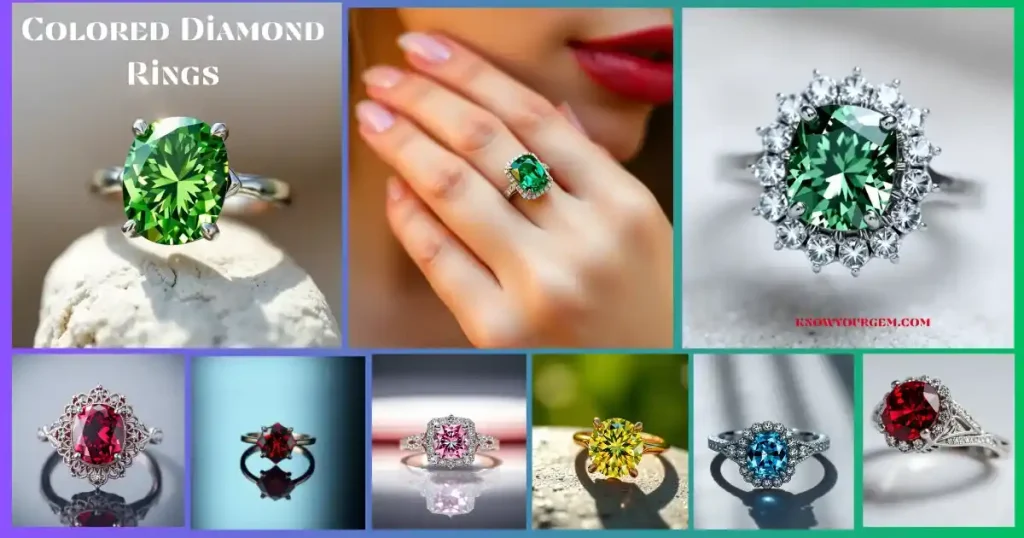
Types of Colored Diamonds:
Colored diamonds shine in almost every imaginable color. Each one is crafted by a rare anomaly in the earth, each of its own unique rarity, value, and function in the market. For investors, collectors, and jewelry enthusiasts, it is necessary to obtain familiarity with all of the categories.
A. Pink star Diamonds:
A pink diamond is highly rated among almost all diamonds. The stone is found in somewhat hazy form; experts think that it is extreme heat that splinters the crystal lattice and causes the light to be absorbed selectively, creating pink rather than trace- element coloration.
- Market Impact: The 2020 shutdown of the Argyle Mine in Australia, responsible for over 90% of the pink diamond market in the world, altered the supply structures worldwide.
- Value: Much Fancy vivid pinks usually charge $1-$2 million per carat, and they are exceptional stones; that’s why they are worthy.
- Famous Stones: The pink star is rare and expensive gemstone. It was sold for 71.2 million; the Graff Pink with 2478 carats, and the Argyle Pink Jubilee with 12.76 carats, have sold most expensively. Added to the 8.7 million 22 pink diamonds, weighing up to 150 cts and over.
- Investment: Pinks wore best from 2005-2020, 180 % up, outperforming all classes. With Argyle gone, this market is forecast to still perform well.
B. Blue Diamonds:
The blue hue of these amazing gemstones is just what the scientists say: “tiny boron atoms” embedded in the crystal structure of the blue diamond, which essentially absorb red, yellow & green light.
- Value: The cost of a high-quality, bright blue diamond can be as much as $200,000 to over $1,000,000 a carat but is size and clarity dependent.
- Famous Stones: The Hope Diamond 45.52 carats, Smithsonian; Ocean Dream 5.51 carats); and Oppenheimer Blue (14.62 carats are perhaps the most well-known stones, which were auctioned at $57.4M.
- Market Trend: Buoyed by high-end Asian and Middle Eastern demand, prices remain robust, and auction records support the continued strength of this segment.
C. Yellow Diamonds:
Yellow diamond are the most frequently occurring fancy color, due to the presence of nitrogen impurities leading to the absorption of blue. These can vary from very light to very vivid canary yellows.
- Value: Beautiful light yellow colored diamonds are expensive. Fancy stones are sold for $3,000-$5,000 per carat; however, vivid yellow diamonds can command $15,000-$25,000 plus per carat or more.
- Famous Stones: 128.54 Tiffany Yellow colored diamonds, 101.29 carats Allnatt Colored diamonds, and the legendary Florentine colored diamond in 137.27 carats can also be sold for higher prices.
- Market Appeal: Yellow-colored diamonds have a unique appeal, particularly in the jewelry they adorn (i.e engagement rings), which makes even the yellow variation significantly cheaper than the pink and blue-colored diamonds.
D. Green Diamonds:
Green is one of the rarest diamond colours. Green colour in the diamonds is due to natural radiation impact, which causes variations in the carbon atoms. This leads to ’… Color centers that absorb red and yellow light’.
- Value: A high-quality green diamond is valued at $200,000-300,000 per carat; pure green is assigned an even greater premium.
- Famous Stones: The Dresden Green (41 carats), a priceless, long-coveted treasure.
- Sources: Minas Gerais (Brazil) and (rare) African deposits (production is very restricted).
E. Red & black Diamonds:
- Red Diamonds: The rarest of the gemstones of all time; it is rather difficult to be found, and its certificate makes it very rare. Unadulterated pure reds are almost priceless.
- Famous Stones: Moussaieff red of 5.11 carats and Hancock Red of 0.95 carats were, in 1987, commonly retailing at 1 million USD per carat.
- Rarity:
- Black Diamonds: They are thicker than the other fancy colors; in fact, black diamonds come from graphite inclusions, and it is quite common.
- Value:
- Famous Stone: They are less expensive and are treasured more for their bold, avant-garde status in modern jewelry.
Grading and certification of colored Diamonds:
Assessing colored diamonds is so much more complex than the more traditional white stones. It is a journey into a world, and it is a must to know about the GIA’s approach for the buyer, the investor, and the collector.
How GIA Grades Colored Diamonds:
It’s quite a departure from the traditional diamond color chart where value increases as color recedes. Therefore, a colored diamond’s value is derived from its chromatic features since GIA’s classification considers three angles from:
- Hue: The strong-looking colors which are rarely found in diamonds are red, orange, yellow, green, blue, violet, purple, pink, and brown. Orange Diamond is rare and often shifts its glow from orange to yellow or pink, and it looks like a purple stone.
- Tone: Colored diamonds always have tones like lightness or darkness that are independent of saturation.
- Saturation: It is the so-called degree of richness or purity of hue, from faint whispers to fierce explosions of color.
GIA Color Terminology:
Instead of D-Z letter grades, which we will explore after the diamond grades, you describe the colored diamonds with words such as:
- Faint / Very Light / Light: Barely any coloring.
- Fancy Light : Strong, but gentle tint
- Fancy: Transparent color of medium saturation
- Fancy Intense: Strong, vibrant hues
- Fancy Vivid: Colors of the rainbow that are exceptionally rich, saturated, and true to life.
- Fancy Deep: Hollow and dark, pitch-dark accents, not for the faint of heart.
Value insight:
- The premium of yellow diamonds is highest for fancy vivid color.
- For pink and blue diamonds, both the fancy intense and the fancy vivid sell by tier.
Why Certification matters?
Receiving a GIA certificate is not just about the documentation; it is about the core of trust and reassurance for investment. It is:
- Color origin verification: Traditional, altered, or laboratory.
- Treatment disclosure: Irradiation and other enhancements are applied to enhance the colors of diamonds.
- Accurate grading: A trained eye and gem experts are needed to set the right hue, tone, and saturation so the colors can look balanced and natural.
- Clarity evaluation: Use the same clarity grading table as for white diamonds.
- Permanent documentation:
- Permanent documentation: Get documentation from GIA, IGS, and SSEF.
Natural vs. Lab grown colored Diamonds
- Natural Diamonds: They have occurred naturally over many millions of years, under unusual geological circumstances, which makes them rare and appealing in the long term.
- Lab-Grown Diamonds: They are identical in chemistry and optics, but they do not have the same rarity and, therefore, investment potential as natural stones.
Furthermore, the certification provided by GIA fully differentiates between the “ natural colored diamond” and ” laboratory grown diamond”, and lets consumers fully understand the product they purchased.
Global Recognition For Colored Diamond:
No matter where you shop – in New York, Dubai, London, Hong Kong or Sydney – GIA Certification is standard. There are other labs like AGS, IGI, and HRD which also set grades for these stones, but the respected universal standard for all shades of diamonds in the world is only continued by GIA.
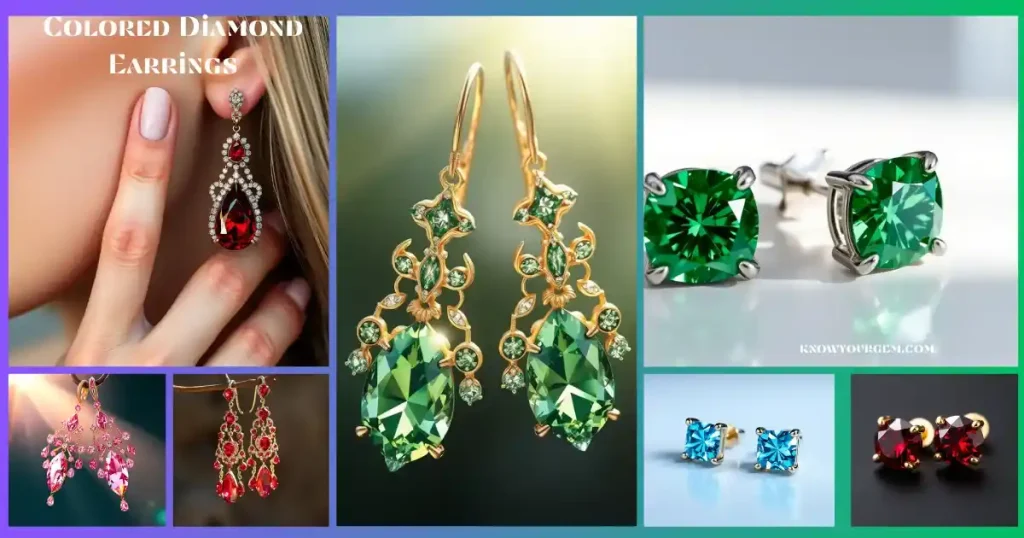
Investment potential of colored Diamonds:
Colored diamonds are established as an alternative investment asset class and have gained the attention of wealth managers, family offices, and experienced traders globally. A variety of factors lend support to the assurance of these items as a luxury investment asset.
Historical price performance:
Colored diamonds are established as an alternative investment asset class and have gained the attention of wealth managers, family offices, and experienced traders globally. A variety of factors lend support to the assurance of these items as a luxury investment asset.
- High-quality pink star diamonds have increased on the order of 180-220%
- High-quality blue diamonds have appreciated by 150-180%,
- Super, premium quality yellow diamonds increased by 90-120%
- Historically limited, the presence of green diamonds has increased by 140- 170%.
Therefore, these figures significantly exceeded the performance of many other typical assets during the same time frame. S&P 500 gained nearly 180% in a similar period (2000-2024), and gold, approximately 450%, with much increased volatility.
Factors driving investment value:
Several dynamics support colored diamond investment strategies:
- Supply Constraints: Main sources have been exhausted or closed down. The closure of Argyle has removed 90% of the world’s production of pink diamonds, and no other sources have come up to fill the gap. This has a long-term impact on prices.
- Portable Wealth: Diamonds have a tremendous value density. A diamond in pink color is expensively sold for $500,000 per carat. But these stones take up a little space, and they require no special storage arrangements.
- Non correlated returns: Gold prices move independently of stock markets, interest rates, or currency exchange fluctuations, and truly diversify a portfolio.
- Global Demand: These stones have gained popularity in Asia, especially in China and India; these stones are in high demand.
- Cultural Significance: Diamonds are best for global aspirational importance and emotional balance, regardless of age and ethnicity.
Rare color diamonds with highest ROI:
Investment returns vary significantly by color:
- Pink Diamonds: The closure of “The Argyle” leaves an unfillable shortfall in supply. Do the 1.5 ct Fancy and Fancy Intense Pink Stones offer the most optimal Risk/Reward gains? 5-10% annual growth is estimated by market specialists.
- Blue Diamonds: Steady appreciation, loyalty collector demand, and fancy vivid blue stones larger than 3 carats offer potentially compelling investment profiles, as the change is greater in absolute levels.
- Red Diamonds: Ultimate rarity ensures appreciation, but, unimaginable scarcity and astronomical (2-3million/CT) price levels, limit the liquidity in the market, could suit best for ultra high net worth collectors.
- Green Diamonds: Undervalued for their rarity. Fancy vivid green gemstones offer a compelling investment for astute retail customers.
- Yellow Diamonds: Entry has to be more affordable but with less appreciation, say 3- 5% pa; maybe better playing with jewelry than investing.
Geographic market comparison:
| Region | Market Characteristics |
| United States | Largest market for luxury jewelry; most experienced collectors; New York auctions selling most expensive jewelry by value; presence of significant institutional buying. |
| Dubai | It has a tax-free environment, which makes it extremely attractive to international buyers; it is developing as a regional trading hub, and there is high demand from Middle Eastern and South Asian buyers. |
| London | It is a traditional city to trade and hold diamond auctions; the city is popular for European collectors. Although the changes happened after Brexit, London is still a crucial city. |
| Hong Kong | The Gateway to Asian collectors, mainly Mainland Chinese; fine results for major auction houses, successful with large and highly saturated colors. |
| Australia | An established producer with a distinctive position, strongly established local market for Argyle pink diamonds, and the heritage importance of PD adds premiums for origin in Australia. |
Risk Analysis vs gold or stocks:
Compare colored diamonds to traditional investments to reveal distinct characteristics:
- Liquidity: Diamonds are also less liquid than stocks or gold. They take a great deal of effort to sell since there are few buyers and it may take hours or months. Liquidity therefore requires longer investment horizons (10+ years optimal).
- Transaction Costs: Buying and selling diamonds incurs transaction costs such as dealer margins and auction fees, which are more significant than for securities or bullion but have to be taken into account when calculating returns.
- Volatility: Diamond prices are less volatile than either gold or equities. Values lack daily fluctuations, which is psychologically beneficial but has the negative impact of limiting tactical trading opportunities.
- Valuation Transparency: Stock and gold prices are known instantly. Stock and gold valuations are always immediately available to experts, so they keep a reference of other sales, which provides information asymmetries for diamonds.
- Storage: In fact, jewelry has to be stored and insured (1-2% of value per year), but it’s less expensive than art or wine.
- Divisibility: Can be divided (return the gold), does not do what it says, or is immovable (diamonds have to be sold in their entirety), so flexibility is adversely affected.
Are colored diamonds a good investment?
Colored diamonds can be excellent investments for appropriate buyers. Ideal candidates have. For these reasons, however, the rarity of color diamonds has made them very attractive to the three types of investor outlined at the beginning of this article: they offer potential for appreciation, a portable store of value, and an aesthetic experience. Color diamonds are not, however, suitable for speculation in the short term nor are they appropriate for investors needing liquidity.
The nutshell is buy right: a certified, untreated colored diamond of correct quality and from a recognized source, at normal current market prices, with any emotional connection with that particular color in accordance with a reasoned investment based on the quality’s value as defined by scarcity.
Colored Diamond Buying guide:
A known, cautious path in the colored diamond market is the only way to go. Having the right knowledge at your disposal and the ability to reference solid resources can aid in pursuing a colored diamond engagement ring or an investment portfolio.
Where to buy colored Diamonds?
Established Retailers:
Gem retailers such as Brilliant Earth, Tiffany & Co, Harry Winston, and Grraf sell their own graded diamonds and made-to-order settings, which also come with a warranty. With the reputation of the brand, the price is higher.
Specialized Dealers:
Dealers tend to specialize specifically in fancy color diamonds and are more likely to have in-depth knowledge and be able to obtain rarer stones than general Jewelers, who would only have a limited body of knowledge gained from dealing with overseas cutters and contacts.
Gotham Jewelry represents this category of specialized dealer. The supplies are often better value than the big high street chains but from reputable quality sources.
Online Platforms:
The internet provides online purchasing and internet auction options. You can browse through large inventories and compare color and cut options worldwide.
When purchasing colored diamonds through online companies, be sure to request the full certification, the ability to return the stone, and the ability to have the stone independently appraised. Do not purchase large colored diamonds on the internet unless you have a GIA certificate at a minimum.
Auction Houses:
Sotheby’s, Christie’s and Bonhams frequently auction the best colored diamonds. Auctions provide availability of the museum-quality stones and vintage pieces that are not available at retail. It would, however, require the buyer to have a great experience of pre-sale estimates and the buyers’ premium that Sotheby’s and Christie’s charge.
Buyers have to be adept at bidding, and often specific stones attract very keen competition. Auction buying therefore is more suitable to a sophisticated collector than someone buying their first stone.
Direct from Cutters/Manufacturers:
Industry contacts may be able to buy direct from a cutter or manufacturer who may be able to offer a better price, but this requires a lot of experience and is usually for bulk buying.
Red flags and scams to avoid:
The market for coloured diamonds suffers from unscrupulous traders. The indicators are:
- Missing or suspect certification: Any sort of seller that is not willing to accept third-party certification should be most definitely avoided: Don’t be afraid to require GIA certification for all major purchases. Beware of labs that are not well known.
- Prices too good to be true: Where prices are significantly lower than the going rate, there will be a reason. The stone can be fabricated, be synthetic, or misrepresented.
- Pressure Tactics: Legitimate dealers provide pause and advise on difficult deals.
- Vague Treatment Disclosure: Entire treatment must be disclosed clearly by seller. Sellers should not evade one by giving vague answers like “I used to use product A”.
- Conflict Diamonds knitted into the tag: Retrieved as one verifies conflict-free sources through compliance with the Kimberley Process certifications. Responsible dealers have records.
Tips for inspecting a colored Diamond:
When evaluating potential purchases:
- Review the Certification: Buyers are advised to verify these stones with trusted labs like GIA, IGS, SSEF before buying.
- Observe in Different Lights: Always check these varieties under daylight or incandescent and fluorescent light to see how their colors appear in different lighting conditions. Some diamonds may reveal extreme color shifts which may or may not suit individual tastes.
- Assess Color Face-up: It is different than the colorless diamonds that are examined table down; colored diamonds should display best when being examined from the top (like a face-up position), because this is how they will be seen when set.
- Consider Size and color relation: In colored diamonds, large sizes tend to behave differently compared to colorless diamonds, in which
- Assess Color Face-up: It is different than the colorless diamonds that are examined table down; colored diamonds should display best when being examined from the top (like a face-up position), because this is how they will be seen when set.
- Consider Size and color relation: In colored diamonds, large sizes tend to behave differently compared to colorless diamonds, in which size is independently priced.
- Evaluate cut quality: Does the color take precedence over the valuation, and is cut quality still relevant? Though low-precision cuts produce extinction (dead area) or guard the display of the color.
- Pay for Independent Appraisal: If you are making a large purchase, pay a few hundred dollars for an independent appraisal from a licensed gemologist who isn’t working for the seller. The few hundred dollars spent will offer priceless protection.
Lab grown vs Natural Considerations:
The existing market comprises a mixture of natural and colored lab-grown diamonds. It is essential to note the variation between the three:
- Value retention: natural stones are holding their value and appreciating. Is a cheap, ubiquitous consumer product like electronic goods, or will lab-grown diamonds depreciate at the rate of other manufactured products?
- Investment vs Jewelry: lab-grown diamonds are appropriate for jewelry which can be worn for pleasure at a comparatively low cost but cannot be ’‘invested’’ in from an economic or any other perspective. The natural stones fulfill both needs.
- Disclosures: Credible sellers identify the source clearly. If not named, ask. Don’t buy until it is certified as natural.
- Pricing variation: generally, the value of a lab-grown colored diamond is 60 to 80% lower than the value of a natural counterpart. Thus, the big discount can be interpreted as unlimited potential supply in comparison to global and geological impediments.
In the case of colored stones, illumination of your goals can lead to conclusions. If you want gorgeous jewelry at affordable prices, with no intent of investment, lab-grown diamonds are one of the possible choices. If you want to accumulate wealth or pass special gemstones to future generations, only natural gemstones can satisfy you.
International purchasing considerations:
When you are buying colored diamonds internationally, you must consider:
- Verify import regulations: Some countries have different customs duties and requirements for imported diamonds. Study before buying abroad.
- Currency considerations: When making overseas purchases, it will impact the final price because of currency exchange rates.
- Legal Protections: Consumer laws will vary by country; be sure to know your rights and resources before you purchase from abroad.
- Return Policies: With policies in place, possible specifications will be made for returns or exchanges, especially for cross-border deals where different logistics will create angry situations.
Buying colored diamonds requires calm, knowledge, patience, and good specialists. Do not haste; reputable dealers are ready to answer the questions, to make checks, and demonstrate to you the correspondence they are proud of.
Caring & maintaining colored Diamonds:
To keep shining and stay valuable, diamonds need proper care. Colored diamonds are the hardest natural substance; they still require delicate care to preserve.
Cleaning techniques for preserving color and brilliance:
Cleaning techniques for preserving color and brilliance:
- Soap Solution: Place the diamonds in warm soapy solution for about 20-30 minutes, brush them lightly, and wipe dry.
- Ultrasonic Cleaning: Ultrasonic cleaners would work on untreated diamonds; however, they may scratch stones that already have fractures or large inclusions.
- Steam Cleaning: We recommend that jewelers can do steam cleaning on center untreated diamonds safely.
- Frequency: Clean the ring every 2-4 months if kept on daily.
Storage:
- Individual Pouches/Boxes: Store each separately in individual pouches / boxes to avoid scratches.
- Stay out of the sun: Metal settings or close-by stones will be damaged.
- Humidity: 40-50% humidity helps keep them from tarnishing.
- Security: Consider putting your stones in a safe location or bank deposit box, as it can provide you with more security.
Protection:
- Removal During Activities: It is best to remove this jewelry when you engage in heavy activities like swimming, working, and playing physical games.
- Chlorine/Bleach: Do not use harsh chemicals on colored diamond jewelry because they can damage the settings and dislodge stones.
- Cosmetics First: Try lotions, perfumes, and & sprays before setting these stones as jewelry.
- Professional Check: Settings should be checked annually with regard to resistance to losing stones.
Special Care:
- Treated Stones: Care needs to be taken as some treatments may react to heat/chemicals.
- Antique settings: Even more delicate, there is a higher risk of damage, so they need to be looked after more vigilantly.
Famous colored diamonds & cultural significancy:
Legendary colored diamonds have been mesmerizing us for centuries, loved by royalty and fetching high prices. They have tales to tell that borrow from geology, history, culture, and an indisputable human love for impossible beauty.
The Hope Diamond:
Maybe the most famous of colored diamonds, the Hope Diamond is a 45.52-carat fine blue stone being proudly displayed by the Smithsonian Institution’s National Museum of Natural History in Washington, D.C.
The story begins centuries ago in the mines of Golconda, India. From there it travels through the royal collections of France, once when it was known as the Tavernier Blue, and later as the French Blue.
The stone was stolen during the Revolution and mysteriously resurfaced in London several decades later, after which it was cut a great deal. It acquired its present name after having been owned by Henry Philip Hope in the 1830s.
The Hope Diamond’s “curse” is a legend. Since stories of misfortune were spread for publicity, the legend is stuck. Currently, it is one of the most-viewed exhibits that link blue diamonds with history and mystery.
Argyle Pink Diamonds:
No single stone could be considered more influential than the Argyle Mine in Western Australia. Situated in Western Australia, the Argyle Mine operated between 1983 and 2020 and is responsible for producing more than 90% of the world’s pink diamonds since pink diamonds made up less than 0.1% of the extract. The Mine’s annual tender has become responsible for viewing some of the world’s best.
Argyle’s closure signals a watershed. Numerous jewelers and collectors are desperately trying to buy up remaining stock, knowing that pink diamond supplies could never again reach pre-closure levels. Prices have soared since Argyle closed, yet another confirmation that these stones were only going to get more and more desirable.
Notable Argyle stones are the Argyle Pink Jubilee, 12.76ct, and the largest pink diamond ever to be mined, and other smaller stones that, although charming, did at least make pink diamond ownership a little more accessible for a time during this mine’s operation.
The Dresden Green Diamond:
The Dresden green is known as the largest and finest natural green diamond that has been found to date; its weight is about 41ct. The stone has over three hundred years of documented history, which is provided by almost certain provenance.
Hence, the stone probably was found in the Golconda mines (India) and passed on to Friedrich August I of Saxony around the 1740s. It was kept in Dresden (Germany) till the wartime in World War II, when it was hidden to safeguard it.
It would appear that the pure green of the Dresden without yellowness or browning, combined with the size, is virtually priceless. The diamond clearly shows why green diamonds are valued so highly when exhibiting pure coloration in such large sizes.
The Pink Star diamond:
The Pink Star’s second name is Steinmetz Pink. At Sotheby’s in Hong Kong, the 59.60-carat Pink Star diamond was sold for $71.2 million in 2017. With big color intensity now, it is now sold for around $12,000 per carat.
Its carat weight started as 132.5 in rough condition, and they were found in South Africa in 1999. After 20 months of expert cutting by Steinmetz Diamonds, they became finished stones that were graded at the highest level for pink diamonds.
The Moussaieff Red (Red Heart Diamond):
Furthermore, for the absolute most expensive color per carat, red diamonds are the clear winners, as, of course, red is always the most expensive color in diamond resale value.
The 5.11 carat Moussaieff Red stands as the largest red diamond in the world at present. Estimated values range between 20-30 million dollars, as there has yet to be a public sale.
Rough diamonds weighing 13.9 carats were found and cut by Willian Goldberg Diamond Corp., and the big change from rough to polished diamond showed toughness for cutting while maintaining both strong color and good size.
Cultural significancy:
Colored diamonds are not just considered valuable stones, but they get their value due to their cultural and spiritual meaning:
- Royalty and Power: Historically, colored stones have been used in crowns and robes. Since blue diamonds tend to be associated with royalty, however, pink diamonds are symbolized with romance and gentility.
- Celebrity and Fashion: Today’s celebrities are sporting colored diamonds and also dictate fashion. Jennifer Lopez’s pink diamond engagement ring from Ben Affleck has been on full display for its romantic connotations. Several of Victoria Beckham’s jewelry collection features colored diamonds.
- Museum collections: Most of the world’s large natural history museums have displays of colored diamonds that aim at popular science to inform the general public about the geology and at the same time to present the most beautiful-looking items.They include the Smithsonian (National Museum of Natural History, Hope Diamond ), the American Museum of Natural History (like Patricia Emerald and other colored diamonds, etc.), the Natural History Museum in London, etc.
- Auction Drama: Massive auction prices create world media coverage that continuously reminds our society that colored diamonds are the top of all luxury items. Every big auction performance becomes a cultural event that is being spread among (business, fashion, lifestyle) mass media.
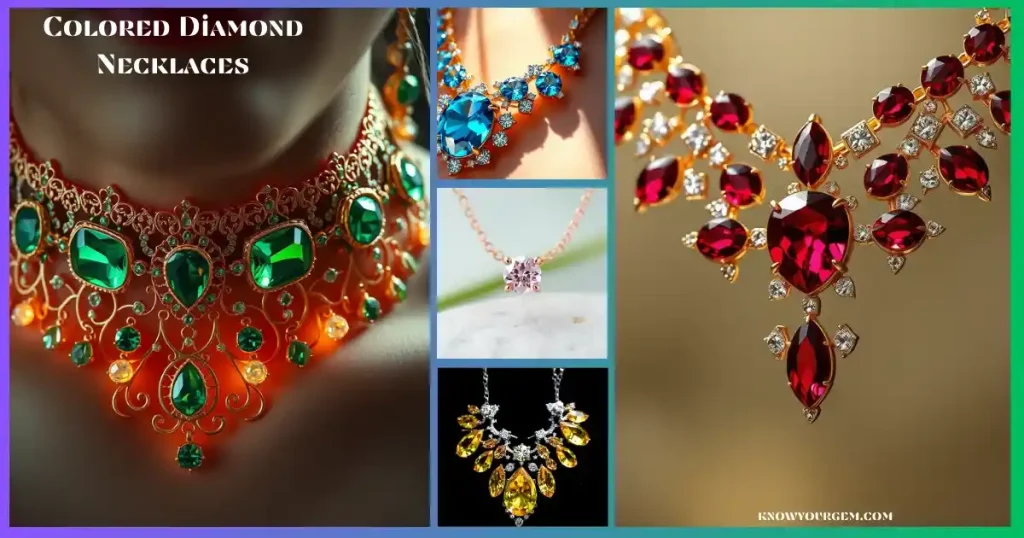
Colored diamond Current Market Trends:
The colored diamond market is evolving at a very rapid pace. Rarity, changing collectors’ behaviors, and the world economy influence the market. Therefore, it is crucial to understand current trends before making investment decisions.
Global Demand Trends by Region:
The colored diamond market is evolving at a very rapid pace. Rarity, changing collectors’ behaviors, and the world economy influence the market. Therefore, it is crucial to understand current trends before making investment decisions.
United States:
demand for colored bands and engagement jewelry remains strong. Millennials & Gen Z buyers are more discerning and want to own more unusual colorless solitaires.
While lower-price-point yellow and champagne colored diamond specimens are popular, high net worth collectors buy pink and blue stones as a way of diversifying their investment portfolio. Wedding bands in the colored diamond category have grown consistently as couples want to own similar investments.
Dubai and Middle East:
Dubai’s role as a tax-free luxury destination has given a new momentum to its colored diamond markets. Middle Eastern buyers prefer larger, more saturated diamonds, like the fancy vivid diamonds, which compare favorably with subtle hues.
Yellow diamonds possess cultural affinity in the region, and the royal family and the ultra-high-net-worth demand superior pink and blue diamonds. The market derives advantage from the nearby manufacturing centers of India and acts as a trading hub and intermediary between Asian suppliers and American/ European buyers.
Hong Kong & Greater China:
Hong Kong continues to be the key entry point for colored diamonds, which is widely considered the main conduit into other Asian markets. Mainland China consumers continue to have an absolute eye for deep saturation and scales that are larger than life- best-if-category mentality. Pink diamonds in particular are demanded at a premium by Chinese collectors who regard the gemstone as a portable coin of wealth and standing.
Frequently ask questions:
1. Are coloured diamonds real?
Yes. all colored diamonds are real because they are formed through a natural process, but some of their varieties are created by labs.
2. What is the rarest colored diamond?
Based on collectors’ searches, red diamonds are the rarest among all diamond varieties. These varieties are so rare that most enthusiasts don’t know about them; pink and blue are also rare.
3. What do you call colored diamonds?
The term “fancy” color diamonds has been commonly used for said colored diamonds; for the color intensity, “fancy” grading is also used.
4. What is the cheapest color diamond?
In colored diamonds, champagne and yellow colored varieties tend to be cheaper compared to other varieties.
5. Should I buy VS1 or VS2 diamonds?
Both VS1 and VS2 are highly eye-clean values also. Unfortunately, VS1 is commonly regarded as the best value for grading potential edge improvement; however, differences are small, and also price-wise, with the same carat/grade band, it gives less value.
6. Which type of diamond is better?
No “better,” just depends on priorities: color choice/BD or lab farm, price and durability; how much you care about natural vs. lab; color differences that can be covered up more in fancy colors than in white diamonds.
7. What cut is Taylor Swift’s diamond?
Not all specific rings have been disclosed by public figures. For example, Taylor Swift has a few known rings that have proven to be specific cuts that work well on her fingers; round brilliant or oval cuts are generally selected for brilliance. However, precise cut type may differ from ring to ring.
8. What’s better, VS1 or VVS?
VVS: Higher on the clarity scale than VS. Many people cannot distinguish VVS from VS with the naked eye, but VVS is a higher clarity if you are willing to spend more money.
9. What is the 3 month ring rule?
This phrase isn’t an industry standard; the usual advice is to measure how much you spend on engagement rings over a specified period of time (e.g., unless it is a formal ‘rule’). Always choose stones based on your preferences and budget.
10. What is the cheapest cut of a diamond ring?
Generally, longer or less step-cut shapes like Princes or round cuts are more versatile shapes. This price depends on factors like carat, color, and clarity.
11. Does 2 carat diamond too big?
Size is a different factor, as a 2-carat diamond is noticeably bigger. This increase in size makes the diamond easier to see, and therefore its value can rise quickly with carat weight and quality.

Welcome to KnowYourGem.com! your ultimate destination for uncovering the fascinating world of gems and their secrets! I'm Kamil Hussain, a passionate blogger with a Master’s degree in Economics, dedicated to bringing you insightful, well researched content that blends the beauty of gemstones with the art of storytelling. With a keen analytical mind and a love for discovering hidden treasures, I created this platform to help you explore the brilliance, history, and value of every gem.


[…] The stone is popularly worn as engagement rings, tennis bracelets, halo earrings, and diamond satin […]
[…] gemstones are graded 4Cs. Diamonds also follow the classic 4Cs grading system, but emeralds are jugged by their own standards, […]
[…] put your aventurine jewelry where diamonds, sapphires like other hard stones exist, and always wear only aventurine stone when out there. You […]
[…] circle of diamonds, white sapphires, or other stones may make your peridot look larger and glossier. Always verify […]
[…] Yes. If you get it right. Larimar is about 4.5 to 5 on the Mohs scale, softer than quartz and much less hard than sapphire or diamond. […]
[…] Color: Most well known in bright blue, but also available in white, gray, green, yellow and pink. […]