

Quick Check:
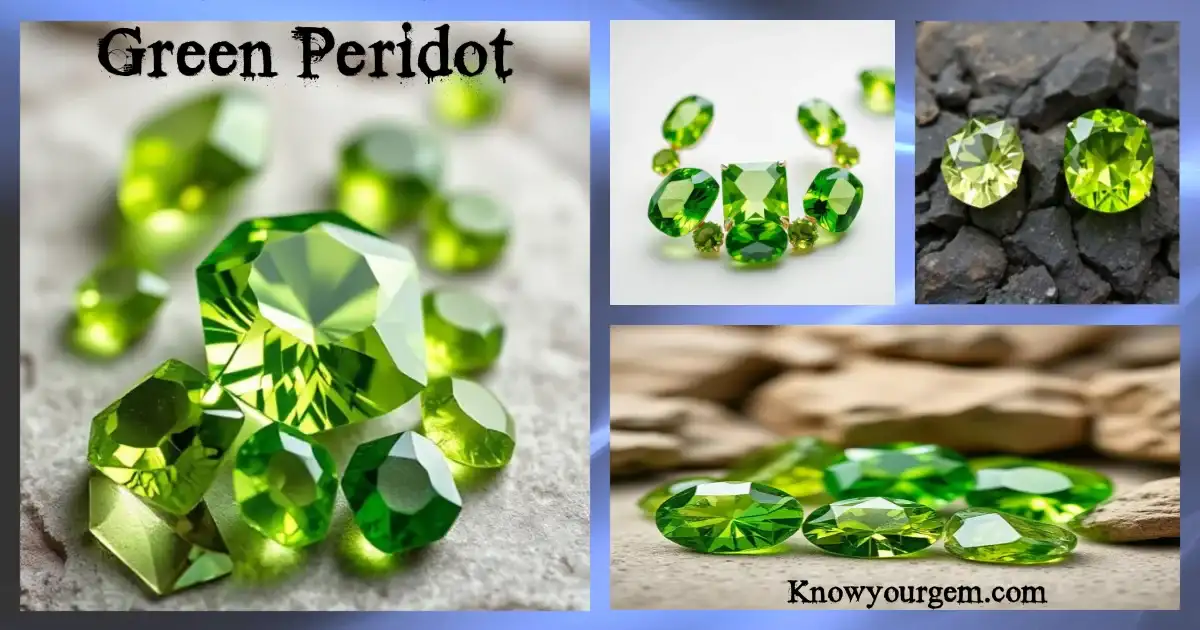
The allure of green peridot to customers is the fact that it is an eye-catching natural green color and has such a fascinating story of formation. The fact that it originates from a volcano and is so obtainable makes it one of the very few gemstones with this story. It has even been found in meteorites!
This guide delves deeper than basic facts, providing inside information on prices, maintenance, authentication, and master buying techniques not mentioned in 95% of articles.
Why Is Green Peridot So Popular?
Green peridot has a one-of-a-kind natural green hue with a rare golden bright glow. This dark green is very historical, as the Egyptians gave it the nickname “Gem of the Sun,” and it has spiritual values of protection, rejuvenation, and healing, which add to its beauty.
Not just that, green peridot holds a right ratio of price and rareness, and its volcanic formation makes peridot quite fascinating when shopping for gemstones in 2026.
Key Popularity Drivers:
- Original color origin: The manganese and iron in the crystal structure combine to produce a fresh lime-to-olive hue in this stone, for the most part giving it a gold shimmer and avoiding the cooler greens characteristic of emeralds, tourmalines, and other stones.
- Volcanic story: It forms 20-55 miles below Earth’s mantle and then erupts on the surface.
- Extraterrestrial association: Only found in pallasite form in meteorites. Every other mineral is terrestrial. This is why the orange variety has the nickname “space gem”.
- Always natural: Never heat-treated, irradiated, or filled; untreated is the norm and not the high quality.
- Affordable luxury: Fine quality is about $300–$900 per carat. Much less expensive than emeralds of similar quality.
What Makes Green Peridot Gemstone Unique?
Peridot stone is special with its particular green color and the rest of its appeal comes from the vibrant colors and geologic history of peridot.
Distinctive Traits:
- Only gem-quality olivine: Peridot stone is a single member of the olivine mineral family that reaches gemstone quality.
- Iron species coloration: To produce a range colors between lime-green and olive-shaded with golden sheen contains high concentration, iron species are used.
- Volcanic birth: Born in Earth’s mantle under raging temperature and pressure, then propelled by upward blast of magma during eruptive process. Evening Emerald nickname: Maintains its vibrant color in the presence of artificial light when others will fade in saturation while inside.
- Double refraction: Features doubled-up facet edges when viewed by a magnifier, an important test revealing the presence of a glass counterfeit.
Underrated Green:
Emeralds tend to be most popular. Nevertheless, this is not the case for peridots, which, despite being the most underrated green stones, they are deprived of the showy bright colours, history, and lack of enhancement.
Why peridot flies under the radar:
- Unattractive to reduce waste dumps; appears similar to less valued emerald cuts.
- Fewer marketing efforts by the biggest jewelry brands.
- The mistaken belief that “cheap” necessarily implies “poor quality.”
- Infrequently found in celebrity engagement rings.
Geological Formation Process of Green Peridot:
Peridot emits such a bright green glow due to its natural origins in the hot falls of the Earth.
How Green Peridot Forms Naturally?
Peridot is created deep in the Earth’s natural environment. When it rests in the Earth’s mantle, the heat and pressure it is subjected the olivine to produce the high-class form of the gemstone inside silica-poor rocks.
Volcanoes then force the stone up in the air, trapping its crystals in the basalt flows. This dramatic elevation provides green peridot with its lime to olive green glow, its color originating from the iron contained within this material.
Volcanic Origins of Green Peridot:
Does Peridot Come from Volcanoes?
Yes. Volcanoes are the only way that peridot is transported down to us. During volcanic eruptions, magma is pushed from the mantle, and with it the olivine. Volcanic rock is then formed.
Major volcanic source regions:
- Arizona
- Hawaii
- Myanmar (Mogok area)
- Islamabad (Kashmir district).
- Egypt (Zabargad Island-ancient source)
Extraterrestrial Connection of Green Peridot:
Peridot’s Connection with Space:
Most green peridot is produced by Earth’s mantle, but some of the most attractive crystals are found within pallasite meteorites. These are bits of old asteroids that took billions of years to cool in space.
These space minerals appear natural, thus establishing directly that they were made through a chemical rather than synthetic process (as they are playing around on Earth). For this reason, the majority of collectors refer to peridot as the “house gem”.
Peridot’s Journey at a Glance:
- Deep within Earth’s mantle, extreme heat and pressure form it.
- It erupts to the surface by volcanoes.
- Also found in rare pallasite meteorites from early asteroids.
- The stone belongs to the olivine group of minerals.
- Its color is always natural. Never needs treatment.
Historical & Cultural Significance of Green Peridot:
Traditional Legends and Cultural Meaning:
More than 4000 years ago it was thought only the green treasure of peridot of his mesmerizing seduction of his observer with brilliant beauty, the source of light and healing. Power and protective capabilities.
This bright green stone was valued across many cultures as a healing stone, a bringer of good luck, and a protective stone, all of which made it a fortunate and somewhat unusual selection for everyday wear.
History of Peridot Gemstone:
The most well-known source for ancient images was Zabargad (or Gabal El-Zebarrah) in the Red Sea. This was where the Egyptians was extracting the stone in the second millennium BCE and had adopted it as the Gem of the Sun.
They thought the ecru-hued green, which turned gold, would lure the protective powers of evil spirits, bad dreams, and perils of the night.
Green Peridot in Egyptian Mythology:
Egyptians interpreted the peridot as a divine present from the sun god, which is trapped the sunlight in a stone. The history of Cleopatra’s famous collection of emeralds implies that the stones used were indeed peridot, as it is very difficult to distinguish the two and peridot was far cheaper and easily available in Egypt.
Ancient Uses of Green Gemstones:
Numerous ancient civilizations have long acknowledged peridot as a symbol of: rebirth, health, and wealth. In Hawaii, crystals located around the volcanic regions were known as “Pele‘s tears”; associated with the Hawaiian goddess of fire and volcanoes.
This added layer of perception allows peridot to carve out its own identity, which combines seamlessly with geological heritage, volcanic displays, and celestial ties.
Meaning, Energy & Metaphysical Properties of Green Peridot:
Green peridot is commonly known as a stone of rebirth, emotional rejuvenation, and abundance. Its invigorating, vibrant green color is believed to induce optimism, compassion, and harmonization, making it a popular choice for anyone seeking positive change.
Green Peridot Spiritual Meaning:
On a spiritual level, green peridot is the gem of change and light, as it is believed to assist in releasing emotional blocks and negative patterns from the mind while attracting happiness and prosperity. It is associated with the power of the sun and believed to help in the attainment of spiritual enlightenment.
Heart Chakra Green Gemstones:
Green stones are associated with the energy center of the heart. Unsurprisingly, peridot is a great stone for this energy center, energizing the heart chakra and making relationships and self-love and forgiving oneself, easier. It generally increases the flow of emotion.
How to Use Green Peridot for Healing?
For healing purposes, many turn to crystal practices:
- Meditation: Inhaling with peridot is thought to release essence and negative feelings and give clarity and refreshment.
- Position of the Heart: To build the energy of the Heart chakra and/or open the Heart to emotional release, it is recommended that the Heart is placed toward the Heart when lying down to rest or sleep.
- Intention setting intend with the peridot to manifest that which you desire, attract abundance, confidence and harmony into your life.
Green Peridot in Jewelry: Styles That Sparkle with Personality
Green peridot jewelry enhances collections with an infusion of naturally inspired color. Whether you prefer delicate and understated or a large and powerful appearance, green peridot provides a splash of personality. In 2026, green peridot provides a splash of personality and character in many series and settings that highlight its beauty and color.
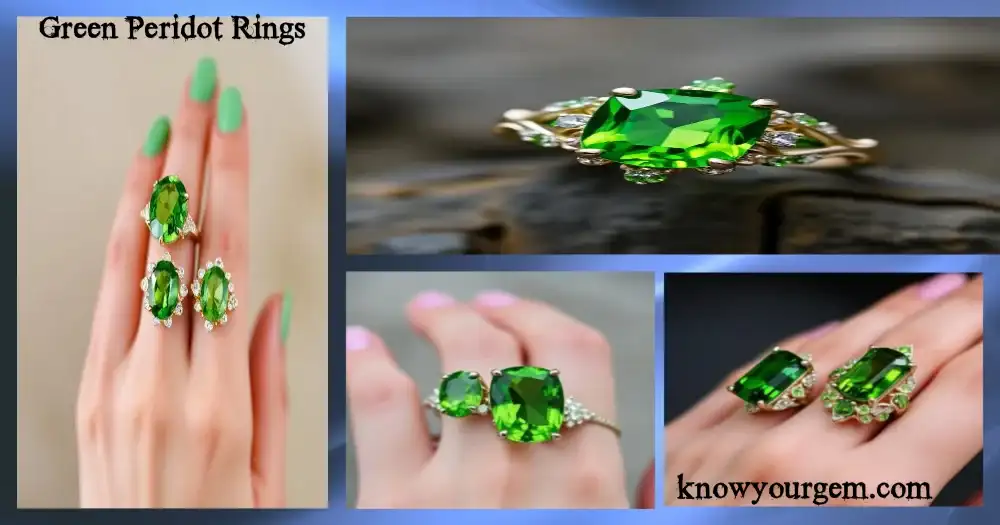
Best Setting for Green Peridot Ring:
As far as the best settings for a green peridot ring, warm metals like rose and yellow Gold really accent the color of this stone. Rose Gold enhances the sunny vibe, while raw silver settings give a more natural feel with contrast.
Popular ring settings include:
- Solitaire: Display the actual peridot.
- Halo designs: Accentuate the center stone with additional diamonds surrounding it
- Bezel settings: The only way to save a girdle is a bezel setting, highly recommended for daily wear.
Modern Green Peridot Engagement Rings:
Contemporary jewelry, especially peridot engagement rings, is fast becoming an individual alternative to the traditional engagement ring, valued for the uniqueness of color, the affordability and the unusual variety of really elegant contemporary design options.
Expert recommendation: If you want something with a good band or halo setting is best as it will be surround and safeguard the stone. Be careful with your ring when doing heavy cleaning, gardening and gym work.
How to Style Green Gemstone Jewelry?
Styling green gemstone jewelry like peridot is easier than you think:
- Casual Wear: Carrying earrings or bracelets with light and grown-out shades or earth-toned shades would suit well with its natural colour.
- Extra sparkle: May look attractive as a combination with general shades of (i.e., Black, white, navy)
- Boho trends: Celebrate your passion of peridot. Combine it with a stack of chakra bracelets, pair it with your gang of metal stacks or take wing with character earrings. Mix and match your love of peridot to suit your mood.
Top 5 Green Peridot Jewelry Trends in 2026:
- Quatrefoil Motifs: Nature-inspired and bring good luck. Combined with green peridot, it hits the perfect style and good luck note.
- Halo Rings: Green peridot with diamonds for beauty and sparkle, bringing out the green color. Modern style.
- Alloying metals: combining pink, yellow, and raw silver for achieving contrast and versatility.
- Boho Chakra Bracelets: They can be worn along or between other stones for a spiritual and fashion statement.
- Statement Earrings: Bright peridots are perfect for hoops earrings
How to Choose a Quality Green Peridot: The Ultimate Buying Guide
Selecting a green peridot. With the right information, you can select a good green peridot based on the three Cs: cut and carat weight. This will not only give you a pleasing and beautiful green peridot but also a worthwhile purchase.
How to Identify Real Green Peridot?
Peridot is one in a million; it has a peculiar natural green color that ranges from bright and fresh lime green to darker olive green, and is caused by the iron inclusions. There are several methods to identify a genuine piece:
- Focus on a regular green color, without going toward brownish or yellowish nuances.
- Check for double refraction (doubled facet edges under a magnified lens.
- Upon inspection, look for natural inclusions such as “lily pads” (healed fractures).
- Don’t go for stones that are too clear or are bubbled – they are definitely glass or fake.
Best Cut for Green Peridot:
The perfection of the cut is influential to the brightness and color of the peridot. The cut should be well defined in the facets, the facets should be reflective and symmetrical. A cut that shows lots of brilliance can increase the brightness and make the peridot exhibit a vibrant green glow. The favorite cuts for a peridot are the cushion and oval cut.
Pro tip: Hold the stone over printed material. If you can read through the center, the pavilion is cut too shallow; light is escaping and reducing brilliance.
What to Look for When Buying Green Peridot Gemstone?
When buying green peridot, look for:
- Color: If we talk of it as a whole, the nuts are a broad, dark green, aside from the odd brown or yellowish patch.
- Clarity: Eye-clean inclusions should not be visible, though some “lily pads” can be tolerated, in which case the origin is natural.
- This is a bit too much: I think symmetrical facets, no windowing.
- What constitutes the origin? Myanmar and Pakistan peridot are definitely highly valued, but Arizona and Chinese material are more reasonably priced.
Myth vs Reality: 7 Peridot Misconceptions That Cost Buyers Money
The majority of articles cite superficial ‘facts’ without dispelling the widespread disinformation. Here to separate fact from fiction are:
| Myth | Reality (Expert Insight) |
|---|---|
| “Peridot is cheap, so it’s low quality” | Price indicates how plentiful a gem is, not how good. Top-quality Monglian gem (5+ ct, intense green) costs about $300-$900 per carat, similar to very good sapphires. |
| “All green gems require treatment” | Peridot is among the rare gems that do not undergo heat treatment, radiation, or filling treatment. “Untreated” is baseline, not premium. |
| “Peridot scratches as easily as opal” | (6.5–7). Harder than 5.5, turquoise. Damage results from impacts rather than wear, if appropriately set. |
| “Yellow-green indicates imitation” | Natural peridot varies from lime to olive. Brown or grey tints are the result of poor cut and/or low quality, not necessarily an imitation. |
| “Ultrasonic cleaners are safe for all gems” | Peridot’s crystal structure can and does shatter when exposed to ultrasonic vibrations and heat.This accounts for the number one reason for heirloom porcelain stoneware and pieces to become cloudy. |
| “More expensive in jewellery” | Precious earthly peridot (Pakistan, Myanmar) is more costly per carat than pallasite. |
| “FAQs about Peridot” | Is peridot light sensitive? ‘Peridot fades in sunlight Peridot does not fade in sunlight: Its color from an iron source is stable in sunlight. |
Critical Clarity Insights:
- Lilly pad exception: Disc-shaped inclusions (healed fractures) are characteristic of natural peridot, and are acceptable in moderation. Stones with no inclusions at 10× are suspicious; suspect glass or synthetic.
- How “eye-clean” backfires on value: A 2-ct peridot with some degree of surface-reaching imperfections but with rich, bright color frequently trumps a larger, clean stone with a paler color. Color over clarity.
- The window test nearly all sellers avoid: Hold the stone above printed text. If you can read the text when looking through the center, then the pavilion is cut too shallow and light leaks out, ruining brilliance no matter how good the clarity grade is.
- Surface-reaching feathers = structural risk: Inclusions that reach the surface (visible as cracks under loupe) are vulnerable to chipping in setting or regular wear. Steer clear, even at the tempting prices!
- Price tier reality: Up to $50/ct, an “eye-clean” may be a stone with inclusions concealed by foil backing or closed setting. Always examine loose diamonds face-up in natural daylight before buying.
- Best format: Checklist with pass/fail criteria [for buyers to check at point of sale].
Green Peridot Care Edge Cases: 6 Scenarios Where Standard Advice Fails
Generic care guides operate under ideal circumstances. These true-to-life situations reveal the damage “just use soapy water” can do.
| Scenario | Why Standard Advice Fails | Expert Fix |
|---|---|---|
| Cloudy after ultrasonic cleaning | Microfracture caused by vibration. Heat speeds up the process. | Soap will not clear up the stone. The stone is damaged permanently. It can be replaced or recut, provided fractures are not too deep. |
| Dullness after swimming/chlorine | Chlorine etches the surface and soapy residue gets trapped in the micro-scratches. | Place in hot de-ionized water for 5 minutes, with a solution of a pH-neutral soap. Rinse with tap water contaminated with distilled water rinse. Sand; rinse. Place in hot de-ionized water for 5 minutes with a solution of a pH-neutral soap. |
| After contact with perfume or hairspray, it leaves a yellowish discoloration: | Alcohol and acids cause surface stain gradually, not instantly. | Re-polish it professionally and keep cosmetics in your purse to avoid it. |
| Loose prongs in day-wear rings | Peridot’s hardness (6.5 7) means it will wear faster than sapphire or diamond. | Check prongs every 6 months; prefer bezel or half-bezel for engagement rings; avoid exposed claws. |
| Storage scratches can get scratches from harder gems | Peridot that is stored with a diamond, sapphire or corundum will always get scratched no matter how carefully it is stored, even if kept in a protective box. | Therefore, it should be stored separately in its own soft pouch and avoid keeping jewelry mixed in one compartment. |
| Night color looks different | Peridot’s mirror fluorescence exhibits strong double refraction when illuminated by artificial sources. | This is a normal characteristic, a doubled facet, not an imperfection. Examine with a loupe to check doubling: true peridot shows single refraction in glass. |
Price Intelligence: What Peridot Really Costs in 2026 (By Origin, Size & Market Tier)
Most articles just say “affordable” or give some “range” of prices ($30–$500). Here’s some useful, quantifiable prices by variables.
2026 Green Peridot Price Per Carat Chart:
| Carat Weight | Commercial Grade | Fine Quality | Collector Grade |
|---|---|---|---|
| Under 1 ct | $15–$60/ct | $40–$100/ct | $80–$150/ct |
| 1–2 ct | $40–$120/ct | $100–$200/ct | $180–$300/ct |
| 3–5 ct | $100–$250/ct | $200–$450/ct | $400–$700/ct |
| 5+ ct (vivid green) | $200–$400/ct | $400–$700/ct | $700–$900+/ct |
Key Pricing Variables:
- Origin premium: Myanmar (Burmese) and Pakistan green peridot is valued 2–3x more than Arizona or Chinese material of the same quality. The dealers are aware of this; retail listings frequently do not specify the origin.
- Retail and wholesale differentials: retail priced per set $ 30- $ 150, often commercial grade (yellow, included).3 or 14k+ orange-clarity scuffs from $400+, increasing fast with carat size.
- The ‘engagement ring tax’: Peridot engagement rings are valued 30–50% above equivalently sized loose peridot stones because of the added custom design, protective setting, and certification (GIA/AGS for stones over 1 carat).
Negotiation Leverage Points:
- Inquire about GIA/AGS reports on stones larger than 1 Ct.
- Request loose stone inspection before setting.
- For the comparison on per-carat prices, a factor for the varying purchasing price of different vendors has to be considered.
- Retail markups over 3× gross are suspicious.
Reader insight: Buyers cease wondering whether or not $500 is reasonable to buy for a 2-ct ring and discover which questions reveal a cost markup.
Advanced: Setting Peridot for Daily wear-engineering Choices That Prevent Catastrophic Failure
Beginner guides state that peridot is soft, so take care. Higher-end buyers want to know which settings crack, why, and how to spec long-lasting jewellery.
Critical Engineering Choices:
- Bezel versus prong: decade test: bezel protects the girdle (weakest area) and is 70+% less likely to chip compared to exposed prong. Prongs wear faster over peridot than corundum (hardness difference).
- Hardness of the metal is more important than you might realize: 14K gold (58.5%) will be harder and tougher than 18K gold (75%).14K yellow or rose gold performs better than 18K for a daily-wear peridot ring in the unlikely event of long-term prong integrity.
- Girdle thickness rule: Request a middle or slightly thick girdle from your cutter or lapidary (not “super thin”). Thin girdles get chipped when set or knocked; thick girdles make the stone smaller face-up. Most buyers never specify this.
Protective Design Features That Work:
| Jewelry Type | Recommended Setting | Avoid |
|---|---|---|
| Engagement rings | Zircon, half-bezel with corner guards Bezel. | Tiffany-style high prongs. |
| Bracelets / Tennis necklaces | Channel setting-notch. Paved setting- unique setting where small openings are empty spaces between stones. | Exposed pavé next to peridot |
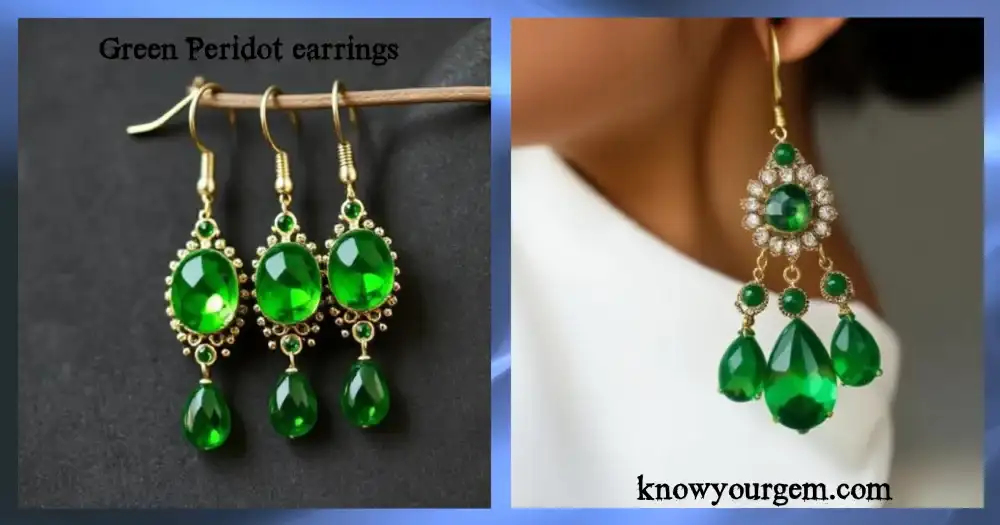
| Earrings | Bezel or secure prong with soldered jump rings. | Lightweight ear wires under 19-gauge. |
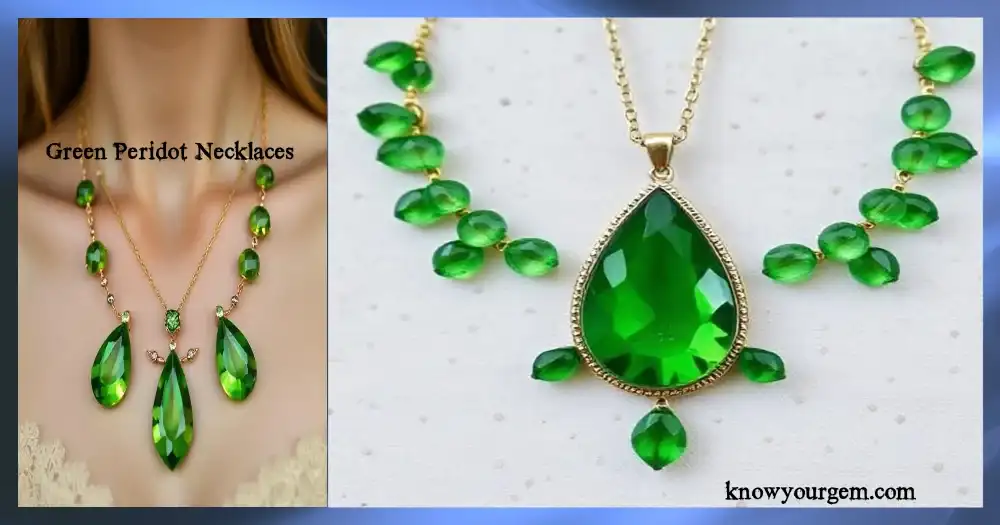
| Pendants | Bezel or halo with protective rim. | Open-back Settings. |
When Peridot Is the Wrong Choice (Honest Talk)?
In particular for men’s rings, physically demanding lifestyles, or family heirlooms that will experience 50+ years of everyday exposure, think about:
- Tsavorite garnet: It is the same green stone with 7-7.5 Mohs scale of hardness.
- Demantoid garnet: It is a dazzling green gemstone with 6.5-7 Mohs scael of hardness, but it is formed in rock like tough crystal system.
- Tourmaline (chrome or verdelite): 7–7.5 Mohs, very good durability
Peridot is great for earrings, pendants, and also dress rings, but not for 24/7, what manual workers wear.
Reader tip: Buyers spec jewelry like a champ: girdle thickness, 14k versus 18k, how to turn down a peridot if it’s a high-risk application:
Caring for Your Green Peridot Jewelry: Make It Last a Lifetime
Peridot is generally considered a beautiful gem but the stone is softer with a 6.5-7 Mohs scale. This means that is prone to chip or scracth easily, so it needs gentle care.
Does Green Peridot Scratch Easily?
Yes, peridot can be scratched or chipped, particularly if worn roughly or knocked by (comparatively) harder objects. Peridot should be removed, where possible, before gardening, cleaning, playing sport, or undertaking any activity which might result in a knock against hard objects.
How to Clean Green Peridot Safely?
Safe cleaning method:
- Pour a small dish of warm, soapy water with a few drops of mild, phosphate-free dish liquid.
- Submerge the jewelry in it for 5 minutes.
- Use a baby-soft toothbrush and massage gently, particularly the back setting where sebum and relics of skin are caking.
- Rinse with clean( lukewarm ) water.
- Wipe dry by hand with a soft, lint-free cloth.
Never use:
- Ultrasonic cleaners- 20 kHz+ vibrations may cause peridot to shatter.
- Steam cleaner (can cause crush fractures from single thermal shock as the gemstone shatters immediately)
- Silver dipping of sterling silver mountings (aggressive thiourea acid etchants dull the surface forever and leave the surface pitted)
- Toothpaste or abrasive cleaners (will scratch softer stones and metals)
How to Store Green Gemstone Jewelry?
- Keep loose pieces of peridot in a soft pouch or in a lined jewelry box.
- This is built in order to prevent the Stones from scratching the camera, as they are more harder.
- Color and brilliance can be retained when packaged in a cool, dry location away from direct sunlight, heat, and shocks. Environmental factors that could cause damage include: chemical products, rough handling, dust, and scratches.
- Always place the various specimens into distinct boxes. Do not keep the ring with peridot in the same box with the sapphire, diamond, and corundum. Peridot can rip in the padded boxes.
- The setting should be examined regularly by a jeweller for prong wear and loosening (1–2 yrs).
Summary:
The real highlight for the gemstone world in 2026 is a green peridot. A green that is as warm as it is lively, with pure shades of bright lime green through to a lovely deep olive green, all thanks to the iron in the gemstone’s crystal structure.
Apart from numerous gem-based sources, such as sapphires and rubies, peridot is unique in that it can also be found in meteorites, as well as on the surface of the Earth itself. This adds a rather wondrous and unusual dimension to its history, with its history forged in the intense fire of Earth’s interior, before shining in the brightness of the sun.
Recommendation: We suggest green peridot for someone who is after a bright green glow that makes a fabulous appearance in jewelry, particularly earrings and pendants, and hard-wearing rings in secure settings.
You need not be a green jewel cleaning expert to look after your peridot, but you do need to look after it. Peridot has a hardness of 6.5–7 on the Mohs scale, so it can be easily scratched or chipped if not treated gently. Follow the advice on cleaning and storing listed above, and your peridot will give you years of wear.
FAQS:
1. How can I tell if my peridot is real or fake at home?
Observe doubled facet edges and “lily pad” inclusions with a loupe. Fake glasses will have bubbles, single refraction, or strange bluish‑green hues.
2. What color is the most valuable for peridot gemstones?
Top quality peridots are bright medium‑dark green, free of brown or yellow. Myanmar and Pakistan stones command 2–3× prices for similar Arizona or Chinese material.
3. Does peridot need certification like diamonds?
Certification is not necessary, but GIA/AGS/IGI reports are recommended for 1 carat+ stones. They verify identity, origin & “no treatments” for resale or insurance.
4. Can I wear peridot every day in an engagement ring?
Yes, with a bezel or a half‑bezel setting and by compromising on lifestyle. For years of wear, tsavorite garnet is a hardier green substitute.
5. Does peridot scratch easily compared to other gemstones?
6.5–7 Mohs range – more hard-wearing than opal but less than sapphire or diamond. Handle with care and keep stored separately and away from activities where it may come into contact with hard or rough surfaces, to prevent micro‑abrasion.
6. Will peridot fade or change color over time?
No, all its iron‑based greens are light‑fast and will not fade in sunlight. Dirt or acid etching on the surface can cause a dulled appearance but can be easily restored.
7. Can I clean peridot with ultrasonic or steam cleaners?
Never use ultrasound or steam can cause fracture and damage due to thermal shock. Can only use mild soap, lukewarm water and soft brush to clean.
8. How often should I have my peridot jewelry professionally inspected?
Daily-wear rings should be checked 6 months, pendants 12–18 months. Check immediately if prongs become loose or chips are seen.
9. What is a fair price for peridot per carat in 2026?
Commercial stones are priced from $15–$60/ct, and collector gems $700–$900+. Shop around; never buy the stone from shops that mark up 3–4×; most are better priced elsewhere.
10. Why do some peridot rings cost $50 while others cost $5,000?
$50 rings with included, yellowish stones in Silver. $5,000 rings with collector bright gems In Gold, inlaid with diamonds.
11. What is the spiritual meaning of green peridot?
Known as the “Gem of the Sun,” it represents rebirth, healing, and prosperity. It is associated with the energy of the heart chakra, love and change.
12. Is peridot a good birthstone gift for August babies?
Yes, it’s August’s primary birthstone, symbolizing strength and renewal. Spinel is tougher for rings, while peridot shines in pendants and earrings.
13. What 5 questions should I ask before buying peridot?
Inquire of where it comes from, that way you can do a loose inspection, ask for certification, the price per carat, and to see if you can send it back. Walk away if they never want to answer those questions; that is a major flag.
14. Does peridot hold value as an investment gemstone?
No, because supply is abundant and brand equity is low. I buy for beauty, not profit; buy emerald or tsavorite, not aquamarine.
15. My peridot looks cloudy after cleaning. Did I ruin it?
Ultrasonic or steam cleaning causes permanent fractures and cloudiness. If hand‑cleaned, residue or etching can be fixed with repolishing.
16. My peridot ring prongs keep loosening. Is this normal?
Yes, peridot’s hardness can scratch prongs more easily than sapphire, diamond. Save peridot in bezel settings and 14k gold keep prongs is stronger.
Quick Reference: Peridot at a Glance
| Property | Value |
|---|---|
| Mineral family | Olivine mybirthstone |
| Mohs hardness | 6.5–7 aquamarise |
| Color range | Lime green to olive with golden shimmer |
| Color cause | Iron content mybirthstone |
| Refractive index | 1.65–1.69 (strong double refraction) aquamarise |
| Specific gravity | 3.27–3.37 mybirthstone |
| Treatments | None always natural |
| Major sources | Myanmar, Pakistan, Arizona, Hawaii, Egypt |
| Birthstone | August (along with spinel and sardonyx) jewelstyleradar |
| Best settings | Bezel, halo, half-bezel with corner guards origin. |
| Avoid | Ultrasonic cleaners, steam cleaning, harsh chemicals |

Welcome to KnowYourGem.com! your ultimate destination for uncovering the fascinating world of gems and their secrets! I'm Kamil Hussain, a passionate blogger with a Master’s degree in Economics, dedicated to bringing you insightful, well researched content that blends the beauty of gemstones with the art of storytelling. With a keen analytical mind and a love for discovering hidden treasures, I created this platform to help you explore the brilliance, history, and value of every gem.


[…] It appeals to collectors because it’s odd. The idea that a crystal is slowly destroying its own internal structure isn’t common in even the rarest minerals and can be cut into straight green or yellow-green gemstones. […]