
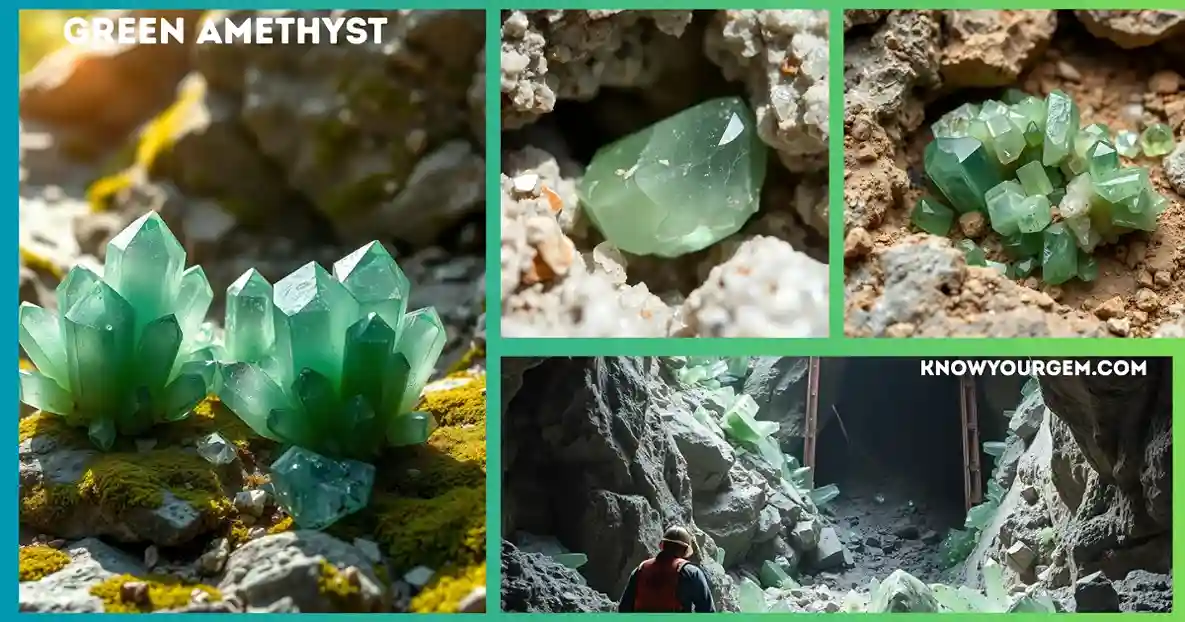

Abstract:
You won’t find “green amethyst.” The above is really prasiolite, the gem’s correct name, which describes the green color of this variety of quartz that was originally colored by the presence of iron (the name comes from the Greek for leeks and stones, prason and lithos, respectively). The surprise comes next. Most of it began as purple amethyst and turned green in a furnace. Heated, yes. Fake, no.
Short version: real quartz, roughly 7 on the Mohs scale that won’t cost you a fortune. When in doubt, simply ask any vendor you shop with this one question to know if a stone is natural or heated.
Knowyourgem has worked with gemstones for more than 2 years of experience. Being a facilitator and founder of this platform, I have seen most customers ask common questions. For example, is this a real amethyst? Where does this stone originate? Is this stone heat-treated?. So these are the questions an authentic buyer can ask and should ask.
What Is Green Amethyst?
This is quartz (yes, like purple amethyst, citrine, and rock crystal, which are all quartz). How purple a typical sample appears, however, depends on the iron’s positioning inside the crystal.
The two arrangements have slightly different hues (one appears purple, the other green), which means a heat treatment can transform one to the other.
The trouble is in the name. It implies a purple stone that’s just green, but that’s not what this is. Since prasiolite is the same as green amethyst, if a listing states it, then ask what it’s really referring to.
| Mineral Group & Composition | Quartz (silicon dioxide, SiO₂) |
| Color | Pale mint to olive, forest or yellowish green |
| Mohs hardness | About 7 |
| The stone have refractive index of | 1.544 to 1.553 |
| Crystal structure is | Trigonal |
| Luster | Vitreous (glassy) |
| Its specific gravity is | About 2.65 |
Is Green Amethyst Natural or Heat-Treated?
Both kinds exist, but nearly everything on sale has been heated. A suitable amethyst goes through a controlled firing, commonly cited at a few hundred degrees Celsius, and the iron shifts until the purple turns green or yellowish green. In normal wear the color holds. Heating is an accepted practice as long as the seller tells you.
Natural prasiolite is the rarer cousin. It’s been reported from Lower Silesia in Poland and from Brazil, among other places. It is essential to confirm each locality and any “first documented” date with a source before keeping this.
Natural stones tend to look lighter and softer, and collectors like that. Without a lab report, though, “natural” is just a word. You only need three questions. Was it heated? Will you write that down? If it’s natural, which lab says so? Good sellers answer fast.
What Does Green Amethyst Look Like?
There’s a rainbow of green woods to choose from: fresh apple and spring, to more restrained field green and olive to brownish green and black; a few stones tend toward yellow or gray. You need consistent color, avoiding dull areas.
Clarity is where quartz shines. It often grows clean, so lots of stones are eye-clean and some look nearly water-clear. A good cut gives a bright, glassy sparkle. Don’t expect diamond fire.
Slow down on color. Green shifts toward yellow or gray depending on the light, so look in daylight and indoors. A shade that wins you over under a shop spotlight can go flat in an office.
How Hard Is Green Amethyst, and Can You Wear It Daily?
About 7 on the Mohs scale, enough for most daily wear. Dust won’t mark it. Sapphire, diamond and topaz will. It’s less tough than sapphire too, so a solid knock can chip it.
A ring wants a protective setting, while a pendant or a pair of earrings barely needs a thought. And since quartz has no cleavage, it beats a lot of softer stones on that score. Sturdy, no fuss, a few limits.
How Does It Compare with Other Stones?
Beside purple amethyst it’s the same mineral in another color. Purple is cheap and common. Green costs a bit more because someone had to make it. Beside peridot, green amethyst looks cooler, closer to mint and olive, and it’s usually cleaner.
Peridot’s back facets look doubled under magnification, and quartz’s don’t. Beside emerald it’s cheaper and tougher, though it can’t touch emerald’s depth of color.
Labels get stretched, so be careful. Some sellers use “green amethyst” for green fluorite, glass or other green quartz. Only transparent, gem-quality quartz colored as described earns the name prasiolite.
What Are the Other Types of Amethyst?
The trade has collected plenty of names. Standard purple runs from violet to deep purple. “Siberian” is a trade term for deep reddish purple, and Rose de France is a pale lilac-pink.
Chevron amethyst has bands of white quartz, and ametrine has purple and yellow in one. Some of these are more marks than true varieties so what they mean can vary from seller to seller.
How Much Does Green Amethyst Cost?
It’s affordable. Price follows color, clarity, size and treatment. Vivid, even green costs more than pale or muddy stones, and bigger clean stones cost more per carat. A documented natural stone should cost more than a heated one, as long as a lab backs it up.
Position table shows the approximate relative positions of each type in the market. (Treat as a guide rather than a quote.)
Market value guide:
| Heated, pale to medium green | Low | Plentiful, easy to source | $2-$15 |
| Heated, vivid even green, eye-clean | Low to moderate | Strong color and a clean, well-made cut | $5-$15 |
| Heated, larger size, well cut | Moderate | Size, and cut that spreads color evenly | $5-$25 |
| Natural prasiolite with a lab report | Higher | Rarity, backed by documentation | $20-$100 |
| “Natural” with no report | Treat as heated until proven | The claim can’t be checked | $25-$40 |
As an investment, I wouldn’t choose this stone but I would love to buy it for the color.
How Do You Buy Green Amethyst Safely?
Start with paperwork. Natural or heated, in writing. For anything valuable, a report from a recognized lab. Then the stone itself.
Look for even, saturated green with no brown or gray. Check it’s eye-clean. Look at the cut – if it’s dark in the middle, then it means there’s light pouring out. Try it under 2 types of light. Online, ask for a video, since movement is where quartz earns its sparkle.
Three last checks: the invoice should name the stone as prasiolite or green quartz, the return policy should be clear, and a “natural green amethyst” priced like heated material deserves suspicion.
Which Jewelry Suits Green Amethyst?
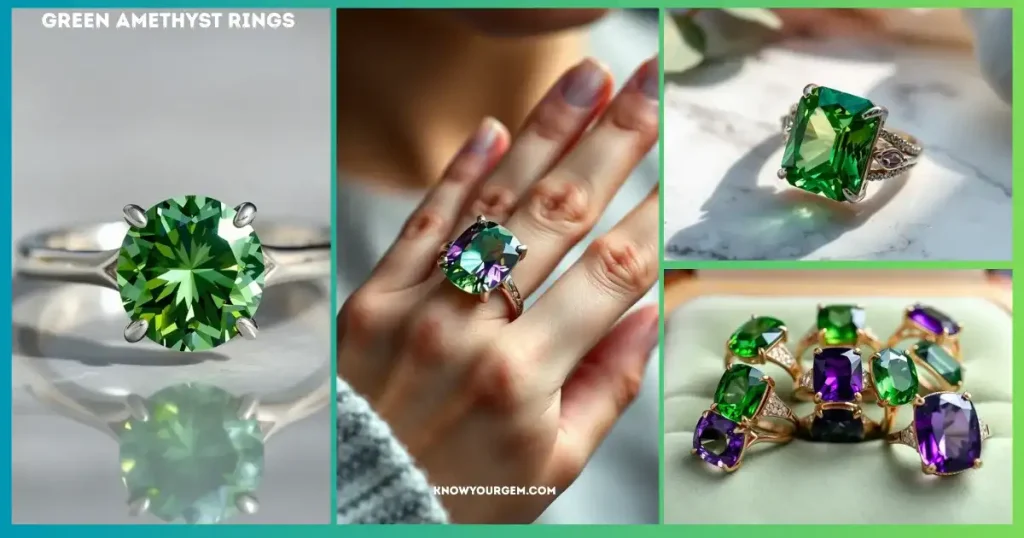
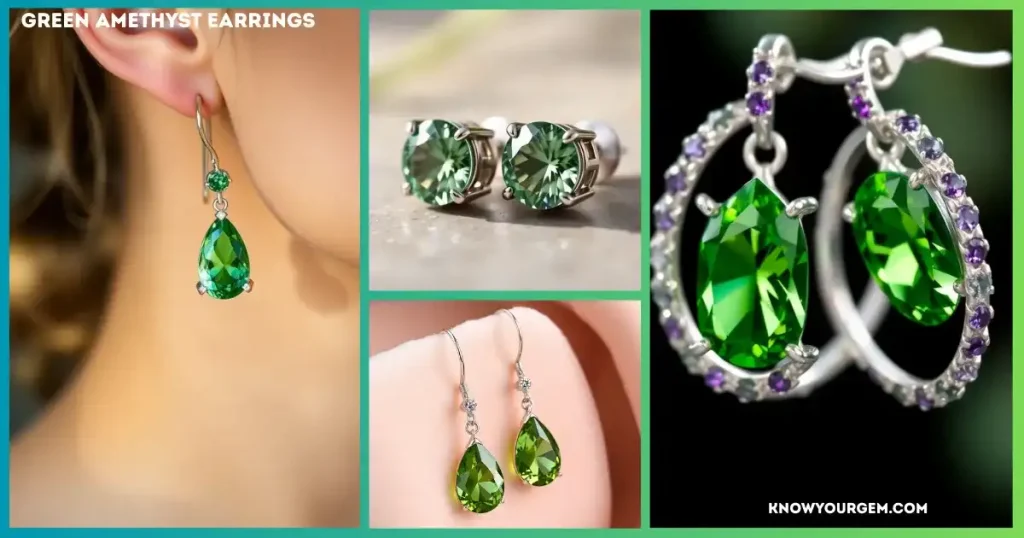
Almost anything, which is half the fun. Emerald cuts are perfect for simple bands, really highlighting the ring’s clarity. Oval and cushion cuts bring sparkle to earrings.
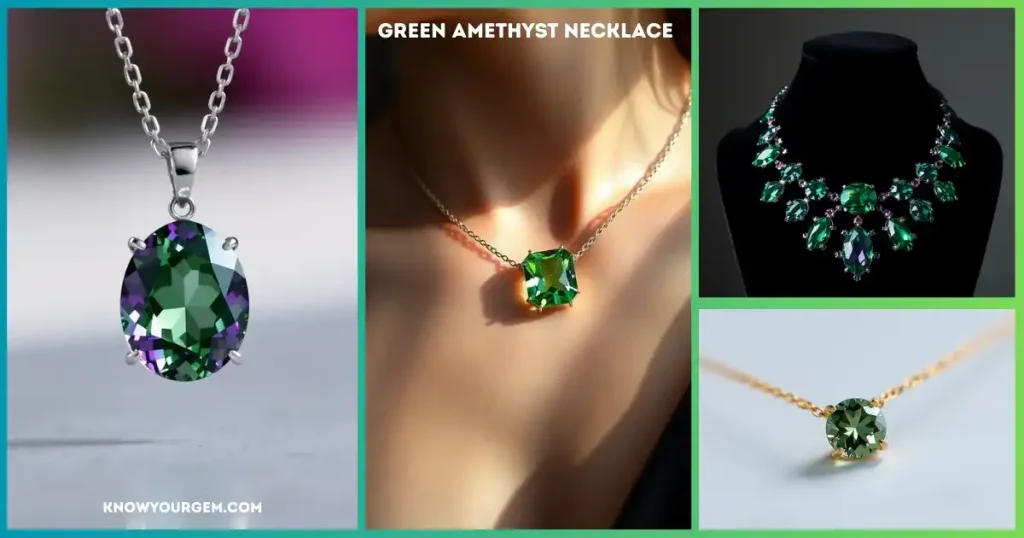
Pendants bring the green right up close to the face where it’ll enhance every skin tone. Tennis bracelets or station settings use the multiple stones for more brilliance.
Couples who don’t want a diamond also pick it as an engagement stone. The soft green feels fresh, and the hardness works with a protective setting.
Gold counts for more than you think. The white gold and platinum are fresh and minty cold for the eye, yellow gold also lends warm golden undertones to the stone to bring out its greenish hue, and rose gold incorporates even more gentleness and romance.
The diamonds or white sapphires act as a halo to complement the centre stone and green versus purple makes for even more dramatic pairings.
How Do You Care for Green Amethyst?
Warm soapy water. A soft brush. A soft cloth. That’s generally the lot. Avoid bleach, acid and ammonia as the stone and surrounding metal are susceptible to damage.
Heat and light require a word. Although most green amethyst is stable in everyday wear, experienced wearers report that extremely high heat (a jeweler’s torch?) and/or prolonged exposure to intense sunlight may impact some stones. Not sure?Inquire about that specific stone from the vendor and avoid placing it on the sunny windowsill.
Leave it in its own pouch so you don’t scratch it with your sapphire and diamond. Take rings off when you are exercising or undertaking other vigorous activities, and get a jeweller to check the settings once a year.
What Does Green Amethyst Mean?
All this is history and belief, not known result. In Crystal method, we assign Green Amethyst to the Heart Chakra, representing emotional balance, compassion, and new beginnings.
In meditation, some use it to make their mind less busy, and because of the green symbolizing growth, it’s often chosen to herald a new path in life.
Astrology is less solid. Amethyst is the typical February birthstone, and prasiolite isn’t a real birthstone for any month, however, some imagine it as a modern birthstone choice. Any Taurus, Virgo, or Libra affiliation is by way of crystal tradition and modifications relying on the supply.
What about the calm people describe? Maybe it’s the habit. Touching a stone you notice every day can nudge you to slow down, and that’s worth having. Nobody has shown the quartz does it.
Mistakes Buyers Make:
The biggest: assuming “green amethyst” means a rare natural stone. After that come paying a “natural” price for heated material, trusting a color seen under shop lighting, buying a mislabeled green stone, and taking spiritual claims as medical fact.
Key Takeaways:
- Green amethyst is prasiolite, which is a green coloured quartz resulting from the presence of iron.
- Almost all of it is heated amethyst, which is accepted when declared.
- 7 on the Mohs scale, which is perfect for the “everyday jewelry wearer” if you are careful.
- Earth-created prasiolite is seriously rare, so any “natural” claim must come with a lab report.
- Healing, chakras, and astrology meanings are beliefs, not scientifically proven.
Sources:
Gemological Institute of America (GIA), International Gem Society (IGS), and Mineralogical Society of America (MSA). Examples of the product documentation you could provide for properties and treatment.
FAQS:
1. What is green amethyst?
A trade name for prasiolite, a green variety of quartz, usually made by heating amethyst.
2. Is green amethyst real?
Yes. It is real quartz. The green can develop naturally, or stones can be heat-treated purple amethyst.
3. Is green amethyst rare?
Prasiolite that is natural is extremely uncommon. Green Amethyst is widely available and inexpensive as well as often heated.
4. How hard is green amethyst?
This material measures roughly 7 on the Mohs scale, making it durable enough to face everyday jewelry use with appropriate protection from a setting.
5. What is another name for green amethyst?
Prasiolite. It’s sometimes called green quartz, though that term can cover other material.
6. Does green amethyst fade?
Not during normal wear. Very high heat or strong light for a long period of time can affect certain stones. Check with seller.
7. Is green amethyst a birthstone?
Not officially. Amethyst is the traditional February birthstone.
8. What is green amethyst good for?
In crystal tradition it’s linked with calm and renewal. Those are beliefs, not proven effects.
9. How do I clean green amethyst?
In order to clean this you can use lukewarm soapy water, you may use soft brush for removing the dust and soft cloth for pat drying. Don’t use bleach, ammonia, or acids.
This content is published by Gemstone Expert and Enthusiast KamilHussain.

Welcome to KnowYourGem.com! your ultimate destination for uncovering the fascinating world of gems and their secrets! I'm Kamil Hussain, a passionate blogger with a Master’s degree in Economics, dedicated to bringing you insightful, well researched content that blends the beauty of gemstones with the art of storytelling. With a keen analytical mind and a love for discovering hidden treasures, I created this platform to help you explore the brilliance, history, and value of every gem.

