

Overview:
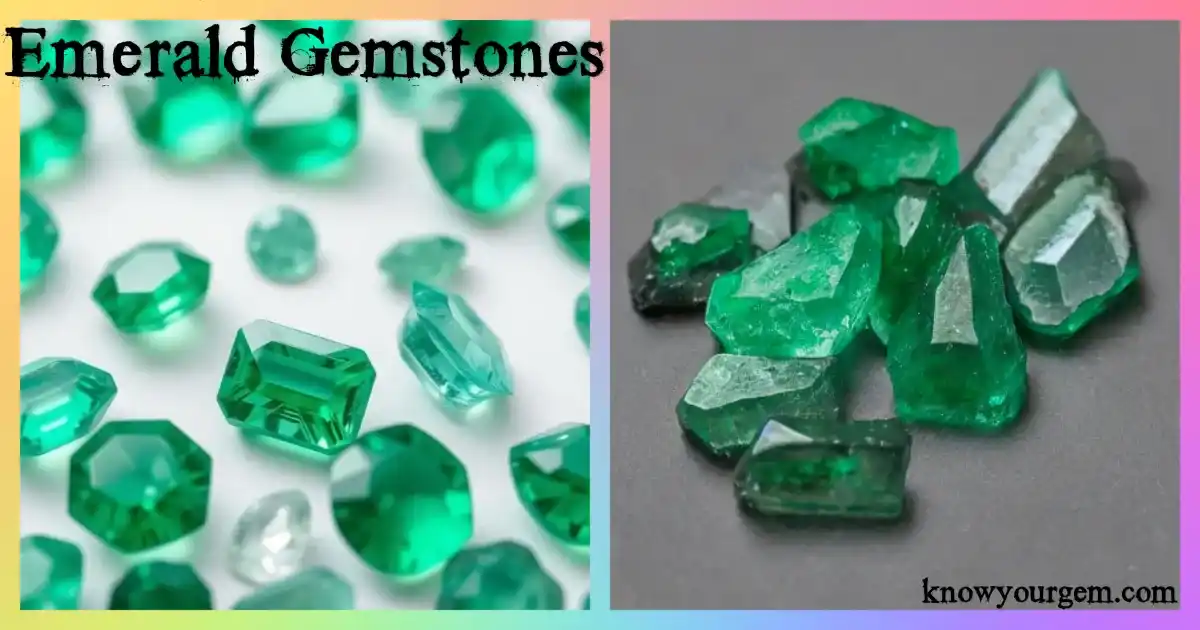
Emerald gemstones are known as good-looking natural green gemstones. They are a symbol of wealth and fashionable goods. These stones are valued for their green species of the beryl family. They display great colors ranging from blue-green to deep forest hues. These green stones have always been associated with hope, rebirth, health, and prosperity.
An emerald’s essence generally comes from its structure, its mineral roots, and the rare geological process that usually forms it. Emeralds are generally timeless; their chemistry, rarity, and origin make these stones both classic and trendsetting.
Emerald DNA: Mineral makeup, chemistry & durability
Emerald gemstones generally contain a hypnotic sheen and unique physical properties due to their atomic makeup. Emeralds are made of a unique mineral that gives them a shiny surface, special chemical traits, and sparkling qualities that make them stand out. Here is a more detailed explanation of what makes emerald gemstones so odd.
Beryl Bloodline: The mineral family Tree
Emerald gemstone is the colorful, expensive variety of beryl. Beryl is a cyclosilicate, which means it is a mineral with a crystal lattice that forms a 6-membered ring. Beryl is a very versatile family, with many different color siblings, including:
- Aquamarine: It is a cool, oceanic blue colored gemstone.
- Morganite: It is soft, romantic pink stone.
- Goshenite: It is pure, colorless beryl.
On a side note, pure beryl is colorless; the typical shades of emerald green are not native. They result from trace migration of elements into the crystal structure during formation.
Chemical Formula:
The molecular blueprint of beryl represents this formula:
Be₃Al₂Si₆O₁₈
Emeralds generally get their structure from the crystalline framework of the mineral family beryl. That’s why these stones belong to the beryl family.
Color Catalyst:
Emerald gemstones generally get their vivid green color because chromium (Cr³⁺) or vanadium (V³⁺) ions replace some of the aluminum atoms in their crystal structure. This element doping conveys how the crystal interacts with the incoming light, specifically how it absorbs and reflects certain wavelengths, and gives rise to the green hue characteristic of the emerald.
If green generally looks too weak or toward yellow, the stone should turn into green beryl. So, this is a case that can greatly decrease the market value.
Strength Stats: Hardness vs. Toughness
- Mohs Hardness: Green emerald gemstones rate at 7.5-8 on Mohs hardness. So they are more suitable for everyday jewelry. No doubt, their hardness and durability are good ways to read them easily.
- Toughness: They will also tend to contain inclusions. These are natural internal fractures or impurities which would make them liable to scratch under pressure or impact as they are so delicate structurally. Because the inclusions are quite common and are, in fact, characteristic of the Emerald, they are often dubbed the Emerald’s, or the gem’s, “jardin”, the French word for garden.
In this paradox manifests the expertise necessary to cut, protect, and set the crystal to be stable in jewelry and maintain this paradoxical combination of qualities.
Name Origins: From Smaragdos to Emerald
The original name for the emerald is derived from the ancient Greek word smaragdos, which means “green gem”. The name was thus adopted into Latin as esmaralda, before finally becoming the modern English “Emerald”. This etymology displays the close relation that emerald has with the green spectrum, being a symbol of growth, renewal, and status.
Earthborn Origins: How Emeralds form & where they’re found
Emerald gemstones are unique in their scarcity and formation. They are a geological anomaly- requiring an incredibly rare conjunction of elements and conditions. Natural emeralds are the result of electric circumstances within the earth.
Formation: Nature’s perfect storm
the perfect combination of elements from nature.
The emerald gemstone formation process starts as crystals in hydrothermal environments. This happens when superheated, mineralized, heated water migrates under pressure through the fractures within the crust. The water starts to act as the chemical courier, bringing the raw materials necessary to create emerald crystals.
To form a true emerald, the following elements must be present simultaneously:
- Beryllium (Be): A rare element and a vital part of the beryl structure; no emerald can be produced without it!
- Aluminum (Al) & Silicon (Si): These are also the elements that make up the crystal lattice of beryl, thus forming the structural base of the mineral.
- Chromium (Cr³⁺) and/or Vanadium (V³⁺): These are the chromophores, the so-called color-inducing agents, responsible for the emerald’s famous sparkling green color. They adapt to the substitution of some aluminum atoms, absorb light, and produce the brilliant green range.
Rarity Factor: The geological chances of everything happening together, as in all the ingredients for the formation of an emerald with all the beryllium, aluminum, silicon to be in the same place at the same time (and in the moment when it happened they did) under the correct temperature, pressure, flow, and specifically the chemistry of the fluids is practically zero.
Hence, natural emeralds are extremely rare, and combine this rareness with their bright color, importance, and mysticism to often push their price per carat just below, and sometimes above, that for a diamond.
Host rocks & geological settings:
Emerald gemstones are generally formed in two different types of geological environments:
- Hydrothermal veins: They are generally observed in metamorphic rocks where hot mineral fluids are generally driven into fractures.
- Pegmatite deposits: They are large crystallized rocks that supply a beryllium-rich environment.
For example, the most widely exploited emerald deposits are from Colombia, Zambia, and Brazil; these sites are the places where the famous conditions for formation of Emeralds have come together. Each local combination of mineral chemistry and formation environment will produce Emeralds of specific characteristics.
Global Apex sources: Where the best Emeralds come from
World Apex sources: The origin of most of the finest Emeralds. Provenance is the source of an emerald gemstone and is a significant element of its value.
Emerald gemstones are mined in various countries, but only regions that consistently produce stones of truly high quality.
These sources have specific characteristics and are associated with particular color and clarity standards and market value.
| Source Region | Dominant Colors & Characteristics | Market Perception & Value |
| Colombia | Colombia also provides Brighter, cleaner green-blue-green specimens. | Transparent Color known as the “Gold Standard” for quality worldwide |
| Zambia | Pure Zambian deep green to bluish-green stones generally look clearer than Colombian stones | Strong saturation; Premium value; Known and highly respected in the market. |
| Brazil | Brazilian light green (sometimes yellowish); wide variation of qualities. | Stable delivery; good for middle-price clients; not as respectable as Colombia or Zambia |
The Four Cs Protocol: Grading & Pricing Emeralds
Emerald gemstones are graded 4Cs. Diamonds also follow the classic 4Cs grading system, but emeralds are jugged by their own standards, especially when it comes to their clarity and color.
Color: The most critical factor
Color is the most important quality in the grading of emeralds. This includes three aspects:
Hue: a true green.
- The purest shade of green is the best in my estimation.
- It is also roundly appreciated. Similar to the above is the vivid bluish green. This..
- Yellowish and grayish hues are a big knock to value.
Color Hue: The various levels of color saturation.
- Finer emerald gemstones generally showcase medium to medium‑dark color tones.
- It is refashioned to green beryl if its weight is too light.
- Much dark water looks inky or opaque.
Saturation: It relates to the strength and purity of a gem’s color.
- Usually, gem-quality pieces shine with their bright, rich color saturation.
- Refined pale or dull green shades are lower-grade, irrespective of their size
Clarity: The “Jardin” Phenomenon
Emerald gemstones are classified as a type III gem, which are known to have and accept inclusions.
- Jardin: The French word for “garden” (meaning the mixture of air, liquid, and earth within the stone. These inclusions are considered the signature of the emerald, which establishes its validity.
- Transparency: It is a test of a gemstone whether it is translucent, opaque, or transparent. More inclusions in any stone can make it cloudy or milky, and it can definitely be worth less.
- Clarity grading: In labs like GIA, IGI, IGS, and SSEF, inclusions are judged while following the stone’s visible appearance.
A gemstone of an eye-clean emerald with non-visible inclusions is a very rare gem and an expensive gem.
Cut: Enhancing beauty & protecting structure
The cut shape of an emerald gemstone can be important in terms of its appearance or mechanical toughness.
- Emerald Cut: It is a classic rectangular or square step cut with beveled corners.
- Purpose: The purpose of this box was to bring out the colors as well as to avoid the chipping of the fragile edges.
- Proportion: When done properly, a cut returns the most light for a given area and has the least amount of extinction, like dark, dull areas.
- Poor cuts lower shine and fold the general value of the stone.
Other well-known cuts include oval, cushion, and pear; however, it is the emerald cut that will always be the most recognizable.
Carat weight: The Scarcity Premium
Carat weight measures the physical size of an emerald and is the most direct indicator of price, but the only difference between emeralds and many other commodities is that emerald prices do not scale linearly but exponentially.
- Emerald (a 1 Carat sparkling emerald of good quality will be so expensive, but a 5-carat, quality emerald will be quite costly, many times more costly, 5 times the cost).
- This very steep rise demonstrates the rarity of large, transparent emerald crystals.
- Large stones with the best color and clarity are slightly difficult to mine, and they are highly sought-after qualities.
- Acquisition strategy: How to buy, authenticate & interpret treatments.
Acquisition strategy: How to buy, Authenticate & understand treatments
Buying emerald gemstone doesn’t just mean selecting a stone for jewelry, but it refers to a safe jewelry set that appeals to educated investors. Learn to browse the emerald market confidently:
GIA certified grading: Why it matters
Always request an authorized gemological report from reputable laboratories such as the GIA, AGL, or SSFE before investing in a high-end emerald.
- In fact, the report confirms the natural origin of the stone with a report grading similar to color, clarity, and cut.
- It also discloses any clarity improvements in emeralds from natural inclusions, which are commonly present in the stone.
Clarity Enhancement Grades:
- None: It means untreated, exceedingly scarce, highest value.
- Minor: Back to just providing a little boost that is still usable.
- Moderate: It means explicit treatment, central value.
- Significant: It applies to a heavy treatment, a lower value.
Transparency is the important word; it is a certified report, which ensures you are not overpaying or inadvertently purchasing a simulated stone.
How to spot real vs. synthetic Emeralds?
Synthetic emeralds:
They are geologically called lab-grown emeralds. These stones are created by labs within a few weeks or a few months. These stones look like natural emeralds, but they are scarce. So, you can easily distinguish them.
- Synthetics are usually hydrothermal or flux grown, and have a cleaner, more perfect appearance than their natural counterparts.
- If a large emerald gemstone appears perfectly transparent and the price is highly suspicious, then it is likely synthetic.
Quick Visual Tip: Natural emeralds tend to have inclusions known as jardin (French for ‘garden’). These internal characteristics are an indicator of natural origin. Always look for emeralds that don’t look perfect; they are not actually natural stones, but they refer to lab creation.
Emeralds in Jewelry: Design & Durability
Emerald gemstones look sparkly in jewelry but need to be set in protective settings thanks to their scratch resistance.
Bezel Setting:
One advantage of this setting is that it is best for rings, as the bezel setting completely surrounds the Emerald with metal, providing increased impact protection and means there is less chance of the Emerald chipping or being damaged.
Prong Setting:
It is more fragile and offers less protection, but can be worn from time to time and be used for smaller stones.
Style Statement:
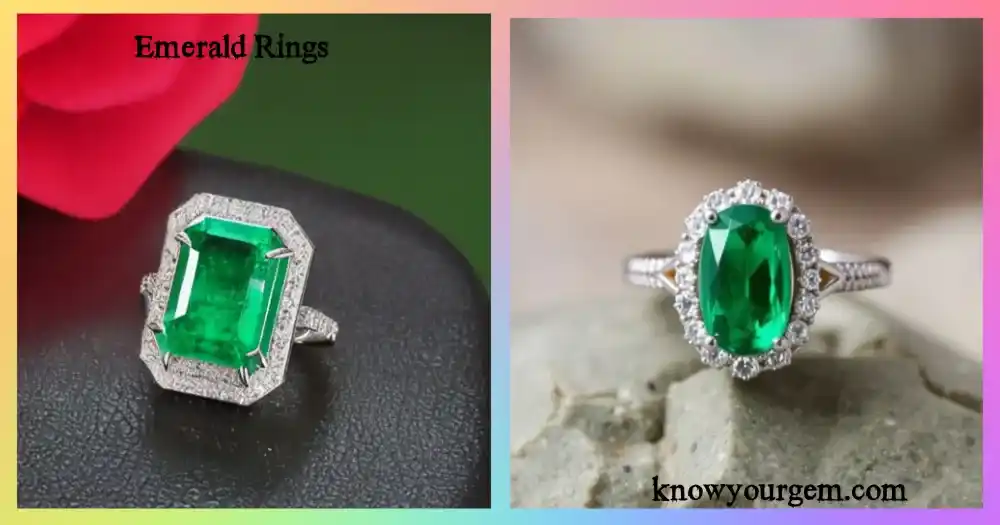
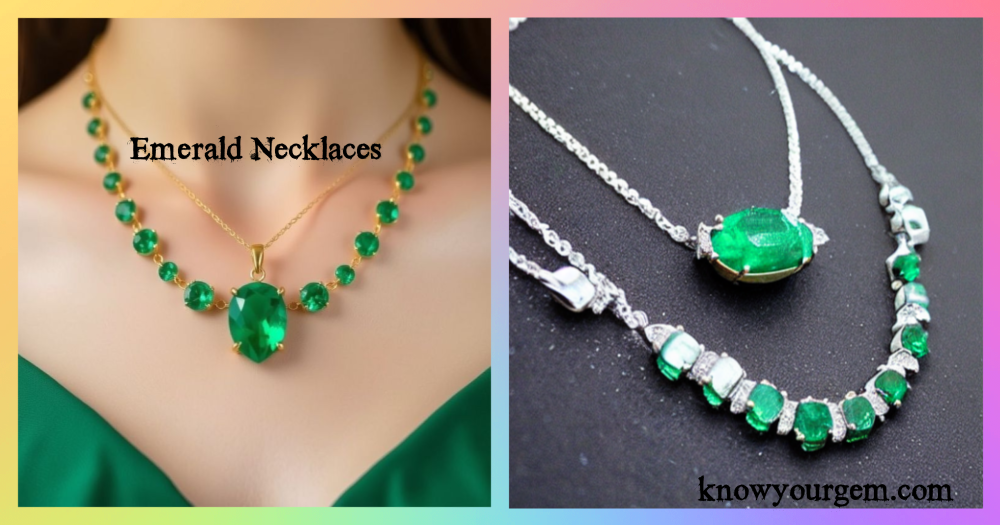
These brilliant emeralds in yellow gold, white gold, or high-quality metals will deliver a striking and luxurious style. The sumptuous green hue? It looks fantastic with each of the precious-toned metals, making it an adaptable showpiece.
The Echelon of Belief: symbolism, Legends & Spiritual Power
Emerald gemstones are precious stones with symbolic meanings passed down through mythology, faith, and monarchy.
Symbolism: The covenant of Life
For centuries, emerald gemstones have represented the divine bond to nature. Their lush green hue conveys a multitude of messages:
- Renewal & Hope: Associated with flowers, this category is related to spring, rebirth, and new starts.
- Love & Fidelity: It means that emerald enhances strong relationships and also unmasks deception; if the color turns off, your lover deceives you.
- Wisdom & Prophecy: It is about the way the Emerald gemstone was utilized in rituals of old to promote clarity, instinct, and foreknowledge.
Cleopatra’s Emerald Legacy:
Queen Cleopatra was famously obsessed with emeralds. She owned the Egyptian emerald mines and used emeralds to demonstrate her dominance.
- By their association with the patronage, there was a connection of the emerald to the imperial state, divine femininity, and the eternally beautiful woman.
- These promotional efforts may help in creating a legacy that turns emeralds into an emblem of royal and spiritual power.
Spiritual properties & folklore:
The green gem is said to possess healing energy and other protective energies that could be beneficial for our spiritual development.
- Heart Chakra Alignment: Emerald has the capacity to balance the Heart (Anahata), and it also has the ability to draw harmony and wealth.
Ancient Beliefs:
- According to Latin folklore, emeralds had the power to curse evil spells.
- In Japanese folklore, they represent energy and vitality.
Biblical Significance:
- The Bible refers to emeralds as a part of the breastplate of the priests, and as foundation stones of the New Jerusalem, and by implication they symbolize God’s blessings and knowledge.
Gemstone valuation guide: Price vs. Quality
For truly understanding the market, buyers need to spot the key traits that shape pricing. Two things matter mostly, one is color intensity and another is clarity. When both are top tier, prices rise fast.
Quality Levels & Market Impact:
| Grade | Color / Saturation | Clarity / Transparency | Market Use | Price Trend |
| Apex Investment | Vivid Pure Green (Max Saturation) | Eye-Clean / Fully Transparent (Extremely Rare) | Collector’s Gem | (Skyrocketing) |
| High Quality | Bluish-Green or Deep Green (Rich & Vivid) | Slight Inclusions / Still Very Transparent | Premium Jewelry | (High) |
| Commercial Grade | Medium Green (Decent Saturation) | Cloudy / Translucent (Visible Inclusions) | Everyday Jewelry | (Moderate) |
| Low Quality | Pale or Yellow-Green (Dull & Washed Out) | Heavy Inclusions / Opaque (Often Fractured) | Budget Stones | (Low) |
Key Insight:
Although the price curve is exponential, it jumps significantly when both color and transparency are excellent. When any of them decreases, the price further plummets.
The Emerald Gemstone: A modernist icon & non linear Asset
Emeralds have transitioned from ancient royal property to the contemporary high-volatility geological investment.
Their percentage value advancement is not linear but irregular, taking a leap of its own only when their color and clarity come together. This is therefore not a crown jewel but a limited flex.
Atomic identity & color Equity:
- Beryl Backbone: The emerald is a beryl crystal that gains its striking color from the inclusion of Chromium or vanadium, the atomic switch that converts colorless into emerald green.
- Color = Value: If too dull or not saturated, then it is simply green beryl.
- Jardin Advantage: Inclusions are not defects; they are evidence of origin. A perfect emerald is probably synthetic.
Structure & setting:
- Hard but Fragile: Has a hardness of 7.5-8.0 on the Mohs scale, which makes it able to be worn, but due to internal fractures, it is impact-sensitive.
- Bezel Setting: The contemporary solution is elegant, tighter, and helps save the edges of the stone.
Global Provenance = Prestige:
| Region | Color Profile | Market Status |
| Colombia | Vivid bluish green. | Benchmark for elite standard of quality set internationally |
| Zambia | Deep forest green Premium challenger | Very well regarded |
| Brazil | Slightly light or yellowish green Sufficiently dependable | Mid-range supply |
The 4 Cs Re Coded:
- Color: Medium-dark plus vivid saturation equals premium.
- Clarity: Inclusions anticipated. Does the accuracy demonstrate the significance of transparency rather than perfection?
- Carat: Large-sized stones are often sold expensively due to their rarity.
Smart Acquisition Strategy:
- Certification First: GIA or AGL certificates are irreplaceable.
- Oiling Disclosure: Slight is moderate, and large is deeply discounted.
- Synthetic Alert: Too clean with too cheap price stones are grown in a lab, because the natural emeralds show their natural inclusions.
- Emerald reality test: the information that is hidden or not obvious
Emerald reality check: The fine print
- High-Maintenance Asset: A high care level of the original Emerald gemstone is required to maintain the natural green glow. Even though it is easy to look after due to the rarity, delicacy, and price.
- Oiling Is Standard: Nearly all natural emeralds are oiled to improve clarity. This is an industry convention, however, not a problem. Avoid cleaning with ultrasonic cleaners and harsh solvents, however, as they remove the oil and reveal fractures.
- Wear Smart: Canadian emeralds chip easily. Don’t choose delicate prong settings for daily wear. Choose bezel or unique protective settings to make emeralds last long.
- Price Truth: Enormous, clear emeralds cost vastly more. If it is not expensive, then it is synthetic, heavily treated, or just green beryl. Never buy the goods without certification.
FAQS:
1. What is the worth of real Emerald rings?
How much is a real emerald ring? The price can range from a few hundred dollars to several thousand dollars for a high-end, untreated Emerald ring with a rich green color and good clarity.
2. Can real Emerald earrings be worthy than real Emerald ring?
Yes, some real emerald earrings can be worth more than rings sometimes due to holding large stones with good color and clarity.
3. What is the cost of real emerald necklace?
Emerald necklaces are very costly; the range of cost starts from $1000 and can go much higher than $ 50000.9Based on size, number of emeralds, and grade, the cost varies.
4. What shape of real Emerald bracelet is best for men?
Real emerald jewelry can be worth it because the stones are rare, but the biggest factors are how they look, their color, clarity, size, and origin. In fact, fine emeralds can sometimes be worth more than diamonds for the same weight.
5. What shape of real Emerald bracelet is best for men?
In men’s jewelry, Emerald bracelets generally feature rectangular or Emerald cut stones. Since their modern, rectilinear lines are masculine and elegant.

Welcome to KnowYourGem.com! your ultimate destination for uncovering the fascinating world of gems and their secrets! I'm Kamil Hussain, a passionate blogger with a Master’s degree in Economics, dedicated to bringing you insightful, well researched content that blends the beauty of gemstones with the art of storytelling. With a keen analytical mind and a love for discovering hidden treasures, I created this platform to help you explore the brilliance, history, and value of every gem.

