

Abstract:
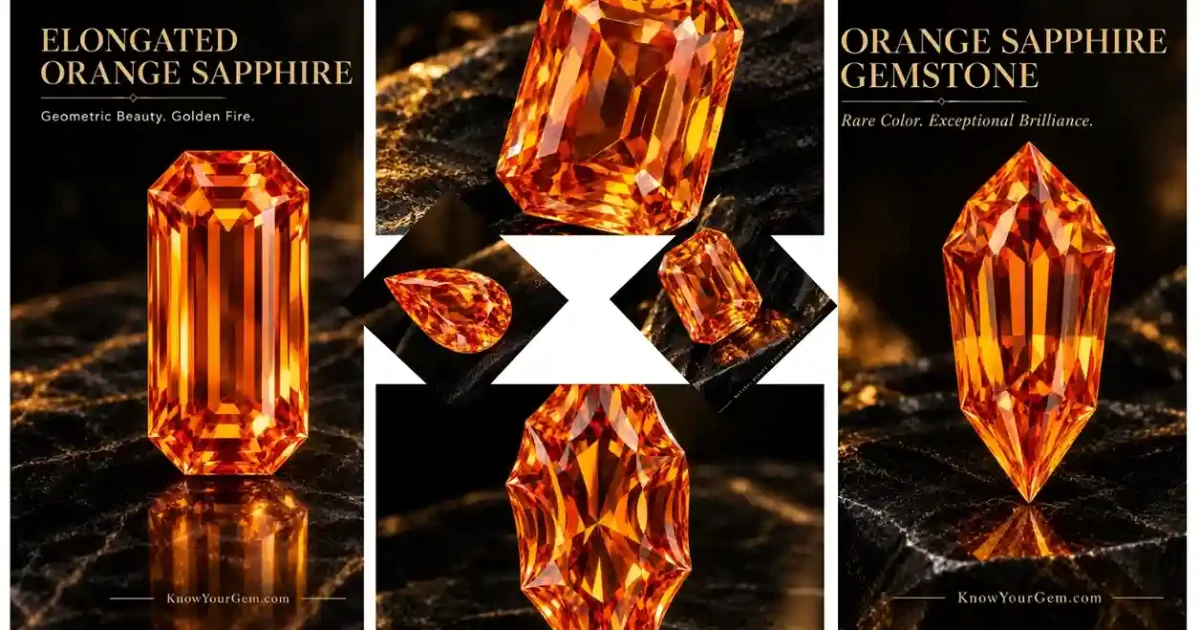
Orange sapphire is the same material as ruby and blue sapphire, it just occurs in softer shades from peach to tangerine. It also has a Mohs hardness of 9, so it is one of the hardest of all the coloured stones. High-quality, untreated orange stones are rarely found and that is primarily where the value is derived.
Buying one takes more care than most gems, because heat treatment is routine, a stronger treatment called beryllium diffusion exists, and trade names like “sunset” and “papaya” blur what you’re actually getting. The sections below cover how to tell the difference.
What Is Orange Sapphire?
Corundum is aluminum oxide (Al₂O₃). Pure, it’s colorless. Add trace elements and defects in the crystal, and you get every color of sapphire. Blue is the famous one, but corundum comes in yellow, pink, green, purple and orange too. Red corundum is called ruby. Everything else is sapphire.
Orange comes from a mix of trace elements, mainly iron and chromium, together with color-causing defects in the crystal structure. It’s a fiddly recipe, which is partly why a pure, vivid orange is hard to find. Stones tend to drift toward yellow, pink or brown.
| Mineral | Corundum (aluminum oxide, Al₂O₃) |
| Mohs hardness | 9 |
| Refractive index | About 1.76 to 1.78 |
| Crystal system | Trigonal |
| Specific gravity is | About 3.99 to 4.01 |
| The stone carries colors like | Peach, orange-pink, vivid orange, tangerine, burnt orange, red-orange |
| Main sources | Sri Lanka, Madagascar, also Tanzania and others |
| Treatment | Commonly heated; untreated stones cost more |
Is it a “semi-precious” gem? That is an outdated marketing term, not a gemstone category. Sapphire is a gemstone in the same class as diamond, ruby, and emerald – the stones the industry used to call precious.
How Does Orange Sapphire Form?
Corundum is found at the boundary of aluminium containing rocks and heat and pressure, primarily in some metamorphic rock such as marble and igneous rocks.
Over time, erosion moves the tough gemstones from their mother rock into gravel beds and river sand, where prospectors seek them. For centuries, sapphires have been mined from Sri Lanka’s gem gravels, or illam.
The orange itself comes from trace elements sitting in the place of some aluminum atoms, along with defects that absorb part of the light passing through the stone. What the crystal doesn’t absorb is what reaches your eye.
What’s the Difference Between Orange Sapphire and Padparadscha?
Padparadscha is a pink-orange sapphire – a mixture that is sometimes called lotus blossom or salmon. Orange sapphire is a generic term that refers to sapphires from peach to deep tangerine and padparadscha is one of them.
| It displays colors like | Peach to tangerine to burnt orange | Delicate pink-orange, salmon tones |
| Pink component | Little or none | Essential |
| Rarity | Scarce in fine quality | Among the rarest sapphires |
| Typical origin | Sri Lanka, Madagascar and others | Historically Sri Lanka |
| Price | Lower | Usually much higher |
The kicker. There is a significant division of opinions on where the border lies. Even major laboratories have had to disagree on it. If a seller offers up an orange padparadscha, demand a report that specifically states that it is padparadscha from a major laboratory, not just a note from the seller.
Trade names add to the confusion. “Sunset sapphire”, “papaya sapphire” and similar terms aren’t scientific, and different sellers use them for different shades. Ask what the stone is, in plain gem terms.
How Is Orange Sapphire Graded?
Color is the primary consideration in evaluating a colored stone, and much more so than with diamonds. Glynis Aston-Jones says gemologists examine hue, tone and saturation, for example: “The more intense, deep orangey stones without brown or gray in them, the more desirable.
Slightly yellow, brownish or pinkish stones are less desirable; a little pink adds value, especially close to the padparadscha border.” Color counts. Bright, pure orange is more impressive than a larger, duller one. Tone counts too. Very dark stones dull the color, and very light ones look washed out.
Clarity is judged without magnification. Colored stones aren’t held to diamond standards, and most orange sapphires show some inclusions. Eye-clean stones, free of surface inclusions to the naked eye, are good quality. Fine rutile needles called silk can be an indication of natural origin. Silk can also be dissolved by heating.
Cut shapes color. Cushions and ovals are more common because they demonstrate saturation, and emerald cuts for vintage and Art Deco jewelry. That’s where a good cut helps by dispersing saturation to every part of the face of the stone, with no dead spots where a stone looks washed out.
Carat weight is most significant in the top. Above two carats, fine stones are truly rare and price per carat rises with size.
Are Orange Sapphires Treated?
Most. Heating has always been part of the sapphire industry, and the vast majority of orange sapphires in the market have been heated – sometimes at extremely high temperatures – to change the color and clarity.
This practice is widely accepted and doesn’t detract from the beauty of stones when set in jewelry. It should be disclosed.
Beryllium diffusion is a different matter. In this treatment, beryllium is driven into the crystal at extreme heat to create or intensify orange and yellow.
The color can sit close to the surface, and stones treated this way are worth far less than naturally colored ones. Spotting it takes advanced lab testing. A seller who can’t tell you which treatment a stone has had isn’t a good source.
| Price | Standard market price | Usually a significant premium |
| Availability | Common | Rare, especially in larger sizes |
| Lab report | Recommended | Essential |
| Disclosure | Must be stated | Must be backed by a lab |
The “unheated” assertion only applies when supported by an established lab like GIA, Gübelin, SSEF or AGL with a statement that it’s unheated. 3 questions: was this stone heated, have you checked for beryllium diffusion, and will you confirm that in writing?
Where Does Orange Sapphire Come From?
Sri Lanka is the traditional benchmark. Ceylon material is known for lighter peach and pinkish-orange stones with good transparency, and the island has been mined for sapphire for a very long time, especially around Ratnapura and Elahera. Many stones close to the padparadscha border come from here.
Madagascar became a major sapphire producer in the late 1990s after discoveries in the Ilakaka area. Its orange stones are known for bright, strong color, often more saturated than Sri Lankan material. Madagascar is now one of the largest sources of sapphire by quantity, but truly vivid orange is still a small slice of what comes out of the ground.
Other countries, including Tanzania, produce orange sapphire as well. Origin matters to collectors, and a lab can sometimes determine it, but it matters less than color and cut when you’re buying for pleasure. A well-cut, vivid stone from anywhere beats a dull one from a famous locality.
How Much Does Orange Sapphire Cost?
Carat prices cannot be generalized. Orange sapphires will cost between very cheap to outrageously expensive due to saturation, heating, size, clarity, cut, and origin. A hot orange sapphire will sell for a lot less than a non-heated orange sapphire of the same size.
Stones near the border can command a premium. Rough stones are much cheaper than the cut stones because the weight is unpredictable.
Think of orange sapphire as something to buy because you like it. Gem prices can be hard to resell at what you paid, and there’s no guaranteed buy-back market. If you’re shelling out a lot of cash, the first thing you should do is find a lab report and an evaluation from a third party.
How Do You Buy Orange Sapphire Safely?
Start with paperwork, then look at the stone.
- If it’s important, demand a GIA, Gübelin, SSEF or AGL report on the stone.
- Get treatment disclosure in writing. Read the report’s exact statement about heat and diffusion.
- Check the color in daylight, inside the house, and LED as orange moves even more than you expect.
- Verify the cut. If the surface is stained or washed out, you are losing light.
- Compare origin only if it matters to you. Color should come first.
- Before you pay. Look at the seller’s return policy.
- An independent valuation for insurance and price checking of items bought over the net, for high value purchases.
How Does Orange Sapphire Compare with Other Orange Gems?
| Padparadscha has colors like | Pink-orange blend; much rarer and pricier |
| Spessartite garnet’s hardness is | about 7 to 7.5; vivid orange; softer and usually cheaper |
| Orange topaz has hardness is | 8; and has perfect cleavage, so it can split on impact |
| Citrine displays | Quartz, Mohs 7; very affordable; common |
| Fire opal colors like | Mohs about 5.5 to 6.5; much softer; different look |
| Hessonite garnet displays colors like | Warm orange, often cloudy; lower value |
The citrine question is asked all the time. Citrine is a lovely stone, but it’s quartz at 7, it’s plentiful and it’s affordable. If a dealer is selling citrine at the price of sapphire, then walk away. It is often the other way round, with citrine or garnet being represented as orange sapphire. Ask for a lab report.
Which Jewelry Suits Orange Sapphire?
Almost anything. Orange sapphire, which is Mohs 9 and has no cleavage, handles daily wear better than topaz, opal or garnet, and only diamond is harder among natural stones.
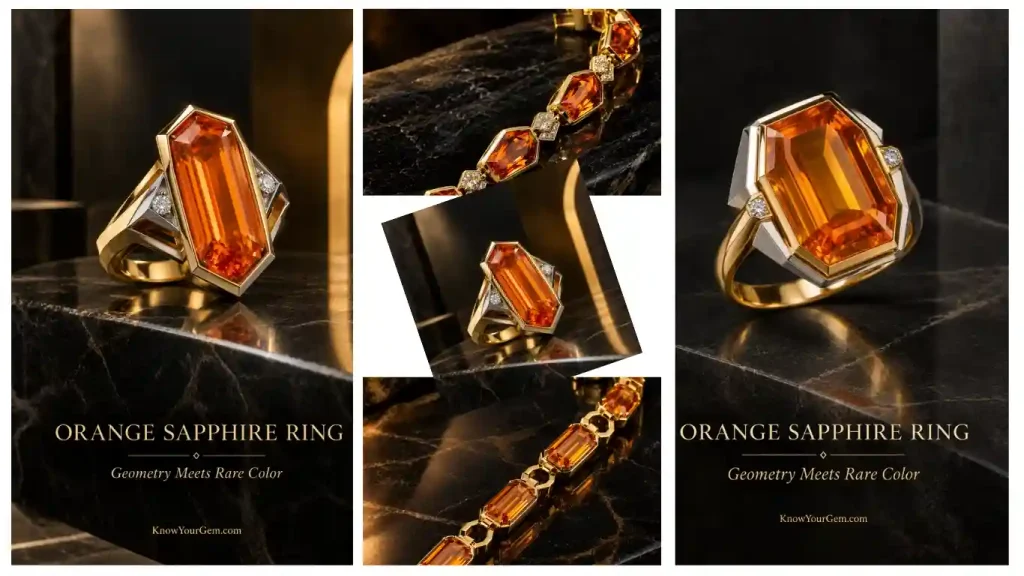
The Engagement Ring: Of course, the real appeal of an engagement ring is the ring itself. Orange sapphire is an excellent, non-traditional substitute for the diamond solitaire, and the bright hue reads happy rather than traditional.
The gemstone can be surrounded by a halo of smaller diamonds for more contrast, and use yellow gold or rose gold to emphasize its warm tones.
Vintage and Art Deco styles pair well with emerald cuts and geometric settings in platinum or yellow gold. Genuine antique pieces from the early twentieth century are uncommon, which can affect their value, so confirm that the gemstone is natural and ask about any restorations.
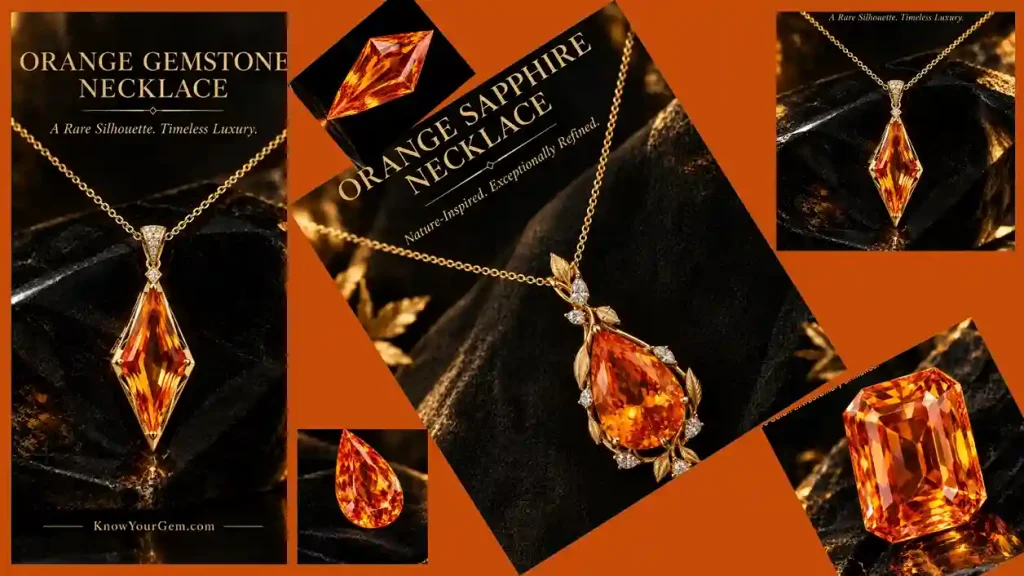
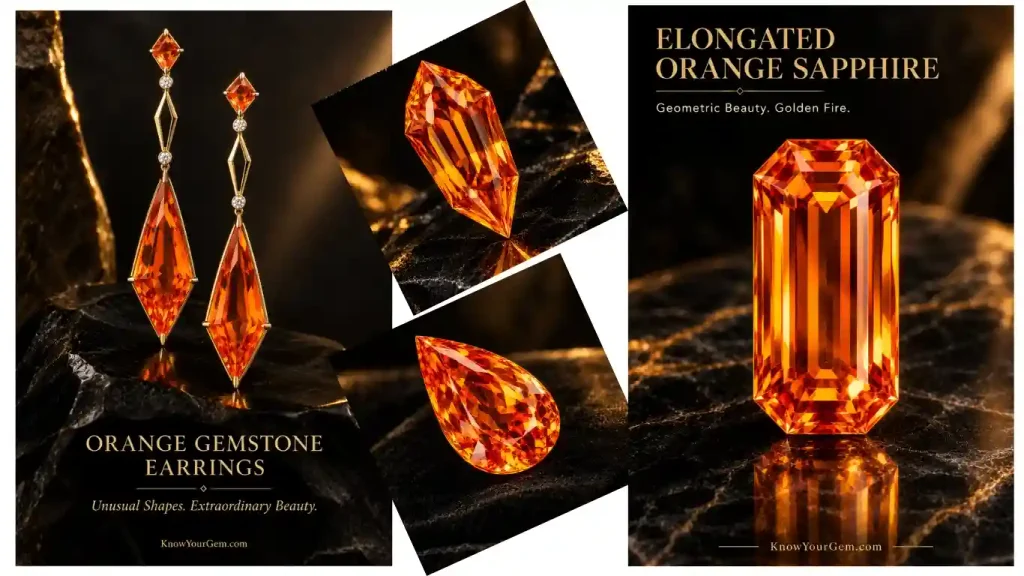
Earrings, pendants and bracelets – all can be worn together. For a pop of colour, a few drops and tennis or link bracelets of orange sapphires and diamonds add shimmer to the face. Today, pink and orange sapphires are usually worn together, with a soft peach-to-tangerine gradation.
How Do You Care for Orange Sapphire?
Use mild soap, lukewarm water and soft brush for removing dust. After that, wash it thoroughly and dry with a soft cloth.
Ultrasonic and steam cleaners are usually okay for untreated and just heated stones, but not for fracture-filled stones and those whose treatment history isn’t known. If you don’t know what you’ve got, don’t have it cleaned. No strong chemicals and keep sapphire separated from diamond (which can scratch it), and from soft stones that sapphire will scratch.
Have your setting inspected annually. With a ring on your finger every day, the setting needs to be inspected annually. The sapphire is very scratch resistant, but prongs can wear and loosen.
Will it fade? No, not typically. When the heat is low and the original color is natural, it is generally stable for most sapphires. Color from fractures and other trace element imperfections as well as some diffusion works can fade in intense light, and some diffusion treated stones can also fade. Ask your jeweler for the specifics of the stone you’re looking at and get it in writing if you’re paying a premium.
What Does Orange Sapphire Mean?
All these are tradition and beliefs, and not the proven effect.
What does a piece of orange crystal represent? They are associated with the sacral chakra (the energetic center of passion, sensuality and pleasure) and with feelings of creativity, joy and fun.
Some people wear one during meditation to feel more inspired. The color itself stands for warmth and optimism, and that’s enough for plenty of buyers.
On astrology, the picture is narrower than many listings suggest. Sapphire is the September birthstone in the Western tradition. According to Vedic astrology, sapphire corresponds to Saturn, and the Blue Sapphire, or neelam, is the traditional stone for that.
Orange sapphire is not a typical prescription. Consult a qualified Jyotish to use a stone if for astrological reasons – prescriptions vary based on the individual chart.
What Does the Orange Sapphire Color Range Look Like?
Orange sapphire spans a broader range than the name implies. Peach and orange-pink stones are close to the padparadscha boundary and are priced accordingly. Vivid orange, a pure saturated tangerine, is the most sought-after color in the standard category.
Burnt orange is a darker, amber-leaning tone that’s popular in vintage and antique jewelry. Very dark orange loses brightness and sells for less. Red-orange stones lean toward ruby territory, and where a stone is classified depends on the lab. Rare stones that change color between lights also exist and are mostly of interest to collectors.
Don’t buy by name. “Sunset”, “papaya”, “Ceylon orange” and similar terms are marketing, and the only reliable description is the stone’s color, treatment and lab report.
Mistakes Buyers Make:
The biggest is paying for “untreated” without a lab report. Others are mistaking a heated stone for a natural one, buying a stone that looks vivid under shop lighting without seeing it in daylight, trusting a trade name like “sunset sapphire” as a grade, and ignoring beryllium diffusion.
Some buyers also assume padparadscha status because a listing says so, or buy for investment without understanding how hard gems are to resell.
- Orange sapphire is corundum (s), Mohs 9, no cleavage, very good for everyday wear.
- “Unheated” has to be confirmed by a report from a reputable lab, not the seller’s word.
- Padparadscha is a pink-orange and much rarer. The border is a question of debate.
- Spiritual and astrological connections are beliefs that exist within a culture; they are not scientifically established.
Sources:
GIA, International Gem Society, and all the links you want to cite from reports published by SSEF, and Gübelin on properties, treatments and grading.
1. Is orange sapphire rare?
High-quality, bright, unheated orange sapphire of any size is very rare. Bright, untreated orange sapphire is very hard to find above 2 carats in size.
2. Are orange sapphires real?
Yes. They’re the same mineral as blue sapphire and ruby (orange is a variety of corundum). There are lab-grown orange sapphires too, which should be disclosed.
3. Is orange sapphire more valuable than blue sapphire?
It depends on the stones. The best blue sapphires typically come at a higher price but a fine orange can claim a position above the commercial blue sapphire.
4. Are untreated orange sapphires worth more?
Usually yes, and the difference might be large. I imagine you would need to get a lab report that shows there is no heating evidence.
5. What is the most valuable orange sapphire color?
Bright, pure orange without brown or gray is the highest standard. Pink-orange stones, close to the padparadscha edge, will sometimes command vastly higher prices.
6. Can orange sapphire fade?
Usually not. Most stones (with natural color and heating) are quite stable, although stones with defect-based color or some diffusion treated stones may change color on intense light or heat.
7. Is orange sapphire good for an engagement ring?
Yes. This is Mohs 9 without cleavage, so tough for everyday wear.
8. What’s the difference between orange sapphire and padparadscha?
Padparadscha contains a pink element and is much rarer. Orange sapphire ranges from peach through to tangerine with minor or no pink.
9. What is orange sapphire called?
Just orange sapphire. Common trade names such as “sunset sapphire” and “papaya sapphire” are loose and variable.
10. How do I tell orange sapphire from citrine or garnet?
Hardness, refractive index, and a lab report can be used for identification. Orange sapphire has a Mohs hardness of 9, citrine is 7, and spessartite ranges from 7 to 7.5. For an expensive stone, obtain a report.

Welcome to KnowYourGem.com! your ultimate destination for uncovering the fascinating world of gems and their secrets! I'm Kamil Hussain, a passionate blogger with a Master’s degree in Economics, dedicated to bringing you insightful, well researched content that blends the beauty of gemstones with the art of storytelling. With a keen analytical mind and a love for discovering hidden treasures, I created this platform to help you explore the brilliance, history, and value of every gem.


[…] flashes these incredible sunny colors, ranging from bright yellow to deep, fiery orange. If you get your hands on a really good […]