


Quick View: Labradotie is a striking member of the feldspar family, cherished for its mesmerizing optical effect known as labradorescene. When light hits the stone, it refracts through internal layers, that produce vivid flashes of color most commonly electric blue and greens, but sometimes shimmering purples and even hints of gold.
The primary sources where this gem is found including Canada, Madagascar, and Finland, each region offer a unique quality. While having 6 -6.5 mohs scale of hardness it is tough enough for daily wear jewelry but still requires a gentle care for daily use.
Quick facts about Labradorite:
| Property | Details |
| Group | Plagioclase Feldspar mineral group |
| Hardness | 6 to 6.5 mohs scale |
| Main Colors | Its main colors like Gray base with blue, green, gold, orange, red flashes |
| Primary Sources | The primary sources where it is usually found are, Canada (Labrador), Madagascar, Finland, Russia, Australia |
| Optical Effect | Labradorescence (iridescent light play) |
| Typical jewelry | It is typically used in Jewelry like, (rings, necklaces, earrings), carvings, countertops, decorative items |
What is actually Labradorite?
Labradorite is a meaningful gemstones which is recognized for its play of color that seems to glow from within. Not as same as gems that rely on transparency or surface brilliance, labradorite’s beauty comes from a sophisticated optical phenomenon rooted in its geological structure. While recognizing about this gem is from both scientific and visual perspectives believe to help you appreciate why this stone has captivated humans for centuries.
Scientifically definition:
Labradorite relates to plagioclase feldspar mineral group family. The mineral composition makes up about 60% of Earth’s crust. Chemically, a gem is called sodium calcium aluminum silicate, that give it complex composition and a distinctive triclinic crystal structure.
This gemstone forms in ingenious rocks, particularly in gabbro, basalt, anorthosite formations. It was first documented since 1770 in Labrador, Canada.
Why it looks iridescent:
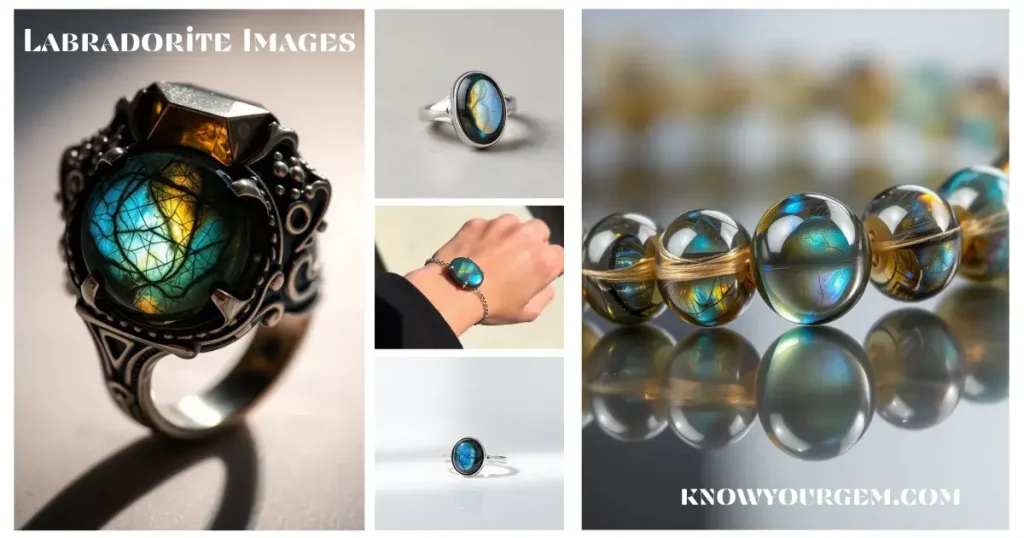
The mesmerizing optical phenomenon is recognized as labradorescene lies when light enters the stone and hits microscopic layers within its internal structure. These thin waves to interfere with each other, creates the signature flash effect.
Not like the surface level shine Labradorescene happens deep inside the stone. As you rotate this gem under light, in different wavelengths reflect back at the vary angles, while producing those dramatic color shift that seem to glow from within. The effect disappears and reappears that hinge on your viewing angle, makes each piece uniquely interactive.
Geological formation & sources:
The story of labradorites begin millions of years ago on the Earth’s molten interior. While recognizing where and how these gemstones form reveal why certain locations produce superior quality materials and why some pieces command significantly higher prices than others. Geography directly impacts labradorite’s optical performance, that makes its origin critical factor in value assessment.
How they form:
A gem forms in cooling magma chambers which are deep beneath in Earth’s surface. As molten rock cools gradually, feldspar crystals begins forming with alternative layers of different chemical compositions. This process, is so called exsolution, creates the internal Lamellae structure responsible for the stone’s signature flash.
The crystal structure develops over thousands of years as temperature and pressure conditions enable minerals to separate into the distinct layers just nanmeters thic. These are perfectly aligned become the engine of labradorescene.
Major mining locations:
- Canada (Labrador): It is the original and most famous source which produces classic gray based labradorite with the strong blue and green flash. Since, Canadian material often showcases bold, broad color zones.
- Finland (Spectrolite): This source provides Finnish variety, which is usually known as spectrolite, and is considered the most premium type of labradorite. It is found only Ylamaa region, it is cherished for its exceptionally vivid colors that range from the classic blues and greens to the rare flashes of purple, orange, and even red.
- Madagascar: Madagascar is the another largest supplier of this gem worldwide. Stones from this region often own lighter base tones and are produced in significant quantities, that make them a staple for beads cabochons in the jewelry trade.
- Russia: Russia is also a producer of quality Labradorite, since on a smaller scale as compared to Finland and Madagascar. Its deposits contribute to the global market but aren’t as commercially dominant.
How origin affects quality:
Source location dramatically impacts flash intensity, like color range, and market value. Finnish spectrolite commands premium prices because of its exceptional full spectrum display. Canadian stones are cherished for their historical significance and strong traditional coloring. Whether Madagascar material offers excellent value for commercial jewelry applications, whether labradorite Australia produces occasional specimens with the unique golden flash characteristics.
Labradorite meaning, symbolism & cultural Context:
According to the geological and optical properties, this gem holds deep cultural significance which spans indigenous traditions and modern spiritual practices. Further it transforms from mere mineral specimen into the meaningful talisman. Whether recognizing these associations can help to explain why Labradorite resonate to powerfully with diverse communities worldwide.
Historical Lore:
According to the Intuit legend, the Northern Lights became trapped in the rocks along the Labrador coast. A warrior stuck the stones with his spear, while releasing most of the aurora back to the sky but some light has remained frozen within the rocks, create Labradorite’s flash. The Intuit people have discovered this stone various centuries ago, before European contact and recognized its special properties. They have incorporated it into tools and ornamental objects, while recognizing its connection to the land’s spiritual essence.
Modern spiritual associations:
Contemporary crystal practitioners associate labradorite with transformation and consciousness expansion. The ability of the stone is shifting colors mirrors themes of change, adaptation, and reveal hidden truths.
Various people believe that it strengthens intuition and protects against negative energies and functions as shield that deflects unwanted influences whether allow positive energy to flow freely.
Its metaphysical properties including transitions, awakening dormant abilities, and bridge the conscious mind with deeper awareness.
Chakra & zodiac associations:
Energy workers connect labradorite to the third eye crown chakra, which believes to enhance perception and spiritual connection. The gem correspondence emphasizes mental clarity and higher consciousness.
Astrologically, it is linked with zodiac signs that are seeking transformation and discovery, since practices vary across different systems.
Labradorescence explained:
Its sign optical effect deserves deeper exploration because it is the single essential factor that determine the stone’s beauty, value, and appeal. Not same as simple color or transparency, labradorescene involves complex physics that creates one of the nature’s most dramatic visual displays. Grasping how and why this phenomenon lies transforms your ability to evaluate quality and appreciate that makes exceptional pieces truly special.
Optical science made simple:
The magic behind the stone’s flash involves the light interference, a quantum phenomenon where light waves interact with the layered structures. When white light enters the stones, it encounters hundreds of microscopic layers are stacked like pages in a book.
Some wavelengths reflect off the first layer, whether others penetrate deeper before bouncing back. These returning light waves either reinforce or cancel each other hinges on their phase relationship, that creates the selective color display we see.
Color Variations Explained:
- Blue Flash Labradorite: it is the most usual variety that showcases predominantly blue and teal flashes. Blue flash labradorite lies when the internal space matches wavelengths in the blue spectrum like, 450-495 nanometers.
- Green: Green flashes appear when layer thickness favors a green wavelengths like 495-570 nanometers. Since high quality green labradorite often showcase alongside blue in the same stone.
- Golden: Rare golden and orange flashes indicate specific lamellae configuration. These warm tones increase a stone’s value significantly.
- Purple: The rarest color, purple stone appears only in the exceptional specimens, primarily from Finland. Since, purple flash commands premium prices among collectors.
- Red: Extremely scarce red flashes embody the holy grail for the serious collectors. Since, true labradorite examples are museum quality rarities.
- Black: Dark bodied stone with having intense flash are sometimes marketed as a black labradorite, since the base color ranges from charcoal to the deep gray. Black labradorite meaning emphasizes mystery and protection in metaphysical contexts.
- Brown: Less common brown toned specimens still showcase flash but typically command lower prices than gray based material.
Spectrolite vs Labradorite:
| Feature | Standard Labradorite | Spectrolite |
| Origin | It is found in multiple countries | It is only found in Finland only |
| Color Range | Its primary spectrum are blue/green | Full of spectrum including purple / red |
| Flash Intensity | It moderates to the strong | It has exceptionally intense |
| Base color | Its owns color base like, light to medium gray | It owns dark to black |
| Price | Its is affordable | It demands premium prices like 3-10 x higher |
| Rarity | Common | It is rare and limited supply |
Value, quality & pricing guide:
While recognizing the thing that make the stone’s wroth $5 per carat while other commands $150 demands knowledge of specific quality factors that professional gemologists and experienced collectors use to asses value. Price variation is not only about arbitrary which reflect measurable differences optical performance, rarity, and aesthetic appeal. If you are purchasing your first piece or building a serious collection, it is must to understand the evaluation criteria protects you from overpaying and helps you to recognize genuine bargains.
What determines its value:
- Flash Intensity The brightness and visibility of labradorescene dominates quality assessment. Stones that flash brilliantly from multiple angles command premium prices, whether weak or directional flash reduce value.
- Color Rarity Its standard colors like, blue/ green combinations are abundant. Golden, purple, and red flashes significantly increase worth. A stone showcase full spectrum color can cost ten times more than basic blue material.
- Clarity Whether labradorite isn’t only expected to be eye clean like diamonds, excessive fractures, cloudiness, or inclusions detract from flash visibility and lower value.
- Size Larger pieces with consistent flash across the entire surface is exponentially rarer and more valuable than the small stones.
Typical price ranges:
- Commercial Grade: $2-$10 per carat (basic blue/green flash, small sizes, jewelry-grade cabochons)
- Mid-Quality: The mid quality of the stone demands price like $10-$30 per carat (strong flash, good size, clean material)
- Premium Quality: The premium quality of the gem demands price like, $30-$100+ per carat (exceptional flash, rare colors, large clean stones)
- Spectrolite: The spectrolite demands price like $50-$200+ per carat hinges on color intensity and size
Labradorite jewelry prices hinge on the metal and design. Since sterling silver ring usually demand cost like, $40–$150, Whether gold with intricate craftsmanship can demand price from $500 to $2,000+.
Premium varieties:
Spectrolite embodies the pinnacle of labradorite quality. This Finnish exclusive exhibits the most intense labradorenscence with full spectrum color including those purples and reds.
Collector grade natural labradorite pieces with museum quality flash, exceptional size like aesterism can command thousands of dollars per specimen.
Labradorite jewelry guide:
It’s unique optical present both opportunities and challenges for jewelry design. Since, its moderate hardness and directional flash demand thoughtful setting choices and cutting orientations to maximize beauty whether ensuring durability. This section helps you to navigate jewelry options intelligently. While you are selecting a labradorite ring for daily wear or choosing a statement piece for special occasions.
Best Jewelry uses:
- Labradorite Ring is popular in both simple solitaire and elaborate designs. Since protective settings work best because of moderate hardness. Whether sterling silver labradorite ring styles remain bestsellers, whether labradorite engagement ring trends appeal to couples who are seeking for a unique alternatives to the traditional stones. Labradorite rings for women often feature an organic, freedorm cuts that maximize flash. Labradorite wedding ring designs incorporate the stone as accent gems or channel set bands.
- Labradorite Necklace Pendant styles believe to showcase flash beautifully, especially when the stone can catch light from various angles. Labradorite bead necklace design use polished rounds or chips for bohemian aesthetics.
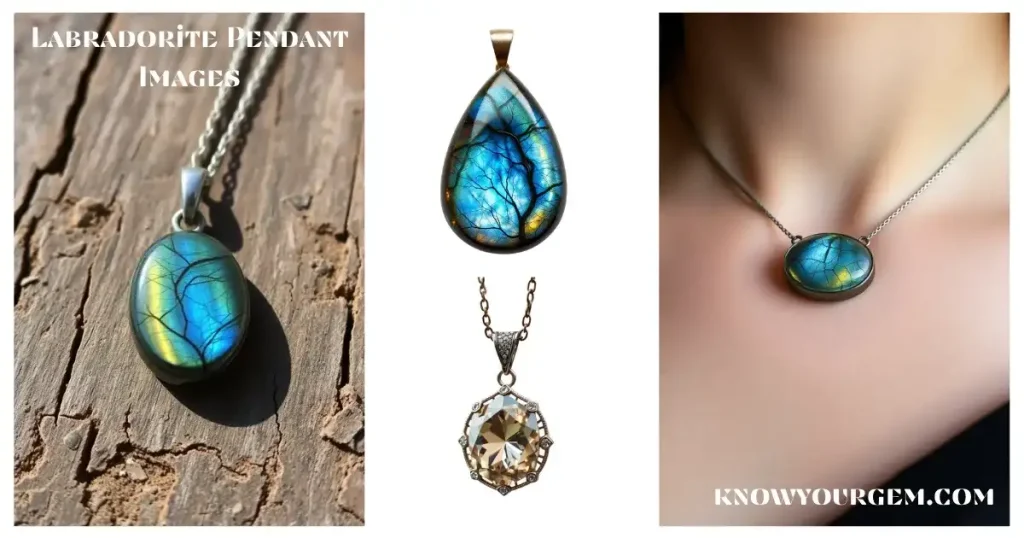
- Labradorite Pendant Since set in silver or gold, pendants allow the stone to move freely, while creating dynamic flash as the wearer shifts position.
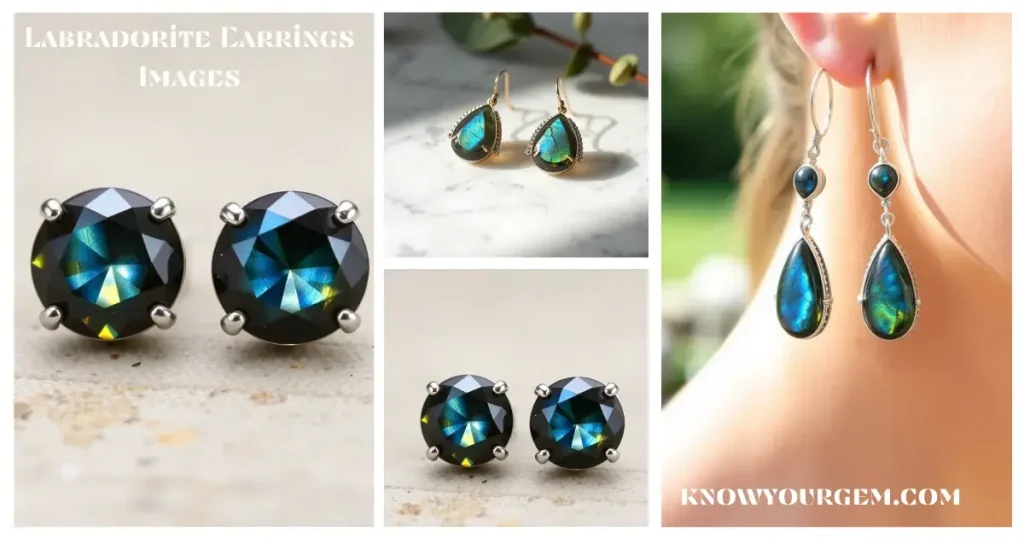
- Labradorite Earrings Drop and stud styles both work well. Whether, Labradorite drop earrings maximize movement and light interaction.
- Labradorite Bracelet Beaded or set styles believe to offer wrist-level flash. Whether gelang labradorites like Indonesian bracelet style combines multiple stones for continuous color play.
- Labradorite Jewelry collections often mix the gemstone with complementary stones like Labradorites, moonstones combination for ethereal effects.
Labradorite durability & daily wear:
While having 6-6.5 mohs scale the stone sits in the moderate hardness range which is harder than the glass but softer than quartz. A durability of Labradori gems makes it suitable for occasional wear jewelry but demands a gentle care for daily pieces.
Daily wear considerations:
- Rings face maximum exposure to the impacts and should use protective bezels or high settings
- Pedants and earrings experience less contact and wear well with the normal care.
- Don’t wear your jewelry during activities which involves hard knocks or chemical exposure.
The benefits of the crystal include visual appeal, but physical properties demand respect to resist chips or scratches.
Popular cuts & shapes:
Cabochon cutting dominates the Labradorite’s preparation. The smooth, domed surface maximizes Labradorescence visibility and protects the stone’s internal structure. Cutters orient cabochons to capture the strongest flash direction.
Labradories area hugely used in beads like, bracelets and necklaces, which are often shaped into smooth rounds or faceted cuts to highlight their shimmering color.For jewelry the appear in speciality items like palm stones, pyramid carvings, and other decorative pieces.
How to identify real Labradorite:
The market numerous Labradorite imitations and misrepresented materials that can fool inexperienced buyers. Learning to distinguish authentic stone from fakes, synthetics, and similar looked stones protect your investment and ensure you are getting what you pay for. Since, these identification techniques range from simple visual checks anyone you can perform to professional testing methods that provide distinctive authentication.
Natural vs fake indicators:
Authentic Labradorite:
- Flash moves and changes with the viewing angle rotation
- Color appears within the stone, not just on the surface
- Base color typically gray with natural variations
- Weight feels substantial for size (specific gravity 2.68-2.72)
- Labradorite’s properties include distinct cleavage planes visible under magnification
Warning signs:
- Surface-only color that doesn’t shift with angle
- Perfectly uniform flash across the entire stone
- Suspiciously vibrant colors in cheap pieces
- Lightweight feel suggesting glass or resin
Common imitations:
Glass with Coating the most usual fake involves coated glass that mimics flash. These Labradorites knockoff showcase the surface iridescence that scratches easily.
Dyed Stones Low quality material sometimes receives dye treatment to enhance apparent color, since this doesn’t create true labradoritescene.
Synthetic Opal Occasionally misrepresented as Labradorites, since opal’s play of color differs from Labradorescene both visually and structurally.
Professional authentication:
Gemological test definitively indentifies Labradorites through:
- Refractive index measurement (1.559-1.568)
- Specific gravity testing
- Microscopic examination of internal lamellae
- Spectroscopic analysis
Reputable sellers endow authetication for high value pieces.
Labradorite vs similar gemstones:
Several other gemstones which share visual similarities with the Labradorites, while leading to confusion in the marketplace. Getting knowledge about how to be make informed about purchasing decisions and understand what actually we are about to buy. This comprehensive comparison reveals why certain stone cost more than other despite superficial resemblance.
| Stone | Flash Type | Hardness | Base Color | Price Range |
| Labradorite | Type of Labradorescence owns tow primary color like (blue/green | 6-6.5 | Gray | $2-$100/ct |
| Moonstone vs Labradorite | Type of Adularescence (white/blue sheen) | 6-6.5 | White/peach | $5-$50/ct |
| Spectrolite | Type of Intense multi-color labradorescence | 6-6.5 | Dark gray/black | $50-$200/ct |
| Larvikite | Types of schiller effect (silver/blue) | 6 | Dark gray/black | $1-$5/ct |
| Opal | Type of play-of-color (full spectrum) | 5.5-6.5 | Varies widely | $10-$6,000+/ct |
Difference between Moonstone and Labradorite: Both stones are fledspars, sicne moonstone exhibits adularescene, a blowy, could like glow, while Labradorite showcases sharper, more metallic flash. Moonstone typically features white or peach base color, whether Labradorites lean gray.
Labradorite care, cleaning & storage:
Proper maintenance extends Labradorite’s beauty and longevity whether resist damages that could diminish flash or structural integrity. The gem’s moderate hardness and cleavage characteristic demand specific care approaches which differ from harder gemstones like sapphire or tougher materials like jade.
Cleaning safely:
Required methods:
- Mix lukewarm water with mild dish soap for submerging
- Gently scrub with soft-bristled brush for burshing
- Rinse thoroughly with clean water for washing
- Pat dry with soft, lint-free cloth for cleaning
- Air dry completely before storing
Avoid:
- Ultrasonic cleaners (can cause fractures)
- Steam cleaning (thermal shock risk)
- Harsh chemicals or abrasives
- Prolonged water soaking
The question like “does Labradorites fade in the sun” which is concerned by owners. While Labradorites themselves don’t fade, prolonged UV exposure can potentially affect treatments if present.
Storage tips:
Keep away harder gemstone from this stone because they can scratch or damage it easily due to having a strong hardness. Soft or line jewelry boxes are best to keep Labradorites.
Energetic Cleansing:
Since metaphysical believe about these gemstones absorb energies and require clearing. Common methods include:
- Moonlight exposure (especially during full moons)
- Sage smoke cleansing
- Sound vibrations from singing bowls
- Burying in earth (use caution—may cause physical damage)
Whether healing properties of the these gemstones remain scientifically unverified, these practices hold meaning for spiritual users. Since, brief water exposure is fine, but avoid prolonged soaking.
Labradorite buying guide:
While purchasing Labradorite successfully demands balancing preferences, like quality standards, budget constraints, and practical considerations about how to use the stone. Whether if you buy online or or physically, it is must to ask right questions and knowing what to look for separates savvy buyers from those who overpay for mediocre material.This comprehensive guide will equip with professional level evaluation skills regardless of your experience level.
Checklist before buying:
✓ Flash Visibility: View the gem from different angles under the light. The flash should be obvious and vibrant, not subtle or demands specific positioning.
✓ Coverage: It is must to check whet percentage of the stone exhibits flash. Full coverage commands premium prices; partial flash reduces value.
✓ Color Quality: It is needy to note color that appear. Since, common colors of this gem are blue/green costs less than rare purple/red/gold combinations.
✓ Thickness: Cabochons should have adequate depth usually 4-6mm minimum to the internal structure creating labradorescence.
✓ Surface Condition: It is usually examined for scratches, chips, or polish quality. Since, professional cutting and finishing add more value.P
✓ Setting Quality (for jewelry): It ensure prongs like, bezels, or channel settings provide adequate protection.
Questions to ask sellers:
- About Origin: “Where was this labradorite mined?” Its origin affects value and quality characteristics. Since recognizing that you are buying Finnish spectrolite versus Madagascar commercial grade help you to verify fair price.
- Regarding Treatments: “Has this stone been treated, enhanced, or stabilized?” Honest sellers disclose any processes beyond standard cutting and polishing.
- On Specifications: “What are the exact dimensions and carat weight?” This helps you compare value across different sellers.
- Pricing Justification: “Why is this piece priced at this level?” Sellers should articulate value factors like rare colors, size, or quality.
Online buying tips:
- Photography Analysis: Request videos showing the stone rotating under light. Static images can’t adequately capture labradorescence. Labradorite pictures should demonstrate flash from multiple angles.
- Lighting Context: Ask how photos were. Since natural daylight, LED, or specific photography light all affect apparent flash intensity.
- Return Policies: These policies ensure that you return the piece if it doesn’t to your expectations.
- Seller Reputation: Always check reviews specifically while mentioning Labradorite purchases. Always look for feedback about accurate representation and description.
- Certification: If you want to buy premium pieces, then it is must to ask for gemological certification to verify authenticity and quality grade.
Healing and metaphysical properties of Labradorite:
Spiritual traditions have valued Labradorite for its transformation and inner strength. Since their beliefs were not supported by scientific evidence, they used to hold deep meaning for those who weave crystals into their wellness practices.
What people always seek for in Labradorite?
People always seek for Labradorite’s benefits such as physical, emotional, and spiritual dimensions. Whether these healing powers lack scientific validation, traditional crystal practices attribute specific qualities to this gem.
Benefits of Labradorite Stone (Traditional Beliefs):
- Mental Clarity Practitioners always believe Labradorites enhance focus and dispels mental fog, that supports decision making and creative problem solving.
- Energetic Protection many people consider it as a shield stone that deflects negative while allowing positive influences to pass through.
- Transformation Support The stone’s association with the change makes it during life transitions, career shifts, or personal growth journeys.
- Intuition Enhancement Users report is heightened perceptual abilities and stronger gut instincts when they are working with Labradorites.
- Stress Reduction The meditative quality of observing its flash can provide calming effects that are similar to other visual of practices.
Labradorite stone benefits in Practice:
Meditation Use: You should hold a polished Labradonite palm stone during meditation to create a focal point. The shifting of colors can facilitate deeper contemplative states.
Workspace Energy: You should display Labradori specimen on your desk to maintain target and create flow throughout the workday.
Sleep Support: You should place a piece of this stone near the bedside, it filters dream energy and resists nightmares, according to traditional thoughts.
Affirmations for Labradorite: While pairing Labradorite with spoken intentions can deepen its symbolic role in a personal growth. Since Affirmations like “I trust my inner wisdom” or “ I embrace transformation with courage” help to align the stone’s energy with your goals.
Labradorite magical properties;
Esoteric traditions attribute various powers to labradorite:
- Awakening dormant psychic abilities
- Facilitating astral travel or lucid dreaming
- Connecting with spirit guides or higher consciousness
- Revealing hidden truths or seeing through illusions
- Synchronizing personal energy with universal rhythms
These magical properties have reflected to various centuries of folklore that have blended with the contemporary new age philosophies.
Important Disclaimer:
What does Labradorite actually do ?(Scientifically) From a purly materla perspective, labradori exhibits remarkable optical properties due to its internal structure. The geological and mineralogical aspects are well documented and fascinated.
Howeve, claims about Labradori healing powers, energy manipuplation, or spiritual effects are not supported by scientific research. There embody traditional beliefs, metaphysical philosophies, and personal experience are not medical or psychological replacements.
Whether you are seeking for Labradorite to own its healing properties. Its is must to consider this stone as a complementary practice that should never replace professional medical care, therapy, or psychiatric treatment.
Special varieties & related terms:
The labradori family extends basic gray stones with the blue flash, that encompasses a specialized varieties, regional name conversations, and architectural applications that demonstrate the stone’s versatility. Since recognizing these distinctions can help you to navigate market terminology and recognize when sellers offer something genuinely special versus standard material with the creative marketing.
Andesine Labradorite value:
Andesine embodies a related feldspar sometimes is marketed alongside Labradorites. Andesine Labradorite value hinges on color intensity and treatment disclosure.Since, natural untreated andesine commands premium prices, whether diffusion treated material costs significantly less.
Labradorite Birthstone Month:
Whether traditional birthstone, some modern systems associate Labradori with February or assign it as an alternative stone for various months. These associations lack historical grounding but appear in contemporary crystal and astrology practices.
Labradorite countertop & Architectural Uses:
For jewelry perspective, high grade Labradori appears in luxury interior design. Labradorites countertop installations create dazzling kitchen or bathroom surfaces where large slabs display a coordinated flash pattern. Labradori tile applications add dramatic walls or backsplashes. These architectural uses showcase the gem’s beauty at grand scale but demand significant investment, Labradorie countertop price typically exceeds $200-$00 per square foot installed.
Labradorite Mala:
Prayer bead necklaces are called malas sometimes incorporate labradori beads for meditation practice. A labradorie mala typically contains 108 beads plus guru bead, which are used for mantra counting and contemplative focus.
Regional names:
The term “Labradorita piedra reflects to growing international markets. The gem represents a common misspelling but helps people to find correct information.
Labradorite vertus:
French metaphysical literature discusses Labradorite’s vertus, or Labradorite’s virtues, that cover similar spiritual and energetic properties that are recognized in English language crystal traditions.
Final thoughts:
Labradorite truly more valued among various gemstones. It is affordable enough for beginners, its dazzling flashes of colors make it irresistible to seasoned collectors.
Whether you are seeking to own its properties, its meaning and benefits within spiritual tradition, or simply love its mesmerizing beauty, this fledspar mineral offer something genuine.
Its ability to shift and change mirrors like life’s constant evolution. Perhaps that’s why it resonates so deeply, labradorite reminders us that transform, pressure, and time can create unexpected beauty. From ancient lava flows to the modern jewelry boxes, from intuit legend to the contemporary crystal shops, Labradorites continue its journey through human culture and consciousness.
When you are going to choose your own piece, you must need to trust both research and intuition. Understand the properties that determine value, ask for informed questions, and ultimately select stones that genuinely speak to you.
Disclaimer: Labradorite’s metaphysical properties are rooted with the tradition and personal practices only, they can’t replace science or medicine. Whether medical, psychological, or financial and experiences with the stone vary from person to person.
FAQS:
1. Is labradorite expensive?
Mostly not, the gem remains still affordable, and demands prices from $20-30 per carat for standard quality. It will demand premium prices in only the condition is that pieces of this gemstone must with rare colors can reach prices like $50-$200 plus per carat.
2. Is labradorite rare?
The mineral is not self relatively common geologically. However, gem quality material with the strong labradorescene is much less abundant. Since specific colors like purple and red are genuinely rare, because large, clean material with full surface flash.
3. Can labradorite get wet?
Yes, brief water with exposure while cleaning will not be harmful for this gem. However don’t use prolonged submersion because water can penetrate and potentially cause problems over time.
4. Does labradorite fade?
Natural Labradorites don’t fade because the labradorescene comes from physical structure, not color pigments that bleach. However, surface polish can dull more years of wear, reduce apparent flash intensity.
5. Is labradorite good for everyday wear?
The stone can work for daily wear jewelry with appropriate precautions. While have 6-6.5 mohs scale means rings need protective settings and shouldn’t be worn during rough activities.
6. What are Labradorite’s symbolism?
In Intuit tradition, this Gem is linked with the transformation, magic, and the Northern Lights. Since modern interpretations expand on this, while adding themes of intuition, protection, and bridging the seen and unseen.
7. Where is labradorite found?
This gem is primarily found in Canada(Labradore), Finland(Spectrolite), Madagascar, Russia and Australia. Whether smaller deposits are existing in Norway, Ukraine, and the United states.
8. Where Labradorite is usually use in?
The large amount this gemstone is used in jewelry, like, ring, pendant, earring, and bracelet. Its features in carvings, decorative objectives, and metaphysical practices. On the rare occasions, it even finds its way into the luxury design elements like countertops or tile.
9. How do I identify quality labradorite?
Always look for a strong stone, which could carry vibrant flash that must be visible from different angles, because rare color combinations like purple, red or gold, colors carry good coverage than other colors.
10. How can we differentiate Spectrolite with regular Labradorite?
Spectrolite is a rare variety of Labradorites , this variety is only found in Finland. It showcases a stronger play of colors, like, rare purples and reds, in contrast standard Labradorites display blue and green flashes.

Welcome to KnowYourGem.com! your ultimate destination for uncovering the fascinating world of gems and their secrets! I'm Kamil Hussain, a passionate blogger with a Master’s degree in Economics, dedicated to bringing you insightful, well researched content that blends the beauty of gemstones with the art of storytelling. With a keen analytical mind and a love for discovering hidden treasures, I created this platform to help you explore the brilliance, history, and value of every gem.


[…] Labradorite is a feldspar mineral valued for its labradorescence, a flash of iridescent color, usually blue, green, or gold, that flashes only from certain angles. […]